Table of Contents >> Show >> Hide
- What Is Glaucoma, Exactly?
- The Main Types of Glaucoma
- Who Is at Higher Risk?
- Symptoms: What You May Notice (and What You May Not)
- How Glaucoma Is Diagnosed
- Treatment: What Actually Happens in Real Life
- Can Glaucoma Be Prevented?
- Daily Life With Glaucoma: Practical Survival Guide
- Questions to Ask at Your Next Eye Appointment
- What This Guide Was Built From (U.S. Reputable Medical Sources)
- Final Takeaway
- Extended Experience Section (Approx. )
If eyes had a “check engine” light, glaucoma would be the warning that stays off until damage has already started.
Not dramatic. Not loud. Just quietly persistent. That’s why this guide exists: to make glaucoma understandable,
actionable, and a lot less scary. You’ll learn what glaucoma is, who’s at risk, what symptoms matter, how diagnosis works,
and what treatment really looks like in daily lifewithout jargon overload and without doom scrolling your way into panic.
Think of this as your practical map. We’ll keep the science real, the advice clear, and the tone human. Your vision deserves
both good medicine and good explanations.
What Is Glaucoma, Exactly?
Glaucoma is a group of eye diseases that damage the optic nervethe cable that sends visual information from your eye to your brain.
That damage can lead to permanent vision loss, and if untreated, blindness. The tricky part is that early glaucoma often has no obvious symptoms.
Many people feel perfectly fine while slow vision loss is already happening.
Most glaucoma management focuses on lowering intraocular pressure (IOP), because pressure is the main modifiable risk factor doctors can treat.
Important nuance: some people with high pressure never develop glaucoma, and some people with “normal” pressure still do.
So pressure matters, but it’s not the whole story.
The Main Types of Glaucoma
1) Primary Open-Angle Glaucoma (Most Common)
In open-angle glaucoma, the drainage system looks open but does not work efficiently enough. Pressure may rise gradually,
and optic nerve damage can develop over years. It usually starts with peripheral (side) vision loss, so people may not notice until late stages.
2) Angle-Closure Glaucoma (Can Be an Emergency)
Angle-closure glaucoma happens when the drainage angle narrows or closes, causing pressure to spike quickly.
Red flags include severe eye pain, headache, nausea/vomiting, blurry vision, and rainbow halos around lights.
This is not a “wait and see” situationurgent care is critical to protect vision.
3) Normal-Tension Glaucoma
Here, optic nerve damage occurs even when eye pressure is in a statistically normal range.
Possible contributors include blood flow and nerve vulnerability. Treatment still often targets lowering pressure further.
4) Secondary and Congenital Forms
Secondary glaucoma can develop from other conditions (for example, inflammation, trauma, diabetes-related vessel problems, or long-term steroid use).
Congenital glaucoma appears in infants or young children due to developmental drainage abnormalities.
Who Is at Higher Risk?
Anyone can develop glaucoma, but risk rises with certain factors. Key ones include:
- Age (especially over 60)
- Family history of glaucoma (especially first-degree relatives)
- Black adults over 40 (higher risk and earlier severe outcomes)
- Hispanic/Latino adults (risk rises notably with age)
- Diabetes and some vascular conditions
- Thin corneas, certain refractive errors, and prior eye injury/surgery
- Long-term corticosteroid use (especially eye steroid use)
Bottom line: risk is personal. Two people can have the same eye pressure and very different outcomes.
That’s why regular comprehensive eye exams matter more than internet guesswork.
Symptoms: What You May Notice (and What You May Not)
Early open-angle glaucoma is usually symptom-free. Later signs can include:
- Patchy blind spots in side vision
- “Tunnel vision” in advanced cases
- Difficulty with contrast and navigation in low light
Acute angle-closure symptoms are different and abrupt:
- Sudden severe eye pain
- Headache, nausea, vomiting
- Blurred vision and halos around lights
- Red eye with rapid visual decline
If those emergency symptoms appear, seek urgent ophthalmic care immediately.
How Glaucoma Is Diagnosed
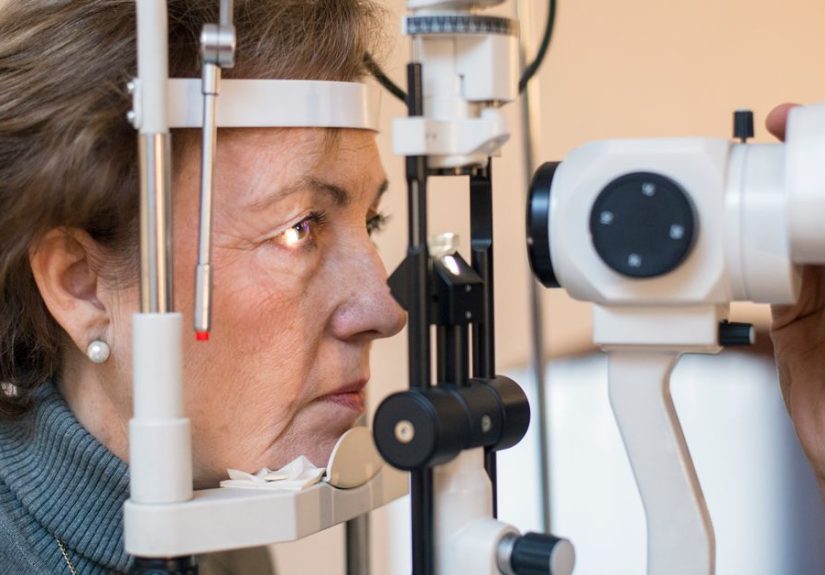
A single pressure reading is not enough. Eye specialists use a set of tests to build the diagnosis and track progression:
- Tonometry: measures eye pressure
- Dilated optic nerve exam: checks nerve appearance
- Visual field test: maps side vision loss
- Pachymetry: measures corneal thickness
- Gonioscopy: evaluates drainage angle anatomy
- Imaging (like OCT): monitors structural nerve and retinal changes over time
Think of diagnosis as less “one test, one answer” and more “multiple puzzle pieces, repeated over time.”
Trends are often more meaningful than a single day’s number.
Treatment: What Actually Happens in Real Life
The core goal is straightforward: protect the optic nerve by lowering eye pressure enough for your eyes.
Treatment plans are individualized and can evolve over time.
1) Prescription Eye Drops (Usually First Step)
Eye drops reduce pressure either by decreasing fluid production or improving drainage.
Common classes include prostaglandin analogs and beta blockers, with other options depending on tolerance and target pressure.
Side effects vary by drug and personredness, dryness, stinging, or systemic effects in some cases.
Pro tip from clinical education programs: drop technique matters.
Using drops exactly as prescribed, spacing multiple drops correctly, and gently pressing the inner corner of the closed eye can reduce systemic absorption.
2) Laser Treatment
Laser procedures (such as trabeculoplasty for open-angle disease) can improve outflow and lower pressure.
They’re typically done in-office, with short recovery. Some people still need drops afterward, and repeat treatment may be needed over time.
3) Surgery (Including MIGS)
If drops and laser aren’t enoughor if disease is advancedsurgery can create or support new drainage pathways.
Options include trabeculectomy, tube shunts, and minimally invasive glaucoma surgery (MIGS), depending on anatomy, pressure goals, and disease severity.
4) Newer Drug-Delivery Approaches
Ophthalmology is moving toward longer-acting options for selected patients, including sustained-release implants in specific clinical scenarios.
These can reduce daily drop burden for some people, but candidacy, risks, and follow-up are highly individualized.
Can Glaucoma Be Prevented?
Strictly speaking, there is no guaranteed prevention for all glaucoma types. But vision loss from glaucoma is often preventable
or delayable through early detection and consistent treatment.
- Get regular comprehensive dilated eye exams
- Follow medication schedules carefully
- Report side effects early (don’t silently quit treatment)
- Attend follow-up appointments for pressure and nerve monitoring
- Manage blood pressure, diabetes, and overall vascular health
- Use eye protection to reduce injury risk
Daily Life With Glaucoma: Practical Survival Guide
Build a “Drop Routine” That Can Survive Real Life
Habit-stacking works better than willpower. Attach drops to non-negotiable routines (tooth brushing, evening tea, nightly alarm).
Set one backup reminder in case your first reminder meets the same fate as every “new year, new me” plan.
Make Follow-Up Easy
Missed follow-ups are a major reason controlled glaucoma becomes uncontrolled glaucoma.
Book the next visit before leaving the clinic. Put it in your calendar immediately. Future You will thank Present You.
Track Changes, Don’t Guess
Keep a simple note with:
- Medication schedule
- Side effects
- Questions for your doctor
- Any changes in night driving, side vision, or glare sensitivity
Talk to Family
Because family history matters, your diagnosis can help relatives catch their risk early.
One conversation can protect more than one set of eyes.
Questions to Ask at Your Next Eye Appointment
- What type of glaucoma do I have?
- What is my target eye pressure?
- How fast is my disease changing?
- What side effects should I watch for with this medication?
- Would laser or surgery improve my long-term stability?
- How often should I get visual field and OCT testing?
- What symptoms mean I should seek urgent care?
What This Guide Was Built From (U.S. Reputable Medical Sources)
This article synthesizes guidance and data from major U.S.-based institutions and clinical education sources, including:
- National Eye Institute (NIH)
- Centers for Disease Control and Prevention (CDC)
- American Academy of Ophthalmology (AAO)
- Mayo Clinic
- Cleveland Clinic
- Johns Hopkins Medicine
- MedlinePlus (U.S. National Library of Medicine)
- American Academy of Family Physicians / USPSTF summary resources
- Glaucoma Research Foundation
- BrightFocus Foundation
- U.S. Food and Drug Administration (FDA) drug labeling information
- National Library of Medicine publications
Final Takeaway
Glaucoma is serious, but it is not a hopeless diagnosis. The biggest danger is silencesilent damage, silent missed visits,
silent side effects, silent assumptions that “my vision seems fine.” Replace silence with a plan:
regular exams, consistent treatment, rapid response to warning signs, and honest conversations with your eye specialist.
You don’t need perfect. You need consistent. In glaucoma care, consistency protects sight.
Extended Experience Section (Approx. )
Experience 1: “I thought I was just clumsy at night.”
Daniel, 58, started bumping shopping carts into aisle corners and blamed bad store lighting. He passed a basic vision screening at work,
so he ignored it for months. At a comprehensive eye exam, he learned he had open-angle glaucoma with early peripheral field loss.
He was shocked because his central vision still felt “normal.” The turning point wasn’t the diagnosisit was seeing his visual field map.
The missing side areas made his daily frustrations suddenly make sense. He started nightly drops, set alarms, and kept a one-page medication log.
At first, he hated the routine. “I can remember every movie quote from the 90s, but eye drops? Impossible.” Three months later, his pressure was lower,
side effects were manageable, and he felt in control again. His biggest lesson: don’t wait for obvious symptoms; glaucoma does not announce itself politely.
Experience 2: “The side effects made me want to quit.”
Marissa, 46, had a strong family history and was screened early. Her first drop worked for pressure control but caused redness and dryness.
She almost stopped treatment without telling her doctor because she felt embarrassed about “complaining.” At follow-up, her specialist switched medications
and reviewed drop technique in detail. She learned to close her eyes after instilling the drop and gently press the inner corner for a couple of minutes.
That small change reduced irritation and helped consistency. She also started spacing her two drop types correctly and stopped improvising doses.
Her words: “I thought treatment failure meant I was bad at this. It turned out I just needed a better fit.” Her story is common:
side effects are not a character flaw, they’re a clinical problem to solve with your care team.
Experience 3: “Emergency symptoms are realgo now, not later.”
A retired teacher named Eleanor, 67, developed sudden severe eye pain with nausea and halos around lights one evening.
She thought it might be a migraine and tried to sleep it off. Her daughter insisted on emergency care. She was diagnosed with acute angle-closure glaucoma.
Fast treatment preserved useful vision. Her ophthalmologist later explained that hours matter in angle-closure events.
Eleanor now tells friends: “If your eye screams at you and the room turns into rainbow rings, don’t negotiate with itget help.”
Her experience became a family education moment: they now discuss eye history openly, and two relatives booked comprehensive dilated exams.
Experience 4: Caregiver reality check.
Malik helps his father manage glaucoma and diabetes. The hardest part wasn’t understanding the diseaseit was coordinating real life:
refill timing, transportation to follow-ups, and remembering which bottle goes in which eye at what hour.
They solved it with color labels, a shared calendar, and pharmacy auto-refill reminders. Their biggest gain came from bringing a printed question list
to appointments. Instead of leaving with half-answers, they left with a clear action plan. Malik says caregiving changed his view of prevention:
“A five-minute reminder today can save years of avoidable vision loss later.”
These experiences share one theme: successful glaucoma care is less about one dramatic procedure and more about everyday systems.
Small actionskept up consistentlyprotect sight.