Table of Contents >> Show >> Hide
- Quick reality check: “driverless” isn’t one thing
- So… are driverless cars already in cities?
- Why city driving is the final boss level of autonomy
- Safety: are driverless cars safer than human drivers?
- Regulation: the patchwork is real (and it matters)
- The economics: the quiet force that decides everything
- What cities should demand before saying “yes, come on in”
- So… will we ever see driverless cars in our cities?
- What It Feels Like: Real-World City Experiences With Driverless Cars (Reported)
Picture a near-future commute: you tap an app, a car rolls up with no one in the driver’s seat, and it politely waits
while you finish arguing with your coffee lid. You slide in, it glides away, and nobodynobodycuts you off to make
an exit they clearly didn’t earn.
That’s the dream. The reality is messier, more interesting, and (sometimes) funnier: in the U.S., truly driverless
vehicles already exist in limited pockets of a few cities, but “everywhere in every city” is a different beast. The
real question isn’t whether driverless cars are possible. It’s whether they can be safe, affordable, and socially
acceptable in the chaotic, ever-changing obstacle course we call “urban streets.”
Quick reality check: “driverless” isn’t one thing
People throw around “self-driving” the way they throw around “natural flavors”it covers a lot, and you should read
the fine print. In transportation, the fine print is usually described using automation “levels.”
Levels of automation, in plain English
Most cars you can buy today are not driverless. They may include driver-assist features like adaptive
cruise control, lane-keeping, or automated emergency braking. These can reduce crashes and make driving easier, but
they still expect a human to be the responsible adult in the room.
What most people imagine as “driverless” is closer to Level 4 automation: the system can drive itself
without a human monitoring it, but only inside a carefully defined set of conditions (like certain neighborhoods,
certain speeds, certain weather, certain roads). That “carefully defined set” is called an
Operational Design Domain (ODD)and it’s basically the AV’s comfort zone.
And then there’s the unicorn: Level 5, a car that can drive itself everywhere, in all conditions, like a
human (but hopefully with better manners). That’s the version people argue about at dinner parties. Level 4 is the
version that’s actually showing up in real cities.
So… are driverless cars already in cities?
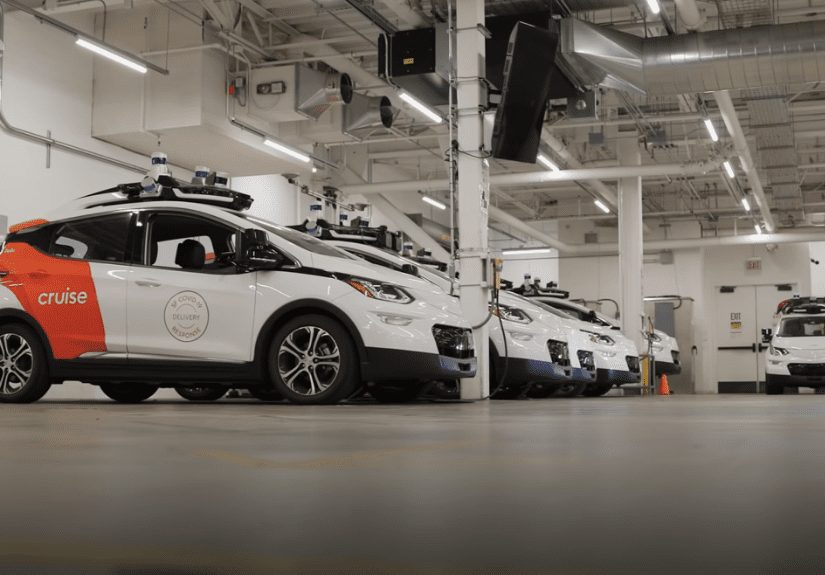
Yesin a limited way. In the U.S., a handful of companies operate or pilot driverless ride-hailing in specific areas.
Think of it less like “a teleportation revolution” and more like “a new transit line that only goes where the tracks
exist.” The tracks, in this case, are the ODD: mapped routes, geofenced service areas, and rules about when the system
is allowed to drive.
Robotaxis: the most visible “driverless city” use case
Robotaxis are the headline act because they put everyday passengers inside the experiment. Services have expanded across
several metro areas, but they still behave like a cautious new roommate: they prefer familiar neighborhoods, avoid certain
scenarios, and occasionally do something awkward that makes you pretend you’re not together.
The most important point: these systems aren’t trying to solve “all driving.” They’re trying to solve
“a lot of driving in a specific place” well enough to safely carry the public.
What about deliveries, shuttles, and trucks?
Cities aren’t just people going placesthey’re also stuff going places. Autonomous delivery vehicles and low-speed shuttles
can be simpler (in theory) because they operate at lower speeds or on more predictable routes. Meanwhile, long-haul highway
trucking can also be attractive for automation because highways are structured compared to downtown streets.
Translation: you may see “driverless” expand in specialized slices before it becomes a universal urban feature.
Why city driving is the final boss level of autonomy
Highways are hard. Cities are harder. Cities have everything: pedestrians who appear out of nowhere, double-parked delivery
vans, weird temporary signage, construction detours that look like a scavenger hunt, and cyclists who can change direction
faster than your group chat can change dinner plans.
The “long tail” problem: infinite weirdness
Autonomous systems can learn common patternsstoplights, lane lines, turns, merges. But city streets are full of rare events:
a couch in the roadway, an officer directing traffic with hand signals, a festival spilling into an intersection, a fallen
tree after a storm, a “temporary” cone setup that becomes a permanent lifestyle.
Humans handle these by improvising with context and social cues. AVs must do it by recognizing, predicting, and planningthen
doing it safelywhile being recorded by fifteen phones.
Weather and visibility: Mother Nature does not care about your roadmap
Fog, heavy rain, glare, and low sun angles can reduce sensor performance. Snow can cover lane markings and change what the
world “looks like” to perception systems. Even in mild climates, sudden weather shifts can turn a straightforward drive into
a confusing one. This is a big reason many deployments start in places with more predictable conditions.
School zones and emergency scenes: where “technically correct” isn’t enough
City driving includes high-stakes, high-context situationslike school buses with stop arms extended, crossing guards, or
emergency scenes with cones and responders directing vehicles. These scenarios demand extra caution and near-perfect behavior.
Recent scrutiny around driverless vehicles passing stopped school buses illustrates how a single failure mode can trigger
investigations, recalls, and public backlasheven if the broader safety record is strong. If autonomy is going to earn trust,
it has to be boringly correct in the places where humans are most vulnerable.
Safety: are driverless cars safer than human drivers?
This is the make-or-break question. If driverless vehicles aren’t safer than humans over time, widespread adoption will stall.
If they are safer, the pressure to expand will growbecause roadway crashes are a public health crisis, not just an
inconvenience that ruins your bumper and your weekend.
Why safety comparisons are tricky (and how to think about them)
Comparing an AV fleet to “humans” isn’t like comparing two cars in a drag race. You have to control for:
- Where the driving happens (downtown vs. suburban arterials)
- When (rush hour vs. late night)
- Weather and visibility
- Exposure (miles driven) and incident definitions (fender-bender vs. injury crash)
Also, driverless companies often start with conservative ODDs. That’s not cheatingit’s responsible engineeringbut it does
mean the “human benchmark” should reflect the same roads and conditions.
What the data is starting to suggest
Some operators publish safety materials that compare their incident rates to human benchmarks in the same environments, and
regulators collect crash reports tied to automated systems. Taken together, the emerging story looks like this:
in certain ODDs, carefully managed driverless fleets may reduce some crash typesbut the systems still make
mistakes that feel uncanny, attract intense attention, and must be engineered out through updates and operational controls.
The practical takeaway for cities isn’t “AVs are perfect” or “AVs are doomed.” It’s:
measure safety continuously, demand transparency, and expand only when performance supports it.
Regulation: the patchwork is real (and it matters)
In the U.S., the AV regulatory landscape is famously… artisanal. States manage many rules about testing and operation on public
roads, while federal agencies focus on vehicle safety standards and defect enforcement. That division can create gaps, overlaps,
and “Wait, who approved this?” moments.
Crash reporting and transparency
Federal regulators have required reporting of certain crashes involving automated driving systems and advanced driver-assist
systems under specific conditions. This doesn’t instantly solve the safety debate, but it helps move the conversation from
vibes to evidencewhat happened, when, where, and under what system state.
State programs: California as a bellwether
California’s framework is often treated like a national weather forecast for AVs: if it gets stormy there, other places pay
attention. The state has structured permit programs for testing (with and without a safety driver) and deployment, plus public
reporting requirements. Suspensions and restrictions in California have also shown how quickly operations can change when
regulators decide safety or transparency isn’t sufficient.
Marketing vs. reality: “self-driving” words have consequences
One reason the public is confused is that consumer driver-assist systems are sometimes marketed with language that sounds like
autonomy. Regulators have pushed back on that, arguing that wording can mislead drivers into overtrusting features that still
require active supervision. In plain terms: if the name sounds like a nap is allowed, people will try to nap.
The economics: the quiet force that decides everything
Even if driverless vehicles can be made safe in cities, they must also be economically viable. A robotaxi has to cover:
expensive sensors, compute hardware, maintenance, cleaning, remote support, insurance, mapping updates, depot operations, and
the cost of the vehicle itselfwhile competing with human-driven ride-hailing and private car ownership.
Utilization is the secret sauce
Private cars sit parked most of the time. Fleet vehicles can operate far more hours per day. That higher utilization is one of
the best ways to amortize expensive technology over many rides. It’s why robotaxis are a more realistic early path than selling
fully autonomous cars to consumers for personal use.
But cities add cost, too
Urban operations mean more stop-and-go wear, more edge cases, more customer support needs, and more interaction with messy curb
space. The “city premium” is real. If robotaxis don’t deliver a compelling price and convenience combo, people won’t switchor
they’ll only use them for niche trips.
What cities should demand before saying “yes, come on in”
Cities aren’t just passive testing grounds. They’re responsible for public safety, mobility access, and the day-to-day quality
of street life. If driverless cars are going to be part of the urban fabric, city leaders and transportation agencies should
treat them like any other major mobility providerwith standards, data expectations, and consequences.
1) Clear operating rules (and a real plan for weird situations)
“It usually works” is not a policy. Cities can require defined ODDs, clear handoff and fallback procedures, and strong protocols
around school zones, emergency scenes, and construction.
2) Transparency that respects privacy
Cities can ask for aggregated safety performance, incident categories, response times, and service-area boundarieswithout
demanding personally identifiable rider data. The goal is accountability, not surveillance-by-spreadsheet.
3) Accessibility and equity commitments
Driverless services should be usable by people with disabilities, support safe pickup/drop-off behaviors, and avoid becoming a
boutique service for only the easiest neighborhoods. If AVs are truly the “future of mobility,” the future needs curb ramps,
not just cool branding.
4) Curb management: the least sexy, most important detail
Robotaxis need places to stop. If curb space isn’t managed, you get chaos: blocking bike lanes, awkward mid-street stops, and
a rising chorus of “Why is this car doing that?” Cities can create designated pickup zones, enforce curb rules, and integrate
fleets into traffic management planning.
So… will we ever see driverless cars in our cities?
Yesbut not as a sudden overnight takeover, and not evenly everywhere.
The most realistic future looks like this:
driverless service expands city-by-city and neighborhood-by-neighborhood, starting where conditions are favorable
and where operators can prove safe performance at scale. Over time, ODDs widen, capabilities improve, and costs fall. Meanwhile,
advanced driver-assistance in consumer vehicles continues to spread, delivering near-term safety gains even before full autonomy
becomes mainstream.
A realistic timeline (without the crystal ball)
In the near term, expect growth in:
- Geofenced robotaxi services in select U.S. metros
- Purpose-built autonomous vehicles in limited districts (like entertainment corridors)
- More regulation and reporting as operations scale and incidents attract attention
- Hybrid models that include remote assistance and conservative operating rules
In the longer term, the “every city” dream depends on four things moving together: technology robustness, regulatory clarity,
economics, and public trust. If any one lags, expansion slows. If all four improve, driverless mobility becomes less of a
sci-fi promise and more of a boring utilitylike elevators. (Remember: elevators used to have human operators too. Now we trust
a button, a sensor suite, and a safety standard. The future is surprisingly unromantic.)
What It Feels Like: Real-World City Experiences With Driverless Cars (Reported)
Let’s talk about the part that actually changes minds: experiences. Not press releases, not conference demosreal rides, real
streets, real “Okay, this is happening” moments. Based on reported rider feedback, public pilots, and journalism from cities
where robotaxis operate, the experience is often a mix of delight, caution, and the occasional “buddy, you can do it… take the
left.”
First, the pickup is where driverless cars reveal their personality. Riders describe the oddly polite behavior:
the vehicle arrives, stops carefully, and sometimes chooses a pickup point that is technically legal but socially weirdlike
three feet farther than you’d walk if you were driving yourself. That’s not the car being “dumb”; it’s the car following strict
rules about where it feels safe to pull over. In dense areas, the curb becomes a negotiation with reality: delivery vans,
ride-share traffic, cyclists, and pedestrians all want the same ten feet of space. Cities that add designated pickup zones can
make the experience dramatically smoother.
Inside the cabin, riders commonly mention two feelings at once: comfort and hyper-awareness. The ride can feel
smoothcareful acceleration, gentle braking, lots of space around other road users. But the absence of a driver removes the
usual social signal that “someone is in charge,” so riders pay closer attention to what the car is doing, especially at
unprotected turns or busy crosswalks. Some people find that attention fades after a few rides; others stay vigilant, like a
passenger on a first-time flight who keeps watching the wing.
The most frequently praised moments are also the most human: the car consistently stops for pedestrians, yields patiently, and
avoids aggressive maneuvers that many human drivers treat as a competitive sport. In city traffic, that caution can feel like a
superpower. But it can also feel like hesitationparticularly when the vehicle encounters construction cones,
confusing temporary signage, or a chaotic merge. Riders sometimes describe a “thinking pause” where a human might inch forward
with eye contact, but the AV waits for clearer space. It’s safe, but it can be slower, and it can make the ride feel
conservative compared with the flow of human traffic.
Then there are the situations that create stories. A robotaxi taking an unexpected route to avoid a tricky intersection.
A vehicle waiting through an extra light cycle because it didn’t like the setup ahead. Or the moment a passenger realizes,
“We’re not lostwe’re cautious.” These anecdotes travel fast online, which is why transparency and rapid fixes matter:
one highly shareable mistake can outweigh thousands of ordinary safe miles in the public imagination.
Finally, the biggest experiential shift is trust calibration. People who start skeptical often become more
comfortable after multiple uneventful ridesespecially when the service behaves predictably. People who start excited can
become more cautious after seeing a single odd decision around a complex urban edge case. The path to “driverless everywhere”
runs straight through this human truth: we don’t adopt technology when it’s perfect; we adopt it when it’s reliable enough
that we stop thinking about it. Driverless cars in cities are still, for many riders, something you think about.