Table of Contents >> Show >> Hide
- First: Is it love… or is it a love-flavored energy drink?
- What you’ll learn
- 1) Emophilia: You’re built to fall fast (and maybe frequently)
- 2) Anxious attachment: Love feels like relief from uncertainty
- 3) Brain chemistry: Your reward system is doing backflips
- 4) Loneliness or a major life change: You’re craving closeness, not just a person
- 5) Validation-seeking and codependent habits: Love becomes proof you’re lovable
- 6) Limerence and idealization: Your brain is filling in blanks with glitter
- 7) Trauma patterns, love bombing, and confusing intensity with safety
- How to slow down (without becoming a robot)
- When it might be time for extra support
- FAQ
- Conclusion
- Experiences: What “Falling in Love Easily” Can Feel Like (Real-Life Snapshots)
Falling in love easily can feel like a rom-com superpower… until you realize your heart is writing wedding vows while your brain is still
trying to remember their last name. If you catch feelings fast, you’re not “too much” or “broken.” You might be wired for connection,
sensitive to chemistry, or running a little short on emotional sleep.
This article breaks down seven real, psychology-backed reasons people fall fastand how to slow down without turning into an emotionless
spreadsheet. (Though, honestly, a small spreadsheet for red flags is not the worst idea.)
First: Is it love… or is it a love-flavored energy drink?
People often use “love” as a catch-all word for attraction, excitement, attachment, and “I like how they laugh at my jokes.”
Early-stage romance can be intense and biologicalyour brain lights up in reward and motivation systems, and your body can interpret that
surge as certainty. That’s normal. But “normal” doesn’t always mean “wise to build your whole future on it by Date #3.”
A quick self-check
- Love tends to grow with time, knowledge, and shared values.
- Infatuation often feels urgent, sparkling, and slightly allergic to reality.
- Limerence can feel obsessiveintrusive thoughts, idealization, and emotional whiplash.
If you’re unsure where you land, don’t panic. The goal isn’t to shame your feelingsit’s to understand what’s powering them.
1) Emophilia: You’re built to fall fast (and maybe frequently)
There’s a term you might recognize if you’ve ever said, “Why do I do this every time?”: emophilia. It describes a tendency to
develop romantic feelings quickly, easily, and often. Some people aren’t “needy” or “desperate”they’re highly responsive to the emotional
rush of a new connection.
What it can look like
- You feel bonded early, before you truly know the person’s patterns.
- You ignore red flags because the chemistry feels like a neon sign that says “SOULMATE.”
- You confuse intensity with compatibility (common trap, very expensive emotionally).
Try this
Treat early romance like a movie trailer: exciting, promising, and not the full plot. If you tend to fall fast, build a “speed bump”:
wait a few weeks before big commitments (exclusivity, moving in, merging friend groups, etc.). Keep dating decisions on a timeline your
future self would appreciate.
2) Anxious attachment: Love feels like relief from uncertainty
Attachment style shapes how we experience closeness, trust, and security. If you lean anxious, a new connection can feel like oxygen:
soothing at first, but quickly scary if it feels unstable. When attachment anxiety kicks in, your mind may try to secure the bond fast
sometimes by “falling in love” hard and early.
Common signs
- You read texts like they’re ancient prophecies (“‘k’ means they hate me”).
- You feel calm when you’re reassuredand panicky when you’re not.
- You over-invest early to prevent abandonment later.
Try this
Practice self-soothing before seeking reassurance. That can mean naming the feeling (“I’m anxious, not abandoned”),
slowing down with a walk or a shower, and letting your nervous system settle before you act. Love grows best when it isn’t built on panic.
3) Brain chemistry: Your reward system is doing backflips
Romantic attraction isn’t just poetryit’s biology. Early-stage “in love” feelings are linked to activity in dopamine-rich reward areas of the
brain. Dopamine is involved in motivation, drive, focus, and that “must have more of this” feeling. Add novelty, anticipation, and a dash of
uncertainty, and your brain may interpret it as deeply meaningful.
Translation: you’re not weak. You’re human. Your brain is basically a golden retriever chasing the tennis ball of new romance.
Try this
- Delay major decisions until the initial chemical surge cools down.
- Watch patterns, not promises. Consistency is the adult version of butterflies.
- Stay busy with your own lifeyour brain needs other rewards besides “them.”
4) Loneliness or a major life change: You’re craving closeness, not just a person
Sometimes “I fall in love easily” is really “I’ve been emotionally hungry.” After a breakup, a move, grief, burnout, or a season of isolation,
a warm connection can feel like sunlight after months indoors. You may attach quickly because the relationship is meeting needs that
haven’t been fed elsewhere: belonging, affection, stability, fun.
Try this
Before you label your feelings as “love,” ask: What need is this meeting right now? If the answer is “companionship” or “feeling chosen,”
build a wider support systemfriends, routines, community, therapy, hobbiesso a new relationship becomes a joyful addition, not emotional
life support.
5) Validation-seeking and codependent habits: Love becomes proof you’re lovable
If your self-worth is wobbly, romance can turn into a quick fix: attention feels like value, and commitment feels like security. In some cases,
people slide into codependent patternsover-giving, over-fixing, over-functioningbecause being needed feels safer than being known.
What it can look like
- You feel “high” when someone wants you and “empty” when they don’t.
- You become the helper, the rescuer, the emotional support human.
- You ignore your needs because keeping the connection feels more urgent.
Try this
Practice a new mantra: “My needs are not negotiable.” Write down 3–5 non-negotiables (respect, consistency, honesty,
emotional safety, shared values). If you feel yourself sprinting, pause and check: are your non-negotiables being met, or are you trying to
earn them?
6) Limerence and idealization: Your brain is filling in blanks with glitter
Sometimes falling fast isn’t loveit’s limerence, an involuntary state of intense fixation and obsession with another person.
Limerence can include idealizing them, craving reciprocation, and thinking about them constantly. It often thrives on uncertaintywhen you
don’t fully know where you stand, your mind may spin harder to “solve” the relationship.
Reality-check questions
- Do I love who they are, or who I imagine they could be?
- Do I know their real behavior under stress, or just their charm on good days?
- Am I feeling calm and groundedor wired and consumed?
Try this
Replace fantasy with data. Spend time in everyday settings (errands, group hangouts, normal life). Notice how they handle small disappointments.
Keep your routines. Limerence hates routines. Healthy love respects them.
7) Trauma patterns, love bombing, and confusing intensity with safety
If you’ve experienced traumaespecially relational traumayour nervous system may confuse intensity with intimacy. In unhealthy dynamics,
cycles of stress and relief can create a powerful bond (sometimes called a trauma bond). Add “love bombing” (big affection, big promises,
fast commitment pressure), and it can feel like destiny… right up until it feels like control.
Watch for “too fast” red flags
- They push for rapid commitment, exclusivity, or big future plans immediately.
- They don’t respect boundaries (“If you loved me, you’d…”).
- The connection feels like a roller coaster: huge highs, confusing lows.
Try this
Slow down and prioritize safety over spark. Talk to a trusted friend who isn’t wearing heart-shaped glasses. If there are signs of emotional
manipulation or abuse, consider reaching out to a professional or a support hotline. Love should not require you to shrink, scramble, or
surrender your peace.
How to slow down (without becoming a robot)
Use “Data Before Devotion”
Give yourself time to gather information. Ask: Are they consistent? Do they communicate clearly? Are their values compatible with yours?
Do you like who you are around themor do you feel anxious and performative?
Keep your life big
Keep seeing friends. Keep your hobbies. Keep your routines. When a relationship grows, it should grow into a full lifenot replace it.
Create a commitment timeline
Chemistry can convince you that “now” is the only time. Reality disagrees. Consider simple guardrails, like:
- No major financial decisions in the first 6–12 months.
- No moving in until you’ve seen how you handle conflict together.
- No “forever” promises until you’ve experienced “ordinary” together.
Get curious about your patterns
If you fall fast repeatedly, the goal isn’t to judge yourselfit’s to learn your triggers. Do you fall faster when you’re lonely? Stressed?
After a breakup? When someone is inconsistent? Knowing your pattern helps you protect your heart without closing it.
When it might be time for extra support
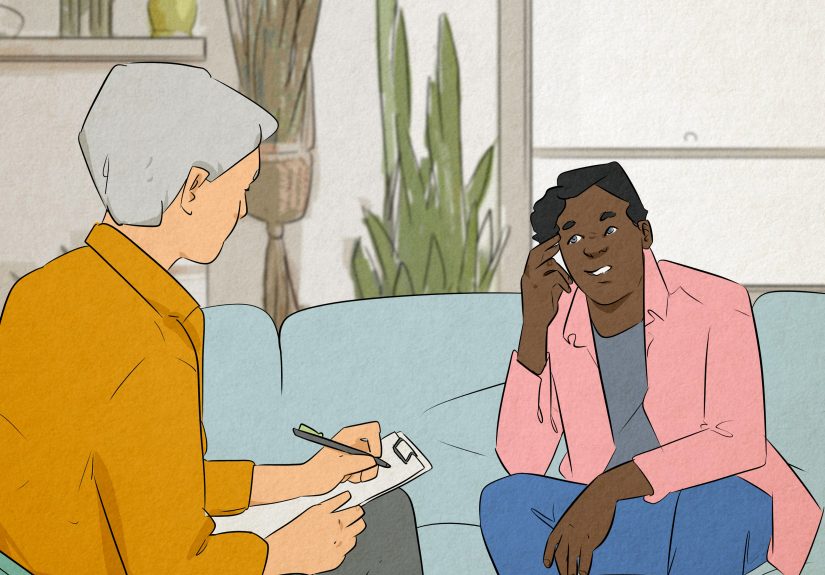
Falling in love easily isn’t automatically a problem. But if it leads to repeated heartbreak, unsafe situations, neglecting your health,
ignoring boundaries, or feeling out of control, it can help to talk to a therapist. Some people also describe “love addiction” patterns
(not an official diagnosis), where obsession and relationship chasing becomes compulsive and disruptive.
Support can help you build secure attachment, stronger boundaries, and a calmer relationship with your own feelingsso love becomes
something you choose, not something that happens to you.
FAQ
Is it bad to fall in love easily?
Not necessarily. It can mean you’re open, empathetic, and capable of bonding. It becomes risky when speed replaces discernmentwhen you
commit before you truly know the person.
How long does the “honeymoon phase” last?
It varies. Many people notice that the intense “high” of early romance shifts over time as reality, routines, and conflict skills matter more.
The goal isn’t to chase the highit’s to build trust, respect, and consistency.
What’s one small step I can take today?
Write a “future me” note: “Here’s what I need to feel safe in love.” Then date (and choose) from that listnot from adrenaline.
Conclusion
If you fall in love easily, you’re not “too much.” You may simply be tuned for connectionsometimes so tuned that your heart picks up signals
your brain hasn’t verified yet. Understanding the reasons (emophilia, attachment patterns, brain chemistry, loneliness, validation needs,
limerence, trauma dynamics) gives you options. You don’t need to shut down your feelings. You just need to pair them with pacing, boundaries,
and a little bit of reality-based romance.
Think of it this way: you can keep your sparkle and your standards. The right person won’t rush youbecause they’ll still be there
tomorrow.
500+ words of experiences (added at the end, as requested)
Experiences: What “Falling in Love Easily” Can Feel Like (Real-Life Snapshots)
The experiences below are composites based on common patterns people describe (names and details are fictional). If you recognize yourself,
take it as informationnot a verdict.
1) “The Spark Chaser”
I can meet someone on a Tuesday and by Friday I’m convinced I’ve discovered my missing puzzle piece. The first few conversations feel electric,
like my brain finally found the radio station it’s been trying to tune in for years. I start rereading texts, imagining vacations, and
mentally introducing them to my friends (who have not consented to this storyline). When the pace slowsbecause life is normalI panic.
I wonder if I did something wrong, so I try harder: more texts, more jokes, more effort. Later I realize I wasn’t in love with them yet;
I was in love with the feeling of possibility.
2) “The Fast-Forwarder”
I don’t just catch feelingsI catch a whole five-year plan. If they mention they like dogs, I’m suddenly picturing our future golden retriever.
If they say they want to travel, I’m mapping out a shared passport era. It feels comforting to have the “answer” so quickly, especially if I’ve
been uncertain in other parts of life. But fast-forwarding skips the part where you learn how someone handles stress, disagreement, or boredom.
I’ve had to practice staying in the present: one date, one week, one choice at a time.
3) “The Fixer”
I fall hardest for people who seem a little wounded. Something in me wants to be the safe place, the proof that love can be good. When they open up,
I feel chosen and needed, and that rush can masquerade as love. The tricky part is that I can start over-functioningmaking excuses, carrying the
emotional workload, ignoring my own needsbecause I’m afraid that if I stop helping, the connection will disappear. Over time I’ve learned:
empathy is beautiful, but it’s not the same thing as compatibility. Love shouldn’t require me to become a full-time rescue team.
4) “The Late-Night Texter”
My feelings tend to explode at night. During the day I’m mostly fine, but when things get quiet, my brain starts running relationship simulations
like it’s training for the Olympics. If they don’t reply quickly, I tell myself a tragic story. Then when they finally respond, I feel euphoric
and I interpret that relief as love. I’ve started setting “nervous system boundaries”: putting my phone down, doing something grounding,
and reminding myself that a delayed text is not a moral judgment. It’s a delayed text.
5) “The Pattern Breaker (in Progress)”
I used to think my fast feelings meant I was destined for heartbreak. Now I see it differently: I’m capable of deep connection, and I’m learning
pacing. I still feel sparks, but I don’t treat them as marching orders. I ask better questions. I watch how someone behaves over time. I keep my
friendships active. I notice when I’m tempted to idealizeand I come back to what’s real. The biggest change is internal: I’m building a life I
like even when I’m single. That way, love becomes a choice I make from abundance, not a sprint I run from emptiness.