Table of Contents >> Show >> Hide
- Why Timing Matters More Than Most People Think
- The Best Time of Year to Put Out Bird Feeders
- The Big Exception: Do Not Feed Birds the Same Way in Bear Country
- What About Hummingbird Feeders?
- Best Time of Day to Fill Bird Feeders
- Should You Feed Birds Year-Round?
- How to Match the Feeder to the Season
- Signs It Is the Wrong Time to Put Out a Bird Feeder
- So, When Is the Best Time to Put Out Your Bird Feeders?
- A Few Real-World Experiences From the Backyard
There are two kinds of people in this world: people who casually notice birds, and people who suddenly find themselves whispering, “Was that a goldfinch?” while clutching coffee like they’ve joined a tiny-feathered fan club. If you’ve reached the bird-feeder phase of life, welcome. It is peaceful, oddly thrilling, and sometimes a little messier than the brochure suggests.
So, when is the best time to put out your bird feeders? The short answer: late fall through winter is the prime season, with spring and fall migration as bonus rounds. But the real answer depends on where you live, what kind of birds you want to attract, whether summer heat turns your feeder into a science experiment, and whether your neighborhood also includes a black bear with buffet ambitions.
This guide breaks down the best time of year, the best time of day, and the exceptions that matter most, so your backyard can become the kind of place birds recommend to one another in their tiny group chat.
Why Timing Matters More Than Most People Think
Bird feeders are not equally useful in every season. Birds naturally rely on insects, seeds, berries, nectar, and other wild food sources for most of their diet. In mild weather, nature often handles the menu just fine. But when temperatures drop, snow covers the ground, or migrants need extra fuel, feeders become more valuable.
That is why the classic “best time” to start feeding birds is late fall. Once natural food becomes scarcer and cold nights start demanding more calories, birds become regular customers. Winter feeding is especially rewarding because many species are easier to spot, more predictable in their habits, and less shy about showing up when the weather gets rough.
Think of winter as peak feeder season. Birds think of it as survival with a side of sunflower seeds.
The Best Time of Year to Put Out Bird Feeders
Late Fall and Winter: The Gold-Medal Season
If you want the most practical and bird-friendly answer, put out your seed feeders in late fall and keep them going through winter. This is when feeders are most helpful because natural food is often less available, and birds need extra calories to maintain body heat during long, cold nights.
Winter is also when many backyard favorites become especially loyal to feeders. Chickadees, nuthatches, cardinals, jays, woodpeckers, finches, and juncos are far more likely to become steady visitors when the landscape looks like an all-you-can-eat salad bar has been replaced by frozen decorative twigs.
If you are brand-new to feeding birds, starting in late fall is smart for another reason: it is easier to notice success. Birds are hungry, visible, and motivated. You are less likely to stare at a silent feeder for three days and assume you somehow offended the entire avian community.
Spring: Excellent for Migration and Nesting Season Activity
Spring is another strong time to put out feeders, especially in areas where migrating birds pass through. During migration, birds are looking for quick, reliable energy. A clean feeder can become a helpful stopover, especially during cold snaps or storms when wild food is temporarily harder to find.
Spring is also when many resident birds are pairing up, defending territory, and preparing for nesting. You may notice brighter plumage, more song, and more dramatic behavior at feeders. It is basically reality television, but with feathers and fewer sponsorship deals.
Mealworms can be especially useful in spring for insect-eating birds such as bluebirds. Nectar feeders also matter in spring, because this is the time to prepare for hummingbirds and, in many places, orioles.
Summer: Optional, but Still Worth It in Many Yards
Some people assume summer is the wrong time to feed birds. Not exactly. Summer feeding is optional, not forbidden. In fact, plenty of birds continue using feeders during summer, especially after they fledge young and suddenly need more food for more mouths.
That said, summer comes with more maintenance. Heat can spoil food faster, sugar water can ferment, and damp seed can mold. If you feed birds in summer, you need to be fussier than usual. Think less “set it and forget it,” more “host of a tiny outdoor café with very particular health codes.”
Summer is usually best for:
- Hummingbird feeders
- Oriole feeders
- Mealworm feeders
- Carefully managed seed feeders in shaded, clean locations
Suet can still work in warm weather if you use heat-resistant products and keep them in deep shade, but traditional suet is generally a better cold-weather choice.
Fall: One of the Most Underrated Seasons
Fall is a fantastic time to put feeders back out if you took them down in summer. Migrating birds often use feeders as refueling stations, and resident birds begin shifting into cold-weather routines. Many bird lovers focus so much on spring migration that they forget fall is also busy, interesting, and full of movement.
One common myth is that leaving feeders out in fall will keep birds from migrating. It will not. Migration is driven largely by changes in day length and internal biology, not by whether your backyard happens to offer safflower seed. So you do not need to play hard to get with your feeder in hopes of encouraging better travel decisions.
The Big Exception: Do Not Feed Birds the Same Way in Bear Country
Here is where the answer changes fast. If you live in an area with active black bears, the best time to put out bird feeders may be winter only, or not at all, depending on local wildlife guidance.
Birdseed, suet, and nectar are incredibly attractive to bears because they are calorie-dense and easy to find. Once a bear learns your yard is the place with free snacks, things can escalate from “wow, nature!” to “why is my shepherd’s hook bent like modern art?”
In many bear-prone areas, feeders should come down from spring through fall, when bears are active. Some wildlife agencies suggest winter feeding only, while others recommend avoiding feeders entirely and focusing instead on native plants, water sources, and bird-friendly shelter.
If bears are part of your local wildlife scene, always check your state wildlife agency’s guidance. In this case, the “best time” is not based only on birds. It is based on avoiding dangerous bear-human habits.
What About Hummingbird Feeders?
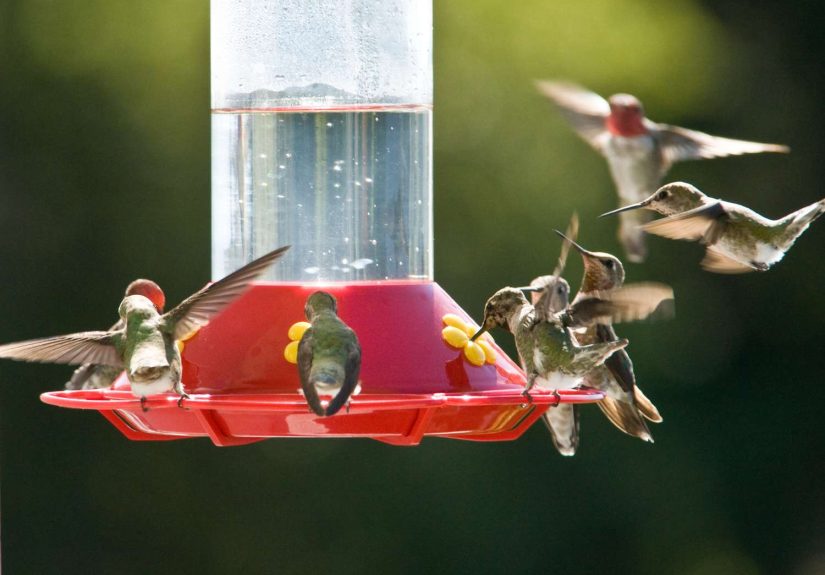
Hummingbird timing follows a slightly different schedule than seed feeders. The best time to put out a hummingbird feeder is shortly before hummingbirds typically arrive in your region.
In the southern United States, that can mean as early as late winter or very early spring. In mid-latitude states, many people put feeders out in April. Farther north, early May is often more realistic. The goal is simple: have the feeder ready before or just as the first migrants appear.
And in fall? Leave it up for a little while after your usual hummingbirds seem to disappear. Late migrants may still come through and appreciate the extra energy. You are not trapping them. You are basically running a well-timed airport snack kiosk.
Best Practices for Hummingbird Feeders
- Use a simple mixture of 1 part white sugar to 4 parts water
- Do not add red dye
- Place feeders in shade when possible
- Change nectar every few days, and more often in hot weather
- Clean feeders thoroughly and regularly
Hummingbird feeders are wonderful, but they are not low-maintenance. Warm sugar water can go bad quickly, so summer laziness and hummingbird care are not a good combo.
Best Time of Day to Fill Bird Feeders
Season matters most, but time of day matters too. The best time to refill bird feeders is usually early morning or late afternoon.
Birds are often most active after sunrise, when they need to refuel after the night. Late afternoon is another useful time because birds often feed again before roosting. In winter especially, topping off feeders before evening helps birds pack in extra calories before temperatures drop.
If your feeder runs empty every day, refill it before the breakfast rush. Backyard birds may not leave online reviews, but they absolutely notice.
Should You Feed Birds Year-Round?
You can, as long as you do it responsibly. Year-round feeding is perfectly reasonable in many places, and plenty of bird lovers enjoy it. But the better question is not “Can I feed birds all year?” It is “Can I maintain the feeders properly all year?”
If the answer is yes, year-round feeding can provide enjoyment for you and a useful supplement for birds. If the answer is no, it is better to focus on your strongest seasons: late fall, winter, and migration.
Birds do not become helpless if you stop feeding them. Feeders supplement wild food; they do not replace nature entirely. Even regular feeder visitors usually forage from multiple sources across the landscape.
How to Match the Feeder to the Season
Best Winter Feeders
- Tube feeders with black-oil sunflower seed
- Hopper feeders with sunflower, safflower, or peanut blends
- Suet feeders for woodpeckers, nuthatches, and chickadees
- Platform feeders for juncos, doves, and ground-feeding species
Best Spring and Fall Feeders
- Seed feeders for migrants and local birds
- Mealworm feeders for bluebirds and insect eaters
- Nectar feeders for hummingbirds and orioles, depending on region
Best Summer Feeders
- Hummingbird feeders
- Oriole feeders
- Mealworm feeders
- Small, carefully maintained seed feeders in the shade
Signs It Is the Wrong Time to Put Out a Bird Feeder
Sometimes the best answer is “not right now.” Hold off, or take feeders down temporarily, if:
- You live in bear country and bears are active
- You cannot clean the feeders regularly
- Seed is getting wet, moldy, or clumped in humid weather
- You see sick birds visiting the feeder
- Your feeder location creates obvious risk from predators or window strikes
If sick birds show up, remove feeders for a while, clean everything thoroughly, and rake up seed debris underneath. Crowding is convenient for birdwatchers, but germs also love a popular restaurant.
So, When Is the Best Time to Put Out Your Bird Feeders?
If you want one clean, confident answer, here it is: the best time to put out your bird feeders is late fall, and the best time to keep them stocked is through winter and migration.
If you want the fuller, more honest answer, it looks like this:
- Best overall season: Late fall through winter
- Best bonus seasons: Spring and fall migration
- Best summer approach: Feed selectively, clean obsessively, use shade
- Best hummingbird timing: Put feeders out shortly before arrival in your region
- Biggest exception: In bear country, remove feeders while bears are active
In other words, the “best time” is not just about the calendar. It is about matching your feeding habits to weather, wildlife, and your ability to keep everything clean and safe.
A Few Real-World Experiences From the Backyard
The first time I put out a bird feeder, I expected instant wildlife magic. I had the seed, the hook, the optimism, and the absolutely unreasonable belief that birds would appear within twelve minutes like I had ordered them with expedited shipping. Instead, nothing happened. For two days, the feeder hung there like a decorative lantern filled with disappointment. Then, on the third morning, one chickadee landed, grabbed a seed, and flew off. That one tiny visitor felt like a grand opening with fireworks.
What I learned quickly is that timing changes everything. In late fall and winter, the feeder became a neighborhood hotspot. On freezing mornings, I could count on a rotation of chickadees, titmice, cardinals, and a woodpecker that arrived with the confidence of someone who pays property taxes. The colder the weather got, the busier the feeder seemed to become. During snow, it felt like every bird in the zip code had received the same memo.
Spring brought a totally different energy. The feeder traffic became less predictable but more interesting. Some days I would see the regular local birds; other days I would get a surprise migrant that looked like it had taken a wrong exit and stopped for gas. The yard sounded louder too. The birds were not just eating. They were singing, chasing, flirting, arguing, and generally acting like spring had turned the whole place into a small, feathery opera.
Summer taught me humility. I learned that bird feeding in hot weather is less about generosity and more about maintenance. Seed spoiled faster than I expected, and one humid week taught me that “I’ll clean it tomorrow” is not a solid wildlife strategy. The hummingbird feeder, however, was worth every bit of effort. Once I switched to a smaller feeder, changed the nectar more often, and kept it in the shade, activity picked up. Watching hummingbirds zip in like tiny caffeinated drones made the extra work feel completely justified.
Then there was the bear lesson, courtesy of a friend in a wooded area who thought one little feeder could not possibly matter. It mattered. The bear did not nibble politely. It treated the setup like an all-inclusive resort and left behind a bent pole, scattered seed, and a new household rule: no feeders while bears are active. That story permanently upgraded my respect for local wildlife guidance.
Over time, the best rhythm turned out to be simple. Put feeders out as the weather cools. Keep them clean. Refill them before cold snaps. Adjust in spring. Be choosy in summer. Watch for local risks. The birds do not need perfection, but they definitely reward consistency. And honestly, that may be the best part of feeding birds. You begin with a question about timing, but somewhere along the way, you end up paying closer attention to weather, seasons, migration, and the everyday drama happening just outside your window. Not bad for a hobby that starts with a bag of sunflower seeds.