Table of Contents >> Show >> Hide
- Quick Definition: What Does MYF Mean?
- The Most Common Meaning: MYF = “Miss Your Face”
- The Second Common Meaning: MYF = “My Fault”
- Other Meanings of MYF (Yes, There Are More)
- How to Tell Which Meaning Someone Intended
- Where You’ll See MYF Used
- MYF vs. Similar Text Slang (So You Don’t Overthink It)
- Should You Use MYF? (A Practical Guide)
- FAQ: MYF Meaning in Text
- Conclusion
- Extra: of Real-World “MYF” Experiences (Because Context Is King)
You’re mid-scroll, half-awake, living your best “I’ll reply in a minute” life… and then someone hits you with:
“MYF”. Three letters. Zero context. Maximum confusion.
Here’s the good news: MYF usually isn’t a secret code for joining a society of texting wizards.
It’s a piece of modern slang that can mean a couple different things depending on the vibe of the conversation.
And yesthose meanings can be wildly different, like “aww” versus “oops” versus “please mind your business.”
Quick Definition: What Does MYF Mean?
In texting and social media, MYF most commonly means:
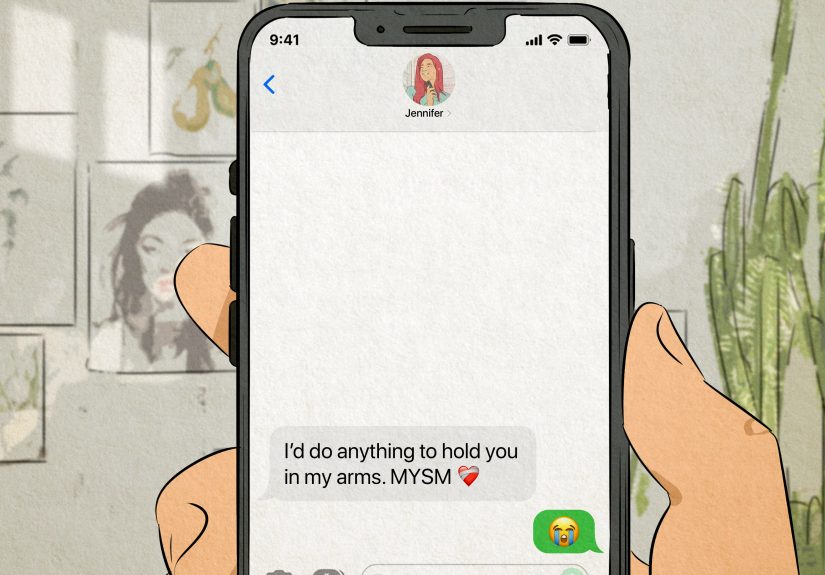
“Miss Your Face.” It’s a playful, affectionate way to say you miss seeing someone.
But (because the internet can’t leave well enough alone), MYF can also mean:
“My Fault.” In some contexts, it’s a quick, casual apologylike “my bad.”
Less commonly, you might see MYF used with more intense meanings (including profanity).
That’s why context isn’t optional hereit’s the whole game.
The Most Common Meaning: MYF = “Miss Your Face”
When MYF means “Miss Your Face”, it’s basically the digital version of waving at someone across a room
and thinking, “I like having you in my life… and also I miss your actual face.”
It’s warm, casual, and usually used between friends, partners, or close family.
When People Use “Miss Your Face”
- Long-distance moments: travel, busy schedules, different time zones
- After a long gap: “We haven’t hung out in forever” energy
- After seeing an old photo: nostalgia hits, feelings appear
- Light flirting: affectionate but not overly serious
Examples of MYF (“Miss Your Face”) in Texts
Friend-to-friend:
“It’s been way too long. MYF 😭”
“Saw that meme and immediately thought of you. MYF.”
“When are you back in town? MYF!”
Romantic / affectionate:
“MYF. I wish you were here.”
“Goodnight. MYF ❤️”
“Stop being cute from far away. MYF.”
How to Reply (Without Making It Weird)
The safest replies match the warmth and keep it simple:
- “MYF too! When are we fixing this?”
- “Aww. Miss youlet’s plan something.”
- “Same. Face-missing is real.”
- “Okay fine, I’ll allow you to miss my face 😌”
If you’re not sure whether it’s flirty or friendly, reply friendly first.
You can always dial up the flirt laterlike adding hot sauce after tasting the soup.
The Second Common Meaning: MYF = “My Fault”
When MYF means “My Fault,” it’s a fast way to take responsibility for something small.
Think: late replies, misunderstandings, posting the wrong thing, forgetting a plan, or accidentally starting a group chat debate about pineapple on pizza.
Clues It Means “My Fault”
- The conversation is about a mistake, confusion, or a minor mess-up
- It’s paired with “sorry,” “oops,” “my bad,” or a facepalm emoji
- The tone is corrective, not affectionate
Examples of MYF (“My Fault”) in Texts
“MYF, I read that wrong.”
“OopsMYF. I thought we said 7, not 6.”
“MYF, I sent that to the wrong chat 😭”
How to Reply
- “All good!”
- “No worriesthanks for clarifying.”
- “It happens. We’re good.”
In other words: don’t turn a tiny “MYF” into a courtroom drama.
Most of the time it’s just a quick “my bad” and everyone moves on.
Other Meanings of MYF (Yes, There Are More)
Here’s where things get spicy. Because MYF is short, it can be repurposed.
Some meanings are niche, some are platform-specific, and some are the kind you definitely don’t want to use with your boss.
MYF as a Profanity-Based Phrase (Use with Caution)
In some corners of the internet, MYF has been used as shorthand for a profanity phrase such as
“Mind Your F” (implying “mind your business” in a rude way) or other “my f” phrasing used for emphasis.
If the message feels aggressive, confrontational, or heated, assume it’s not the cute “Miss Your Face” version.
Practical tip: If you wouldn’t say it out loud in a grocery store aisle, don’t send it in a text.
(And if you would say it out loud in a grocery store aisle… you’re braver than most.)
MYF as “My Favorite” (Occasional, Context-Driven)
Sometimes MYF is used as a shorthand for “my favorite,” especially in comments or captions.
This one usually shows up near compliments, rankings, or “top-tier” content.
Examples:
“This song is MYF.”
“You’re MYF human.”
“That place is MYF for brunch.”
MYF as an Organization/Group Acronym (Rare in Texting)
Outside of slang, MYF can stand for all kinds of official terms (youth groups, funding programs, sports leagues, etc.).
If you’re seeing MYF in a work email, a school context, or an event flyer, it’s probably not “Miss Your Face.”
It’s probably something with a committee and at least one spreadsheet.
How to Tell Which Meaning Someone Intended
When one acronym has multiple meanings, you don’t need psychic powersyou need context cues.
Here’s a quick checklist you can run in your head in about two seconds.
1) Check the Emotional Temperature
- Sweet / affectionate: likely “Miss Your Face”
- Apologetic / corrective: likely “My Fault”
- Annoyed / confrontational: possible profanity-based meaning
2) Look for Emoji “Body Language”
Emojis are basically the facial expressions of texting. They often decide what MYF means:
- ❤️🥺😭😍 → usually “Miss Your Face”
- 😬🤦♂️😅 → usually “My Fault”
- 😒💀 (plus a tense convo) → could be the rude version
3) Read the Sentence Around It
“MYF, I didn’t mean that” is apology-coded. “MYF, come back already” is feelings-coded.
If it still doesn’t click, don’t guessjust ask.
4) Use the Low-Drama Clarifier
If you’re unsure, try:
“WaitMYF as in miss your face or my fault?”
It’s friendly, direct, and prevents you from replying “Aww I miss you too” to someone who actually meant “Oops, that was on me.”
(That’s a real-life plot twist you don’t need.)
Where You’ll See MYF Used
MYF meaning in text isn’t locked to one app. But usage patterns shift a bit depending on the platform:
Text Messages & iMessage
You’ll see both “Miss Your Face” and “My Fault,” especially between friends or partners who already share a slang vocabulary.
Instagram & Snapchat
“Miss Your Face” pops up a lot in DMs and story replies because those apps are basically built for quick emotional check-ins.
“My Fault” also shows up when someone replies fast after a misunderstanding.
TikTok Comments
“My Fault” can show up when someone corrects themselves (“MYF, I had the wrong info”).
TikTok is also where slang meanings can shift quickly, so context matters even more.
Gaming Chats & Group Chats
Short apologies (“MYF”) can be handy when typing quickly matters.
But “Miss Your Face” also shows up in friend groupsusually with jokes, teasing, and the occasional dramatic “MYF WHERE HAVE YOU BEEN.”
MYF vs. Similar Text Slang (So You Don’t Overthink It)
If You Mean “Miss Your Face”
- IMY = I miss you (simple, classic)
- Miss u = the minimalist approach
- Can’t wait to see you = clearer, slightly more serious
If You Mean “My Fault”
- MB = my bad
- SRY / sorry = direct apology
- That’s on me = accountability with full sentences (look at you, mature)
If you want maximum clarity (especially with someone older, professional, or not deep into internet slang),
spelling it out is often the best move.
Should You Use MYF? (A Practical Guide)
You can absolutely use MYFjust pick the right meaning for the right audience.
Here’s the easy rule: only use MYF if you’re confident the other person will interpret it correctly.
Use MYF When…
- You’re texting someone you’re close with (friends, partner, close family)
- The conversation already includes slang and casual shorthand
- You’re matching the tone they’ve already set
Avoid MYF When…
- You’re messaging a coworker, client, teacher, or anyone who signs emails with “Warm regards”
- You’re apologizing for something serious (use real wordsthis is not the time for speed-running a message)
- You suspect the acronym could be misread (because it can)
FAQ: MYF Meaning in Text
Is MYF a Gen Z thing?
It shows up across age groups, but it’s most common among people who regularly use texting shorthand and social media slang.
Like most slang, it spreads through platforms and friend groups, not official age requirements.
Is MYF common?
It’s not as universal as “LOL” or “BRB.” You’re more likely to see it in certain circles or on specific platforms.
That’s also why it can confuse peopleit’s familiar to some, totally random to others.
Can MYF mean something else entirely?
Yes. Outside texting slang, MYF can be an acronym for organizations, programs, or technical terms.
If the context looks formal, it’s probably not “Miss Your Face.”
Conclusion
MYF meaning in text usually lands in one of two buckets:
“Miss Your Face” (cute and affectionate) or “My Fault” (quick apology).
Less commonly, it can carry stronger meaningsso context is everything.
When in doubt, ask a quick clarifying question and save yourself from accidentally sending a heartfelt reply to a typo-level apology.
Extra: of Real-World “MYF” Experiences (Because Context Is King)
If you’ve ever felt personally victimized by a three-letter acronym, welcomeyou’re among friends.
One of the funniest things about MYF is how it can create completely different scenes depending on timing and tone.
In real life, people don’t send acronyms in a vacuum; they send them in the middle of busy days, half-finished thoughts,
and conversations that are moving at the speed of caffeine.
Picture this: a friend moves away for a new job. You stay in touch, but weeks go by with the usual “we should hang soon”
energy that never becomes an actual calendar invite. Then one day they send, “MYF 😭.”
If you know the friend is sentimental (or at least emotionally available on Tuesdays), it reads as
“Miss your face,” and it feels weirdly sweetlike receiving a tiny digital hug.
You reply with something equally warm, maybe a joke, maybe a plan: “MYF too. When are you back?”
Suddenly the acronym did its job: it nudged the friendship back into motion without making it overly dramatic.
Now flip the situation. You’re in a group chat planning dinner. Someone writes “7pm,” you read it as “9pm,”
and you show up late like you’re starring in a personal sitcom.
When you realize the mistake, you send: “MYF 😅.”
In that context, nobody thinks you’re missing anyone’s facethey think you’re admitting you messed up.
It’s quick, it’s casual, it’s basically the texting equivalent of raising your hand and saying,
“Yep, that one’s on me.” The group chat forgives you (mostly), and you live to be late another day.
The best (and slightly chaotic) “MYF” experiences happen when the meanings collide.
Someone you’re newly talking tomaybe a crush, maybe a new friendtexts “MYF” after a couple days of silence.
Your brain has to pick a lane: are they saying “Miss your face” (cute!), or are they saying “My fault” (apology for disappearing)?
If you guess wrong, you can accidentally respond like a romance novel to what was basically an “oops.”
That’s why “MYF is ambiguous” isn’t just a dictionary noteit’s a real texting survival skill.
Over time, most people develop a pattern. Some only use MYF as “Miss Your Face” and always pair it with hearts,
crying emojis, or a “come back” message. Others only use it as “My Fault,” usually in fast-moving chats.
And some friend groups create their own house ruleslike using “myf” in lowercase for “my fault” and “MYF” in caps for “miss your face.”
None of this is official, but that’s the point: texting slang is a living language, and your social circle is basically the grammar committee.
The takeaway from real-world use is simple: MYF works best when you already share a vibe with the person.
If you’re close, it’s a shortcut that feels natural. If you’re not, it can feel confusing or even risky.
When clarity matters, use real words. When connection matters and the tone is playful, MYF can be a fun little bridge:
small, quick, and surprisingly effective for three letters that look like they belong on a license plate.