Table of Contents >> Show >> Hide
- The Quick Answer Cheat Sheet
- Step One: Know Your Grey Suit
- The Best Shoe Colors with a Grey Suit
- 1) Black Shoes: The Formal Classic
- 2) Dark Brown Shoes: The Most Versatile Upgrade
- 3) Oxblood/Burgundy Shoes: The “I Know What I’m Doing” Choice
- 4) Medium Brown & Cognac Shoes: Warm, Modern, and Daytime-Friendly
- 5) Tan/Light Brown Shoes: Casual, Crisp, and Warm-Weather Perfect
- 6) White Sneakers (Optional): Only if Your Suit is Casual
- How Formal Do You Need to Look?
- Shoe Style Matters (Not Just Color)
- Don’t Forget the Supporting Cast: Belt, Socks, and Leather Finish
- Outfit Examples You Can Copy-Paste Into Real Life
- Common Mistakes (So You Don’t Become a Cautionary Tale)
- Keeping It Sharp: Quick Shoe Care That Pays Off
- FAQ: Grey Suit Shoe Color Questions People Actually Ask
- Conclusion: Pick the Shoe Color That Matches the Moment
- Real-World Experiences: What I’ve Learned Wearing Grey Suits in the Wild (Extra )
A grey suit is basically the Swiss Army knife of menswear: it works for job interviews, weddings, date nights, and
“I just remembered I have a thing” emergencies. But the shoes? The shoes are the mood-setter. The right pair makes
you look intentional. The wrong pair makes you look like you got dressed in the dark… and not in the cool, runway way.
This guide breaks down what color shoes to wear with a grey suit (light grey, medium grey, and charcoal), how formal
each combo feels, and the little detailsbelt, socks, leather finishthat separate “sharp” from “close enough.”
The Quick Answer Cheat Sheet
- Black shoes: Most formal and safestespecially with charcoal grey suits and business settings.
- Dark brown shoes: The most versatile “smart” optiongreat with medium grey and many charcoal suits (depending on the vibe).
- Oxblood/burgundy shoes: Stylish, confident, and surprisingly easy with greyexcellent for weddings and creative offices.
- Medium brown/cognac shoes: Best with lighter greys and daytime eventspolished but less corporate.
- Tan or light brown shoes: Most casualperfect for light grey suits in spring/summer or outdoor events.
- Clean white sneakers (optional): Only for modern, casual tailoringthink light grey suits and relaxed dress codes.
Step One: Know Your Grey Suit
“Grey” covers a whole range, and your suit’s shade changes what shoe colors look natural.
Think of it like coffee orders:
- Light grey: airy, daytime-friendly, less formal (great in warm weather).
- Medium grey: the all-season MVPprofessional without feeling stern.
- Charcoal grey: dark, serious, and inherently more formal (it’s the suit equivalent of speaking in complete sentences).
Also notice undertones. Some greys lean cool (steelier, bluer), others a bit warm (taupe-ish). Cool greys love black,
oxblood, and cooler browns. Warmer greys can look fantastic with chocolate brown and cognac tones.
The Best Shoe Colors with a Grey Suit
1) Black Shoes: The Formal Classic
If you want the safest, most traditional choice, black dress shoes with a grey suit almost never miss. This pairing is
especially strong with a charcoal grey suit, where black keeps everything crisp and business-appropriate.
Best for: job interviews, formal business meetings, evening events, funerals, and anytime you’d rather be “perfectly appropriate” than “boldly expressive.”
Best shoe styles: black cap-toe Oxfords, sleek wholecuts, minimalist Chelsea boots.
Pro tip: Black shoes demand maintenance. If your shoes are scuffed, everyone will see it. Grey is neutral; it won’t distract from tired leather.
2) Dark Brown Shoes: The Most Versatile Upgrade
Dark brown shoes (think chocolate, espresso, or deep chestnut) are the sweet spot for many people: formal enough for work,
warmer than black, and friendly with most shades of grey. If you’re building a small rotation, a pair of dark brown dress shoes
plus black dress shoes covers a lot of your calendar.
Best for: office wear, weddings, dinners, presentationsbasically “I need to look good, but not like a courtroom sketch artist.”
Best with: medium grey suits, many charcoal suits (especially outside strict formal settings), and textured fabrics like flannel or tweed.
Pro tip: With charcoal, choose very dark brown. If the brown is too light, it can look disconnectedlike the shoes wandered over from a different outfit.
3) Oxblood/Burgundy Shoes: The “I Know What I’m Doing” Choice
Oxblood and burgundy shoes are the secret weapon for grey tailoring. They add depth and personality without screaming for attention.
The red-brown tone plays beautifully against grey’s neutrality, which is why this combo shows up so often in menswear circles.
Best for: weddings, cocktail events, date nights, creative industries, and anytime you want a classic look with a twist.
Best shoe styles: cap-toe Oxfords, brogues/wingtips, monk straps.
Style note: Keep the rest of the outfit calm. Let the shoes be the flavor, not the entire buffet.
4) Medium Brown & Cognac Shoes: Warm, Modern, and Daytime-Friendly
Medium brown or cognac shoes bring warmth and contrast, which looks fantastic with light grey suits and many medium greys.
This is a classic pairing for daytime weddings and smart-casual events where black might feel too stern.
Best for: daytime events, business casual offices, summer weddings, and “smart but approachable” moments.
Best shoe styles: Derbies, brogues, loafers, suede options for casual settings.
Pro tip: Cognac reads a bit more fashion-forward than plain brown. If you want to look current without looking trendy, this is a strong move.
5) Tan/Light Brown Shoes: Casual, Crisp, and Warm-Weather Perfect
Tan shoes with a light grey suit can look fresh and confidentespecially outdoors or in spring/summer.
But tan is the least formal of the classic dress-shoe browns, so it’s not ideal for conservative business settings.
Best for: summer weddings, garden parties, daytime celebrations, travel, and lighter fabrics like linen or cotton suits.
Best shoe styles: loafers, suede derbies, light brogues.
Style note: If your suit is charcoal and your shoes are tan, your outfit is sending mixed signals. That’s not “bold,” it’s confusing.
6) White Sneakers (Optional): Only if Your Suit is Casual
Yes, you can wear sneakers with a grey suitif the suit is unstructured or styled casually (think modern tailoring, minimal tie, maybe no tie at all).
White leather sneakers work best with light grey suits and relaxed dress codes.
Best for: creative workplaces, casual dates, city events, travel days when you still want to look put together.
Rules: clean, minimal, and in good condition. If they look like they’ve survived a music festival, they don’t get to attend the suit event.
How Formal Do You Need to Look?
Shoe color isn’t just about matchingit’s about formality. A quick way to decide is to start with the event, then work backward:
| Occasion | Best Grey Suit Shade | Best Shoe Colors | Safe Shoe Styles |
|---|---|---|---|
| Job interview / formal business | Charcoal or medium grey | Black (or very dark brown in less strict settings) | Cap-toe Oxford, wholecut |
| Wedding (traditional) | Medium grey | Dark brown, oxblood, black | Oxford, derby, monk strap |
| Wedding (daytime/outdoor) | Light or medium grey | Medium brown, cognac, tan, oxblood | Derby, loafer, brogue |
| Business casual / creative office | Light to medium grey | Brown (all shades), oxblood, clean white sneakers | Derby, loafer, Chelsea boot |
| Date night / dinner | Any | Oxblood, dark brown, black | Monk strap, sleek Chelsea |
Shoe Style Matters (Not Just Color)
If color is the headline, shoe style is the tone of voice. You can wear the “right” color and still miss the mark if the shoe style
is too casual (or too loud) for the event.
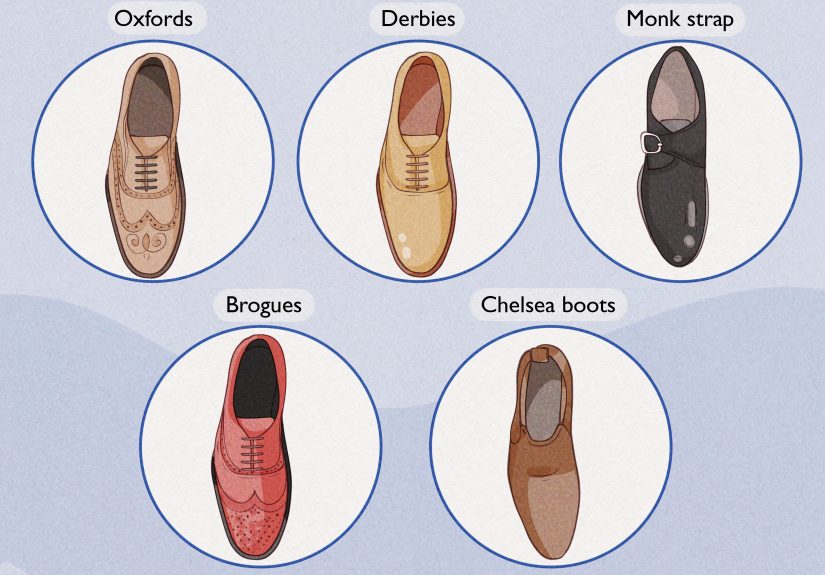
- Oxford: most formal; best for black and dark brown in business/formal settings.
- Derby: slightly less formal; great for brown shades and business casual.
- Monk strap: stylish and sharp; excellent in dark brown or oxblood.
- Loafer: relaxed and modern; great with light/medium grey for daytime events.
- Brogue/wingtip: adds texture; works best outside strict formal environments.
- Chelsea boot: sleek alternative in fall/winter; works well in black or dark brown.
Don’t Forget the Supporting Cast: Belt, Socks, and Leather Finish
Match (or closely coordinate) your belt to your shoes
For most classic menswear outfits, your belt should match your shoes in color family and formality. Exact matching is great,
but “close and coordinated” is usually enoughespecially with textured leathers or suede.
Socks: Usually match your trousers
The safest rule: socks in the grey family (close to your trouser shade) elongate the leg line and keep the outfit clean.
Want personality? Go subtle: charcoal socks with a muted pattern, or a deep burgundy sock when wearing oxblood shoes.
Leather finish: Shine equals formality
Polished calfskin reads formal. Suede reads casual. That’s why tan suede loafers with a light grey suit look breezy and intentional,
while shiny black Oxfords with the same suit look boardroom-ready.
Outfit Examples You Can Copy-Paste Into Real Life
Example 1: The “Nail the Interview” Uniform
- Charcoal grey suit
- White shirt
- Conservative tie (navy, burgundy, or subtle stripe)
- Black cap-toe Oxfords
- Black belt, charcoal socks
This look is classic for a reason: nothing distracts from you. It says “competent” before you say hello.
Example 2: Wedding Guest (Daytime) Without Looking Like the Groom
- Light grey suit
- Light blue shirt or crisp white shirt
- Textured tie (knit navy, soft pattern, or muted floral)
- Medium brown or cognac derbies
- Matching brown belt, pocket square that echoes the tie
Warm shoes + light grey reads celebratory and approachableperfect for photos that will live on someone’s mantle for a decade.
Example 3: Evening Event (Dressy, Not Black Tie)
- Medium-to-charcoal grey suit
- White shirt
- Deep burgundy tie
- Oxblood monk straps
- Oxblood belt, grey socks
The shoes add richness without forcing you into “look at me” territory. It’s confident, not chaotic.
Example 4: Business Casual That Still Means Business
- Medium grey suit (or grey suit separates)
- Open-collar dress shirt (white, light blue, or subtle stripe)
- Dark brown loafers or derbies
- Brown belt (or no belt if tailored with side adjusters)
This combo works because grey is polished, and brown keeps it human. You look like someone people can talk towhile still respecting you.
Common Mistakes (So You Don’t Become a Cautionary Tale)
- Charcoal suit + light brown/tan shoes: the formality levels don’t match.
- Black belt with brown shoes: it breaks the visual line in a distracting way (especially in formal outfits).
- Overly pointy shoes: if your toes could pick a lock, reconsider.
- Ignoring shoe condition: grey suits are clean and neutralscuffs, salt stains, and dull leather stand out fast.
- Too much “statement” at once: loud socks, loud tie, loud pocket square, loud shoespick one star.
Keeping It Sharp: Quick Shoe Care That Pays Off
A grey suit is structured and tidy. Your shoes should match that energy.
- Black leather: regular polishing gives that crisp, formal finish.
- Brown leather: condition occasionally; brown looks better with depth and (light) patina.
- Oxblood: keep it rich with polish in the same color family; avoid turning it into a bright red accident.
- Suede: brush after wear and use a suede eraser for markssuede looks amazing when it looks intentional.
FAQ: Grey Suit Shoe Color Questions People Actually Ask
Can I wear brown shoes with a grey suit?
Absolutely. Brown shoes with a grey suit are one of the most common modern pairings. Just match the brown intensity to the suit:
lighter greys can handle lighter browns; charcoal usually needs dark brown (or black/oxblood) to keep things cohesive.
What color shoes go with a charcoal grey suit?
Black is the safest and most formal. Oxblood/burgundy also looks excellent and is a favorite for stylish occasions. Dark brown can work,
especially if it’s deep and the event isn’t ultra-formal.
Do my shoes have to match my belt?
In classic menswear, yesat least closely. Exact matching is ideal, but “same color family and similar formality” is usually enough.
The more formal the event, the more you should aim for a clean match.
What about grey shoes with a grey suit?
It can work as a tonal look, but it’s harder to pull off than black or brown because the greys must coordinate exactly.
If you want easy and reliable, black, brown, or oxblood will treat you better.
Conclusion: Pick the Shoe Color That Matches the Moment
If you remember nothing else, remember this: black shoes make a grey suit more formal,
brown shoes make it more versatile and approachable, and oxblood shoes make it look styled on purpose.
Choose based on the suit shade and the occasion, keep your belt coordinated, and make sure your shoes look cared for.
A grey suit can do almost anythingyour shoes just tell it which job to take.
Real-World Experiences: What I’ve Learned Wearing Grey Suits in the Wild (Extra )
The first time I wore a grey suit to a big event, I treated shoe color like a minor detaillike choosing a pen.
I grabbed the closest “nice shoes,” congratulated myself for being an adult, and left the house.
Halfway through the night, I realized something: the suit looked fine, but the outfit didn’t look finished. It was like a movie with great actors
and no soundtrack. That’s when it hit meshoes aren’t an accessory with a suit. They’re the foundation.
Over time, I started noticing patterns. When I wore a charcoal grey suit with black Oxfords, people responded to it like a uniform.
Not in a bad waymore like, “This person is here to handle business.” It worked especially well for anything remotely formal:
interviews, presentations, serious dinners, events where you don’t want your outfit to be a conversation starter. The biggest surprise?
Black shoes made the whole look feel more expensive, even when the suit wasn’t. Clean lines do a lot of heavy lifting.
Then I tried dark brown shoes. That was the turning point. Suddenly the same grey suit felt less strict and more wearable.
Dark brown derbies with a medium grey suit became my go-to for weddings and work eventspolished, but not intimidating.
I also learned a sneaky truth: brown shoes age better socially. Black shoes are “perfect or bust.” Brown shoes can pick up a little character
and still look great, especially if you keep them conditioned. A small crease in brown leather reads like “lived-in quality.”
The same crease in black can read like “forgotten in the closet.”
Oxblood was the most fun lesson. The first time I wore oxblood shoes with a grey suit, I worried it would be too much.
Instead, it looked intentionallike I’d planned the outfit rather than assembling it under pressure.
The trick I learned is balance: if your shoes have color, keep the rest of the outfit calm.
A white shirt, a dark tie, and a pocket square that quietly echoes the shoe tone (not matches it aggressively) makes the whole look feel coherent.
Oxblood is also a cheat code for photos: it pops just enough against grey without looking loud.
And yes, I’ve made the classic mistake: charcoal suit, shoes that were “brown-ish,” and a belt that didn’t match.
In the mirror it looked okay. In real light it looked like three different outfits negotiating a peace treaty.
That’s when I started treating coordination like a simple system:
pick the suit shade, pick the shoe formality, then match the belt to the shoes. After that, everything else is just seasoning.
The most practical takeaway? If you want the easiest life, own two pairs: black cap-toe Oxfords and dark brown derbies (or Oxfords).
If you want style range, add oxblood. If you want summer charm, add tan suede loafers. Then your grey suit becomes a true all-purpose tool:
you can dress it up, dress it down, and always look like the choice was deliberatebecause it was.