Table of Contents >> Show >> Hide
- Introduction: The Baron Who Made Natural History Look Like an Adventure
- Who Was Walter Rothschild, 2nd Baron Rothschild?
- Ranking Walter Rothschild’s Major Achievements
- Walter Rothschild Rankings by Category
- Public Opinions About Walter Rothschild
- Why Walter Rothschild Still Matters Today
- Specific Examples That Define His Legacy
- Walter Rothschild’s Strengths and Weaknesses
- Experience Section: How Readers Can Connect With Walter Rothschild’s Story Today
- Conclusion: How Should Walter Rothschild Be Ranked?
Note: The “rankings” in this article are editorial evaluations based on Walter Rothschild’s documented achievements, public legacy, scientific influence, and historical reputation. They are not official institutional rankings.
Introduction: The Baron Who Made Natural History Look Like an Adventure
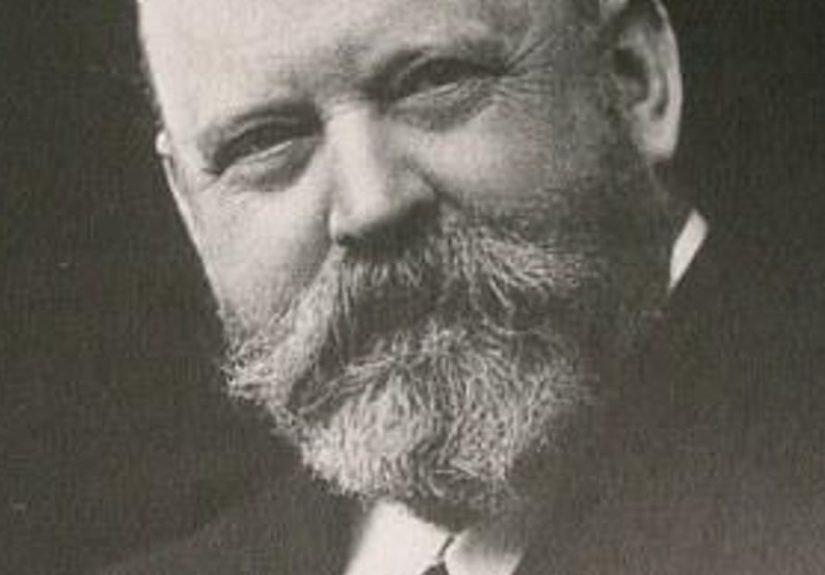
Walter Rothschild, 2nd Baron Rothschild, was not the kind of aristocrat who quietly sat in a drawing room polishing inherited silver. He preferred butterflies, birds, giant tortoises, cassowaries, and, most famously, zebras trained to pull a carriage. Born Lionel Walter Rothschild in London on February 8, 1868, he became one of the most unusual figures of the late Victorian and early 20th-century world: banker by family expectation, politician by social position, zoologist by obsession, and museum founder by childhood prophecy.
At age seven, Rothschild reportedly announced that he would create a museum. Many children say ambitious things at seven. Some say they will become astronauts; some declare war on broccoli. Rothschild actually followed through. By adulthood, he had built a vast natural history museum at Tring, assembled one of the greatest private zoological collections ever known, and left a legacy that still influences scientists, museum visitors, historians, and anyone who enjoys a biography with a few eccentric plot twists.
This article ranks Walter Rothschild’s achievements and examines opinions about his life, from his scientific brilliance to his complicated political symbolism. His story is not just about privilege. It is about what happens when wealth, curiosity, social rank, and a very determined love of animals collide.
Who Was Walter Rothschild, 2nd Baron Rothschild?
Walter Rothschild was the eldest son of Nathan Mayer Rothschild, 1st Baron Rothschild, and Emma Louise von Rothschild. As heir to one of Europe’s most famous banking families, he was expected to enter finance and continue the family’s commercial influence. He did work at N. M. Rothschild & Sons for years, but banking never captured his imagination the way beetles, birds, butterflies, and mammal specimens did.
Educated partly at home because of delicate health, Rothschild later studied in Germany and at Magdalene College, Cambridge. His lifelong fascination with zoology became more than a gentleman’s hobby. He hired expert curators, built research collections, published scientific work, and turned Tring into an internationally recognized center for natural history.
He served as Member of Parliament for Aylesbury from 1899 to 1910 and inherited the title of 2nd Baron Rothschild in 1915. In 1917, he became historically linked to the Balfour Declaration when British Foreign Secretary Arthur Balfour addressed the famous letter to him for transmission to the Zionist Federation. This political connection gives his legacy a global dimension far beyond zoology.
Ranking Walter Rothschild’s Major Achievements
1. Natural History Collector: Elite-Level Legacy
Walter Rothschild ranks among the most important private natural history collectors in modern history. His collection at Tring included millions of specimens across birds, insects, eggs, mammals, reptiles, and other animal groups. This was not a casual weekend collection stored in dusty drawers. It was a scientific infrastructure, complete with curators, taxidermists, researchers, publications, and global networks of collectors.
His museum opened to the public in 1892 and became known for its scale, seriousness, and occasional theatrical flair. The collection helped researchers study biodiversity, classification, extinction, island species, and animal variation. In terms of private zoological collecting, Rothschild belongs near the very top.
2. Museum Founder: A Lasting Public Contribution
As a museum founder, Rothschild also ranks extremely high. The Natural History Museum at Tring remains one of his most visible legacies. Built to house his growing collection, it gave the public access to the diversity of the animal kingdom at a time when natural history was both a scientific pursuit and a public fascination.
What makes the museum remarkable is that it was not merely a display of aristocratic wealth. It became a working scientific institution. Rothschild employed specialists such as Ernst Hartert for birds and Karl Jordan for insects, both of whom helped turn the collection into a serious research resource. The museum’s journal, Novitates Zoologicae, published research based on specimens held at Tring, strengthening Rothschild’s place in scientific history.
3. Zoological Science Patron: Exceptionally Influential
Rothschild’s own scientific reputation is closely tied to his ability to support, organize, and publish research. He was not simply buying rare animals because they looked interesting, though some of them certainly did. He helped create a system in which specimens were collected, studied, cataloged, compared, and shared with the scientific world.
Many species and subspecies were described from material connected to his museum. His collections continue to matter because preserved specimens offer evidence that modern researchers can revisit with new methods, including genetics, climate studies, and conservation science. A bird skin, egg, or insect collected more than a century ago may still answer questions that scientists did not yet know how to ask in Rothschild’s lifetime.
4. Political Figure: Historically Notable, But Not Dominant
As a politician, Walter Rothschild ranks as historically notable rather than transformational. He served as MP for Aylesbury, but he is not remembered primarily for parliamentary speeches, legislative reforms, or ideological leadership. His political significance comes mostly from social position, Anglo-Jewish leadership, and his role as the recipient of the Balfour Declaration.
The Balfour Declaration remains one of the most discussed documents in modern Middle Eastern history. Rothschild’s role was important, but it is best understood as part of a wider diplomatic and political network involving British officials, Zionist leaders, wartime strategy, and competing national claims. He was a key recipient and symbolic representative, not the sole architect of the policy.
5. Public Personality: Eccentric Icon Status
In the category of unforgettable aristocratic personalities, Rothschild ranks very high. He is widely remembered for his zebra-drawn carriage, which he used to challenge assumptions that zebras could not be trained. Whether one views this as scientific demonstration, aristocratic theater, or top-tier historical mischief, it made him famous.
He also kept exotic animals at Tring Park, including kangaroos, emus, cassowaries, and giant tortoises. These details make him unusually vivid. Plenty of historical figures have titles. Fewer have titles, scientific publications, a giant museum, and a zebra commute.
Walter Rothschild Rankings by Category
| Category | Ranking | Reason |
|---|---|---|
| Private Natural History Collectors | Top Tier | Built one of the largest private zoological collections ever assembled by one person. |
| Museum Founders | Excellent | Founded the Tring museum, which remains important for public education and research. |
| Zoological Patrons | Outstanding | Supported curators, collectors, scientific publishing, and global research networks. |
| Political Leaders | Moderate | Served in Parliament and held symbolic political importance, but was not chiefly known as a legislator. |
| Memorable Eccentrics | Legendary | Zebra carriage. Giant tortoises. Cassowaries. Enough said. |
Public Opinions About Walter Rothschild
The Admirers: A Visionary Collector and Scientific Benefactor
Supporters and historians often admire Rothschild as a visionary who used his wealth for knowledge. He could have spent his life simply enjoying family privilege, but instead he built an institution that served science and the public. His museum was not a vanity cabinet; it was a serious archive of life on Earth.
From this viewpoint, Rothschild represents the best side of private patronage. He funded research, preserved specimens, employed experts, and made natural history accessible to visitors. His early passion became a public resource, and that is no small achievement.
The Critics: A Product of Imperial-Age Collecting
Modern opinions are more complicated. Rothschild’s collecting took place during an era when wealthy European institutions acquired biological specimens from around the world, often through colonial networks and unequal power structures. Today, museums increasingly examine how collections were built, who collected them, and what ethical responsibilities follow.
Critics may argue that massive collecting removed animals from ecosystems and reflected an age when nature was often treated as something to possess. Even when motivated by science, Victorian and Edwardian collecting could be extractive. Rothschild’s legacy must therefore be viewed with both admiration and context.
The Balanced View: Brilliant, Complicated, and Still Relevant
The fairest opinion is that Walter Rothschild was both a brilliant natural history patron and a man of his time. His methods reflected the scientific culture of his era, while his results continue to benefit research. He was not a modern conservationist in every sense, but he did preserve knowledge that helps modern conservation science.
His legacy asks a useful question: can work created under old assumptions still serve new ethical and scientific goals? In Rothschild’s case, the answer is yes, but only if we discuss the full story honestly.
Why Walter Rothschild Still Matters Today
Walter Rothschild matters because natural history collections matter. In an age of climate change, extinction, habitat loss, and genetic research, museum specimens are not just old curiosities. They are time capsules. They show what species looked like, where they lived, how they varied, and how populations changed over time.
The Tring collections and related Rothschild materials help researchers study birds, insects, eggs, extinct species, island ecosystems, and the history of biodiversity. His work also matters to museum history because it shows how private collections could evolve into public scientific institutions.
For general readers, Rothschild matters because his life is wonderfully readable. He was shy yet bold, privileged yet personally driven, expected to become a banker yet determined to build a museum. He turned childhood curiosity into an institution. That is the sort of plot development even a novelist might call “a bit much,” but history allowed it.
Specific Examples That Define His Legacy
The Zebra Carriage
The zebra carriage is the image most people remember first. Rothschild trained zebras to pull a carriage and famously drove them in public. The story endures because it captures his personality: scientific curiosity with a flair for spectacle. It also makes a useful reminder that communication matters. A dramatic demonstration can make an idea unforgettable.
The Giant Tortoises
Rothschild kept many giant tortoises and showed interest in protecting them from decline. While his approach was not identical to modern wildlife conservation, it reflected concern for species at risk. His fascination with rare and unusual animals helped preserve knowledge of creatures that were already under pressure.
The Cassowary Collection
Rothschild was especially fascinated by cassowaries, the large flightless birds of Australia and New Guinea. His collection of cassowary specimens became unusually important because these birds are rare in museum collections. Researchers can still use such material to study anatomy, variation, and evolution.
The Tring Museum
The museum at Tring is the heart of Rothschild’s legacy. It transformed private passion into public education and scientific infrastructure. A good museum does not merely store the past; it keeps asking new questions. That is why Rothschild’s work remains alive rather than frozen behind glass.
Walter Rothschild’s Strengths and Weaknesses
Strengths
- Extraordinary focus: Rothschild turned childhood curiosity into a lifelong scientific project.
- Institution-building: He created a museum, library, research network, and publication platform.
- Scientific generosity: His collections were ultimately preserved for public and scholarly use.
- Memorable communication: His eccentric public image made natural history feel exciting.
Weaknesses
- Limited political distinction: His parliamentary career was less significant than his scientific legacy.
- Era-bound collecting ethics: His work reflected a period when large-scale specimen gathering was rarely questioned as it is today.
- Dependence on wealth: His achievements were inseparable from family resources, which complicates simple “self-made genius” narratives.
- Public mythmaking: Some popular stories emphasize eccentricity so much that they can overshadow his serious scientific influence.
Experience Section: How Readers Can Connect With Walter Rothschild’s Story Today
Experiencing the story of Walter Rothschild today is less about memorizing aristocratic titles and more about learning how curiosity can become a lifelong project. Imagine walking into a natural history museum and seeing rows of birds, insects, mammals, and strange creatures from distant islands. At first, it may feel like stepping into a beautifully organized attic of the planet. But with Rothschild, the experience becomes more layered. Every specimen hints at travel, classification, obsession, money, science, and the human desire to understand the living world.
For students, Rothschild’s life offers a useful lesson in following a passion seriously. He did not merely say, “I like animals.” He built systems around that interest. He collected, hired experts, supported research, published findings, and created a museum that outlived him. That is an important model for anyone who wants to turn a personal interest into meaningful work. Passion is charming, but structure is what makes it powerful.
For museum visitors, Rothschild’s legacy encourages slower looking. A bird specimen is not just a bird specimen. It may represent a vanished habitat, an extinct population, a historical collecting journey, or a clue for modern science. When visitors understand that, museum galleries become less like storage rooms and more like libraries written in feathers, shells, bones, and wings.
For writers and content creators, Walter Rothschild is a reminder that the best biographies usually contain contrast. He was shy but spectacular. He came from banking wealth but preferred zoology. He belonged to elite political circles yet is remembered most warmly for animals. He was both serious scientist and public eccentric. That combination makes his story ideal for articles, documentaries, educational content, and museum storytelling.
For modern conservation-minded readers, the experience is more complicated. Rothschild’s collections are scientifically valuable, but they also come from an age when collecting was often aggressive by today’s standards. This tension is worth sitting with. It teaches that history does not always divide neatly into heroes and villains. Sometimes it gives us people whose work must be appreciated, questioned, and reinterpreted at the same time.
For anyone building a career, Rothschild’s life offers one more practical takeaway: expertise often grows from unusual combinations. His influence came from wealth, yes, but also from persistence, collaboration, curiosity, and willingness to fund specialists who knew more than he did. That last part matters. Smart people do not always need to be the smartest person in the room. Sometimes their greatest achievement is building the room, inviting the right minds into it, and making sure the work continues after they are gone.
In that sense, Walter Rothschild’s story remains surprisingly modern. Whether you are interested in science, museums, history, politics, or simply the mental image of an aristocrat trying to make zebras behave like carriage horses, his life rewards attention. It is educational, odd, grand, flawed, and unforgettable. In other words, it is history doing its best impression of a very well-curated circus.
Conclusion: How Should Walter Rothschild Be Ranked?
Walter Rothschild, 2nd Baron Rothschild, should be ranked as one of the most influential private natural history collectors and museum founders of his era. His political career was respectable but secondary. His scientific legacy, however, remains exceptional. He built a museum, supported global research, preserved immense collections, and helped make natural history both scholarly and spectacular.
Opinions about him should remain balanced. He was a visionary patron of science, an eccentric public figure, and a representative of a collecting culture that modern readers must examine critically. His greatness lies not in being simple, but in being consequential. He left behind more than stories of zebras and tortoises. He left behind an institution, a research legacy, and a model of curiosity pursued with almost unreasonable commitment.
If history had a category for “Most Likely to Turn a Childhood Bug Collection Into a World-Class Museum,” Walter Rothschild would not merely rank first. He would probably arrive at the ceremony in a zebra-drawn carriage.