Table of Contents >> Show >> Hide
- Before We Compare: A Quick Safety + Code Reality Check
- What Are Wire Nuts?
- What Are Wago Lever Nuts?
- Wago Lever Nuts vs. Wire Nuts: The Real-World Comparison
- 1) Installation Consistency: “Skill Issue” vs. “System Design”
- 2) Solid vs. Stranded Wire: Fixture Work Changes the Game
- 3) Box Space and Wire Management: Compact vs. Organized
- 4) Rework, Troubleshooting, and “I Need To Change One Thing”
- 5) Cost: Pennies vs. “Okay, But Why Is Plastic This Expensive?”
- 6) Reliability and Safety: Both Can Be Excellent (When Correctly Used)
- Code and Inspection: Will Lever Nuts “Pass” Like Wire Nuts?
- Which Should You Pick? Scenario-Based Recommendations
- Common Mistakes That Cause Problems (No Matter Which Connector You Use)
- Bottom Line: The Best Connector Is the One You’ll Use Correctly
- Experiences From the Real World: What People Notice After Using Both (500+ Words)
You’re standing in the electrical aisle, staring at two tiny pieces of plastic that somehow hold the power to keep your lights on
(and prevent your weekend project from turning into a “why does it smell like toast?” situation). On one side: the classic wire nut,
the OG twist-on connector that’s been living in junction boxes since forever. On the other: Wago lever nuts, the sleek little
clamp-and-go connectors that look like they were designed by someone who hates wrist strain and loves tidy wiring.
So… which should you pick? The honest answer is: it depends on what you’re connecting, how often you’ll need to undo it, and how much
you value speed, consistency, and a clean box. Let’s break it downclearly, calmly, and with just enough humor to keep your brain from
crossing its own wires.
Before We Compare: A Quick Safety + Code Reality Check
Splicing conductors is not “arts and crafts.” If you’re not trained or experienced, the safest move is to hire a licensed electrician.
Electrical work can shock, burn, or start fires if done incorrectly. Even professionals treat connections seriously because loose or
improper connections can overheat over time.
If you’re reading this for general knowledge (or to help decide what to buy for a qualified person to install), here’s the big picture:
electrical splices must use connectors that are listed/approved for the purpose and used according to their instructions. Also,
connections belong inside approved enclosures (like junction boxes), and they need to remain accessible in most typical situations.
What Are Wire Nuts?
Wire nuts (usually meaning twist-on wire connectors) are the traditional way to join two or more wires. You align stripped conductors,
twist on the connector, and a metal spring inside bites down to hold everything together. They’re inexpensive, widely available, and
come in different sizes (often color-coded) for different wire combinations.
Why Wire Nuts Are Still Everywhere
- They’re cheap and sold in huge multi-packs.
- They’re compact, which matters when a junction box is already packed.
- They handle bundles wellespecially multiple solid copper conductors.
- They’re familiar to inspectors and electricians because they’ve been the default for decades.
The Catch
Wire nuts are reliable when they’re properly sized and properly installed. But “properly” is doing a lot of work in that sentence.
A sloppy twist, the wrong size connector, uneven conductor lengths, nicked wire strands, or mixing wire types the connector isn’t meant
for can all weaken the connection. In other words: wire nuts are greatunless they’re not.
What Are Wago Lever Nuts?
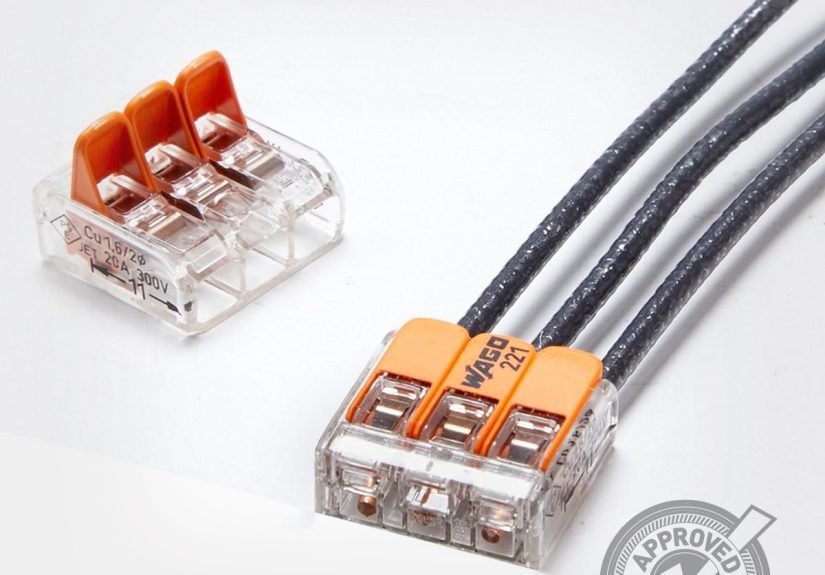
Wago lever nuts (often referring to Wago’s 221-series lever connectors) use a spring clamp and a lever mechanism instead of a twist.
You lift the lever, insert the conductor, and close the lever to clamp it. The concept is simple: consistent clamping pressure with a
clear, repeatable motion.
Why Lever Nuts Got Popular Fast
- Speed and repeatability: less technique-dependent than twisting.
- Easy mixing: commonly used for solid-to-stranded connections (like fixture leads to house wiring).
- Reusability: you can open the lever, remove the wire, and reinsert (handy for troubleshooting).
- Clean organization: many people find lever connectors make a box look less like a wire salad.
The Catch
Lever nuts typically cost more per connection than standard wire nuts, and they can take up a different kind of space in a box.
They’re also not a magic “works for everything” device: you still have to match the connector to the wire size/type and follow the
manufacturer’s strip length and application limits.
Wago Lever Nuts vs. Wire Nuts: The Real-World Comparison
1) Installation Consistency: “Skill Issue” vs. “System Design”
Wire nuts reward good technique. With experience, a pro can make fast, strong splices all day long. But the quality can vary more with
the installer, especially for DIYers or occasional users.
Lever nuts are more “systematic.” The clamp action is more consistent from connection to connection, and you can usually see/feel when
the lever is fully closed. If you care about repeatable results (especially across many connections), lever nuts often feel more foolproof.
2) Solid vs. Stranded Wire: Fixture Work Changes the Game
In many homes, branch-circuit wiring is solid copper. But fixture leads (lighting, fans, some devices) are often stranded or finely stranded.
That’s where connector choice matters:
-
Wire nuts can connect solid-to-stranded, but it’s easier to mess up if the stranded conductors splay or don’t bite evenly.
Some wire nuts are specifically designed to accommodate stranded conductors wellothers are less forgiving. -
Wago lever nuts are widely liked for mixed connections because the clamp grabs the conductor without needing a perfect twist
between mismatched wire stiffness.
If your “project list” involves swapping light fixtures, adding smart switches, or installing dimmerslever nuts often shine because they
reduce fuss when the wires aren’t all the same type.
3) Box Space and Wire Management: Compact vs. Organized
In a cramped single-gang box, every cubic inch is precious. Traditional wire nuts can be extremely compact, especially on short splices.
That’s a point in their favor.
Lever nuts can look bulkier, but they also let you route conductors more deliberately. Instead of one twisted bundle, you get cleaner,
more predictable wire paths. In larger junction boxes, that neatness can make future service much easier.
4) Rework, Troubleshooting, and “I Need To Change One Thing”
If you expect to revisit a connectionlike when testing a smart device, diagnosing a flicker, or swapping fixtureslever nuts are often
the friendlier option. Opening a lever and removing a conductor is straightforward.
With wire nuts, removing and redoing a splice can be perfectly fine, but it can also turn into a mini battle: un-twist, re-strip if needed,
re-align conductors, twist again, and hope you didn’t shorten your wires into unusable stubs.
5) Cost: Pennies vs. “Okay, But Why Is Plastic This Expensive?”
Wire nuts usually win on priceby a lot. If you’re wiring multiple boxes, the cost difference adds up fast.
Lever nuts cost more per connection, but some people treat them like buying good drill bits: more expensive up front, less annoyance later.
If you’re only doing a few connections (like replacing a dining room light), the cost difference may be small compared to the time and
frustration you save.
6) Reliability and Safety: Both Can Be Excellent (When Correctly Used)
Here’s the non-dramatic truth: both connector styles can be safe and reliable when they’re listed for the job, correctly sized, and
installed per instructions. Failures usually come from misusewrong connector size, improper stripping, mixing incompatible conductors,
overcrowding a box, or leaving connections loose.
Loose connections are a known risk factor for overheating and electrical failures. That’s why the “use the right connector the right way”
part matters more than brand loyalty.
Code and Inspection: Will Lever Nuts “Pass” Like Wire Nuts?
In typical residential work, inspectors care that splices are made with listed/approved connectors, installed in an approved enclosure,
and done in a workmanlike manner. Wire nuts have a long history, so nobody blinks when they see them.
Lever connectors are also commonly listed/approved as splicing wire connectors when you buy genuine, properly rated products. The key is
avoiding off-brand mystery connectors and using connectors that match your conductor material and size range.
A Note on Aluminum and Mixed Metals
If aluminum wiring is involved (common in some older homes), you cannot treat it like copper. Mixing dissimilar metals requires connectors
specifically identified for that use. Many standard connectors are copper-only, and some specialty twist-on connectors are specifically
rated for aluminum-to-copper splicing. If you suspect aluminum wiring, this is a strong “call a licensed electrician” moment.
Which Should You Pick? Scenario-Based Recommendations
Pick Wago Lever Nuts If…
- You’re connecting solid house wire to stranded fixture wire (lighting, fans, some devices).
- You expect to remove/reinstall wires (testing, troubleshooting, future upgrades).
- You want consistency and prefer a connector that’s less technique-dependent.
- You care about a tidy junction box and easy visual organization.
- You’re doing a small number of connections where the cost difference is minor.
Pick Wire Nuts If…
- You’re making lots of splices and cost matters (wire nuts are budget-friendly workhorses).
- You’re joining multiple solid copper conductors and want the most compact splice.
- You need sizes that cover big bundles (some scenarios are simply easier with twist-on connectors).
- You’re matching an existing style in a box where space is already tight.
Pick Neither (Yet) If…
- You suspect aluminum wiring or mixed metals and you’re not 100% sure what’s permitted.
- The location is wet/outdoor/buried and you need a connector listed for those conditions.
- The junction box is overcrowdedthe right fix may be a larger box or a different wiring approach.
- You’re unsure what you’re doingthis is not the place to “learn by surprise.”
Common Mistakes That Cause Problems (No Matter Which Connector You Use)
- Using the wrong size connector for the wire gauge or number of conductors.
- Incorrect strip length (too short = weak contact, too long = exposed conductor).
- Damaging conductors (nicking copper or cutting strands reduces effective capacity and strength).
- Mixing materials (copper + aluminum) without a connector identified for that purpose.
- Overcrowding the box, which can stress connections and make servicing risky.
- Assuming “tight enough” is a vibe instead of following the product’s instructions.
Bottom Line: The Best Connector Is the One You’ll Use Correctly
If you want the simplest, most repeatable connector for common fixture and device workespecially mixing solid and stranded conductors
Wago lever nuts are an excellent pick (when genuine and properly rated).
If you want the most cost-effective, compact connector for lots of solid-copper splicesand you (or your electrician) know how to make
tight, correct connectionstraditional wire nuts remain a perfectly solid choice.
Either way, the “winner” isn’t the connector with the coolest marketing. It’s the connector that’s properly listed, properly sized,
properly installed, and used in the right environment. Electricity does not care about brand wars.
Experiences From the Real World: What People Notice After Using Both (500+ Words)
People don’t usually develop strong opinions about wire connectors… until they’ve had to redo the same connection three times while
balancing a light fixture like it’s a sleepy baby giraffe. That’s when the “experience” part kicks in, and it’s where lever nuts and
wire nuts feel very different.
The “Ceiling Light Shuffle”
A common scenario: swapping a ceiling light where the house wiring is solid copper, but the fixture leads are stranded. Many DIYers (and
even some pros, depending on preference) report that lever nuts feel calmer here. Instead of twisting dissimilar wires together and hoping
the stranded strands don’t fan out like a tiny copper paintbrush, the lever clamp captures each conductor cleanly. The emotional benefit
is real: fewer do-overs, fewer “why won’t you go in?” moments, and less time spent re-stripping wires because they got chewed up in the
process.
Wire nuts can absolutely work in this situationand experienced electricians do it every daybut the “feel” is different. With wire nuts,
you’re more dependent on getting the alignment right and maintaining pressure while twisting. When you’re working overhead, with limited
slack, it’s easy to understand why some people become lever-nut converts overnight.
The “Cramped Box, Big Feelings” Story
In a crowded switch box (especially multi-gang setups), space becomes the boss. Here’s where wire nuts often get their revenge arc:
they’re compact and can be oriented in tight arrangements. People who do a lot of residential work sometimes stick with wire nuts because
they can make a splice that fits where bulkier connectors would force awkward bends or reduce working space.
Lever nuts can still work in tight boxes, but the experience is more about planning. Users often mention that lever connectors reward neat
routingalmost like “wiring with manners.” If you like orderly conductors and the idea of future-you opening the box without sighing,
lever nuts can feel like a small act of kindness to your own timeline. If you just need everything to fit and the box is already
maxed-out, wire nuts may win by sheer compact practicality.
The “Mysterious Flicker” and the Joy of Easy Rework
Troubleshooting is where lever nuts get a lot of fan mail. When a light flickers or a device behaves weirdly, the process often involves
checking connections. People who use lever connectors describe the experience as “surgical”: open lever, remove conductor, inspect, reinsert,
close leverdone. That ability to undo and redo without wrestling a twisted bundle can reduce frustration and help keep wire ends longer
and cleaner.
With wire nuts, troubleshooting can still be straightforward, but it’s more “mechanical.” You may need to untwist, re-strip, and remake the
spliceespecially if the conductors got short or messy. Over multiple reworks, some users notice that wire ends can get progressively
shorter, which eventually limits what you can do inside the box.
The “Confidence Factor” (and Why People Get Weirdly Loyal)
A lot of the preference comes down to confidence. Some people trust what they’ve always used: a properly installed wire nut feels like a
rock-solid, time-tested connection. Others trust consistency: a lever clamp feels like it produces the same “good” result every time,
even when you’re tired, annoyed, or working in a place where your hands don’t fit.
The best takeaway from these experiences isn’t “always pick X.” It’s that your connector choice should match the job’s reality:
the wire types you’re joining, the space you have, and whether you’ll need to revisit the connection. When you pick based on that,
both wire nuts and Wago lever nuts can deliver a safe, professional-quality outcomewithout the drama, the flicker, or the
surprise toast smell.