Table of Contents >> Show >> Hide
- What Is a Vintage Wooden Swivel Stool, Exactly?
- A Quick History: From Parlor Music to Workshop Workhorses
- The Big Three Styles You’ll See Most Often
- Why Vintage Wooden Swivel Stools Are Still Worth It
- How to Spot a Quality Vintage Wooden Swivel Stool
- Buying the Right Height: Don’t Let Your Knees Suffer
- Cleaning and Care: Preserve the Patina, Not the Grime
- Restoration Without Regret: A Practical Approach
- Styling Ideas: Where a Vintage Swivel Stool Looks Amazing
- When to Call a Professional
- Conclusion: The Stool That Spins Through Time
- Real-Life Experiences With a Vintage Wooden Swivel Stool ( of Lessons, Laughs, and Light Regret)
A vintage wooden swivel stool is the rare home item that can be both a practical seat and a conversation starter.
It’s the furniture equivalent of someone who can play piano and parallel park: quietly impressive, slightly mysterious,
and probably older than it looks. Whether it started life in front of a piano, at a drafting table, or in a machine shop,
a good swivel stool has one jobspinand it has been nailing that assignment for well over a century.
In this guide, we’ll break down what makes these stools special, how to identify the good ones, how to restore them without
erasing their charm, and how to actually use one in a modern home without turning your kitchen into an accidental museum exhibit.
What Is a Vintage Wooden Swivel Stool, Exactly?
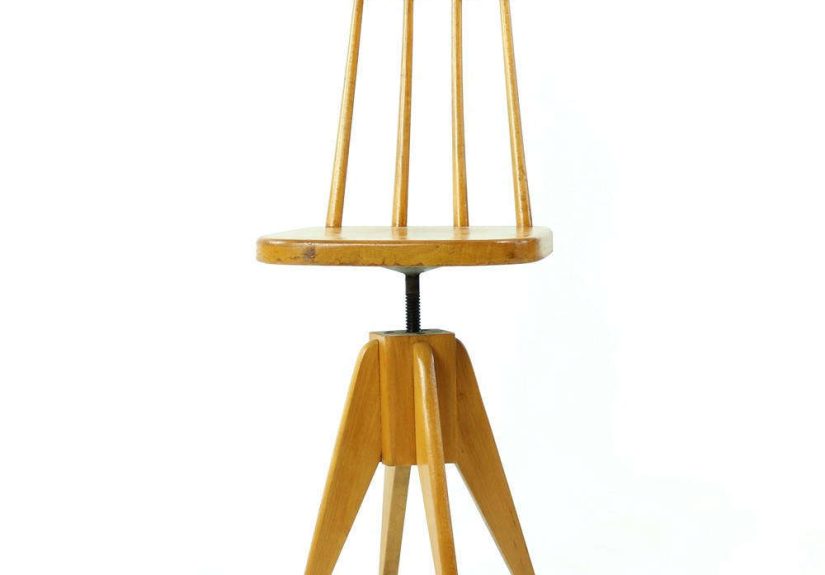
At its simplest, it’s a stool with a seat that rotates around a central axis. That rotation can happen in a few ways:
a basic swivel plate (common in bar stools), a screw-threaded spindle (classic in piano and industrial stools), or a hybrid
mechanism that combines swiveling with height adjustment.
“Vintage” is usually used for pieces that are a few decades old (or more), while “antique” typically implies 100+ years.
In the swivel-stool world, both categories existand both can be incredibly well-made when compared to the “assembled in 11 minutes,
wobbly by lunchtime” stools of today.
A Quick History: From Parlor Music to Workshop Workhorses
Swivel stools show up early in American furniture history, especially tied to music and domestic life.
Museums and historical collections document piano stools made in the early 1800s (often hardwoods like mahogany),
designed to be compact, sturdy, and easy to reposition.
By the mid-to-late 1800s, piano stools got more mechanically clever: many used a screw-threaded spindle so the player could
raise or lower the seat by turning itan elegant solution that feels surprisingly modern. Patents from the period even describe
improvements like removable back supports added to screw-spindle piano stools, hinting at long practice sessions and
the timeless human desire for lumbar support.
Around the same time, swivel stools became essential in industrial settingsmachinists, factory workers, and draftsmen
benefited from a seat that could pivot quickly between tools, benches, and tasks. These industrial versions often feature
cast-iron bases and rugged hardware paired with wooden seats: not delicate, not precious, and absolutely not afraid of grease.
The Big Three Styles You’ll See Most Often
1) Piano Stools (The “Spin-and-Adjust Classic”)
Piano stools are the poster child of the vintage wooden swivel stool. Many have:
- Swivel + height adjustment via a threaded spindle (turn the seat, change the height).
- Three or four legs, sometimes with scrollwork or decorative feet.
- Upholstered seats (round or square), sometimes with storage compartments under the lid.
- Maker labels or patent markings under the seat or on a metal flange.
Some New England makers, for example, produced stools with birch that was grained to imitate rosewoodan old-school
design flex that says, “Yes, I’m practical, but I also have taste.”
2) Industrial / Machinist Stools (The “Built Like a Tank” Option)
Industrial stools tend to prioritize durability over ornament. Typical features include:
- Cast-iron base (heavy enough to feel like it should pay rent).
- Wooden seatoften thick, sometimes contoured, usually easy to refinish.
- Threaded post for height adjustment, sometimes with a locking collar.
- Foot rings on taller drafting versions.
These stools are beloved for workshops and studios because they’re stable, adjustable, and unapologetically functional.
They also age well: scratches read as “honest wear,” not “oops.”
3) Swivel Bar Stools (The “Mid-Century Meets Modern Life” Cousin)
Wooden swivel bar stools became especially popular in later decades, commonly using a swivel plate hardware system rather than a
spindle. They can be vintage without being “antique,” and they’re often the easiest to integrate into a kitchen or bar area.
If you’re shopping for vintage bar-height seating, remember the comfort math:
you want enough legroom between seat and counter so your knees aren’t forced into a negotiation with the underside of your island.
Standard guidelines commonly place counter stools lower than bar stools, with clearance in the neighborhood of 10–12 inches
between the seat and the surface.
Why Vintage Wooden Swivel Stools Are Still Worth It
- Engineering you can feel: real joinery, solid wood, heavy hardware, and mechanisms that were designed to be repaired.
- Compact footprint: they tuck into corners, slide under desks, and fit where bulky chairs don’t.
- Patina with personality: worn edges, softened stain, and “I’ve seen things” characterwithout needing a filter.
- Multi-room versatility: office, kitchen, vanity, music corner, workshop, entrywayyou name it.
How to Spot a Quality Vintage Wooden Swivel Stool
Not every old stool is a good stool. Some are charming; some are charming until you sit down.
Here’s what to check before you commit.
Stability First: The “No Surprise Acrobatics” Test
- Wobble: A slight wobble can sometimes be fixed, but a badly twisted base or cracked legs can be a dealbreaker.
- Leg joints: Look for separation at joints, old repairs, or glue failure.
- Seat attachment: Make sure the seat isn’t barely hanging on like a loose button on a winter coat.
Mechanism Check: Smooth Spin, Not Grind
A good swivel should rotate smoothly and “hold” without feeling like it’s skating on ice. For spindle stools:
- Turn the seat through its rangedoes it adjust predictably?
- Listen for harsh scraping (often dirt, corrosion, or misalignment).
- Check for missing collars, broken sockets, or bent hardware.
For plate swivels, note the condition of the plate and mounting screws. Hardware can be replaced, but original, well-fitted parts
are a bonusespecially when the stool is meant for daily use.
Look for Clues: Labels, Markings, and Maker Identity
True vintage and antique stools sometimes come with receipts from the past: paper labels, cast lettering, or patent dates.
On some documented piano stools, you may find:
- Printed paper labels under the seat naming the maker and location.
- Cast-iron flanges with raised lettering and patent date references.
- Trade-mark language and “entered according to Act of Congress” style text on labels (a period detail).
Buying the Right Height: Don’t Let Your Knees Suffer
Vintage stools are fun until you realize the seat height turns your breakfast into a squat workout.
The “right” height depends on where it’ll live:
- Desk / writing table: Aim for a seat that lets your elbows rest comfortably at the surface.
- Kitchen counter: Countertops are typically lower than bars; many counter stools land in the mid-20-inch range.
- Bar height: Standard bars are taller; bar stools commonly sit a few inches higher than counter stools.
If you’re not sure, an adjustable spindle stool is the easiest insurance policyfine-tune the height instead of guessing and hoping.
Cleaning and Care: Preserve the Patina, Not the Grime
“Vintage” should not smell like a damp basement. The goal is to clean gently, preserve the finish, and avoid quick fixes that
cause long-term problems.
Daily/Monthly Care (Simple, Safe, Effective)
- Dry dust first with a microfiber cloth (dust can be abrasive).
- Never spray cleaner directly onto the woodspray onto the cloth instead.
- Avoid soaking the surface; wood can swell with moisture and finishes can get stressed.
- Keep it out of direct sunlight to reduce fading and finish damage.
Skip the “Miracle Shine” Products
Many modern polishes promise instant glow but can create sticky buildup over timeespecially silicone-based products
that attract dust and make future cleaning harder. Vintage finishes tend to prefer “less is more.”
Humidity and Temperature Matter More Than People Think
Wood expands and contracts with humidity changes. Over time, that movement can loosen joints, crack wood, or lift veneer.
Conservation guidance often recommends minimizing extremes and rapid fluctuations. If you want your stool to survive another
50 years, don’t park it next to heat vents, fireplaces, or blazing windows.
Watch for Pests (Yes, Furniture Can Have Uninvited Guests)
Tiny holes, powdery frass (fine “sawdust”), or insect debris can indicate wood-boring insects. If you suspect an issue,
isolate the piece and consult a professionalespecially for valuable antiques.
Restoration Without Regret: A Practical Approach
Restoring a vintage wooden swivel stool is a balancing act: you want it solid and usable, but you don’t want to sand away
a century of character like you’re erasing the past for a smoother Instagram story.
Step 1: Tighten What Can Be Tightened
- Check screws and fasteners (especially under the seat and at the swivel plate).
- Gently test jointsif they shift, you may need regluing rather than “just tightening harder.”
- For spindle stools, inspect threads for grime and wear.
Step 2: Clean Before You Refinish
Many “needs refinishing” pieces simply need careful cleaning. Once you strip a finish, you can’t un-strip it.
Clean first, reassess second.
Step 3: Preserve Original Finishes When Possible
Museum-style guidance often prefers maintaining original surfaces. If the finish is stable (not flaking),
gentle cleaning and occasional wax (when appropriate) can be enough. Paste waxes that are basically wax + solvent
are often considered acceptable in conservation contexts, but they shouldn’t be applied constantlythink years, not weeks.
Step 4: Fix the Spin
If the swivel squeaks, binds, or feels gritty, the usual culprit is old dirt and dried residue.
Cleaning and proper lubrication (appropriate to the mechanism) can dramatically improve performance.
If hardware is missing or broken, replacement parts may be possibleespecially for plate swivels.
Some modern swivel hardware is designed for smooth rotation and a stable “hold,” which can be a practical upgrade
for everyday seating.
Styling Ideas: Where a Vintage Swivel Stool Looks Amazing
A vintage wooden swivel stool is basically a design chameleon. Try it here:
- Home office: Great as a compact seat that can tuck away when not in use.
- Vanity corner: Piano-stool vibes feel right at home near mirrors and soft lighting.
- Kitchen island: Vintage bar stools bring warmth and texture to modern kitchens.
- Music room: Obviouslypair it with a piano and pretend you’re practicing, even if you’re mostly spinning.
- Plant stand / side table: If it’s too delicate to sit on, it still makes an excellent display piece.
When to Call a Professional
If the stool has valuable provenance, unstable veneer, flaking finishes, severe cracks, or pest damage, a professional conservator
is the safest route. Conservation guidance frequently emphasizes caution with severely damaged surfaces and warns that
many commercial products have unknown long-term effects.
Conclusion: The Stool That Spins Through Time
A vintage wooden swivel stool is more than a seatit’s a little piece of functional history.
The best ones combine solid wood, smart mechanics, and a lived-in beauty you can’t fake.
Buy with your eyes and your hands: check stability, test the swivel, look for maker clues, and respect the finish.
Then put it to workat a desk, a piano, a counter, or wherever you need a seat that can literally turn on a dime.
Real-Life Experiences With a Vintage Wooden Swivel Stool ( of Lessons, Laughs, and Light Regret)
The first time you bring a vintage swivel stool home, you learn something important: your brain instantly becomes a detective.
You’re not just carrying furnitureyou’re carrying a mystery with legs. I once saw a piano stool at an estate sale that looked
perfectly innocent: warm wood tone, a slightly tired upholstered top, and that classic “I used to live next to sheet music” aura.
Then I flipped it over and found a label-style underside that read like a time capsulemaker name, location, and language that
sounded like it had been written by someone wearing a waistcoat on purpose. In that moment, the stool stopped being “a stool”
and became “a story that happens to swivel.”
The second lesson arrives when you sit on it for the first time. A good spindle stool has a particular feel:
it rotates with intention, not with chaos. You turn, you stop, it stays. But if it hasn’t been cleaned in decades,
it may also announce itself with a squeak that makes your dog judge you. The fix is rarely dramaticmore “careful cleaning”
than “rebuilding the Industrial Revolution.” Still, it’s oddly satisfying when the spin goes from gritty to smooth,
like you just gave the stool a new lease on life (and it repays you by not sounding haunted).
Then there’s the question everyone asks: “Should I refinish it?” The first impulse is to chase perfectionstrip it down,
sand it silky, stain it evenly, and make it look brand new. But after you live with a vintage wooden swivel stool for a while,
you start to appreciate the small dings and worn edges. They’re not flaws; they’re proof the piece did its job for years.
A few scratches around the rim? That might be from someone turning quickly to grab a music book. Slight wear on a foot?
That could be decades of shifting on wooden floors. If the finish is stable, cleaning and light maintenance can keep that history
intact while still making the stool pleasant to use.
Practicality also shows up fast. Put the stool at a kitchen island and you’ll learn the truth about height:
“close enough” is not close enough when your knees are involved. Adjustable stools are the MVP hereespecially if your household
includes both tall adults and kids who suddenly want to sit at the counter like tiny CEOs. And styling? Effortless.
A vintage stool makes a modern room feel warmer, like it knows a secret about the place that the brand-new furniture hasn’t learned yet.
My favorite part, though, is the quiet ritual: dusting it with a cloth, avoiding the temptation to drown it in “miracle polish,”
and keeping it away from harsh sun like it’s a vampire with excellent taste. Over time, you realize the stool doesn’t need you
to make it perfectit needs you to keep it alive. And if you ever forget why you bought it, just give it a spin.
Vintage furniture is one of the few things that can be both useful and delightful in a single rotation.