Table of Contents >> Show >> Hide
- How This Ranking Works (So Nobody Throws an Axe in the Comments)
- Quick Refresher: What Vinland Saga Is (and Why It’s Not Just a Viking Action Show)
- The Big Ranking: Seasons (Yes, We’re Starting a Friendly Civil War)
- Arc Rankings (Anime-Friendly, Manga-Aware, Spoiler-Light)
- Character Rankings (By Writing, Impact, and “Lives Rent-Free in My Head” Energy)
- Top Vinland Saga Opinions (Some Popular, Some Spicy)
- Best Ways to Make Your Own Rankings (Without Starting a Blood Feud)
- 500+ Words of Viewer Experiences and “What It Feels Like” to Rank Vinland Saga
- Conclusion: The Best Vinland Saga Ranking Is the One You Can Defend With Your Heart
If you came here looking for a simple “Top 10 Vinland Saga Things” list, I have good news and bad news.
The good news: we’re ranking a lot of things.
The bad news: Vinland Saga is the kind of story that laughs politely at simple rankings, then calmly asks you to reconsider your entire relationship with violence, revenge, andyesagriculture.
This guide is “spoiler-light.” We’ll talk about arcs, themes, and why certain moments hit like a longship to the emotions.
When something risks spoiling a major twist, I’ll wave a tiny Viking flag and steer back to safe waters.
How This Ranking Works (So Nobody Throws an Axe in the Comments)
Rankings are opinions wearing a tuxedo. So here’s the scoring “vibe” behind mine:
- Character writing: growth, contradictions, and consequences.
- Themes: does it say something meaningful about power, war, and humanity?
- Pacing: not “fast vs slow,” but “earned vs dragged.”
- Craft: animation, music, voice work, and direction.
- Rewatch/rewind value: does it get deeper the second time?
Also: “best” doesn’t always mean “most hype.” Sometimes “best” means “the episode that gently rewired my brain and made me want to apologize to a chair I bumped into in 2014.”
Quick Refresher: What Vinland Saga Is (and Why It’s Not Just a Viking Action Show)
Vinland Saga started as a manga by Makoto Yukimura and ran for about 20 yearslong enough for readers to age into wisdom right alongside the characters.
The manga began in 2005 and concluded in 2025, becoming a full epic rather than a quick raid-and-leave situation.
The anime adaptation is split into two seasons (so far): Season 1 aired in 2019 and Season 2 aired in 2023, with a studio change along the way.
Season 1 is famously intense and war-focused; Season 2 pivots into something quieter, more introspective, and arguably more daring.
Streaming availability shifts by region, but in the U.S. it’s widely known through major platformsNetflix has hosted it, and anime-first services have carried it tooso it’s accessible for both casual viewers and “I compare subtitle tracks for fun” fans.
The Big Ranking: Seasons (Yes, We’re Starting a Friendly Civil War)
#1: Season 2 (The “Farming Arc” That Turns Out to Be a Sword)
Season 2 is the boldest thing Vinland Saga could do after a violent first season: it slows down, sits with trauma, and asks what happens after the revenge story collapses.
Some viewers call it “boring.” Others call it “masterpiece.” Both reactions make sensebecause Season 2 refuses to entertain you the easy way.
What makes it #1 for me is how intentionally it rebuilds meaning. It doesn’t glorify strength; it interrogates it.
It treats healing like a journey with setbacks, not a “three motivational quotes and you’re cured” montage.
#2: Season 1 (Elite War Drama with a Trapdoor Under the Revenge Plot)
Season 1 is still phenomenal: sharp political tension, brutal battles, and characters who feel like they could step off the screen and argue about ethics in a very loud tavern.
It’s also the season that sets the emotional bill that later seasons must payno shortcuts, no refunds.
If Season 2 is a reckoning, Season 1 is the storm that makes the reckoning necessary. Which is why it’s a close #2, not a distant one.
Arc Rankings (Anime-Friendly, Manga-Aware, Spoiler-Light)
Depending on how you split the story, you’ll see different arc names, but most fans recognize the big “eras” of the narrative.
Here’s a ranking that fits both anime viewers and manga readers without dumping spoilers on your head like a bucket of North Atlantic seawater.
#1: The Farmland Arc (a.k.a. “Season 2’s Quiet Thunder”)
The Farmland Arc is where Vinland Saga becomes what it always wanted to be: a story about breaking cycles.
It’s not “less intense” than warits intensity is internal. It’s about guilt, labor, human value, and what it costs to choose peace when violence is easy and rewarded.
It also introduces relationships that feel painfully real: the way people cling to hope, the way systems grind down the vulnerable, and the way kindness becomes an act of rebellion.
#2: The Prologue / War Arc (a.k.a. “Season 1’s Fire and Politics”)
If you love political intrigue, shifting alliances, and characters who can smile while ruining your life, the Prologue is your feast.
It’s the arc that hooks action fansthen quietly plants the seeds that action alone won’t satisfy.
What elevates it is that it isn’t violence for spectacle’s sake. It uses violence to show what violence does: to bodies, to families, to futures, to identity.
#3: The “Bridge” Material (After War, Before the Dream)
Without naming specific events, there’s a stretch of story where the plot shifts from surviving to rebuildingwhere people start asking,
“Okay, but what would a better world even look like?”
This section often ranks differently depending on the reader. If you’re here for philosophy and social themes, you’ll rate it higher.
If you want constant battlefield chess, you might rank it lower. Both are valid; the saga is big enough for both appetites.
#4: The “Expansion” Arcs (More World, More Consequences)
Later arcs broaden the cast and stakes. They can feel less laser-focused than Farmland, but they add scope:
the story becomes less about one person’s pain and more about what it means to build something lasting in a world that profits from conflict.
In short: if the Prologue is the blade and Farmland is the healing, the later arcs are the hard work of living differently when the old world keeps trying to pull you back.
Character Rankings (By Writing, Impact, and “Lives Rent-Free in My Head” Energy)
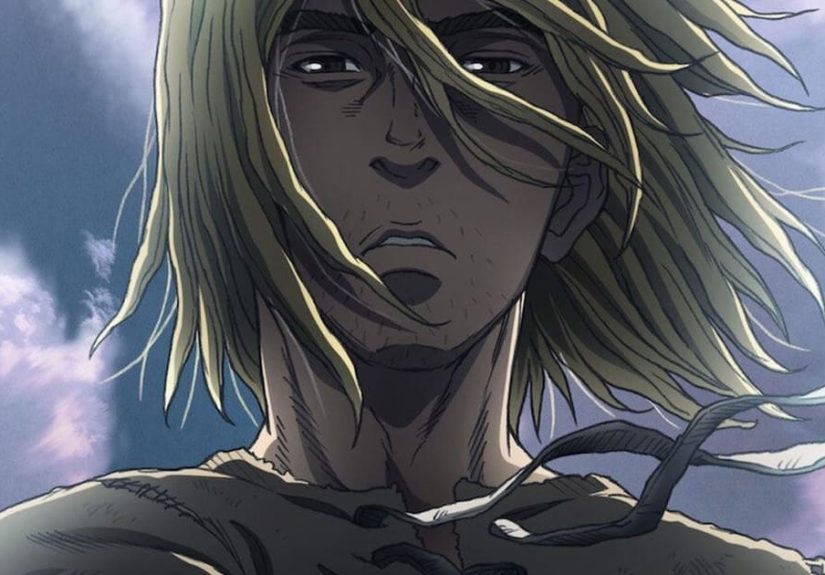
#1: Thorfinn (Best Long-Form Character Growth)
Thorfinn’s arc is the backbone of the entire saga: a study in what revenge does to a person, and what it takes to crawl out of that pit.
He’s not ranked #1 because he’s “coolest.” He’s ranked #1 because his transformation is earned, messy, and emotionally honest.
#2: Askeladd (Best “I Hate You / I Admire You” Complexity)
Askeladd is a masterclass in layered characterization: charismatic, strategic, cruel, and weirdly principled in ways that make you uncomfortable.
He’s the kind of character who makes you realize “villain” is often just a lazy word for “person with a terrifying worldview.”
#3: Canute (Best Political Evolution)
Canute’s storyline is one of the most compelling political evolutions in modern anime: the tension between idealism and power, faith and control, mercy and necessity.
Even when you disagree with him, you understand himand that’s the sign of great writing.
#4: Einar (Best “Humanity Anchor”)
Einar brings something essential: a perspective that isn’t mythic or legendary, but deeply human.
He’s the character who reminds you what’s at stake for ordinary people when “great men” chase glory.
#5: Thors (Best Moral North Star)
Thors is the quiet gravity of the storythe example that reframes strength as restraint and courage as refusing unnecessary harm.
He’s influential precisely because he doesn’t dominate the narrative with constant presence. His impact echoes.
Underrated Mentions
- Snake: a character whose competence hides complicated regret.
- Arnheid: a storyline that exposes how “peaceful farms” can still be violent places.
- Thorkell: terrifying and hilarious in the same breathlike if a hurricane told jokes.
Top Vinland Saga Opinions (Some Popular, Some Spicy)
Opinion 1: “Season 2 Isn’t SlowIt’s Brave”
Fast pacing is easy. Anyone can stack fights and cliffhangers.
Season 2 chooses tension without constant combat, and that’s harder.
It makes you sit with consequences. It dares you to care about healing as much as you care about winning.
Opinion 2: “The Story Doesn’t ‘Switch Genres’It Reveals Its Real Genre”
Many viewers start Vinland Saga thinking it’s a revenge action epic.
It isuntil it becomes a reconstruction story about identity, purpose, and refusing inherited violence.
The saga isn’t abandoning action; it’s asking what action is for.
Opinion 3: “The Best Moments Are Often Quiet”
Vinland Saga’s most powerful scenes aren’t always the flashiest.
They’re the moments of choice: refusing escalation, admitting fear, asking forgiveness, or rebuilding trust.
If you’ve ever said “I need a minute after that episode,” it was probably a quiet moment that did the damage.
Opinion 4: “Sub vs Dub: Try Both (Because Vinland Saga Has Options)”
Here’s a rare modern anime flex: Vinland Saga has had multiple English dub tracks in circulation, which can surprise new viewers.
If you’re sensitive to performance style, it’s worth sampling bothespecially for characters with heavy emotional dialogue.
Best Ways to Make Your Own Rankings (Without Starting a Blood Feud)
- Rank by theme, not hype. Ask which parts say something that sticks with you.
- Separate “favorite” from “best.” Your favorite arc might be comfort food; the best arc might be a five-course moral crisis.
- Re-rank after a rewatch. Vinland Saga changes when you know where characters are headed.
- Note what you value. If you rank animation first, your list will differ from someone ranking philosophy first. That’s fine.
- Keep two lists. One for “objective craft,” one for “what I’d binge at 2 a.m.”
500+ Words of Viewer Experiences and “What It Feels Like” to Rank Vinland Saga
Ranking Vinland Saga is less like making a playlist and more like sorting your life lessons into folders.
People don’t just finish this series and say, “Neat.” They finish it and stare at the wall like the wall owes them an explanation.
A common first-time experience goes like this: Season 1 pulls you in with intensitybattles, strategy, charisma, shock.
You think you’re watching a Viking epic where the goal is to become stronger, deadlier, more unstoppable.
Then the story quietly asks, “Strong for what?” and you realize you’ve been cheering for a protagonist who is losing himself.
When Season 2 arrives, it feels different on purposelike the show is forcing you to breathe after running for miles.
Some viewers feel whiplash. Others feel relief. Many feel both in the same week.
The “ranking debate” usually starts when someone says, “Season 2 is boring,” and someone else replies,
“No, it’s realistic.” That argument is basically the point of the story:
if your entertainment depends on violence, what happens when a character tries to live without it?
A lot of fans eventually admit something funny (and slightly humbling): the episodes that felt “slow” at first are the ones they remember most.
You might forget a random skirmish. You don’t forget a scene where a character chooses mercy when anger would be easier.
Another shared experience: the urge to rewatch.
Vinland Saga rewards a second pass because you stop watching for plot surprises and start watching for motivations.
You notice how early the story plants its philosophy.
You catch the moments where a character is technically “winning” but spiritually losing.
You start ranking based on meaning, not adrenalinelike your inner critic has grown a beard and learned patience.
And then there’s the “discussion culture” experience.
People don’t just talk about who would win in a fight (though yes, that happensbecause we are still human).
They talk about whether someone deserved redemption, whether peace is possible, and whether the world rewards moral choices or punishes them.
Fans compare character arcs the way sports fans compare seasons: “Prime Canute,” “Peak Askeladd,” “Late-Story Thorfinn is different.”
The best part is that the arguments usually aren’t shallow. Vinland Saga encourages deeper conversations because it’s built around consequences.
Finally, ranking the series can feel personal because it reflects where you are in life.
If you’re younger (or just in your “fight the world” era), you may rank the Prologue higher.
If you’re tired, healing, or rebuilding something, the Farmland Arc might hit harder.
Many fans end up with a surprising conclusion:
the “best” part of Vinland Saga is the part that teaches them something they neededwhether they wanted that lesson or not.
Conclusion: The Best Vinland Saga Ranking Is the One You Can Defend With Your Heart
If you rank by action, you’ll crown Season 1 and the Prologue.
If you rank by character depth and emotional honesty, you’ll probably put Season 2 and the Farmland Arc at the top.
If you rank by impact, you’ll realize the series is engineered to make every era matterbecause each one is a step in a longer argument about what it means to live.
My final opinion? Vinland Saga is a rare story where the rankings are fun, but the real reward is noticing how your opinions change over time.
That’s not just fandom. That’s the saga doing its job.