Table of Contents >> Show >> Hide
- What the Varv Lamp Actually Does (Besides Looking Innocent on Your Nightstand)
- Wireless Charging 101: Qi, Alignment, and Why Your Phone Gets Moody
- How to Use Varv Without Doing the “Is It Charging?” Wiggle Dance
- Where Varv Makes the Biggest Difference
- Charging Performance: What You Should Expect (and What You Shouldn’t)
- Safety and Common Sense (The Unsexy Part That Saves the Day)
- Troubleshooting: Quick Fixes That Usually Work
- Styling Tips: Make It Look Like Decor, Not a Tech Stand
- Alternatives and Upgrades (If You Want Faster or More “Snap-On” Charging)
- Real-Life Experiences With the Varv Table Lamp (500+ Words of “This Is How It Actually Feels”)
- Conclusion: Is the Varv Table Lamp With Wireless Charging Worth It?
A table lamp that also charges your phone is one of those ideas that sounds obvious after you live with one.
It’s like a toaster that also makes coffee: you don’t need it… until you do, and then suddenly every other setup feels like it’s missing a limb.
The Varv Table Lamp with Wireless Charging takes two nightly habitsturning on a cozy light and parking your phonethen politely suggests you stop juggling cables like you’re auditioning for a circus.
This guide breaks down what the Varv lamp is, how wireless charging really works (without the boring partsokay, with some boring parts, but they’ll be wearing a funny hat),
what to expect from charging performance, how to set it up for success, and how people actually use it in real life.
If you’re searching for a wireless charging table lamp that feels like decornot a gadgetread on.
What the Varv Lamp Actually Does (Besides Looking Innocent on Your Nightstand)
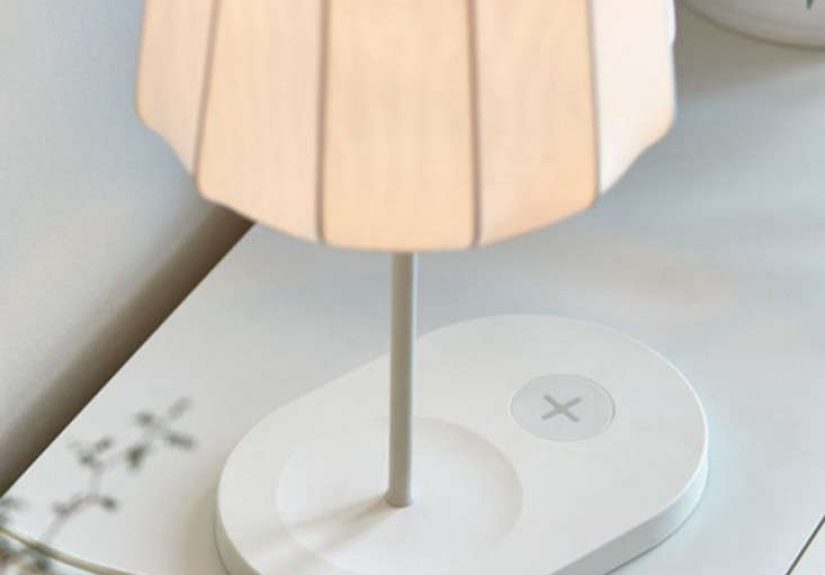
At its core, Varv is a table lamp with a built-in Qi wireless charging pad, plus an extra USB charging option so you can power a second device at the same time.
In other words: your phone can “live” on the lamp base while your earbuds, e-reader, smartwatch puck, or another phone can sip power from the USB port.
Design-wise, Varv aims for that minimalist, Scandinavian vibe: soft lighting, clean structure, and a base that doesn’t scream “TECH PRODUCT!”
It’s the kind of lamp that makes your room feel calmereven if your notifications are the emotional equivalent of a fire alarm.
Key features you’ll notice fast
- Wireless charging for Qi-compatible phones and devicesplace the device directly on the charging target for best results.
- USB charging so you can charge one additional device at the same time.
- Status light behavior that tells you whether it’s charging, done, or having a tiny charger meltdown.
- Safety monitoring designed to watch temperature and power during charging.
Wireless Charging 101: Qi, Alignment, and Why Your Phone Gets Moody
Wireless charging for phones is usually inductive charging. A coil inside the charger creates an electromagnetic field;
a coil in your phone receives that energy and converts it into power for the battery.
The popular standard for this is Qi (pronounced “chee”), which is why you’ll see “Qi-certified” on compatible devices and chargers.
Here’s the part that matters for everyday use: wireless charging isn’t magicit’s geometry.
The charging coils need to line up well. That’s why many chargers have a symbol (often a plus sign) showing where your phone should sit.
If your phone is off-center, charging can slow down, stop, or start and stop like it’s indecisive.
Why wireless can be slower than wired
Wireless charging is usually less efficient than plugging in a cable. Some energy is lost as heat, and many phones will slow charging if things get warm.
Convenience is the trade: you get fewer cords, but you may not get the fastest possible charge.
Think of wireless charging like taking the scenic route. You still arrive, but you might stop to look at a lake.
Older Qi vs newer “magnetic” alignment
Newer wireless chargers increasingly use magnetic alignment (popularized by MagSafe-style accessories and later reflected in updated standards).
Magnets help keep the coils lined up, which improves reliability.
Varv’s approach is more classic: place the phone correctly and you’re golden.
If you’re the type who tosses your phone onto the nightstand like you’re skipping a stone across a pond, you’ll want to build a steadier habit.
How to Use Varv Without Doing the “Is It Charging?” Wiggle Dance
Most people discover wireless charging in three phases:
(1) “This is amazing!” (2) “Why is it not charging?” (3) “Oh, it was one millimeter off.”
With Varv, the trick is simply being intentional about placement.
Setup basics
- Plug the lamp into a wall outlet using the appropriate adapter/cable setup provided for the charger portion.
- Turn on the lamp and confirm it behaves normally.
- Place your phone on the charging target area (directly on the marked spot) and wait for the charging indicator on your phone.
- If charging doesn’t start, adjust placementstart with moving it to center on the target mark.
Understanding the status light (so you don’t stare at it like it owes you money)
- Power on: the LED lights briefly.
- Charging: LED stays on.
- Charging complete: LED turns off.
- Error: LED flashes.
Real-world charging tips that save your sanity
-
Thick or metal cases can cause problems.
If charging is slow or inconsistent, remove the case and try again.
(Some “wireless charging compatible” cases still reduce efficiency.) -
Phone vibrations can knock alignment off.
If your phone buzzes from notifications and shifts, charging may stop.
Consider Do Not Disturb at night, or place the phone so it can’t slide. -
Expect warmth.
Devices can get warm while charging, and many will cool down afterward.
Warmth is normal; excessive heat is not.
Where Varv Makes the Biggest Difference
1) The bedside “landing pad”
This is Varv’s home turf. Your phone already sleeps next to you (metaphorically, hopefully).
Instead of fumbling for a cable in the dark, you set your phone on the base, confirm it’s charging, and call it a night.
The lamp gives you the kind of soft light that doesn’t feel like an interrogation spotlight.
2) The desk setup that refuses to become a cable museum
On a desk, Varv works as a two-in-one: task lighting + a wireless charging station for quick top-ups.
If you tend to work with your phone nearby for calls, timers, or music, charging becomes effortless.
The USB option is handy for charging a secondary device without adding a second brick.
3) Guest room “hotel energy”
Guests love simple. A lamp that also charges a phone feels like a thoughtful upgradelike you quietly run a boutique hotel.
It also reduces the “Do you have an iPhone cable?” moment. If the guest has a Qi-compatible phone, they’re set.
Charging Performance: What You Should Expect (and What You Shouldn’t)
Wireless charging is best for steady, low-effort charging, not for speed-running from 12% to 80% in 18 minutes.
It shines when you have timeovernight charging, a few hours at a desk, or a casual evening on the couch.
Great expectations
- Convenient overnight charging without hunting for a cable.
- A reliable “home base” so your phone is consistently topped up.
- Less clutter on a nightstand or desk.
Not-so-great expectations
- If you need fast charging, a wired connection typically wins.
- If your phone case is thick or has metal parts, you may need to remove it.
- If your phone slides easily or gets bumped a lot, you may see stop-and-start charging unless you adjust placement.
Safety and Common Sense (The Unsexy Part That Saves the Day)
Wireless charging is generally safe when you use compatible devices and follow basic precautions.
Still, “basic precautions” are where most people go rogue.
Here’s how to keep things boringin the best way.
Keep the charging area clear
Don’t place metal objects (coins, keys, jewelry) on the charging surface.
Wireless chargers can detect foreign objects, but you should still avoid treating the base like a spare-change tray.
Ventilation matters
Keep the lamp and charger area reasonably ventilated.
Heat is a natural byproduct of wireless charging, and devices may throttle charging when warm.
Avoid covering the base with fabric, papers, or “creative clutter.”
Dry locations only
Use the charger in dry locations and unplug it before cleaning.
Wipe with a damp cloth and avoid submerging anything in water.
(If you’re thinking, “Who would submerge a lamp base?”I admire your optimism.)
Troubleshooting: Quick Fixes That Usually Work
If the phone won’t charge at all
- Confirm your phone supports Qi wireless charging.
- Re-center the phone on the charging target mark.
- Remove thick or metal cases.
- Check that the lamp/charger is plugged in securely.
- If the LED indicates an error (flashing), remove the phone, wait a moment, then try again with careful placement.
If it charges, but slowly
- Check for heat: warm devices may charge more slowly until they cool down.
- Try a thinner case or no case.
- Make sure the phone stays alignednightstand bumps or vibration can shift it.
Styling Tips: Make It Look Like Decor, Not a Tech Stand
A lamp that charges phones can look “gadgety” if you surround it with cords, adapters, and random accessories.
The Varv aesthetic works best when the nightstand is calm.
- Commit to one “landing zone.” Put the lamp where you naturally set your phone down.
- Choose a bulb that matches the vibe. Warm white light is usually best for bedrooms; cooler light suits workspaces.
- Hide the cable path. Route the cord along the back edge of furniture so the lamp looks intentional.
- Don’t stack stuff on the base. The charging area needs to stay clear for reliable charging.
Alternatives and Upgrades (If You Want Faster or More “Snap-On” Charging)
If you love the idea of a charging lamp but want faster charging or magnetic alignment, consider newer wireless chargers that support updated standards.
Some newer products focus on stronger alignment features and higher wattage options.
The best choice depends on your priorities:
Pick Varv-style charging if you want:
- A bedside lamp with phone charger convenience.
- A minimalist look that blends into your room.
- A steady, set-it-and-forget-it overnight charge.
Pick a modern high-power wireless charger if you want:
- More consistent alignment (often magnetic).
- Potentially faster wireless charging (device-dependent).
- A charging accessory that’s primarily “tech” rather than “lighting.”
Real-Life Experiences With the Varv Table Lamp (500+ Words of “This Is How It Actually Feels”)
The first night I used a wireless-charging lamp setup (Varv-style), I did the thing everyone does: I placed my phone on the base, waited for the little charging icon,
and felt a completely unnecessary sense of accomplishmentlike I’d just discovered fire. No cable. No bending behind the nightstand. No “Why is my charger only working when I hold it at a 43-degree angle?”
It was clean. Calm. Suspiciously adult.
By night three, a pattern formed: the lamp didn’t just charge my phoneit changed where my phone lived. Before, my phone floated around the room:
on the bed, on the dresser, balanced on a pile of laundry like a risky game of Jenga. With a charging base, it had a home address.
I’d walk into the bedroom and set it down in the same spot every time.
That tiny routine meant I stopped losing my phone in the sheets and stopped waking up to 14% battery because I “totally plugged it in” (I did not).
The biggest surprise was how much the lighting and charging combo improved the feel of my nighttime routine.
Varv-type lamps give you a soft, cozy lightenough to read a page or find your water glass, not enough to trick your brain into thinking it’s noon.
And because the phone is already on the lamp base, it’s easier to leave it alone.
I’m not saying a lamp will fix your screen time, but it definitely removes one excuse:
you don’t need to pick up your phone just to plug it in.
There are also some “real world” moments you only learn through experience. For example, alignment matters more than you think.
The first time my phone didn’t charge, I blamed the lamp, the outlet, and the entire concept of electricity.
Then I realized the phone had slid slightly off-center after a notification buzz.
After that, I either turned on Do Not Disturb at night or placed the phone in a way that kept it from drifting.
It’s not a big dealbut it’s helpful to know that wireless charging is less “toss and forget” and more “place and relax.”
On a desk, the experience is different but equally satisfying. You’re working, you set the phone down, and it just… charges.
No cable snake pit, no hunting for a port, no plugging and unplugging ten times a day.
I started using the USB port for a second device (like earbuds or a small accessory),
and suddenly my workspace looked less like a charging station and more like a place where actual work happens.
If you’re the kind of person who hates visual clutter but still loves being at 100% battery, it’s a strong match.
The “guest room test” is also real. People notice thoughtful details.
A lamp that can charge a phone feels modern and considerate, and it reduces the awkward borrowing of cables.
Guests with Qi-compatible phones can just place the device down and relax.
It’s a small upgrade that makes your home feel more put-together than it has any right to be.
The bottom line from lived experience: a wireless-charging lamp doesn’t just add a featureit nudges you into a simpler routine.
If you like your bedroom to feel calm, your desk to feel clean, and your phone to stop dying at inconvenient times,
the Varv Table Lamp with Wireless Charging is the kind of everyday object that quietly earns its spot.
Not flashy. Just useful. Like the friend who always has gum.
Conclusion: Is the Varv Table Lamp With Wireless Charging Worth It?
If you want a nightstand lamp with wireless charging that blends into your room and makes charging feel effortless,
Varv checks the boxes: soft light, Qi-compatible charging, and a second charging option via USB.
It’s best for people who value convenience and simplicity over maximum charging speed.
Treat it like a “home base” for your phoneplace the phone deliberately, keep the surface clear, and let it do its job while you do literally anything else.
That’s the magic: not the physics, but the habit.