Table of Contents >> Show >> Hide
- Quick Context: What Exactly Is Two Virgins?
- What It Sounds Like (And Why That’s the Point)
- The Controversy That Outshouted the Audio
- Rankings: Scoring Two Virgins Without Pretending It’s a Pop Record
- Opinions: Why Critics and Fans Split So Hard
- How to Listen (So You Don’t Rage-Quit at Minute 4)
- Where Two Virgins Fits in the Lennon/Ono Universe
- So… Is It Good?
- Bonus: Listener Experiences (About of “What It’s Like”)
- SEO Tags
Every music fan has at least one “I swear I listened to it” album. The kind you mention at parties when someone says,
“I’m into experimental stuff,” and you nod like a wise monk who has heard the sacred tape loops.
Unfinished Music No. 1: Two Virgins is that album for a lot of peoplepart avant-garde sound collage,
part celebrity diary, part cultural hand grenade in a record sleeve.
This is not a “put it on while you meal-prep” record. It’s a “what even counts as music?” record. And yet, for something
that many listeners call unlistenable, Two Virgins keeps getting reissued, re-litigated, and rediscoveredlike a
haunted painting that periodically shows up in your attic with fresh dust on it.
Quick Context: What Exactly Is Two Virgins?
Released in 1968 under the Unfinished Music banner, Two Virgins is the first in a short series of
Lennon/Ono experimental collaborations. The album is built around long-form, side-length pieces rather than conventional
“songs,” and it leans heavily on techniques associated with musique concrète and sound collage:
tape loops, room sounds, fragments of instruments, voices, and moments that feel more like a late-night home recording than a
studio-polished production.
- Format vibe: Two long sides (often labeled “Side One” and “Side Two”), not a track-by-track pop album.
- Core idea: Treat the recording like a documentan audio snapshot of a momentrather than a “performance.”
- Historical footprint: It became famous for reasons that go beyond sound (more on that soon).
What It Sounds Like (And Why That’s the Point)
If you press play expecting guitars, verses, a chorus, and a respectful fade-out, this record will emotionally shoulder-check
you. Two Virgins behaves like an audio scrapbook: snippets of conversation, odd textures, abrupt shifts, and the kind
of sonic clutter you’d normally edit outexcept here, the clutter is the message.
Think “Domestic Field Recording,” Not “Studio Album”
A helpful way to approach it: imagine someone left a tape recorder running during an all-night art experiment. You might hear
instruments appear briefly and then vanish. You might catch voices in the background. You might notice silence that feels loud
because your brain is trying to turn ambiguity into structure. The album asks the listener to do a lot of the “meaning-making”
worksometimes rewarding, sometimes exhausting.
Why People Hear It So Differently
Some listeners experience Two Virgins as boldly intimate: not polished celebrity product, but the sound of two artists
testing boundaries in real time. Others experience it as a 28-ish minute prank with great PR. Both reactions make sense, and
part of the album’s weird longevity is that it sits right on that fault line.
The Controversy That Outshouted the Audio
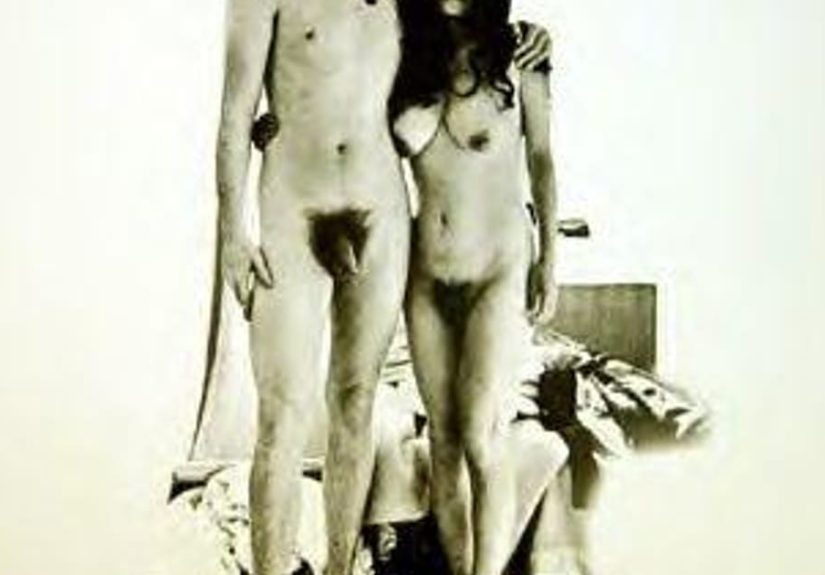
You can’t talk about Two Virgins without acknowledging the packaging drama that followed it. The original release
became notorious for its cover image, which led to refusals from major distributors and a “wrap it up” approach in retail.
In many places, the record was sold in plain packaging meant to minimize public display.
The irony is that the sound itself is the kind of deep-cut experimental work that would normally stay in a niche corner of
art culture. The controversy shoved it into mainstream conversationmeaning a lot of people encountered it not as a curious
avant-garde document, but as a scandal with a soundtrack attached.
Rankings: Scoring Two Virgins Without Pretending It’s a Pop Record
Ranking Two Virgins like it’s competing for “Song of the Summer” is like ranking meteor showers by how well they
behave indoors. So here are rankings that actually fit what this album is: a conceptual sound document with a messy public life.
Overall Scorecard (10-Point Scale)
| Category | Score | Why |
|---|---|---|
| Historical Importance | 9/10 | It captures a turning point in Lennon/Ono collaboration and helped define “celebrity as conceptual art.” |
| Experimental Cred | 8/10 | It leans into sound collage and process-over-product thinkingvery much in dialogue with the era’s avant-garde. |
| Listenability | 3/10 | For most people, it’s challenging, repetitive, and intentionally anti-comfort. |
| Replay Value | 4/10 | Revisits can reveal details, but it’s rarely anyone’s “daily driver.” |
| Conversation Starter | 10/10 | Whether you love it or hate it, you’ll have something to sayand that’s part of its design. |
Ranking the Album’s “Best Use Cases”
- As a cultural artifact (Rank #1): If you’re studying late-’60s art, media, and celebrity, it’s a goldmine.
- As a listening challenge (Rank #2): Perfect for the brave souls who treat music like a marathon.
- As background ambience (Rank #3): Surprisingly workableif you like your ambience a little haunted.
- As a gateway to avant-garde techniques (Rank #4): It can teach you to notice texture and space, but it’s not beginner-friendly.
- As “I need something catchy” (Rank #Last): No. Absolutely not. Put it down and back away slowly.
Opinions: Why Critics and Fans Split So Hard
The Case Against Two Virgins
The most common critique is blunt: it’s boring. Not “slow burn,” not “minimalist trance”just a slog. Some reviewers have
framed it as meandering, thin on musical development, and more famous than it is compelling. If you come to it expecting the
craft of Lennon’s best songwriting, you might feel like someone replaced your sandwich with an art school syllabus.
There’s also the “context tax.” To many listeners, the record only becomes interesting once you’ve read about the era,
conceptual art practices, and the public reaction. If the album needs a footnote longer than the runtime, skeptics argue,
maybe the album is the footnote.
The Case For Two Virgins
Supporters hear something else: an unfiltered document of process and intimacy, the sound of boundaries dissolving between
“private life” and “art.” The record can feel like a time capsule of two creatives experimenting without asking permission.
That matters because it reframes Lennon not only as a songwriter, but as a participant in a broader avant-garde conversation
that was already happeningespecially through Ono’s influence and background in conceptual performance and Fluxus-adjacent scenes.
Another defense is that “listenability” isn’t the goal. The album is closer to conceptual art than entertainment.
In that framing, your discomfortyour urge to categorize it, your impatience, your curiositybecomes part of the piece.
It’s less “please enjoy” and more “please react.”
How to Listen (So You Don’t Rage-Quit at Minute 4)
1) Choose Your Listening Mode
- Headphones: Best for picking up detail, but also the fastest route to “why am I like this?”
- Speakers, medium volume: Turns it into an environment rather than a direct confrontation.
- While doing something repetitive: Walking, cleaning, drawingyour brain can absorb texture without demanding melody.
2) Give Yourself a Mission
Try one of these missions instead of passively “getting through” it:
- Texture hunt: Identify three distinct sound textures (metallic, breathy, percussive, etc.).
- Space mapping: Notice when the recording feels “close” versus “far away.”
- Time perception: Track when time speeds up or slows down. (Yes, this is a thing.)
3) Treat It Like a Photograph, Not a Movie
A pop album often tells a story over time. Two Virgins is more like a single photograph you stare at until details
emerge: the messy edges, the accidental elements, the emotions you bring to it. If you expect plot, you’ll be disappointed.
If you expect atmosphere, you’ll be intrigued.
Where Two Virgins Fits in the Lennon/Ono Universe
The Unfinished Music releases sit in a strange corner of the Beatles-adjacent world: they’re not “Beatles
albums,” not standard solo albums, and not easily categorized by rock critics who grew up rating riffs and choruses.
They’re part art statement, part relationship document, part media critique-by-existence.
Later reissues and retrospectives have pulled these recordings back into view, often emphasizing Ono’s broader avant-garde
legacy and how these collaborations look different when you read them as conceptual work rather than failed rock experiments.
If you only approach them with rock metrics, they “lose.” If you approach them with art metrics, they start doing their job.
So… Is It Good?
Here’s the most honest answer: Two Virgins is not “good” in the way most people use that word for music.
It’s not designed for comfort, pleasure, or replay-friendly hooks. But it can be successful at being what it is:
a raw, boundary-testing artifact that still provokes debate decades later.
If you want melody, go elsewhere. If you want a snapshot of late-1960s artistic frictioncelebrity, conceptual art, media outrage,
and the sound of two people experimenting without a safety netthen yes: it’s worth hearing at least once.
Bonus: Listener Experiences (About of “What It’s Like”)
Listening to Unfinished Music No. 1: Two Virgins for the first time is a little like walking into a room where an art
project is already in progressand nobody stops to explain it to you. Your brain immediately starts negotiating. “Is this the
right track?” “Is my audio broken?” “Am I supposed to be hearing this?” Within the first minute, you might feel the modern
urge to skip ahead, because streaming has trained us to treat boredom like a technical glitch instead of an artistic decision.
Then something funny happens: once you accept that the album won’t meet you halfway, you stop demanding a chorus and start
noticing moments. A tiny shift in texture. A fragment of voice. The way the sound sits in the room. The record can
feel oddly physicallike you’re hearing space, not just “music.” It’s the opposite of compressed, loud, attention-grabbing
production. It’s closer to overhearing than performing.
For some listeners, the experience is mostly comedic. Not because it’s “joke music,” but because the situation is absurd:
a world-famous rock star making something that refuses rock-star expectations. You can almost picture the confusion of anyone
who bought it on reputation alone. It’s a reminder that fame doesn’t guarantee accessibilityand that sometimes artists use
their platform to do things that are intentionally inconvenient.
For other listeners, the experience is strangely intimate. Not romanticizedjust intimate in the way a candid recording can be.
It’s the sound of process, trial, and unguarded experimentation. In that sense, it can feel like an audio diary entry that you
weren’t originally meant to hear. The fact that it was widely discussed, argued over, and packaged to avoid public display
adds another layer: you’re hearing something that collided with the outside world in a very loud way.
One surprisingly rewarding way to experience Two Virgins is to treat it like a creative exercise rather than a passive
listen. Put it on while sketching, journaling, or building a mood board. Write down five adjectives for what you hear (not what
you “think it should be”). Notice when your mind drifts and what pulls you back. The album becomes a mirror: it reflects how you
handle ambiguity, repetition, and the absence of clear structure.
And yesmany people will still finish it and say, “Cool history, never again.” That’s a valid outcome. Not every art experience
needs to become your personality. But if an album can make you argue with your own expectations for half an hour, it has done
something. Even if what it did was simply force you to admit: “I like my music to sound like music.” Congratulationsyour ears
have discovered a boundary. Two Virgins lives right on the other side of it, waving politely, and absolutely not changing.