Table of Contents >> Show >> Hide
- What Is a Cataract, Exactly?
- Why “Types” of Cataracts Matter
- The 3 Main Types of Age-Related Cataracts
- Other Cataract Categories (By Cause, Not Just Location)
- Causes: What Actually Makes Cataracts Form?
- Risk Factors (Who’s More Likely to Get Cataracts?)
- Symptoms: How Cataracts Usually Show Up
- Diagnosis: How Eye Doctors Confirm Cataracts
- Treatment: From Simple Fixes to Surgery
- Prevention: Can You Avoid Cataracts?
- Quick FAQs
- Real-Life Experiences: What It’s Like to Notice Cataracts (and Decide What to Do)
- Conclusion
Cataracts are like having a smudge on your camera lensexcept the camera is your eyeball and you can’t just wipe it on your shirt.
They’re extremely common, especially with aging, and the good news is that modern treatment is about as routine (and successful) as eye care gets.[1]
In this guide, we’ll break down the main types of cataracts, what causes them, who’s at higher risk, and what treatment actually looks like in real life.
What Is a Cataract, Exactly?
A cataract is a cloudy area in the lensthe clear structure inside your eye that helps focus light onto the retina.[1]
When the lens becomes cloudy, light scatters instead of focusing neatly, so vision can look blurry, dim, hazy, or washed out.
Most cataracts develop gradually as part of aging. One widely shared explanation is that, starting around midlife, lens proteins can begin to break down and clump together, creating cloudy spots that slowly expand over time.[1]
Why “Types” of Cataracts Matter
Cataracts are often categorized by where the clouding sits in the lens. That location influences symptoms and how quickly things change.
In clinical practice, the three most common age-related types are nuclear, cortical, and posterior subcapsular cataracts.[5]
The 3 Main Types of Age-Related Cataracts
1) Nuclear Cataracts (Nuclear Sclerosis)
Location: The center (“nucleus”) of the lens.[7]
Common vibe: “Everything looks a little more sepia-toned… and why are streetlights doing a starburst impression?”
Nuclear cataracts often develop slowly. As the lens nucleus becomes denser, some people notice a shift toward nearsightednesssometimes nicknamed
“second sight” because close-up reading may briefly seem easier without reading glasses.[7]
Color perception can also change as the lens yellows over time.[7]
Example: A 68-year-old who suddenly feels like they “don’t need readers as much” might actually be experiencing a lens power shiftnot a miracle.
2) Cortical Cataracts
Location: The outer layer (“cortex”) of the lens.[7]
Common vibe: “Glare is my new nemesis.”
Cortical cataracts often look like whitish spokes or wedges. People may notice glare, reduced contrast, and trouble with bright headlightsespecially during night driving.
The impact depends on how close the clouding is to the center of vision.[7]
Example: Someone who avoids driving at night because oncoming headlights feel painfully bright may be describing classic glare symptoms.
3) Posterior Subcapsular Cataracts (PSC)
Location: Near the back of the lens, just under the capsule (“subcapsular”).[7]
Common vibe: “My reading is worse, and bright light makes everything more annoying.”
PSC can affect vision more noticeably because it sits closer to the path of light focused onto the retina.
People may report glare, blur, and difficulties with near tasks. PSC may also progress faster than some other types.[7]
PSC is often discussed alongside certain health and medication factorslike diabetes and long-term corticosteroid usein many medical references.[7]
Example: A 52-year-old on long-term steroids for an inflammatory condition who suddenly struggles with glare and reading may be evaluated for PSC as part of the workup.
Other Cataract Categories (By Cause, Not Just Location)
Congenital and Developmental Cataracts
Some cataracts are present at birth or develop during childhood. Causes can include genetic factors, infections during pregnancy, or metabolic issues.
Because vision develops rapidly in childhood, early diagnosis and management are especially important (and handled by pediatric eye specialists).
Traumatic Cataracts
Eye injuriesespecially blunt trauma or penetrating injuriescan damage lens fibers and lead to cataract formation.
Sometimes this happens soon after the injury; other times it appears later.[1]
Secondary Cataracts (From Other Conditions or Treatments)
The term “secondary cataract” can be confusing because it’s used in two different ways:
- Cataracts linked to another condition or exposure (for example, diabetes, chronic inflammation, prior eye surgery, or steroid use).[1]
- Posterior capsular opacification (PCO), a cloudy membrane that can form after cataract surgery. It can mimic cataract symptoms, but it isn’t a true cataract because the natural lens has already been removed.[12]
Causes: What Actually Makes Cataracts Form?
For age-related cataracts, the simplest explanation is “time + biology.” As years pass, the lens changes: proteins can clump, oxidative stress builds, and the lens becomes less clear.[1]
Other cataracts can form after injury, radiation exposure, or due to certain medications and diseases.[1]
Risk Factors (Who’s More Likely to Get Cataracts?)
Some risks are non-negotiable (like aging). Others are modifiable (meaning you can actually do something about themno superhero cape required).
Non-Modifiable (Mostly)
- Age: Risk rises as you get older.[1]
- Family history: Genetics can play a role.[1]
- Past eye injury or eye surgery: Can raise risk later.[1]
Modifiable (Or Manageable)
-
Smoking: U.S. public health sources link smoking with cataract risk; some report smokers are
2–3 times more likely to develop cataracts than non-smokers.[11] - Heavy alcohol use: Often listed as a risk factor in public health education materials.[1]
- Excess sun exposure: Prolonged UV exposure is a commonly cited risk factor; eye protection helps.[1]
- Diabetes: Frequently associated with higher cataract risk and earlier onset.[1]
- Long-term steroid use: Often associated with cataract development (commonly PSC).[1]
Symptoms: How Cataracts Usually Show Up
Cataracts can start quietlyso quietly that early symptoms might be “none.”[1]
As they progress, common symptoms include:
- Cloudy, blurry, or dim vision[2]
- Colors that look faded[2]
- Halos around lights[2]
- Glare and light sensitivity (sunlight or headlights feel extra intense)[2]
- Trouble seeing at night[2]
- Frequent changes in glasses or contact lens prescription[2]
- Double vision in one eye (sometimes)[2]
Because these symptoms can overlap with other eye problems, it’s smart to get evaluated rather than playing “guess that diagnosis” at home.[2]
Diagnosis: How Eye Doctors Confirm Cataracts
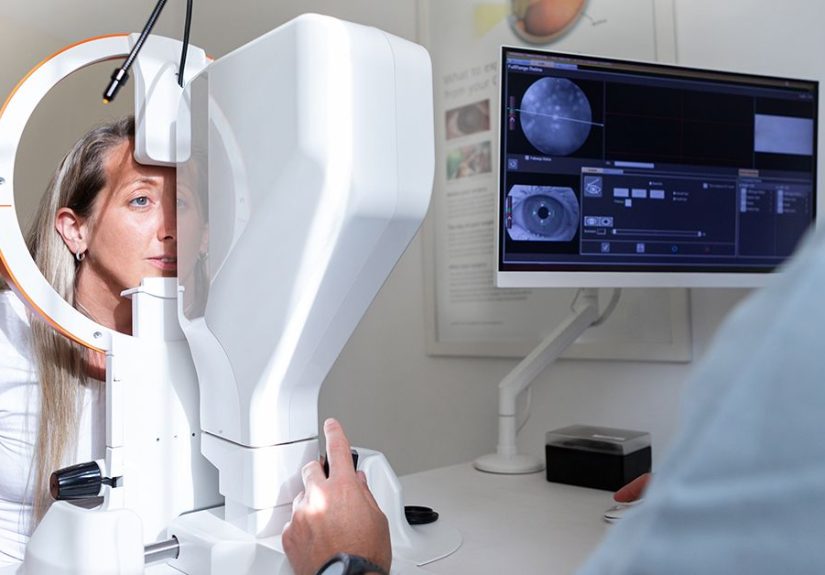
Cataracts are typically diagnosed during a dilated eye exam, where drops widen the pupil so the lens can be examined clearly.[1]
Eye care providers may also test visual acuity, check glare sensitivity, and evaluate the retina and optic nerve to rule out other causes of vision loss.[7]
Treatment: From Simple Fixes to Surgery
Step 1: Early Management (When Surgery Isn’t Needed Yet)
Cataract surgery is the only way to remove a cataract, but many people don’t need it right away.[1]
Early on, you may manage symptoms with:
- Brighter lighting at home or work[1]
- Anti-glare sunglasses[1]
- Magnifying lenses for reading[1]
- An updated glasses or contact prescription[1]
Step 2: Cataract Surgery (When Vision Impacts Daily Life)
Surgery is commonly recommended when cataracts interfere with everyday activities like reading, driving, or watching TV.[3]
During cataract surgery, the cloudy natural lens is removed and replaced with a clear artificial lens called an intraocular lens (IOL).[1]
Large U.S. health organizations describe cataract surgery as very common and generally safe, with most patients reporting improved vision afterward.[1]
(Your eye surgeon will still discuss risks, because your eyeball deserves informed consent like everything else.)
Choosing an IOL: The “New Lens” Menu
IOLs aren’t one-size-fits-all. Patient-facing FDA materials describe multiple IOL categories, each with pros and tradeoffs:[8]
- Monofocal IOLs: Single-focus lenses typically set for distance vision; reading glasses are often still needed for near and sometimes intermediate tasks.[8]
- Multifocal IOLs (bifocal/trifocal): Provide focus at multiple distances to reduce reliance on glasses, but may increase glare/halos at night for some people.[8]
- Extended Depth of Focus (EDOF/EDF) IOLs: Designed for a more continuous range (often distance to intermediate, with some near function), though reading glasses may still be needed for fine print.[8]
- Accommodating IOLs: Intended to mimic natural focusing; results vary and reading glasses may still be needed.[8]
- Toric IOLs: Designed to correct astigmatism; can come in monofocal and other designs. Some glasses needs can remain depending on goals and eye anatomy.[8]
After Surgery: What Recovery and Follow-Up Often Include
Recovery routines vary by surgeon and individual needs, but typically include follow-up appointments and prescribed eye drops.
Many people notice improvement quickly, with vision continuing to stabilize over the following weeks.
Practical note (U.S.-specific): Medicare Part B covers one pair of eyeglasses with standard frames (or one set of contacts) after each cataract surgery that implants an IOL.[9]
Risks and “Secondary Cataracts” After Surgery
Any surgery has potential risks. Professional eye-care organizations list complications such as infection or bleeding as possible risks, and some note a slightly increased risk of retinal detachment in certain situations.[4]
Your personal risk depends on your eye health and medical history.
Also: cataracts don’t “grow back” once the natural lens is removed. But some people develop posterior capsular opacification (PCO),
sometimes called a “secondary cataract,” where the capsule holding the IOL becomes cloudy.[12]
U.S. ophthalmology sources describe a posterior capsulotomy (YAG laser) as a common way to restore clear vision when this happens.[13]
Prevention: Can You Avoid Cataracts?
You can’t freeze time (if you can, please tell science), but you can lower risk and protect your eyes:
- Protect your eyes from UV light with sunglasses and a brimmed hat.[1]
- Don’t smoke (or quit if you do). Public health resources specifically link smoking to cataracts.[10]
- Manage chronic conditions like diabetes with your healthcare team.[1]
- Use protective eyewear for high-risk activities to prevent eye injuries.[1]
- Review steroid use with a cliniciandon’t stop prescribed meds on your own, but ask whether the dose and duration are necessary.[1]
Quick FAQs
Can cataracts spread from one eye to the other?
Cataracts can occur in one or both eyes, but they don’t “spread” from one eye to the other like a cold.[1]
When should someone consider surgery?
Many clinicians frame it around function: when cataracts interfere with daily activities you care aboutdriving, reading, work tasks, hobbiessurgery becomes a reasonable conversation.[3]
Real-Life Experiences: What It’s Like to Notice Cataracts (and Decide What to Do)
Most people don’t wake up one morning and announce, “Ah yes, today is the day my lens proteins shall clump.” Cataract experiences are usually subtle at first.
A common early story is lighting drama: you start turning on more lamps, moving closer to windows, or realizing the restaurant menu is suddenly printed in “ant-sized.”
You might blame your phone brightness, the weather, your tirednessanything but your eyes.
Another frequent moment is night driving. People describe headlights and streetlights as extra glaring or haloed, like every car is auditioning for a sci-fi movie poster.
Some quietly change routinesno more late drives, fewer errands after sunsetwithout realizing how much they’ve adapted.
Family members sometimes notice first: “Why are you avoiding driving at night?” (Translation: “We love you, please stop squinting like you’re reading the fine print on the universe.”)
The emotional part is real. Even though cataract surgery is widely described as common and safe, it’s still eye surgery, and “eye surgery” is a phrase that makes many people suddenly remember they have feelings.
People often worry about the procedure itself, the idea of being awake, or the fear that something could go wrong. On the flip side, lots of patients report a sense of relief after the consultation:
they finally have an explanation for the blur and glare, and a plan that isn’t just “try harder to see.”
Decision-making often hinges on function, not perfection. Many patients say they didn’t choose surgery because vision was “terrible,” but because daily life got harder:
reading for long periods, recognizing faces in dim light, driving safely, or doing work that depends on crisp vision.
Some people wait until both eyes feel affected; others move forward when one eye becomes noticeably worse and throws off depth perception.
After surgery, one of the most common reactions is surprise at how different the world looksespecially colors.
People may describe whites looking whiter, blues looking brighter, and indoor lighting feeling less “yellow.”
Many also say they didn’t realize how much they’d been compensating until the compensation wasn’t necessary anymore.
Of course, not every experience is instantly perfect: some people need time for vision to stabilize, some need glasses for certain distances, and some need follow-up treatment for issues like PCO.
But the big theme you hear again and again is this: cataracts often shrink your world slowlytreatment tends to expand it quickly.
Conclusion
Cataracts are common, treatable, anddespite their talent for sneaking up slowlyusually manageable with the right care.
Understanding the main types (nuclear, cortical, and posterior subcapsular), plus the causes and risk factors, can help you recognize symptoms early and have a more confident conversation with an eye care professional.
Whether you’re in the “new glasses and brighter lamps” stage or the “let’s talk surgery” stage, the goal is the same: safe, clear vision that supports everyday life.