Table of Contents >> Show >> Hide
- What Trend Following Actually Means
- Why Bubbles Form in the First Place
- Why Trend Following Can Work Beautifully Inside a Bubble
- Why Trend Following Can Also Get Wrecked
- Historical Lessons: When the Bubble Meets the Trend
- How to Use Trend Following Without Becoming Bubble Food
- Trend Following in a Bubble: The Real Takeaway
- Experience Notes: What Trend Following in a Bubble Feels Like
Markets love a good story. Give investors a shiny innovation, a few eye-popping earnings charts, a catchy acronym, and a price chart that points up like it is auditioning for a space program, and suddenly caution is treated like a personality flaw. That is where trend following enters the chat.
At first glance, trend following in a bubble sounds like bringing a ruler to a fireworks show. One side says bubbles are irrational, dangerous, and eventually painful. The other says price is truth, the trend is your friend, and your feelings are not part of the system. Both sides are right, which is exactly why this topic is so fascinating.
A bubble is one of the few environments where trend following can look genius, reckless, disciplined, and late to the party all at once. It can help traders stay aligned with a powerful move long after valuation purists have stormed out of the room. But it can also leave them badly exposed when the music stops, the punch bowl vanishes, and everyone suddenly remembers the word “fundamentals.”
This article explores how trend following in a bubble really works, why it can be effective, why it can fail spectacularly, and how investors can use a trend following strategy without turning their portfolio into a museum of expensive mistakes.
What Trend Following Actually Means
Trend following is not prophecy. It does not claim to know what an asset should be worth, when the economy will turn, or whether a beloved growth stock has become a floating valuation balloon. It does something more humble and, in practice, more useful: it responds to price behavior.
In simple terms, a trend follower buys markets that are rising and reduces or exits exposure when they weaken. In some systems, the trader may even go short when the trend turns negative. The logic is straightforward: markets often move in persistent ways because information diffuses slowly, institutions rebalance over time, narratives build momentum, and human beings are not famous for calmly doing the mathematically perfect thing under pressure.
That makes momentum investing and trend following cousins, though not identical twins. Momentum often compares winners against losers across a group of assets. Trend following often asks a simpler question: is this asset itself going up or down over a chosen time horizon? If yes, follow. If no, step aside. No crystal ball required. Just rules, discipline, and a willingness to look boring until you suddenly look brilliant.
Why Bubbles Form in the First Place
An asset bubble usually starts with something real. That is the annoying part. Bubble stories are rarely born from nothing. They begin with a genuine catalyst: the internet, housing finance, artificial intelligence, electric vehicles, blockchain, biotech, or some other transformation that may very well matter in the long run.
Then the story gets turbocharged. Prices rise. Early investors make money. Media attention intensifies. More buyers arrive, partly because they believe the thesis and partly because they hate being the only person at dinner not bragging about it. Rising prices become evidence that the story is correct, which pushes prices even higher. That loop is the beating heart of market psychology during a bubble.
Valuation stops being a governor and turns into a trivia question. People stop asking, “What is this worth?” and start asking, “How much higher can it go before I miss it?” That shift matters because bubbles are not just about optimism. They are about feedback. Price moves create belief, belief attracts capital, and capital extends the move.
In other words, bubbles are not merely valuation events. They are social events with a ticker symbol.
Why Trend Following Can Work Beautifully Inside a Bubble
1. Bubbles can last much longer than critics expect
One of the classic mistakes in markets is assuming that being early is the same as being right. An investor can correctly identify a bubble and still lose money for months or years by fighting it too soon. Trend followers avoid much of that pain because they are not trying to win a debate on valuation. They are trying to survive and participate in the move that is actually happening.
That matters in speculative markets. During a speculative bubble, price can detach from conventional valuation frameworks for a very long time. Trend followers do not need to explain the detachment. They only need to observe that buyers remain in control. While fundamental investors mutter darkly into spreadsheets, trend followers can stay with the move as long as the tape keeps confirming it.
2. Price often reacts faster than narratives do
By the time the financial press publishes its twentieth article asking whether a boom has gone too far, price may have already answered the question twice and changed the question altogether. Trend following works in part because it gives priority to market action over opinion. In a bubble, that can be a superpower.
If capital keeps rotating into a theme, leadership keeps narrowing, and dips keep getting bought, the trend follower remains involved. No philosophical crisis needed. This is one reason systematic traders can sometimes outperform highly intelligent discretionary investors during frothy periods. The system does not care that your valuation model is offended.
3. Trend following is often stronger when moves are broad and persistent
Bubbles are emotional, but they are also mechanical. Flows chase performance. Funds rebalance into winners. Options activity reinforces moves. Index construction can add fuel by channeling more capital into the biggest winners. When that process becomes self-reinforcing, trends can strengthen across sectors, regions, and asset classes. A well-designed trend following strategy is built for exactly that kind of persistence.
Why Trend Following Can Also Get Wrecked
1. The turn is often violent
Here is the dark joke of bubble trading: the trend is your friend right up until it turns into a lawsuit. The same feedback loop that lifts prices can reverse with alarming speed. Once confidence breaks, liquidity thins, correlations jump, and the crowd that chased upside begins chasing exits.
For trend followers, the biggest danger is not always the initial selloff. In many cases, it is the rebound that follows a panic. Momentum and trend systems can suffer when deeply beaten-down losers snap back hard while former winners roll over. That reversal is exactly the kind of environment that can punish a strategy built on recent leadership.
2. Bubbles create crowding
When a trade becomes obvious, popular, and easy to explain at parties, it often becomes crowded. Crowding is dangerous because it creates hidden fragility. Everyone appears calm until everyone needs the same exit at once. A bubble can make even disciplined trend followers overconfident, especially after a stretch of seemingly effortless gains. That is when risk management quietly leaves the building.
3. Trend following is not valuation-proof
Many people talk about trend following as if it lives in a magical castle above all concerns about price. It does not. Trend following may ignore valuation in the entry decision, but valuation can still influence how unstable a trend becomes. The more extended and crowded the move, the greater the chance of sharp air pockets, failed breakouts, and ugly reversals. A trader does not need a discounted cash flow model to notice that the floor is getting slippery.
Historical Lessons: When the Bubble Meets the Trend
The dot-com era remains the classic case study. Technology leadership became so powerful that traditional valuation arguments looked prehistoric for a while. Investors who followed price trends often did very well on the way up. Investors who fought the move too early were steamrolled. But once the bubble burst, leadership changed, reversals hit hard, and not every momentum-based approach handled the transition gracefully.
The housing bubble taught a different lesson. In housing-related assets and credit, the problem was not only speculation but the broad financial plumbing that supported it. Bubbles are rarely just a chart pattern; they often interact with leverage, balance sheets, and institutional incentives. When those structures break, the unwind can be much nastier than a simple technical correction.
More recently, the AI-driven equity surge has revived familiar questions. Are investors pricing real transformation, irrational exuberance, or some uncomfortable mix of both? The honest answer is usually the third one. Major technological shifts can be economically real and still produce inflated market behavior along the way. That is why trend following remains attractive during innovation booms, but also why traders must resist the temptation to confuse a strong tape with invincibility.
How to Use Trend Following Without Becoming Bubble Food
Have rules before the excitement starts
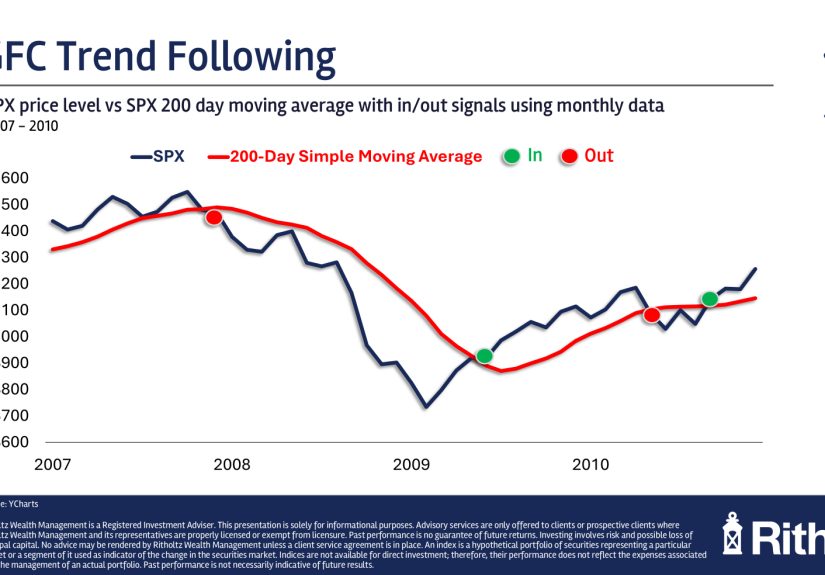
The best time to design exits is before you need them. A strong process might include moving averages, breakout rules, volatility filters, position sizing limits, or trailing stops. The exact recipe can vary, but the principle is the same: do not invent discipline in the middle of a mania.
Diversify across assets and time frames
A bubble in one theme can look like the whole world if your social feed is chaotic enough. Real trend following is usually broader than that. It works better when applied across multiple assets, sectors, and even different lookback windows. That reduces dependence on one glamorous trade and lowers the odds that your portfolio becomes emotionally attached to a single narrative.
Respect volatility, not just direction
A rising chart is not automatically a healthy trend. Some advances are orderly. Others are caffeinated. If volatility expands dramatically, smaller position sizes may be smarter than bigger convictions. Trend followers who survive bubbles tend to size risk, not just chase return.
Do not confuse participation with belief
This is the psychological trickiest part. A trend follower may own an overheated asset without believing it is fairly valued. That is not hypocrisy. It is method. But the distinction must remain clear. The moment participation turns into ideology, discipline weakens. Your job is not to join the cult. Your job is to follow the signal.
Trend Following in a Bubble: The Real Takeaway
So, does trend following in a bubble work? Yes, often impressively. But it works best when traders remember what it is and what it is not.
It is a framework for responding to persistent price movement. It is not a moral endorsement of the asset, a guarantee of safety, or a defense against all crashes. It can help investors stay in profitable moves longer than valuation-based approaches allow. It can also expose them to painful whipsaws when bubbles burst and leadership reverses fast.
The central paradox is this: bubbles are exactly where trend following can shine, because price persistence is strong and narratives attract flows. Yet bubbles are also where humility matters most, because every trend eventually meets reality, liquidity, or both. A disciplined trader can ride the bubble. A careless trader becomes part of the bubble.
In that sense, the smartest trend followers are not the ones who pretend bubbles do not exist. They are the ones who know a bubble can keep inflating, know it can pop sooner than expected, and know their real edge is not prediction. It is process.
Experience Notes: What Trend Following in a Bubble Feels Like
If you have never traded through a bubble, it is hard to appreciate how weird the experience can be. At the beginning, it feels almost reasonable. A sector starts working. Breakouts hold. Dips get bought. Analysts raise targets. More names in the same theme start participating. You tell yourself you are simply following the market, which is true. Nothing feels crazy yet.
Then something changes. The move gets faster. Conversations get louder. People who ignored markets for years suddenly have strong opinions about semiconductors, startups, tokens, housing, or whatever the hot object of the moment happens to be. Everyone has a cousin, neighbor, barber, or group chat legend who “caught the move early,” which in market folklore usually means “bought last Thursday and now speaks like a hedge fund documentary.”
For the trend follower, this is the seductive phase. The strategy looks brilliant because price keeps validating the position. Pullbacks are brief, momentum signals stay strong, and every reduction in exposure feels premature. The trader begins to feel less like a disciplined operator and more like a genius with excellent chart settings. That is usually a bad sign.
The strangest part is emotional conflict. Even while making money, many traders start feeling uneasy. The numbers on the screen look great, but the tone of the market feels off. Price action becomes jumpier. Leadership narrows. Gap moves become common. Good news gets absurdly rewarded. Bad news gets ignored until one day it is not ignored at all. The tape begins acting like a party that has gone on too long: still fun, but someone has definitely broken a lamp.
When the break finally comes, it often does not arrive with a trumpet. Sometimes it starts with a failed rally, a sharp reversal, or a leader that no longer responds to positive headlines. Then a few more leaders crack. Traders who were confidently “buying the dip” last week are suddenly explaining why cash is underrated. Liquidity gets thinner. Spreads widen. Narratives that sounded unstoppable begin to sound suspiciously like marketing copy.
That is when experience matters. A seasoned trend follower does not ask, “Do I still love the story?” The only question is whether the signal still justifies the risk. If the answer is no, positions get cut. No drama. No speeches. No need to win a debate against the market that just changed its mind.
Afterward comes the most humbling part: reflection. Traders realize that the bubble was easier to recognize in hindsight than in real time, that profits felt permanent until they did not, and that process mattered more than brilliance. The lasting lesson is not that bubbles are impossible to trade. It is that they demand emotional distance. In a bubble, your edge is not excitement. It is your willingness to stay systematic while everyone else is auditioning for a sequel to irrational exuberance.