Table of Contents >> Show >> Hide
- 1) Big Pendants Instantly Upgrade Your Space (Without Renovating Anything)
- 2) They Create a Focal Point That Pulls the Whole Room Together
- 3) Big Pendant Lights Help Define Zones in Open-Concept Homes
- 4) They Can Improve the Quality of Light (Not Just the Quantity)
- 5) One or Two Big Pendants Often Look Better Than Three Tiny Ones
- 6) Big Pendant Lights Play Nicely With Many Design Styles
- 7) Where Big Pendant Lights Work Best
- 8) How to Choose the Right Size: The “Big, Not Bonkers” Checklist
- 9) Hanging Height and Spacing: The Details That Make It Look Designer-Level
- 10) Bulbs, Color Temperature, and Dimmers: The “Secret Sauce”
- 11) Common Mistakes (So You Can Skip the “Oops” Phase)
- 12) Installation Notes: Pretty, Practical, and Safe
- Conclusion: Big Pendant Lights Make Rooms Look Finished
- Real-World Experiences With Big Pendant Lights (The “Why Didn’t I Do This Sooner?” Section)
- SEO Tags
Big pendant lights are the interior design equivalent of showing up to a party in a perfectly tailored blazer: suddenly, the whole room looks like it has its life together.
If your space feels “fine” but not finished, chances are your lighting is playing it safe. And safe lighting is how you end up with a kitchen that looks like
it’s still waiting for its glow-up montage.
Oversized pendant lights (also called large pendant lights) don’t just brighten a roomthey define it. They create a focal point, add personality,
improve task lighting, and make your home feel intentionally designed rather than “assembled from the lighting aisle during a mild panic.” Let’s unpack exactly why
big pendants work so welland how to choose and hang them without accidentally installing a UFO over your island.
1) Big Pendants Instantly Upgrade Your Space (Without Renovating Anything)
Want a high-impact update that doesn’t involve dust, demolition, or eating microwaved noodles for three weeks? Install a statement pendant.
Large pendants add visual weightthe kind that makes a room feel anchored and balanced. In design terms, they act like punctuation:
the difference between “nice kitchen” and “Nice kitchen!”
Small fixtures can disappear, especially in open layouts. Big pendant lights don’t disappear. They show up. They do their job. They also politely inform your ceiling
that it’s part of the decor now.
2) They Create a Focal Point That Pulls the Whole Room Together
Every room wants a “main character.” In kitchens, it’s often the island. In dining rooms, it’s the table. In entryways, it’s the spot where you drop your keys
and immediately forget where you dropped your keys.
Oversized pendant lights highlight those central zones and tell your eye where to land. That sense of organization makes the entire space feel more expensive,
even if you’re still using the same barstools you swore were “temporary” in 2019.
Big pendants also solve “floating furniture” syndrome
When furniture sits in a wide, airy room, it can look like it’s drifting. A large pendant creates a strong vertical connection between ceiling and surface,
visually “locking” the arrangement in place. The room feels settled, coherent, and less like it’s about to slide off the edge of the floor.
3) Big Pendant Lights Help Define Zones in Open-Concept Homes
Open layouts are great until everything blends into one giant multipurpose area: cooking, working, eating, scrolling, and wondering why the laundry chair has
become a permanent resident of the living room.
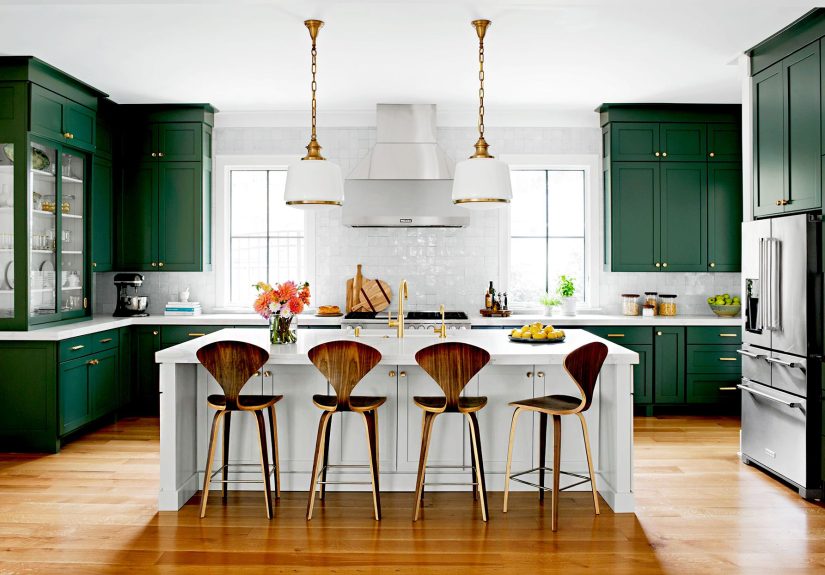
Large pendant lights create visual boundaries without walls. Two oversized pendants over an island tell everyone, “This is the prep zone.”
A dramatic pendant over the dining table says, “This is where we pretend we don’t eat over the sink.” Lighting becomes a soft, stylish way to organize space.
4) They Can Improve the Quality of Light (Not Just the Quantity)
Brightness matters, but how light hits a room matters more. Many oversized pendants have larger shades, wider diffusers, or broader silhouettes that help
spread light more evenly. Translation: fewer harsh hotspots, fewer weird shadows, and less “why do I look like a villain in this mirror” lighting.
Big fixtures can reduce glare and add comfort
A tiny pendant with an exposed bulb can blast light straight into your eyeballs. A larger shade often softens the beam and directs it downward for task lighting
while still providing ambient glow. Add a dimmer, and you’ve basically invented “mood control” for your entire room.
They work best as part of layered lighting
Designers love layered lightingusing ambient, task, and accent lighting togetherbecause it creates depth and flexibility. Big pendant lights can do double duty:
they provide focused task light on a counter or table while contributing to the overall ambience when dimmed and paired with recessed lights, under-cabinet lighting,
and lamps.
5) One or Two Big Pendants Often Look Better Than Three Tiny Ones
There’s nothing inherently wrong with multiple small pendants. But in many kitchens, a row of mini fixtures can look busylike your ceiling is hosting a chandelier
convention.
Oversized pendants simplify the visual scene. One statement pendant or a pair of larger fixtures can feel calmer, more modern, and more intentional. It’s the same
principle as a capsule wardrobe: fewer pieces, stronger impact.
6) Big Pendant Lights Play Nicely With Many Design Styles
Large pendants aren’t locked into one aesthetic. The trick is matching material and shape to your space:
- Modern: Sleek domes, spheres, linear pendants, minimal hardware
- Farmhouse: Oversized lanterns, black metal frames, warm glass
- Coastal: Woven textures, airy shades, soft white finishes
- Midcentury: Globe pendants, opal glass, brass accents
- Industrial: Metal cages, exposed bulbs (with control), matte finishes
- Organic/modern natural: Paper, rattan, linen, sculptural forms
The big takeaway: large pendant lights are less about “going dramatic” and more about choosing the right scale so the fixture looks like it belongs.
7) Where Big Pendant Lights Work Best
Over a kitchen island
This is the classic. Large pendants over an island provide strong task lighting, define the work zone, and instantly add style.
They’re especially effective in kitchens with tall ceilings or large islands that can “swallow” smaller fixtures.
Over a dining table
Dining rooms love a statement piece. A big pendant helps the table feel grounded and creates warm, flattering light for meals, conversations, and the occasional
“let’s just order pizza” night that somehow becomes a cherished memory.
In an entryway or foyer
A large pendant in the entry sets the tone. It’s a design handshake: welcoming, confident, and way less awkward than an actual handshake.
In bedrooms (yes, really)
Big pendants can replace bedside lamps, freeing up nightstand space and creating a boutique-hotel feel. Just make sure the fixture is positioned thoughtfully
and your bulb temperature is warm and calming.
In bathrooms
If the fixture is rated appropriately for damp locations, a large pendant can elevate a powder room dramatically. Bonus: powder rooms are small, so the impact feels
huge. (Just avoid anything so low that it becomes a forehead magnet.)
8) How to Choose the Right Size: The “Big, Not Bonkers” Checklist
Oversized doesn’t mean random. The goal is a pendant that looks intentional, fits the room’s proportions, and doesn’t block sight lines like a stylish hanging boulder.
Step 1: Start with proportion
-
Dining rooms and general spaces: A common sizing guideline is to add your room’s length and width (in feet) to estimate a fixture diameter (in inches).
Example: a 12′ x 10′ room suggests a fixture around 22″ wide. -
Kitchen islands and surfaces: A practical rule is to keep the pendant’s diameter comfortably smaller than the surface width,
leaving breathing room on both sides. Some guides suggest subtracting about 12 inches from the surface width to estimate a maximum pendant diameter.
Step 2: Decide how many pendants you actually need
For many islands, two larger pendants look more elevated than three small ones. If your island is very long, three can workbut the fixtures should have enough scale
to hold their own. If you’re unsure, choose fewer, bigger lights rather than more, smaller lights.
Step 3: Don’t forget visual “weight”
A 20-inch open-frame lantern feels lighter than a 20-inch opaque dome. Glass feels airy; metal feels bold; woven shades feel soft. When in doubt, evaluate the pendant
by its silhouette, not just its diameter.
9) Hanging Height and Spacing: The Details That Make It Look Designer-Level
You can buy the perfect pendant and still end up with a weird vibe if it’s hung too high, too low, or spaced like it was measured by someone closing one eye and guessing.
Here are widely used starting points:
Over a kitchen island
- Height: A common guideline is 30–36 inches from the countertop to the bottom of the pendant.
- Spacing: Many guides suggest spacing multiple pendants roughly 24–36 inches on center (often around 30 inches is a comfortable middle).
- Edge clearance: Keep pendants in from the ends of the island so they look centered and intentional, not like they’re trying to escape.
Over a dining table
- Height: A common guideline is 28–34 inches from the tabletop to the bottom of the pendant.
- Comfort: You want people to see each other without a fixture photobombing every conversation.
For ceiling height
If you’re planning drop length from the ceiling, a widely used approach is that pendants often hang about 12–20 inches below an 8-foot ceiling,
with a bit more drop added as ceilings get taller. This isn’t the only method, but it’s a helpful starting point when you’re staring at a cord and asking,
“Is this too much drama… or not enough?”
10) Bulbs, Color Temperature, and Dimmers: The “Secret Sauce”
The fixture is the outfit. The bulb is the lighting mood. Choose badly and your gorgeous pendant will still make your kitchen feel like a convenience store at midnight.
Pick a consistent color temperature
Many designers recommend keeping a consistent bulb color across the room. In kitchens, common choices are 2700K (warm) or 3000K (neutral-warm).
For more task-heavy areas, some homeowners prefer slightly cooler options, but consistency matters more than chasing the “perfect” Kelvin number.
Prioritize good color rendering
Look for a high CRI (Color Rendering Index) if you want food, finishes, and faces to look natural. In practical terms, 90+ CRI is a great target
in kitchens and bathrooms.
Install dimmers whenever possible
Dimmers turn big pendant lights into multi-taskers: bright for prep, soft for dinner, low for late-night snack missions where you’d prefer not to be fully perceived.
11) Common Mistakes (So You Can Skip the “Oops” Phase)
- Going too small: Tiny pendants over a big island look like earrings on a refrigerator.
- Hanging too high: The pendant feels disconnected from the surface and loses its purpose.
- Hanging too low: It blocks sight lines and becomes an obstacle course for tall people.
- Mixing bulb temperatures: Creates visual chaos and makes a room feel “off.”
- Ignoring glare: Exposed bulbs can be harshdiffuse where you can, and dim where you can’t.
- Forgetting scale elsewhere: Big pendants look best when paired with appropriately scaled stools, hardware, and decor.
12) Installation Notes: Pretty, Practical, and Safe
Pendant lights are often straightforward to install, but oversized fixtures may be heavier, require secure mounting, and sometimes need ceiling reinforcement or
the right electrical box. If you’re not comfortable with wiring, a licensed electrician is worth itbecause “statement lighting” should not also become “statement insurance claim.”
If you rent, consider plug-in pendants with swag hooks (where allowed). You can still get that big, dramatic look without rewiring the ceilingjust keep cords tidy and
avoid creating a tripline situation that turns dinner into a slapstick routine.
Conclusion: Big Pendant Lights Make Rooms Look Finished
Installing big pendant lights is one of the fastest ways to make a home feel designed, not just decorated. Oversized pendants add a focal point, improve the quality of
light, define zones in open layouts, and balance the scale of kitchens, dining rooms, and entrywaysoften with less visual clutter than multiple small fixtures.
If you choose the right size, hang them at a sensible height, space them thoughtfully, and pair them with good bulbs (and dimmers), large pendant lights become the kind
of upgrade that pays you back every daythrough better function, better ambience, and a room that finally looks like it knows what it’s doing.
Real-World Experiences With Big Pendant Lights (The “Why Didn’t I Do This Sooner?” Section)
People rarely regret going bigger with pendantswhat they regret is living with “almost-right” lighting for years. One common story: a kitchen island that felt like it was
always missing something. The counters were new, the stools were cute, the backsplash was finally not beige… and yet the island still looked unfinished. The moment a pair
of oversized pendants went up, the island stopped feeling like a piece of furniture and started feeling like the heart of the room. It’s the difference between “place to chop onions”
and “place where everyone somehow ends up during every gathering, even when you beg them to leave the cooking zone.”
Another frequent experience shows up in dining rooms. Homeowners will describe a table that looks strangely lonelylike it’s waiting for a centerpiece that never arrives.
A big pendant fixes that instantly. It gives the table a visual “roof,” making the dining area feel intentional. The funny part? Once the pendant is installed, people start using
the dining table more. It’s not magicit’s comfort. The lighting feels warmer, the space feels defined, and suddenly eating at the table feels like an actual choice rather than a
special occasion reserved for holidays and relatives you’re trying to impress.
Big pendants also come with practical “aha” moments. A larger shade often means less glare and fewer harsh shadowsespecially over an island where you prep food. People notice they’re
not leaning forward to see what they’re cutting, and they’re not squinting at the countertop like it’s a tiny stage under a spotlight. Add a dimmer and the same pendant becomes
a daytime workhorse and an evening mood-setter. It’s common to hear some variation of: “I didn’t realize how much our lighting was stressing me out until it wasn’t.”
Even in smaller kitchens, oversized pendants can work when chosen thoughtfully. The key experience here is surprise: homeowners expect big fixtures to overwhelm the space, but when the
pendant has an airy material (like glass, open frames, or woven textures), it reads as sculptural rather than heavy. The room can actually feel bigger because the lighting feels
more cohesive and less cluttered. In contrast, multiple small pendants can create visual noiselots of little shapes competing for attention. One larger pendant or a pair of substantial
fixtures often looks cleaner.
Finally, there’s the “confidence factor.” A statement pendant makes a space feel personal. People describe feeling proud when someone walks in and immediately comments on the light
because it signals taste and intention. It’s an upgrade that doesn’t require new cabinets or new floors. It just requires choosing a fixture with the right scale and letting it
do what it was born to do: show up, look amazing, and make the entire room feel like it leveled up.