Table of Contents >> Show >> Hide
- What Happened Before the Special?
- Why the Timing Made It So Much Worse
- Jordan Jensen Was Not Coming Out of Nowhere
- What the Special Itself Suggests About Her Actual Strengths
- Why Podcast Meltdowns Hit Comics Differently Than Actors or Musicians
- What This Says About Comedy in the Algorithm Era
- Can a Comedian Recover From a Pre-Special Spiral?
- A Longer Reflection on the Experience of a Pre-Special Podcast Meltdown
- Final Take
In modern stand-up comedy, a special is no longer just a special. It is a launch, a rebrand, a résumé, a stress test, and, if the comedy gods are feeling particularly mischievous, a public referendum on whether a comic can survive thirty seconds of social media clipping. That is what makes the Jordan Jensen situation so fascinating. Right as her Netflix debut Take Me With You arrived, the conversation around her was not centered on her punchlines, her rhythm, or even her increasingly visible rise through the New York comedy scene. Instead, it was centered on a podcast appearance that felt like a comedian stepping on her own rake, then stepping on three more for good measure.
The story is not compelling because comics saying wild things on podcasts is somehow new. That ship sailed years ago, crashed into a reef, and now hosts a floating gift shop. What makes this moment stand out is the timing. Jensen had real momentum behind her. She had recognition from comedy tastemakers, a reputation as a sharp and fearless club comic, a growing podcast footprint, late-night credits, and a streaming platform large enough to turn a niche favorite into a household name. Then came a pre-special podcast appearance that produced backlash, confusion, and the kind of online discourse that makes everyone involved wish the Wi-Fi had briefly gone out.
What Happened Before the Special?
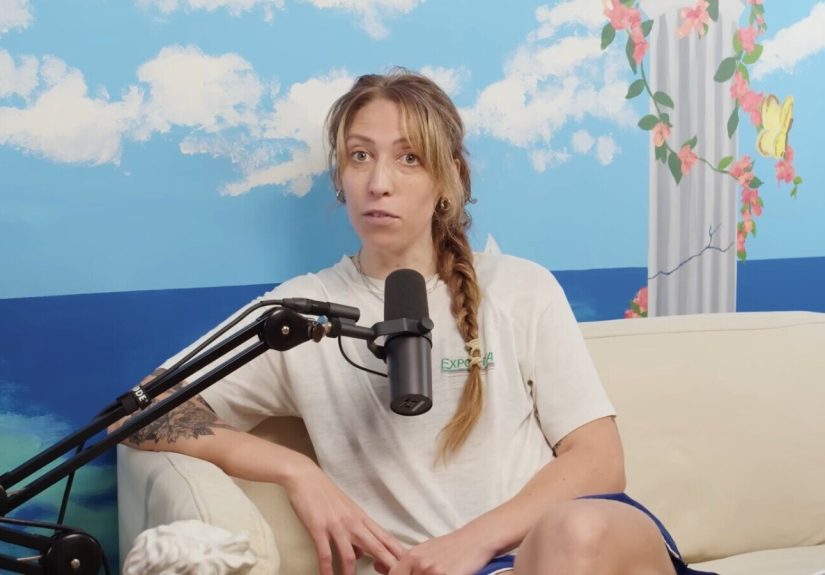
The rough outline is simple: Jordan Jensen appeared on a high-profile comedy podcast during the promotional run for her Netflix special, and the appearance quickly became more notorious than helpful. Instead of giving audiences a neat preview of her comic voice, she veered into messy culture-war commentary, particularly around gender, feminism, and trans issues. The result was not the thrilling danger of a comic taking a big swing. It felt more like an unforced error in real time, with the host pushing back while listeners watched the conversation wobble, skid, and keep going long after the brakes had clearly failed.
That is the cruel beauty of the podcast era. A stand-up set is edited by timing, craft, and the immediate feedback of a room. A long-form podcast is edited by none of those things. It records every half-formed opinion, every awkward pivot, every moment where a comic thinks they are being provocatively honest but instead sound strangely undercooked. Jensen’s appearance landed badly not only because the comments were controversial, but because they did not feel especially disciplined, purposeful, or funny. And in comedy, that last part may be the most unforgivable.
Audiences will tolerate risk. They will tolerate offense. They will even tolerate a joke that makes them recoil if they can tell the comic knows exactly where the line is and why they crossed it. What they tend to reject is vagueness dressed up as bravery. A joke can be dangerous and still feel precise. A rant can be loud and still feel hollow. The backlash around Jensen’s pre-special appearance came from that mismatch. Listeners did not hear a daring comic threading a needle. They heard someone fumbling with the sewing kit and somehow blaming the fabric.
Why the Timing Made It So Much Worse
If this had happened in a random month, it would still have been ugly. Happening right before a debut streaming special made it a master class in terrible rollout strategy. A first big special is supposed to answer a straightforward question for new viewers: “Who is this comedian?” The answer should come from the hour itself. That is the product. That is the thesis statement. But in Jensen’s case, the podcast appearance threatened to become the accidental trailer for her entire brand.
That matters because a special is often the first clean introduction for audiences who do not live inside the comedy podcast ecosystem. Club fans may already understand a comic’s energy, style, and rough edges. The “normies,” to borrow the industry’s favorite slightly smug word, do not. They show up to the special cold. If the buzz before release says, “Here is a funny comic with an unusual voice,” that audience leans in. If the buzz says, “Here is a comic currently spiraling through culture-war talking points on a podcast,” the material has to fight uphill before the opening joke even lands.
That is why the pre-special meltdown label feels earned. It was not just messy. It was strategically upside down. The promotional circuit exists to funnel attention toward the work. Here, attention got hijacked by the performance outside the special. Nothing says “please watch my carefully built hour” quite like detonating a side argument in the internet’s favorite digital green room.
Jordan Jensen Was Not Coming Out of Nowhere
Part of what makes the episode so frustrating is that Jensen was not some random internet loudmouth trying to brute-force relevance. She had already built a substantial comedy résumé. She had been recognized by Vulture as one of the comedians you should know, which in comedy-media terms is basically a flashing sign that says, “Pay attention before you have to pretend you discovered her later.” She had made her late-night television debut. She had become the first female winner of New York’s Funniest Stand-Up competition. She was a regular in serious comedy spaces and had the kind of profile that suggested real staying power.
That background matters because it explains why the podcast appearance felt like self-sabotage rather than mere obscurity. Jensen’s appeal has long come from sounding feral in a controlled way. Her stage persona often feels blunt, weird, grimy, self-deprecating, and unexpectedly insightful all at once. She talks about femininity, bodily discomfort, family chaos, desire, identity, shame, and social awkwardness without sanding away the uglier edges. That is a real voice. It is not polished in the corporate sense, but it is shaped in the comedic sense. Viewers can tell when the mess has architecture.
And that was exactly the problem with the podcast blowup: it pulled attention away from the carefully built version of Jensen and toward the more chaotic, less edited one. Fans who were ready to celebrate a breakthrough suddenly found themselves explaining, contextualizing, defending, or cringing. That is never ideal during a major release week. It is especially bad when the comic in question is trying to jump from cult following to mainstream streaming audience.
What the Special Itself Suggests About Her Actual Strengths
By all indications, Take Me With You was meant to showcase the version of Jordan Jensen that comedy insiders had been talking up for years: frank, dirty, self-lacerating, and unusually comfortable living in the tension between vulnerability and disgust. The special’s themes revolve around hookups, femininity, ADHD, self-worth, awkward social performance, and the absurd demands women face when trying to be desirable, sane, effortless, and somehow also spiritually centered. That is rich material. It is personal without being precious and abrasive without being shapeless.
In other words, the special appears to be built around things Jensen does well: turning embarrassment into momentum, dragging taboo topics into the light, and using an off-kilter point of view to expose how ridiculous social rules really are. The strongest comics often sound like they are confessing and attacking at the same time. Jensen’s lane has been that rare combination of anti-glamour and total stage confidence, as if a mall goth wandered into a philosophy seminar, got kicked out, and came back with better punchlines.
That is why the pre-special controversy feels so counterproductive. There is already plenty to discuss in her actual work: her approach to womanhood, her rough-edged charisma, her refusal to present herself as neat or inspiring, and her ability to mine discomfort without begging for applause. The podcast appearance shifted the frame away from those strengths and toward whether she was chasing provocation for its own sake. Once that question enters the room, it is very hard to get it to leave politely.
Why Podcast Meltdowns Hit Comics Differently Than Actors or Musicians
Actors can survive a bad interview because audiences often separate the person from the role. Musicians can survive one because the song still exists independently of the press cycle. Stand-ups have a harder time. For comedians, the offstage self and onstage self are already entangled. Fans do not just buy the jokes; they buy the worldview, the cadence, the sensibility, the whole slightly damaged operating system. When a comic melts down on a podcast, it does not feel like bonus content. It feels like leaked source code.
That is why comedy podcasts are both career accelerants and career land mines. They build intimacy faster than nearly any other format. A comic can turn casual listeners into loyal fans by sounding spontaneous, weird, and unfiltered. But the same openness can backfire spectacularly if the unfiltered version turns out to be less perceptive than advertised. A bad podcast appearance does not just create bad press. It can make audiences wonder whether the stage act is sharper than the underlying thinking, or whether the comic’s confidence depends too much on a crowd laughing before they fully process what was said.
Jensen’s case also reveals another tension in comedy right now: some corners of the podcast world reward swagger, ideological bait, and anti-PC posturing so heavily that comics can start confusing attention with command. But a Netflix special is a different room. Streaming audiences are broader, colder, and less invested in your mythology. They do not know your podcast lore. They do not care which edgy clique thinks you are a real one. They want the material to work. If the offstage discourse starts smelling like culture-war cosplay, the special has to work twice as hard.
What This Says About Comedy in the Algorithm Era
The old fantasy of stand-up was simple: you got funny in clubs, you got discovered, and then the special sealed the deal. Today, the process is much messier. A comic is also a clip machine, a guest-booking strategy, a podcast personality, a social media rhythm, a fan-community vibe, and, increasingly, a walking bundle of context collapses. One appearance can reach longtime fans, hate-watchers, casual scrollers, industry people, and complete strangers all at once. Everybody arrives with different expectations, and all of them think they are judging the “real” version.
That environment favors comedians who can manage multiple registers without losing themselves. The stage version must be crafted. The podcast version must feel alive. The social version must be clipped into something recognizable. The challenge is that authenticity has become both the currency and the trap. Audiences say they want realness, but what they usually want is coherent realness. They want the comic to feel raw, not random; reckless, not confused; bold, not merely noisy. That distinction is where careers now wobble or solidify.
Jensen’s pre-special podcast fiasco is a perfect case study because it shows what happens when the promotional machine gets ahead of the message. Her rise had been driven by a specific comic voice. The backlash came when that voice seemed to slide into a different register entirely, one that many listeners experienced as ugly, muddled, or opportunistic. The internet rarely rewards nuance in those moments. It just starts handing out labels like a substitute teacher with no seating chart.
Can a Comedian Recover From a Pre-Special Spiral?
Absolutely. Comedy history is basically a museum of public misfires followed by improbable recoveries. Fans have short memories when the material is undeniable. They also have long memories when a comedian looks like they are dodging accountability while demanding admiration anyway. The recovery path usually depends on two things: whether the work is strong enough to redirect the conversation, and whether the comic responds with any sign of clarity, growth, or at least self-awareness.
Jensen is not doomed by one ugly rollout. She is talented, distinctive, and already far enough into the comedy world that a single controversy is unlikely to erase her career. But first impressions at the streaming level matter. A debut special is a door-opener. You do not want the public walking through that door already asking whether you are brilliant, reckless, confused, or just terminally podcast-poisoned. The whole point is to make them ask a better question: “Is this person funny enough that I need to keep watching?”
That is the tragedy of a pre-special meltdown. It replaces curiosity with cleanup. Instead of letting the art introduce the artist, it forces the artist to chase the art around with a mop.
A Longer Reflection on the Experience of a Pre-Special Podcast Meltdown
For the comedian, this kind of experience must feel like spending years building a house and then watching the neighborhood talk exclusively about the trash can you accidentally set on fire out front. You still built the house. It might even be a great house. The wiring is solid, the floors are level, and the living room has real charm. But all anyone can smell right now is burnt plastic and bad timing.
For fans, the experience is its own special form of emotional whiplash. Comedy fans are used to loving messy people. In fact, they often prefer them. The problem comes when the mess stops feeling productive and starts feeling cheap. A comic can be chaotic onstage and still feel trustworthy because the chaos has intention. On a bad podcast, though, fans suddenly hear the unedited draft version of the brain. That can be funny, revealing, and intimate. It can also be alarmingly disappointing. The weird little bridge between performer and audience starts wobbling. People begin asking the dreaded question: “Wait, is this what you really think, or are you just trying to sound edgy because the room rewards it?”
For fellow comedians, the experience is probably familiar in the most uncomfortable way possible. Every comic knows the temptation to keep talking past the point where a bit is working. Every comic knows the little adrenaline rush that whispers, “Double down. Triple down. Surely the fourth attempt will clarify the first three disasters.” Podcasts make that impulse visible. They turn private overconfidence into public content. A club set lets you pivot when the room tightens. A podcast records the pivot, the missed pivot, the explanation of the pivot, and the part where everyone starts wishing for a commercial break that does not exist.
And for casual viewers, the meltdown is often the first thing they learn. That may be the harshest part. They do not know the years of club work, the late-night spots, the grind, the road gigs, or the genuinely strong material. They just meet the controversy first. So now the special is not being watched with fresh eyes. It is being watched through fogged-up glasses. Even a good joke gets interpreted differently when the audience arrives already suspicious, defensive, or annoyed.
There is also a broader emotional truth here about how audiences experience comedy in 2025. People no longer consume a comedian in one format. They absorb the whole ecosystem. They see a clip, then a quote, then a reaction video, then a podcast segment, then a review, then maybe the actual special if they still have the energy. By the time they get to the hour, they are not just evaluating jokes. They are evaluating the entire cloud of vibes around the comedian. It is wildly unfair, deeply modern, and absolutely real.
That is why Jensen’s moment landed with such force. It was not just an awkward interview. It was a reminder that the road to a big special now includes dozens of little trapdoors, and some of them are labeled “just come on the pod and be yourself.” That works wonderfully when “yourself” is sharp, grounded, and funny under pressure. It works less wonderfully when “yourself” starts treating half-baked provocation like a substitute for a bit.
Still, comedy has always been a medium built on recovery. Bombing, reworking, embarrassing yourself, learning the room, finding the joke later than you wanted to, and surviving public weirdness are all part of the profession. So maybe the real experience here is not simply collapse. Maybe it is exposure. A special introduces the polished version. A meltdown reveals the unstable edges. The audience, for better or worse, now gets both.
Final Take
Jordan Jensen’s pre-special podcast blowup stands out because it collided with a moment that should have belonged to her work. Instead of letting a debut Netflix hour define her to a wider audience, the discourse got rerouted through an ugly, awkward, and strategically awful podcast appearance. That does not erase her talent. It does not negate the rise that got her to this point. But it does underline a brutal truth about comedy right now: the microphone that builds your audience can also steal your spotlight.
And if there is one lesson buried underneath all the chaos, it is this: when the special is finally ready, the smartest thing a comedian can do is make sure the funniest thing people are talking about is the special itself.