Table of Contents >> Show >> Hide
- Introduction: When Oscar Glory Meets “Wait, What Is This?”
- Who Is Nick Vallelonga, and Why Does Green Book Still Follow Him Around?
- The Controversy That Would Not Leave the Room
- So What Is That’s Amore! Supposed to Be?
- Why the Movie Sounds Risky Before Anyone Has Seen It
- The Labor Lawsuit: A Bad Sign for a Feel-Good Movie
- Why People Still Care About a Movie That Is Not Even Out Yet
- What That’s Amore! Would Need to Work
- The Bigger Hollywood Pattern: Nostalgia as a Safety Blanket
- Experience Section: Watching the Green Book Aftertaste Turn Into That’s Amore! Anxiety
- Conclusion: A Movie That Has Already Become a PunchlineFairly or Not
Note: This article is based on publicly reported entertainment, awards, labor, and film-industry information available as of May 2026. It discusses That’s Amore! as a developing project and does not claim to review the finished film.
Introduction: When Oscar Glory Meets “Wait, What Is This?”
Hollywood loves a comeback story, a love story, a redemption story, and, if we are being honest, a story where everyone learns something important right before the credits roll and the audience can safely return to parking validation. That is part of why Green Book became such a fascinating movie-world lightning rod. It was loved by many viewers, rewarded heavily by awards voters, criticized sharply by others, and then discussed as if it were less a film than a personality test with popcorn.
Now Nick Vallelonga, the Oscar-winning co-writer and producer of Green Book, has been attached to a new musical romantic comedy titled That’s Amore!. On paper, that sentence already sounds like the beginning of a late-night monologue. The project has been described as a romance about a lonely pizzeria worker, a shy woman named Patty Amore, complicated families, emotional baggage, and music. In other words, it appears to be aiming for the sweet spot between old-school Italian-American romance, sentimental musical, and “your aunt’s favorite movie if she still owns a DVD player.”
But the reason this movie has attracted raised eyebrows is not simply that it sounds old-fashioned. Old-fashioned can be wonderful. Moonstruck is old-fashioned. Marty is old-fashioned. Even a good meatball sub is old-fashioned, and nobody is suing lunch. The issue is that Vallelonga’s post-Green Book career carries a lot of baggage: controversy over historical representation, criticism of racial politics, scrutiny of old social media activity, and, later, labor-related legal trouble connected to That’s Amore! itself.
So, is this new movie really “terrible”? Since the finished film has not had a broad public release or full critical reception, the honest answer is: nobody can fairly review it yet. But the concept, context, and production history give film fans plenty to chew on. And yes, some of that chewing may sound suspiciously like nervous laughter.
Who Is Nick Vallelonga, and Why Does Green Book Still Follow Him Around?
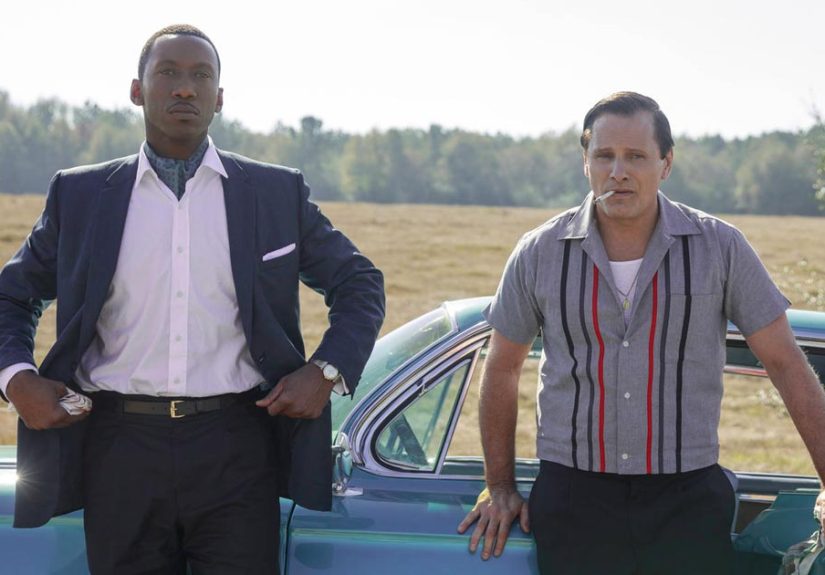
Nick Vallelonga is the son of Frank “Tony Lip” Vallelonga, the real-life Bronx bouncer and driver played by Viggo Mortensen in Green Book. The 2018 film was inspired by Tony Lip’s tour through the Jim Crow South with pianist Dr. Don Shirley, played by Mahershala Ali. Vallelonga co-wrote the screenplay with Brian Hayes Currie and director Peter Farrelly.
The movie became a box office success and an awards-season machine. At the 91st Academy Awards, Green Book won Best Picture, Best Original Screenplay, and Best Supporting Actor for Ali. That is not exactly a minor résumé line. Most writers would frame that Oscar win, hang it above the fireplace, and casually point to it every time someone asked where the bathroom was.
Yet Green Book was never just “the nice road-trip movie that won Oscars.” It also became a shorthand for Hollywood’s tendency to reward feel-good stories about racism that make difficult history easier to digest. Critics argued that the film centered Tony Lip’s emotional growth more than Don Shirley’s interior life. Some described it as a “white savior” narrative. Others felt the film reduced the historical importance of The Negro Motorist Green Book itself, a travel guide created to help Black travelers find safe lodging, restaurants, and services during the era of segregation.
That tension matters because it frames the way people react to Vallelonga’s next projects. When a writer wins Hollywood’s biggest award with a movie that many viewers also found simplistic or historically questionable, the follow-up is not greeted like a blank slate. It arrives wearing a name tag that says, “Hi, I come with discourse.”
The Controversy That Would Not Leave the Room
The most serious criticism around Green Book came from members of Don Shirley’s family. Relatives argued that the movie misrepresented Shirley, especially his relationship with Tony Lip and his connection to his own family and community. Some family members said the film presented Shirley as more isolated than he really was and that they were not properly consulted during the film’s development.
Defenders of Green Book have pointed to interviews, recordings, and statements suggesting that Shirley and Tony Lip had a warmer relationship than critics allowed. They also note that movies based on real events often compress, shape, and dramatize history. That is true. Biopics rarely behave like notarized depositions. Still, when the subject involves race, segregation, and a real Black artist whose living relatives felt sidelined, the “it’s just a movie” defense starts wobbling like a folding chair at a wedding reception.
Adding to the storm, an old social media post by Vallelonga resurfaced during awards season, in which he supported a false claim about Muslims in New Jersey celebrating on 9/11. He apologized, including to Mahershala Ali, who is Muslim. Director Peter Farrelly also apologized after past inappropriate behavior was reported. By the time Green Book won Best Picture, the movie had become a perfect awards-season paradox: beloved by many general audiences, honored by the Academy, and treated by critics as an example of Hollywood patting itself on the back so hard it needed an ice pack.
So What Is That’s Amore! Supposed to Be?
That’s Amore! is a musical romantic comedy written and directed by Nick Vallelonga. The project has been described as the story of Nick Venere, a middle-aged bachelor working in his family’s pizzeria. He believes his best romantic years are behind him, has never heard the words “I love you,” and practices dancing alone after closing. That detail is either charming or a cry for help from the mop bucket.
The romantic lead, Patty Amore, has been described as shy, introverted, emotionally guarded, and shaped by a secret in her past. When Nick and Patty bump into each other, a romantic connection begins. Their families get involved, and the story reportedly becomes a musical comedy about two emotionally bruised people trying to open their hearts.
The cast attached to the project has shifted in public reporting. John Travolta has been associated with the lead role, and earlier reports connected Katherine Heigl and Christopher Walken to the project. Later listings and updates have mentioned names such as Mira Sorvino, Chazz Palminteri, William Fichtner, Drea de Matteo, Robert Davi, Joe Cortese, and D.B. Sweeney. That lineup suggests the film is leaning hard into Italian-American screen familiarity, older-star nostalgia, and the kind of ensemble energy that says, “Someone’s uncle is definitely going to yell at a dinner table.”
The premise has been compared to romantic classics like Marty, Moonstruck, and My Big Fat Greek Wedding. That is an ambitious comparison. Those films work because their sentiment is grounded in character, rhythm, and specificity. They are not merely about people finding love; they are about communities, loneliness, timing, identity, and the odd miracle of someone seeing you clearly when you have almost given up on being seen at all.
Why the Movie Sounds Risky Before Anyone Has Seen It
1. The Premise Sounds Deeply Familiar
There is nothing wrong with a familiar romantic setup. In fact, romance depends on familiar structures. People meet. People resist. People misunderstand. People reconcile. Someone runs, sings, dances, cries, or stands outside a window like emotional weather. The problem is not familiarity; it is whether the movie adds enough fresh observation to justify the trip.
That’s Amore! sounds like it may rely on several well-worn elements: the sad bachelor, the mysterious shy woman, the meddling families, the food-centered ethnic comedy, and the idea that love arrives when two wounded souls collide. Done well, this can be delicious. Done lazily, it can taste like reheated sauce from a jar labeled “Authentic Movie Feelings.”
2. Musical Romantic Comedy Is a Tough Genre
Movie musicals are not easy. They demand rhythm, emotional escalation, strong songs, visual confidence, and actors who can make breaking into song feel inevitable instead of medically concerning. A musical romantic comedy needs charm and structure at the same time. If the songs do not reveal character or heighten emotion, they become speed bumps with choreography.
John Travolta has musical history, of course. From Grease to Saturday Night Fever, he is tied to some of the most recognizable dance-driven screen moments in American pop culture. That gives That’s Amore! a nostalgic hook. But nostalgia is seasoning, not the meal. You cannot build an entire movie on the audience remembering that the star once moved like electricity in tight pants.
3. The Title Is Doing a Lot
That’s Amore! borrows the phrase made famous by the Dean Martin song. The phrase instantly evokes pizza, moonlight, old Italy as imagined by American pop culture, and every restaurant where the check arrives in a little leather folder. That can be fun. It can also be dangerously close to stereotype if the movie does not treat its world with enough texture.
A title like That’s Amore! promises big-hearted romance, broad comedy, and maybe a few hand gestures visible from space. The challenge is whether the film can use those familiar cultural signals with affection and wit instead of flattening them into a themed party.
The Labor Lawsuit: A Bad Sign for a Feel-Good Movie
One of the biggest real-world issues connected to That’s Amore! is not artistic at all. In December 2023, IATSE local unions filed a civil lawsuit against That’s Amore Movie, LLC, alleging that the production failed to meet wage and benefit obligations to union workers. Public statements from the union said the film had a projected budget of $34 million and that dozens of workers were owed more than $570,000 in combined wages, plus benefit contributions.
That kind of allegation changes the tone around a project. A romantic musical can ask us to believe in love, healing, family, and the magic of song. But audiences and industry workers may have a harder time embracing that message if the production itself is associated with unpaid crew claims. The people who light the scenes, build the sets, move the equipment, style the hair, check the continuity, and keep the whole machine running are not background extras in the ethics of filmmaking. They are the reason there is a movie at all.
Hollywood has always loved stories about dreamers. But behind every dream is labor. When labor disputes enter the conversation, the sparkle dims. It is difficult to sell “amore” while the crew is reportedly asking, “Can we get our checks?”
Why People Still Care About a Movie That Is Not Even Out Yet
The reason That’s Amore! attracts attention is not simply that it exists. Many unreleased movies exist. Some are announced, vanish, return, change cast, change financing, and eventually appear on a streaming platform at 2:00 a.m. under the category “Because You Watched One Thing With John Travolta.”
This movie matters to pop-culture watchers because it is a follow-up from a writer whose biggest success remains controversial. Green Book is now part of a larger conversation about what the Academy rewards, how Hollywood packages social issues, and why “inspired by a true story” can become a battlefield. When that writer pivots to a musical romance full of nostalgic ingredients, people naturally wonder whether the same sentimental instincts that made Green Book popular will become even more obvious here.
That does not mean the film is doomed. Sometimes projects that sound terrible become delightful. Sometimes a cheesy title hides a sincere heart. Sometimes a movie that looks like a walking punchline turns out to understand loneliness better than prestige dramas with three rain-soaked monologues and a violin score. Film history is full of surprises. But skepticism is understandable.
What That’s Amore! Would Need to Work
For That’s Amore! to succeed creatively, it would need more than star power and pasta-adjacent vibes. It would need characters who feel specific rather than assembled from romantic-comedy spare parts. Nick Venere cannot simply be “lonely pizzeria guy who dances.” Patty Amore cannot simply be “shy woman with a secret.” Their families cannot merely shout, hug, and serve marinara as emotional punctuation.
The movie would also need songs that matter. In a good musical, characters sing because ordinary speech is no longer enough. The music should reveal desire, fear, shame, humor, and hope. If the songs are just decorative, the film risks feeling like a dinner theater production trapped inside a feature film.
Most importantly, the movie would need emotional honesty. The best romantic comedies are not successful because they avoid clichés. They are successful because they make clichés feel newly true. Audiences can forgive broadness, sentiment, and even a title that arrives wearing a red-checkered tablecloth if the film understands the ache underneath the joke.
The Bigger Hollywood Pattern: Nostalgia as a Safety Blanket
That’s Amore! also reflects a broader industry habit: using nostalgia as a shortcut to trust. Older stars, familiar songs, ethnic family comedy, pizzeria settings, classic-romance references, and musical numbers all signal comfort. The message is clear: come in, sit down, remember movies you used to love, and please do not ask too many questions.
There is an audience for that. In a world full of franchise fatigue, algorithmic content, and superhero universes that require homework, a sincere romantic musical could feel refreshing. Not every movie needs to reinvent cinema. Sometimes people just want two adults to fall in love, a family to interfere, and someone to sing under warm lighting.
But nostalgia becomes dangerous when it avoids complexity. That was also part of the criticism aimed at Green Book. Many viewers felt the film turned a brutal historical era into a smooth, reassuring friendship tale. If That’s Amore! similarly leans on old tropes without self-awareness, it may confirm every skeptical joke made about it. If it finds genuine feeling inside its throwback style, it could surprise people.
Experience Section: Watching the Green Book Aftertaste Turn Into That’s Amore! Anxiety
Watching the conversation around Nick Vallelonga’s new movie feels a little like sitting at a family dinner where someone says, “Let’s not talk politics,” and then immediately brings up the most political thing imaginable. On the surface, That’s Amore! sounds harmless: a lonely man, a guarded woman, music, family chaos, and romance. It is the kind of premise that should make people smile politely and ask whether Christopher Walken sings. But because it comes after Green Book, the reaction is more complicated.
The experience of watching Green Book itself was already split for many viewers. Some people saw a warm, funny, well-acted road movie about friendship overcoming prejudice. They enjoyed the chemistry between Mortensen and Ali, laughed at the banter, and left feeling better than when they arrived. That is not fake. Audience pleasure is real, and Green Book undeniably connected with a lot of people.
But for others, the movie produced a strange discomfort. It was polished, likable, and easy to watch, yet that ease became the problem. The movie seemed to turn a deeply dangerous historical reality into something tidy and digestible. Dr. Don Shirley’s brilliance, loneliness, identity, and social world felt less central than Tony Lip’s journey toward being a better man. The title referenced a vital survival guide for Black travelers, but the film did not fully explore the guide’s history or the community that needed it. It was as if a movie had borrowed the weight of history but kept checking its watch to make sure nobody got too uncomfortable.
That is why the idea of That’s Amore! inspires such immediate skepticism. The project appears to double down on sentiment, nostalgia, and broad emotional framing. For viewers already wary of Vallelonga’s storytelling instincts, the new movie sounds like a giant plate of cinematic comfort food with extra cheese. Comfort food can be wonderful, but too much cheese can cover up what is missing underneath.
There is also the experience of following Hollywood announcements themselves. A new film is announced with big names. Then the cast changes. Then the project lingers. Then there are reports about production trouble. Then a trade site updates the status, another site repeats an older cast list, and suddenly the movie becomes less a film than a rumor wearing cologne. That uncertainty creates its own comedy. It makes people wonder whether the movie will arrive as a heartfelt throwback, a camp curiosity, or a cautionary tale screened at 11 p.m. by people live-posting every musical number.
Still, there is a small, annoying part of every movie fan that wants to be wrong. It would be fun if That’s Amore! turned out to be sweet, strange, sincere, and unexpectedly moving. It would be fun if Travolta danced with real vulnerability. It would be fun if the songs had charm, the families had texture, and the romance landed with old-school warmth. Cynicism is easy; a good romantic musical is hard. If Vallelonga pulls it off, the jokes will look premature.
But until then, the experience is mostly one of cautious disbelief. The title sounds like a parody. The premise sounds familiar. The production history raises concerns. The connection to Green Book brings unresolved baggage. And somewhere in the distance, a film critic is already sharpening a metaphor about pizza dough, Oscar bait, and emotional mozzarella.
Conclusion: A Movie That Has Already Become a PunchlineFairly or Not
The Writer Of ‘Green Book’ Is Making A New (Terrible) Movie is a funny headline because it captures a real cultural mood. Nick Vallelonga’s That’s Amore! may not be terrible. It may be charming. It may be chaotic. It may be released quietly and become a niche favorite among viewers who love sentimental musicals and old-school romantic comedy. But the skepticism surrounding it is not random.
Vallelonga’s Oscar-winning success came with serious debate about representation, authorship, history, and Hollywood’s appetite for easy redemption stories. His new project, a musical romantic comedy built around lonely love, family meddling, Italian-American nostalgia, and a famous old song title, sounds ripe for either heartfelt surprise or spectacular corniness. Add the reported labor dispute connected to the production, and the movie’s feel-good promise becomes more complicated.
The fairest position is also the funniest: wait for the film, but keep one eyebrow raised. In Hollywood, amore can conquer allexcept maybe unpaid wages, overfamiliar tropes, and the internet’s ability to smell Oscar-winning cheese from three states away.