Table of Contents >> Show >> Hide
- Why Espresso Machine Cleaning Matters
- Know Your Machine Before You Start
- What You Need in Your Cleaning Kit
- What to Clean After Every Use
- Your Weekly Espresso Machine Cleaning Routine
- Monthly or Every 1 to 3 Months: Deep Cleaning Time
- Descaling Your Espresso Machine Without Panic
- How to Clean a Superautomatic Espresso Machine
- Common Espresso Machine Cleaning Mistakes
- A Simple Espresso Machine Maintenance Schedule
- Signs Your Espresso Machine Needs Cleaning Right Now
- Real-World Experience: What Cleaning Your Espresso Machine Actually Feels Like Over Time
- Conclusion
- SEO Tags
If your espresso suddenly tastes flat, bitter, or vaguely like yesterday’s bad decisions, your beans may not be the villain. Your espresso machine might be begging for a bath. A clean machine does not just look better on the counter; it brews better coffee, steams milk more reliably, and usually lives a much longer, happier life. In other words, regular espresso machine cleaning is less “optional chore” and more “the secret handshake of people who make consistently good coffee at home.”
This guide breaks down exactly how to clean an espresso machine without turning your kitchen into a chemistry lab. Whether you use a manual machine, a semi-automatic espresso machine, or a push-one-button superautomatic, you will learn what to clean, how often to clean it, which mistakes to avoid, and why backflushing and descaling are not the same thing. Spoiler: one removes coffee oils, the other removes mineral scale, and your machine would like you to stop confusing the two.
Why Espresso Machine Cleaning Matters
Espresso is concentrated, which means every tiny issue gets amplified. Coffee oils cling to metal parts, milk residue hardens like edible cement inside the steam wand, and minerals from water build up in boilers and water paths. The result can be stale flavors, weak steam pressure, slow flow, weird noises, inconsistent shot times, and eventually repair bills that feel deeply personal.
Cleaning your espresso machine regularly helps in three big ways. First, it protects flavor. Fresh espresso should taste lively, sweet, and balanced, not muddy or ashy. Second, it improves performance. Clean valves, screens, baskets, and wands simply work better. Third, it extends the life of your machine. Think of it as brushing your machine’s teeth, except the patient is stainless steel and a little dramatic.
Know Your Machine Before You Start
Manual and Semi-Automatic Espresso Machines
These machines usually require the most hands-on care, but they are also the easiest to inspect. You can clean the portafilter, basket, group head, steam wand, drip tray, and water tank yourself. If your machine has a three-way solenoid valve, it may support backflushing with a blind basket.
Heat Exchanger and Dual-Boiler Machines
These higher-end machines often benefit from a structured maintenance routine because they are built to pull frequent shots and steam milk with enthusiasm. That enthusiasm, unfortunately, also means more coffee oils and more milk residue if you get lazy.
Superautomatic Espresso Machines
These do a lot for you, but they do not clean themselves as completely as the marketing photos suggest. Many have automatic rinse cycles, yet they still need manual attention for the brew group, milk system, drip tray, dregs box, and water system. Convenience is wonderful, but convenience also has a drip tray.
What You Need in Your Cleaning Kit
A good espresso machine maintenance routine does not require a suitcase full of tools. A few basics will do the job:
- A soft microfiber cloth or bar towel
- A group head brush
- Espresso machine cleaning detergent or tablets
- A blind basket for backflushing, if your machine supports it
- Milk system cleaner for steam wands or automatic frothers
- A descaling product approved for your machine
- A small container for soaking baskets and removable parts
- A soft sponge and mild dish soap for non-electrical removable parts
Avoid abrasive scrubbers, random household chemicals, and the wild confidence of using “whatever is under the sink.” Espresso machines are not impressed by improvisation.
What to Clean After Every Use
1. Purge and Wipe the Steam Wand
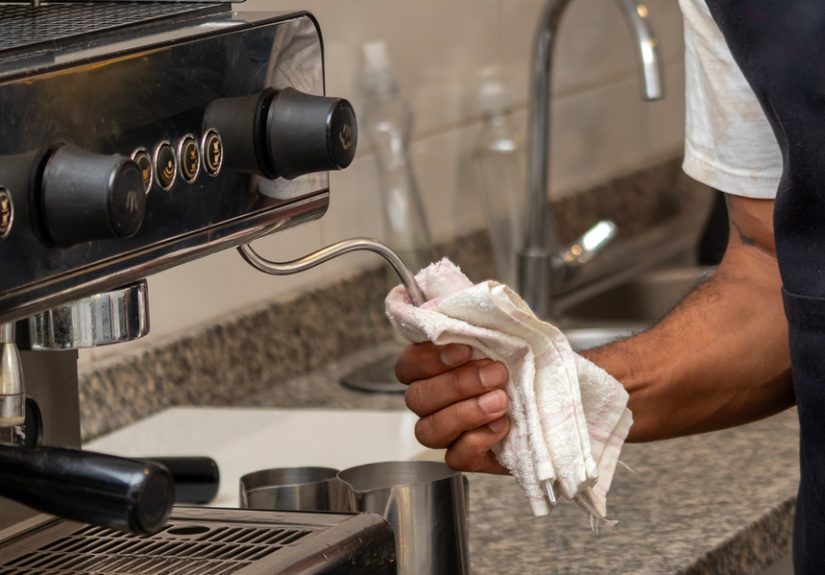
This is the non-negotiable rule of milk drinks. As soon as you finish steaming, wipe the wand with a damp cloth and purge a short burst of steam. Do not wait. Milk residue turns stubborn fast, and once it dries inside the tip, your next cappuccino may arrive with sad steam pressure and a side of clog.
2. Knock Out the Puck and Rinse the Portafilter
Discard the used puck, rinse the portafilter and basket, and wipe them dry. This removes old grounds and oils before they bake onto the metal. Leaving a soggy puck sitting around is a choice, but it is not a good one.
3. Flush the Group Head
Run a blank shot or brief water flush through the group head after brewing. This helps remove leftover grounds and oils from the shower screen. Your next shot will taste cleaner, and your machine will stop carrying emotional baggage from the last extraction.
4. Empty the Drip Tray If Needed
Do not let the drip tray become a science project. Espresso splashes, coffee oils, water, and milk drips create the sort of aroma no one writes tasting notes about. Empty and rinse it often.
5. Refresh the Water Tank
If water has been sitting around for too long, dump it, rinse the tank, and refill with fresh water. Good water matters for both flavor and scale control, so this tiny habit goes a long way.
Your Weekly Espresso Machine Cleaning Routine
Clean the Group Head More Thoroughly
Use a group head brush to clean around the gasket and shower screen. Oils and tiny particles love to hide there. A quick scrub once a week helps prevent buildup that can eventually affect sealing and shot quality.
Backflush With Water
If your machine supports it, perform a water backflush using a blind basket. This is especially useful on semi-automatic machines with a three-way valve. It pushes water back through the system to loosen coffee residue. If your machine does not support backflushing, do not force the issue. Read the manual first and keep the heroics for latte art competitions.
Soak Baskets and Portafilter Parts
Soak the filter baskets and metal portafilter parts in warm water with espresso cleaner. This helps dissolve stubborn coffee oils that regular rinsing misses. Be careful with portafilters that have wood handles or finishes that should not be submerged.
Wash the Water Tank and Drip Tray
Use mild dish soap, rinse thoroughly, and let everything dry. This is basic housekeeping, but espresso machines reward basic housekeeping more than most kitchen appliances.
Monthly or Every 1 to 3 Months: Deep Cleaning Time
Detergent Backflush
If your machine allows it, use espresso machine detergent or cleaning tablets with a blind basket for a deeper backflush. This removes oily buildup that water alone cannot handle. Follow your machine’s instructions for timing and rinse cycles. Too little rinsing leaves cleaner behind, and no one wants a shot with top notes of lemony detergent.
Deep-Clean the Steam Wand or Milk System
If you make milk drinks regularly, use a proper milk cleaner on the steam wand or automatic milk circuit. Daily wiping is great, but proteins and fats can still accumulate over time. This is especially important for superautomatic machines with milk hoses or integrated frothers.
Clean Screens, Trays, and Internal Touch Points
Remove and clean anything the manufacturer says is removable: shower screens, drip tray covers, dregs containers, brew groups, and frothing components. Rinse thoroughly and let parts dry before reassembly.
Replace or Check Water Filters
If your machine uses a water filter, check the replacement schedule. A good filter can reduce scale and improve taste, but only if it is changed on time. An expired filter is mostly decorative.
Descaling Your Espresso Machine Without Panic
Descaling removes mineral deposits caused by hard water. It is not the same as regular coffee cleaning. Coffee oils collect around the group head, portafilter, and valves. Scale builds inside boilers, thermoblocks, and water lines. One is greasy. One is chalky. Both are rude.
How often should you descale an espresso machine? That depends on your water hardness, how often you brew, whether you use a water filter, and what the manufacturer recommends. Some machines will prompt you when it is time. Others expect you to pay attention like a responsible adult.
Always use the descaling procedure approved for your specific machine. Some manufacturers strongly prefer branded or approved descaling products, and that is not just brand drama. Different machines use different metals, sensors, and flow paths. The wrong product or method can cause problems. Vinegar is often suggested online for everything from coffee makers to existential dread, but for espresso machines it is frequently not the best option. Use the product your machine is designed for unless the manufacturer clearly says otherwise.
If you live in a hard-water area, descaling will probably be part of your life. If you use softened or filtered water correctly, you may need it less often. Either way, waiting until your machine sounds like it is gargling gravel is not a maintenance plan.
How to Clean a Superautomatic Espresso Machine
Superautomatic machines deserve their own section because they hide the mess better. They often run automatic rinses, but that is only part of the job.
- Empty and wash the drip tray and coffee grounds container frequently.
- Clean the milk system exactly as directed, especially tubes, carafes, and frothing attachments.
- Remove and rinse the brew group if your model allows it.
- Lubricate moving brew-group parts if the manufacturer recommends food-safe lubricant.
- Run the machine’s built-in cleaning and descaling cycles when prompted.
Some brew groups should never go in the dishwasher. High heat can warp plastic components, which is a cruel way to learn that “easy cleanup” has limits.
Common Espresso Machine Cleaning Mistakes
Ignoring the Steam Wand
One missed wipe is not the end of the world. Repeating that mistake for a week is how clogs are born.
Backflushing a Machine That Should Not Be Backflushed
Not every espresso machine is built for this. If you are unsure, check the manual before using a blind basket.
Thinking Descaling Solves Everything
Descaling does not remove coffee oils from the group head or solenoid. It handles minerals, not espresso gunk.
Using Harsh Cleaners
Bleach, abrasive powders, and random degreasers do not belong in your espresso ritual. Use coffee-specific products where needed.
Skipping Rinses After Cleaner
Any detergent or milk cleaner needs a thorough rinse cycle after use. “Probably good enough” is not the standard when hot water is about to run through it into your cup.
A Simple Espresso Machine Maintenance Schedule
| Task | How Often |
|---|---|
| Wipe and purge steam wand | After every milk drink |
| Rinse portafilter and basket | After every shot |
| Flush group head | After every session |
| Empty drip tray and grounds container | As needed, often daily |
| Brush group head and clean removable parts | Weekly |
| Water backflush | Weekly, if supported |
| Detergent backflush | Every 2 to 4 weeks, if supported |
| Deep-clean milk system | Monthly or more often with heavy milk use |
| Replace water filter | Per manufacturer schedule |
| Descale machine | As needed based on water and manufacturer guidance |
Signs Your Espresso Machine Needs Cleaning Right Now
If your shots are running too fast or too slow for no obvious reason, your steam wand sputters, your espresso tastes stale, your machine smells funky, or you notice reduced water flow, cleaning should move to the top of your to-do list. Other warning signs include visible buildup on the shower screen, milk crust on the wand tip, and drip trays that look like they should require a permit.
Real-World Experience: What Cleaning Your Espresso Machine Actually Feels Like Over Time
Here is the part people do not always mention in glossy coffee content: cleaning your espresso machine is less about one dramatic deep-cleaning weekend and more about building a rhythm. The first week you own a machine, you treat it like a museum piece. You wipe everything. You admire the portafilter. You probably name the machine something ridiculous. By month two, real life shows up. You make a rushed latte before work, promise yourself you will wipe the steam wand in a minute, and then remember it six hours later when it looks like it has been shellacked in milk.
That is usually the turning point. Most home baristas learn quickly that tiny habits beat heroic cleanup sessions. A five-second purge of the steam wand saves twenty minutes of scrubbing later. A quick flush through the group head keeps tomorrow’s shot from tasting like today’s leftovers. Emptying the drip tray before it becomes a swamp is not glamorous, but it is one of the easiest ways to keep the whole setup feeling under control.
There is also a noticeable flavor difference once you get serious about espresso machine maintenance. People often blame beans, grinders, weather, moon phases, or cosmic injustice when espresso starts tasting dull. In many cases, the machine is simply dirty. Old coffee oils can make even excellent beans taste tired. Once you clean the basket, screen, portafilter, and group head properly, the flavor often snaps back into focus. Suddenly the same beans taste sweeter, brighter, and more defined. It is mildly annoying, because it means the machine was right and you were wrong.
Descaling brings its own life lesson. Most people put it off because it sounds technical, messy, or both. But once you do it correctly with the right product and the manufacturer’s instructions, it becomes much less intimidating. The bigger challenge is remembering that descaling is not a substitute for routine cleaning. You can descale a machine and still have a grimy steam wand. You can also keep the outside sparkling while scale quietly builds inside. Espresso machines are wonderful at teaching the difference between looking clean and actually being clean.
Superautomatic owners go through a similar arc, just with more removable plastic parts. The machine seems magical at first. Then one day the milk system starts acting weird, or the brew group gets sticky, or the grounds container smells like a damp compost bin. That is when the reality sets in: the easier a machine makes espresso, the more disciplined you need to be about following its cleaning prompts. Convenience does not erase maintenance. It just packages it in friendlier buttons.
The good news is that once a cleaning routine becomes habit, it stops feeling like a chore. It becomes part of the ritual, right alongside grinding, tamping, and pretending you can absolutely taste “stone fruit” before your second sip. A clean espresso machine rewards you daily with better flavor, more reliable performance, and fewer unpleasant surprises. And honestly, there is something deeply satisfying about pulling a beautiful shot from a machine you know is clean all the way through. It feels competent. It feels calm. It feels like the coffee version of having your life together, even if the rest of the kitchen says otherwise.
Conclusion
The best way to clean an espresso machine is to stop thinking of it as one giant project and start treating it like a series of small, smart habits. Purge the steam wand. Rinse the portafilter. Flush the group head. Deep-clean on schedule. Descale when your water and your manufacturer say it is time. Do that consistently, and your machine will reward you with better espresso, better milk texture, fewer breakdowns, and a lot less mystery funk.
Great coffee starts with fresh beans and a good grinder, but it stays great when your espresso machine is clean. The shot in your cup may only last a few seconds, but the taste of neglect can hang around much longer. So give the machine the care it deserves. Your espresso will taste brighter, your kitchen will smell better, and your future self will not have to chip dried milk off the steam wand like an archaeologist.