Table of Contents >> Show >> Hide
- What Was Found Beneath Lake Van?
- Why the Viral Version Needed a Little Archaeological Braking
- Who Were the Urartians, and Why Are They Central to This Story?
- Why Lake Van Preserved the Ruins So Well
- Why This Discovery Still Matters
- What Travelers and History Lovers Can Take From the Lake Van Story
- Experiencing the Mystery of Lake Van Today
- Conclusion
Every now and then, a rumor refuses to die because, annoyingly for skeptics everywhere, it turns out to be at least partly right. That is exactly what happened at Lake Van in eastern Turkey, where local stories had long insisted that ancient ruins slept beneath the water. For years, that sounded like the sort of tale people tell while pointing dramatically at a horizon and insisting they definitely saw something strange out there. Then divers went looking. And yes, they found stone walls, fortress-like remains, and enough evidence to launch one of archaeology’s favorite modern genres: the “wait, this is real?” headline.
The story that caught global attention centered on an “ancient castle” beneath Lake Van, Turkey’s largest lake. The ruins were linked to the Urartians, an Iron Age civilization that once dominated the region around the lake. That alone is fascinating. But the real story is even better than the viral version, because it is more layered, more human, and much more archaeological. Instead of a neat fairy-tale fortress frozen in time, what researchers appear to have found is a site shaped by shifting shorelines, reused stone, and centuries of history stacked like a very dramatic lasagna.
So yes, the rumors were true. There really are ancient-looking fortress remains under the lake. But the deeper story is not “Atlantis, but make it Turkish.” It is about how landscapes change, how civilizations borrow from the past, and how a lake can hide history in plain sight for generations. If that sounds delightfully cinematic, good. It should.
What Was Found Beneath Lake Van?
The discovery that sparked worldwide interest came from a diving team exploring Lake Van near the town of Adilcevaz. The group, led by underwater photographer Tahsin Ceylan and working with local specialists, documented substantial stone walls beneath the water. Reports described visible sections of masonry rising several meters above the lakebed, with the broader remains stretching across a sizable area. In other words, this was not one lonely rock trying its best. It looked like a genuine built structure.
That is where the phrase “underwater castle” took off. The site appeared fortress-like, and because the stonework seemed consistent with ancient construction in the region, early coverage connected it to the Urartian kingdom, which flourished around Lake Van during the Iron Age. The visual appeal did the rest. Blue water. Massive walls. Lost history. Archaeology never says no to good scenery.
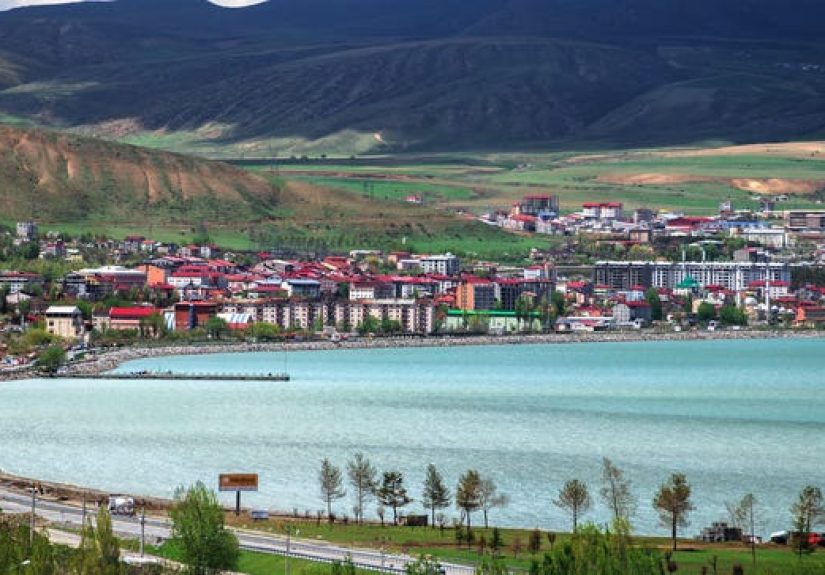
Part of what made the find so compelling was the setting itself. Lake Van is enormous, intensely blue, and already rich with local lore. It sits near the Iranian border in eastern Anatolia and has long been an important natural and historical landmark. Once divers found walls below the surface, the old stories suddenly looked less like folklore and more like community memory with very good instincts.
And that is a useful reminder: people who live near an ancient landscape often know more than outsiders give them credit for. Archaeology may bring the cameras and the measurements, but local memory often keeps the first breadcrumb trail alive.
Why the Viral Version Needed a Little Archaeological Braking
Here is where the story gets more interesting than the clicky version. After the discovery exploded online, experts pushed back on the simplest interpretation. Not because the ruins were fake. They were not. The caution was about the label.
Several archaeologists noted that the site may not be a single, neatly preserved, 3,000-year-old castle sitting untouched beneath the water like a time capsule with stone walls. Instead, the remains likely include a mix of periods. Some parts may indeed date back to the Urartian era, while other elements appear to be medieval. That distinction matters, especially if later builders reused older stones, which was common practice in many parts of the ancient and medieval world. History has always loved recycling, just with fewer reusable tote bags.
That means the underwater ruins are real, but the phrase “ancient castle” may oversimplify what is actually a more complex site. Some reports on the region from the mid-20th century had already mentioned a medieval castle at Adilcevaz and noted reused Urartian blocks. In other words, the ruins were not necessarily unknown to scholarship, even if the underwater imagery made them newly famous to the wider public.
There is also the question of submersion. It is still not entirely clear when the structure went underwater or how its different components interacted across time. Did an older Urartian wall stand first, only to be incorporated into later fortifications? Did changing lake levels gradually claim parts of the settlement? Was the site repeatedly used, rebuilt, and partially drowned over centuries? Those questions are not annoying footnotes. They are the actual treasure map.
Good archaeology often works like this: the first headline says, “A lost castle has been found.” The better second headline says, “The past is messier, smarter, and more surprising than we thought.” The Lake Van discovery belongs firmly in that second category.
Who Were the Urartians, and Why Are They Central to This Story?
To understand why scholars so quickly associated the ruins with Urartu, you have to meet the civilization that once ruled the region. Urartu was an Iron Age kingdom centered around the Lake Van area and surrounding highlands. It became a major power in the first millennium B.C., especially during the ninth and eighth centuries B.C., and controlled territory across parts of what are now eastern Turkey, Armenia, and northwestern Iran.
The Urartians were known for fortresses, state-building, military strength, and skilled craftsmanship, especially in bronze. They built strongholds in commanding positions and left behind inscriptions, temples, defensive works, and finely made metal objects. If you were trying to build a kingdom that announced, “We are very serious people, and these walls are not decorative,” Urartu had the aesthetic down.
That matters because the Lake Van region is not some random place where a castle-shaped mystery suddenly appeared. It was the heartland of a civilization famous for exactly the kind of architecture that makes archaeologists squint at masonry and say, “That looks familiar.” Nearby excavations at Urartian sites such as Ayanis Castle have continued to reveal just how sophisticated this culture was, from temple complexes to weapons, ceremonial objects, and evidence of elite life.
So when divers found submerged walls near Lake Van, the Urartian connection made sense. Even if parts of the visible structure prove to be medieval, the site still appears tied to a landscape deeply shaped by Urartian settlement, building traditions, and long political importance.
Why Lake Van Preserved the Ruins So Well
One reason the discovery looked so dramatic in photographs is that Lake Van can be unusually kind to stone remains. The lake is enclosed, alkaline, and brackish, and its chemistry has helped preserve submerged features in striking condition. Early reports on the site emphasized how well some of the walls had survived beneath the water.
That preservation adds another layer of fascination. Water often destroys. But in the right environment, it can also protect. Lake Van has already produced other underwater curiosities, from unusual formations nicknamed “fairy chimneys” to historic remains from later eras. The lake is less an empty body of water than a giant archive with waves on top.
Its shifting levels also help explain why ruins might be partially submerged today. Lakes in enclosed basins can rise and fall over long stretches of time, changing coastlines and swallowing built spaces that once stood on dry land. A fortress near the shore in one era can become a diver’s destination in another. Nature has many hobbies, and rearranging human certainty is one of them.
Why This Discovery Still Matters
Even with all the caveats, the Lake Van site remains a remarkable discovery story. First, it confirms that the old rumors of hidden ruins beneath the water were grounded in reality. Second, it highlights how archaeology often benefits from collaboration between local explorers, photographers, academics, and historians. Third, it reminds us that ancient sites are not always singular snapshots. They are layered places where one civilization builds, another reuses, and the environment edits the final draft.
It also shows why viral archaeology stories should not be dismissed just because the first headline was too tidy. Sometimes the truth is not less exciting. It is simply more adult. The real wonder at Lake Van is not just that walls lie beneath the water. It is that those walls may tell a longer story about the Urartians, medieval builders, changing lake levels, and a landscape that has carried memory across centuries.
And honestly, that version has everything: mystery, empire, geology, reused stone, and a lake dramatic enough to deserve its own supporting-actor award.
What Travelers and History Lovers Can Take From the Lake Van Story
For travelers, the Lake Van ruins are a reminder that some of the world’s most thrilling historical stories are not always in the biggest museums or the most over-photographed capitals. Sometimes they are hidden in places where legend and landscape still talk to each other. Lake Van is already known for its beauty, its size, and its deep historical associations. Add underwater ruins to the mix, and the area becomes the kind of destination that makes history buffs start pricing flights while pretending they are “just curious.”
For history lovers, the site offers something even better than a clean fairytale. It offers evidence of continuity. The Urartians built around Lake Van. Later communities lived there too. Builders reused stone. Shorelines changed. Memory lingered. A rumor survived. Then divers dropped below the surface and found that the past had not vanished after all. It had simply changed address.
Experiencing the Mystery of Lake Van Today
There is something wonderfully unsettling about standing beside a lake that might be hiding a fortress below its surface. Not unsettling in a haunted-house way, though Lake Van certainly has enough folklore to flirt with that mood. More in the sense that your brain suddenly realizes the landscape in front of you is incomplete. The blue water is not just water. It is a curtain.
If you visit the Lake Van region today, that feeling can sneak up on you fast. The lake is broad, bright, and almost impossibly calm in photographs, but in person it carries a quiet heaviness. You look across it and understand why people have been telling stories about it for generations. A place that large never feels empty. It feels like it knows things.
Traveling around the lake, you are constantly reminded that history here is not trapped behind glass. It sits in the shape of the hills, in ruined walls on the shore, in old settlements, in churches on islands, and now, famously, beneath the waterline. Even when you are not diving, the imagination does most of the work for you. You find yourself staring into the lake and mentally sketching battlements below the surface, like an overly ambitious documentary narrator living rent-free in your own head.
There is also a strange intimacy to the story. Most people think of ancient fortresses as things you climb. You expect steps, gates, towers, maybe a mildly threatening audio guide. But Lake Van flips that expectation. This one must be imagined downward. The fortress is not above the world, dominating the horizon. It is below it, quiet and half-hidden, making you think less about conquest and more about time.
That shift matters. It turns the discovery from a simple “look what we found” moment into a meditation on how landscapes absorb human ambition. Once, these stones may have marked authority, defense, status, and survival. Now they rest under water, observed by divers, historians, and curious travelers trying to reconcile the calm surface with the buried architecture underneath. It is humbling in the best possible way.
The Lake Van experience is also a lesson in how travel changes when you know the backstory. A lake is never just a lake once you understand that an Iron Age kingdom once shaped the region, that medieval builders may have reused ancient stone, and that local whispers about ruins turned out not to be wishful thinking. Suddenly every shoreline feels like a draft of history. Every view comes with subtext.
And then there is the beauty. The region around Lake Van is visually stunning even before you add archaeology to the brochure. The water can appear intensely blue, the surrounding landscape dramatic and high, and the historical atmosphere hard to ignore. It is exactly the kind of place where you can spend an afternoon looking scenic and thoughtful while secretly imagining submerged walls and ancient kingdoms. That is not tourism. That is productive daydreaming.
For photographers, writers, and travelers who enjoy places with a little narrative voltage, Lake Van offers a rare combination. It is beautiful enough to feel restorative and mysterious enough to keep your mind busy. You do not need to see the underwater ruins directly to feel their pull. Knowing they are there changes how you see the whole lake. The surface becomes a clue instead of a conclusion.
In that sense, the best experience related to this discovery is not necessarily the dive itself. It is the mental shift that happens once you realize the landscape is layered. You stop asking, “What is here?” and start asking, “What used to be here, and what else am I not seeing?” Those are the questions that turn a good trip into a memorable one. They are also the questions that keep archaeology alive long after the headlines cool off.
Lake Van does that beautifully. It gives you the scenery first, then the mystery, then the historical complexity. By the time you leave, the old rumor no longer sounds like folklore at all. It sounds like a community remembering something the water tried, and failed, to keep.
Conclusion
The Lake Van “underwater castle” story became famous because it sounded impossible, then looked spectacular, then turned out to be real enough to matter and complicated enough to respect. That is exactly the kind of archaeological discovery worth paying attention to. Beneath the viral headline lies a richer truth: this Turkish lake appears to preserve a layered historical site tied to the Urartian world, later occupation, and the long environmental changes that reshaped the shoreline.
So yes, the rumors were true. But as usual, the truth had better architecture than the rumor. It also had better storytelling.