Table of Contents >> Show >> Hide
- What This Theory Claims (Without Pretending It’s Official)
- Why The Theory Feels Weirdly Plausible
- The Jetsons Connection: Two Futures, One Unequal World
- The “Hellscape” Part: It’s Not Fire and BrimstoneIt’s Suburban Anxiety
- Real-World Context: Why This Theory Exists at All
- Counterpoints: Why It’s Still Mostly Just a Fun Theory
- So… Is Bedrock the Future?
- Conclusion
- Extra: of “Experience” With This Theory (Because Your Brain Will Do This Once You Let It)
Picture this: you’re watching The Flintstonesa cheerful cartoon where dinosaurs mow lawns, birds serve as record players, and Fred Flintstone treats a rack of ribs like a life achievement. It’s “prehistoric,” right? Stone Age. Cavemen. History class with better sound effects.
But there’s a fan theory that flips Bedrock on its head like a foot-powered convertible hitting a pebble: what if The Flintstones isn’t the distant past… but the far future? Not “dinosaurs and humans lived together” future (science teachers, breathe into a paper bag), but a post-apocalyptic futurea world rebuilt after civilization collapsed, where survivors reinvent modern life with rocks, animals, and sheer denial.
Is it canon? No. Is it fun? Absolutely. And the best part is: the theory works because The Flintstones was always a satire of modern life. That “modern” is doing a lot of heavy liftinglike Fred at the quarry on leg day.
What This Theory Claims (Without Pretending It’s Official)
The “post-apocalyptic Bedrock” idea usually goes like this:
- Bedrock is a rebuilt society that looks primitive because the old world endedthrough some catastrophe (war, climate collapse, or a vague “oops”).
- People kept the habits of suburbiajobs, mortgages, bowling leagues, consumer trendsbecause apparently those survive anything.
- Technology exists… but it’s improvised using animals, stone, and whatever the world still has available.
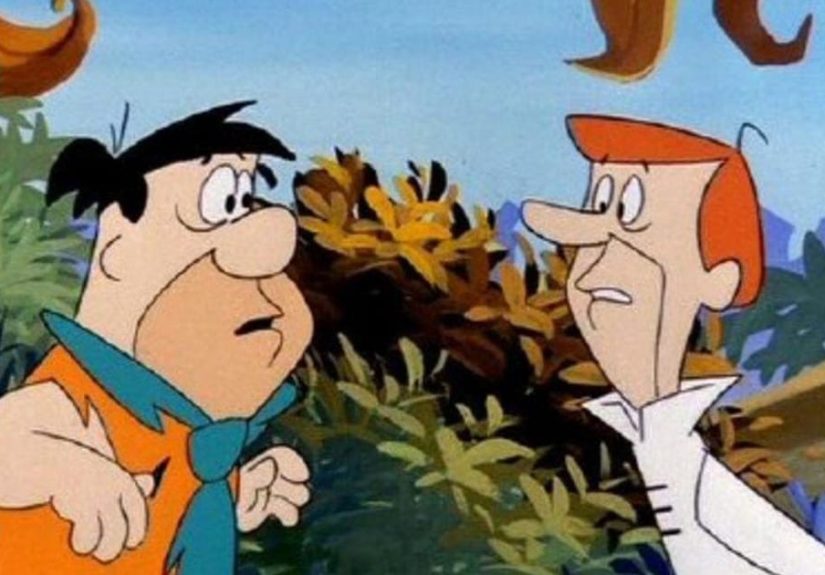
- Sometimes the theory connects The Flintstones to The Jetsons: the wealthy live in the sky (Jetsons), while everyone else is stuck on the ground (Flintstones).
Think of it as: “Stone Age aesthetic, late-stage civilization vibes.” Or, if you want to be dramatic (and the title insists you do): a cheerful post-apocalyptic hellscape with catchphrases.
Why The Theory Feels Weirdly Plausible
1) The Show Is Literally About Being “Modern”
The Flintstones’ whole identity is the joke that these aren’t wild cavemen living off berries and panic. They’re a suburban family sitcominspired by the rhythms of mid-century TV comedydressed up in prehistoric cosplay. Fred isn’t hunting mammoths; he’s trying to keep his boss happy, pay bills, and get a little respect.
That’s the first reason the post-apocalypse theory lands: Bedrock behaves like a society that remembers modern life. Not in a scholarly waymore like “we lost electricity but not our obsession with convenience.”
2) Bedrock Has Jobs, Consumer Culture, and Peak Suburb Energy
In a truly prehistoric setting, you’d expect survival to be the plot. In Bedrock, survival is… making it to the drive-in on time. The Flintstones have:
- steady employment (hello, quarry)
- structured neighborhoods with friendly rivalries
- shopping, entertainment, and social status
- leisure culture (bowling isn’t just a hobbyit’s a lifestyle)
This looks less like “early humans inventing society” and more like society rebooting after a crash. Like civilization got factory-reset, but someone forgot to delete the suburban software.
3) “Animal Appliances” Work Like Desperate Engineering
One of the funniest recurring gags in The Flintstones is that technology exists, but it’s powered by animals: a bird becomes a record needle, a mammoth becomes a shower, a dinosaur becomes a crane. On the surface, it’s a visual pun“We don’t have machines, so we have critters.”
But through the post-apocalyptic lens, it becomes: “We lost machines, so we built substitutes.” The world still wants labor-saving devices and entertainment. It’s just sourcing power from… whatever’s still walking around.
That’s a classic post-collapse trope: people rebuild using what they can find. Except in Bedrock, “what they can find” has eyelashes and a personality.
The Jetsons Connection: Two Futures, One Unequal World
This is where the theory gets extra spicy. Fans often rope in The Jetsons because both shows were made by the same studio and because there’s a famous crossover movie. The “shared universe” version claims:
- The Jetsons’ world is a protected, high-tech society living above the cloudsclean, controlled, and separated from a damaged Earth.
- The Flintstones’ world is what’s left on the surfacerebuilt from ruins, resource-limited, and forced into a “modern Stone Age” workaround.
It’s basically: the rich escaped upward, the rest adapted downward. Dark? Yes. But also… suspiciously on-brand for the way modern satire works.
And here’s why it fits: both shows are reflections of their time. The Flintstones pokes at mid-century domestic life; The Jetsons imagines a shiny future built on convenience and automation. A theory that joins them turns that contrast into an inequality storywho gets the future, and who gets the leftovers?
The “Hellscape” Part: It’s Not Fire and BrimstoneIt’s Suburban Anxiety
Let’s be clear: The Flintstones isn’t bleak on screen. Bedrock is bright, playful, and mostly safe (unless you’re a brontosaurus trying to enjoy a quiet meal). So why call it a “post-apocalyptic hellscape”?
Because “hellscape” doesn’t have to mean constant explosions. Sometimes it means something much more terrifying:
Endless work, endless consumption, and endless social pressureforever.
Think about what the show satirizes: keeping up with neighbors, impressing bosses, chasing the newest thing, and trying to look successful. That’s not ancient life. That’s modern lifeespecially the postwar American version where consumerism and suburbia became the default dream.
In that sense, the “apocalypse” isn’t just a bomb. It’s the idea that even after society collapses, people rebuild the exact same stress machinejust with more rocks and fewer warranties.
Real-World Context: Why This Theory Exists at All
The Flintstones Was a Prime-Time Sitcom, Not Just a Kids’ Cartoon
The Flintstones premiered in prime time on ABC in 1960 and ran for years as a mainstream sitcom-style show. That matters because it was designed to feel like contemporary TV comedydomestic squabbles, workplace hijinks, neighbor friendshipsjust dressed in Stone Age visuals.
So fans aren’t imagining “adult themes” out of nowhere. The format practically invites grown-up interpretation, including darker onesbecause satire is often a polite mask for anxiety.
It Came From an Era Obsessed With the Good Life… and Afraid It Could End
Mid-century America is famous for shiny optimismnew homes, new gadgets, “more, newer, better.” But it was also the Atomic Age, full of cultural tension and fear: war headlines, social change, and a background hum of “what if everything breaks?”
That cocktailconsumer optimism plus existential dreadis basically the DNA of a post-apocalyptic interpretation. If you live in a time that sells you comfort while whispering catastrophe, a show about suburban life in a “primitive” world can easily become a canvas for darker theories.
Counterpoints: Why It’s Still Mostly Just a Fun Theory
To keep our feet on the ground (like Fred’s car): the simplest explanation is the correct one. The Flintstones is a comedic satire. It uses a Stone Age setting to make modern life look ridiculous, and it leans into anachronisms because they’re funny.
Also, the show’s world isn’t portrayed like a ruined Earth. There aren’t explicit remnants of skyscrapers, lost cities, or radioactive warnings. The “evidence” is mostly thematichow modern Bedrock feelsplus the broader fan ecosystem that loves connecting universes.
Still, the theory persists because it does something great satire always does: it gives you a new way to look at familiar jokesand suddenly the jokes stare back.
So… Is Bedrock the Future?
Officially? No. But as a thought experiment, it’s a weirdly sharp one.
If Bedrock is the distant past, the show is a clever parody of modern life. If Bedrock is the far future, it becomes a darker parody: even after civilization ends, we rebuild the same routineswork, consumption, status, and comfortbecause we don’t know how to be anything else.
Either way, the satire lands. One version says, “Look how silly your world is.” The other says, “Look how sticky your world is.” And somehow, both feel true when you watch Fred sprint through the house yelling about money.
Conclusion
The “Flintstones post-apocalyptic hellscape” theory works because The Flintstones is already built on contradictions: Stone Age visuals, modern behavior; primitive tools, sophisticated social systems; “simple” living, complicated pressures.
Whether you treat it as a joke, a social commentary lens, or a midnight “wait, hold on…” spiral, it adds a new layer to a show that has always been about the presentno matter what era it pretends to be set in.
And if the world ever ends? Let’s just hope the next civilization doesn’t reinvent the 40-hour workweek before it reinvents indoor plumbing. Yabba-dabba-don’t.
Extra: of “Experience” With This Theory (Because Your Brain Will Do This Once You Let It)
Here’s the funny thing about the post-apocalyptic Bedrock idea: you don’t even have to fully believe it for it to change how you watch the show. The moment you entertain the thoughtjust for funyour eyes start behaving like they’ve been hired as detectives.
You notice how often the jokes aren’t “cavemen are goofy,” but “modern life is exhausting.” Fred isn’t struggling against nature; he’s struggling against expectations. He wants promotions, respect, a nicer gadget, a better seat at the bowling alley. It feels familiar in a way that has nothing to do with dinosaurs and everything to do with being a person who has ever opened a bill and whispered, “How is paper allowed to cost money?”
Then the props start popping. That bird record player? It’s not just a gag anymoreit becomes a symbol of a society that will do anything to keep entertainment alive. The mammoth shower? Suddenly it feels like a desperate workaround for “we can’t manufacture machines like we used to, but we still want comfort.” And the quarry job starts looking less like “prehistoric labor” and more like an industrial economy that’s been rebuilt from scratchsame grind, new materials, no OSHA posters.
Watching this way is like putting on “theory glasses.” You can’t unsee the way Bedrock mirrors suburbia: neat houses, predictable routines, friendly competition with neighbors, social clubs that feel suspiciously like modern attempts to create community on purpose (because community doesn’t just happen when everyone’s busy working). Even the humorFred’s schemes, Barney’s panic, Wilma’s side-eyefeels like a sitcom translation of real-life stress.
And if you’ve ever gone down the rabbit hole far enough to connect it to The Jetsons, that’s when the theory starts feeling less like a spooky story and more like a social metaphor. The idea that some people get a clean, automated future while others are stuck improvising survival isn’t just “dark fan fiction.” It’s the kind of thing satire loves to whisper in a funny voice, because humor can say what serious speeches can’t.
Honestly, the “experience” of this theory is less about proving anything and more about rewatching with a different mood. One night it’s just comfort TVsimple jokes, bright colors, classic sitcom rhythms. Another night it’s a weird little mirror: a reminder that humans will rebuild convenience and status the moment they have enough stability to argue about where to park the car.
So if you ever catch yourself looking at a brontosaurus crane and thinking, “That’s not prehistoric, that’s post-historic,” don’t worry. You’re not alone. You’re just watching The Flintstones the way modern satire begs to be watched: laughing… and slightly concerned.