Table of Contents >> Show >> Hide
- Quick Picks
- How We Judged “Best” in 2025
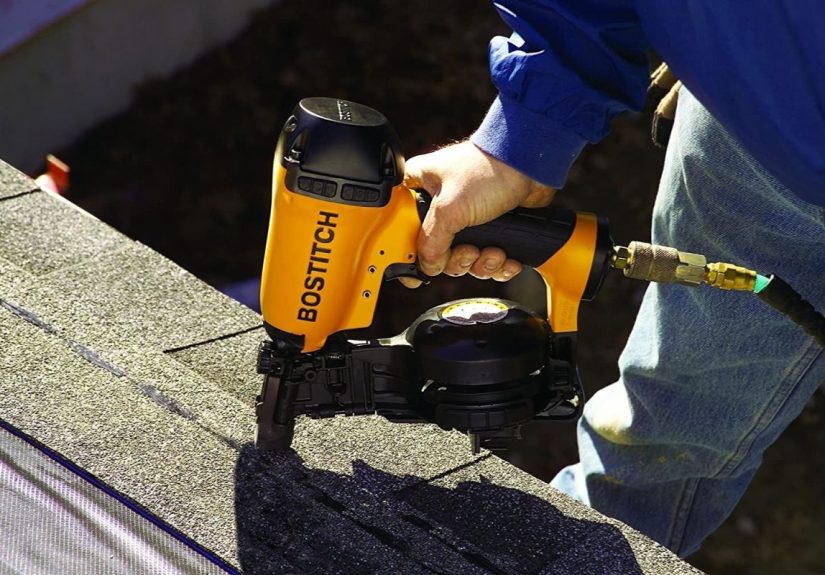
- Best Overall Pneumatic Roofing Nailer: BOSTITCH RN46
- Best Pro Pneumatic Speed & Specs: Metabo HPT NV45AB2
- Best Lightweight Pro Alternative: SENCO RoofPro 445XP
- Best Cordless for Repairs & Punch Lists: DEWALT DCN45RNB
- Best Cordless for “Bigger Than a Repair” Jobs: Metabo HPT NV1845DA
- Best Budget Pneumatic: WEN 61783
- Honorable Mention: MAX CN445R3 (When Tar and Abuse Are Part of the Job)
- Buyer’s Guide: How to Choose the Right Roofing Nailer
- Safety and Setup Tips (Because Gravity Never Takes a Day Off)
- Bottom Line: Which Roofing Nailer Should You Buy?
- Field Notes: Real Roofing Nailer Experiences ( of “Been There”)
Roofing is basically a cardio workout with a side of “please don’t drop that.” The right roofing nailer won’t
magically make you love hauling bundles up a ladder, but it will make nailing shingles faster, cleaner,
and a lot less likely to end with you muttering at proud nails like they personally insulted your family.
For 2025, the big story is still the same: pneumatic coil roofing nailers dominate production
work for speed and lighter weight, while cordless roofing nailers have earned real respect for
repairs, punch lists, and smaller roofs where dragging a hose feels like bringing a marching band to a quiet
library.
Quick Picks
- Best Overall Pneumatic: BOSTITCH RN46 (balanced, tough, and easy to live with)
- Best Pro Pneumatic Speed & Specs: Metabo HPT NV45AB2 (fast cycling, pro-friendly features)
- Best Lightweight Pro Alternative: SENCO RoofPro 445XP (compact, efficient, comfortable)
- Best Cordless for Repairs & Punch Lists: DEWALT DCN45RNB (no hose, no compressor, just go)
- Best Cordless for “Bigger Than a Repair” Jobs: Metabo HPT NV1845DA (more production-ready cordless)
- Best Budget Pneumatic: WEN 61783 (solid basics without the premium price)
Comparison Table (Real-World Buying Shortcuts)
| Model | Power | Typical Nail Range | Magazine | Why It’s Here |
|---|---|---|---|---|
| BOSTITCH RN46 | Pneumatic coil | 3/4″–1-3/4″ | High-capacity coil | Classic “works all day” reliability for most crews and DIYers |
| Metabo HPT NV45AB2 | Pneumatic coil | 7/8″–1-3/4″ | 120 nails | Speedy cycling + widely used nail compatibility |
| SENCO RoofPro 445XP | Pneumatic coil | 3/4″–1-3/4″ | 120 nails | Ultra-compact feel and a “refined” pro ergonomics vibe |
| DEWALT DCN45RNB | Cordless coil | 3/4″–1-3/4″ | 120 nails | Fast setup, great for repairs, valleys, flashing, and small jobs |
| Metabo HPT NV1845DA | Cordless coil | 7/8″–1-3/4″ | 120 nails | More “production-capable” cordless option in 2025’s lineup |
| WEN 61783 | Pneumatic coil | 3/4″–1-3/4″ | 120 nails | Budget-friendly, gets the job done with the right setup |
Note on nail angles: Roofing nailers commonly use wire-collated coil nails around the “15-degree”
family. Some brands label their tools 15°, others 16°what matters is matching the nail type and collation your
nailer specifies. If your nail coil doesn’t feed smoothly, don’t “force it and hope.” That’s how jams and roof
vocabulary get creative.
How We Judged “Best” in 2025
Roofing nailers live in a harsh ecosystem: dust, grit, tar, heat, and the occasional “oops” drop (we don’t endorse
it, but we all know it happens). For this list, we focused on what actually affects your day on the roof:
- Consistency of drive depth: flush, not cratered, not proud.
- Reloading + jam clearing: because stopping mid-row is a vibe killer.
- Weight + balance: light mattersespecially on a steep pitch.
- Shingle spacing help: guides that actually guide (instead of “suggest”).
- Cordless reality: where battery nailers shineand where they still don’t replace air.
Best Overall Pneumatic Roofing Nailer: BOSTITCH RN46
The RN46 is the type of tool you buy because you want your roofing nailer to do one thing extremely well:
show up and work. It’s a long-standing favorite because it’s light enough to handle comfortably,
rugged enough to take jobsite abuse, and practical in the ways that matterlike easy loading and dependable depth
control.
Why it stands out
- Wide fastener range for typical asphalt shingle work (and plenty of repair scenarios).
- Lightweight feel that helps reduce arm fatigue when you’re running rows all day.
- Jobsite-friendly features like dry-fire lockout, wear guards, and straightforward adjustments.
Best for: DIYers doing a big roof once, remodel crews doing several roofs a year, and pros who
want a dependable daily driver.
Reality check: It’s still a pneumatic nailerso pair it with a compressor that can keep up, a
hose that won’t kink every 11 seconds, and the patience to dial in pressure and depth the first time.
Best Pro Pneumatic Speed & Specs: Metabo HPT NV45AB2
The NV45AB2 is a modern “classic” in the roofing world. It’s built for fast-paced shingle installation, with
features that help you keep moving: tool-less depth adjustment, a side-loading magazine, and a reputation for
being a workhorse in the real world.
Why it stands out
- Fast cycling design for high productivity in production roofing.
- 120-nail capacity so you reload less often (your wrists say thank you).
- Useful safety + control options (including optional sequential mechanisms on some setups).
Best for: Pros who want a widely-supported nail platform and a roofing nail gun that stays quick
and consistent when the roof (and timeline) is unforgiving.
Pro tip: With any high-speed pneumatic nailer, spend two minutes doing test shots on scrap (or
a hidden starter area). The goal is flush headsespecially around valleys, ridge caps, and any place where
overdrive can invite problems later.
Best Lightweight Pro Alternative: SENCO RoofPro 445XP
If the NV45AB2 feels like a “jobsite pickup truck,” the RoofPro 445XP feels like a well-tuned crossover: compact,
nimble, and surprisingly efficient. SENCO leans into ergonomics and efficiency herehandy when you’re working
overhead angles, moving around flashing, and placing nails with intention rather than sheer speed.
Why it stands out
- Compact build that’s easier to maneuver in tight areas.
- Efficiency-minded design aimed at reducing air consumption without sacrificing performance.
- Shingle guide + clear magazine door that actually help you work cleaner and faster.
Best for: Pros and serious DIYers who care about comfort, control, and a “lighter-in-the-hand”
feel during long roofing days.
Best Cordless for Repairs & Punch Lists: DEWALT DCN45RNB
Cordless roofing nailers used to feel like a compromise you made only when the compressor broke. In 2025, the
DCN45RNB makes a stronger case: grab it, climb up, fix the problem, climb down. No hose drag. No compressor
setup. No “where’s the outlet” scavenger hunt.
Where it shines
- Repairs and service calls (blow-offs, slipped shingles, flashing touch-ups, small leaks).
- Detail areas like valleys, around chimneys, and punch-out work where mobility matters.
- Small roofs (sheds, garages, additions) where setup time is the real enemy.
What to expect: Cordless nailers are typically heavier than pneumatics and may require a brief
spin-up feel. The trade-off is convenienceespecially if you’re doing “a little roofing” instead of “a whole
roof, start-to-finish, today.”
Best for: Remodelers, maintenance teams, and roofing crews that want a go-anywhere nailer for
quick jobs and tricky spots.
Best Cordless for “Bigger Than a Repair” Jobs: Metabo HPT NV1845DA
If your cordless roofing plans are more ambitious than “replace five shingles and a drip edge,” the NV1845DA is
the kind of battery roofing nailer that aims for more real production capability. It’s built for roofers who
want cordless freedom but still need a tool that keeps pace when the job is bigger than a tiny patch.
Why it stands out
- Designed for higher-output cordless roofing than typical repair-focused models.
- Full-size coil magazine and familiar roofing nail workflow.
- Good option for crews that want to reduce compressor dependence on certain jobs.
Best for: Contractors who want cordless capability that’s closer to “workday tool” and less like
a specialized sidekick.
Best Budget Pneumatic: WEN 61783
If your mission is “get shingles nailed correctly without paying premium-tool money,” the WEN 61783 is a popular
budget pick. It covers the basics: coil capacity, standard nail range, and the kind of features that prevent
beginner frustrationlike an adjustable shingle guide and convenient jam access.
Why it stands out
- Budget-friendly entry into coil roofing nail guns.
- Beginner-helpful controls like shingle spacing help and tool-free depth adjustment.
- Reasonable weight for the category (especially at the price point).
Best for: DIY homeowners, occasional users, and anyone roofing a shed, small garage, or a single
home project where value matters most.
Tip: Budget nailers reward careful setup. Use clean, dry air, keep the tool oiled per the manual,
and do a test strip before you commit to a full run across your nicest shingles.
Honorable Mention: MAX CN445R3 (When Tar and Abuse Are Part of the Job)
Some roofs fight back. Hot weather turns shingles tacky. Tar builds up. Dust gets everywhere. MAX is known for
making jobsite-tough nailers, and the CN445R3 gets attention for features aimed at staying functional when the
roof is messy and time is tight.
Best for: Pros who want a rugged pneumatic option with design choices meant for real-world
roofing conditions (including sticky, tar-heavy days).
Buyer’s Guide: How to Choose the Right Roofing Nailer
1) Pneumatic vs. Cordless
Pneumatic is still the production king: lighter tool weight, fast cycling, and predictable drive
once your compressor is dialed in. Cordless wins on convenience: faster setup, easier mobility,
and no hose dragging behind you like an annoying pet snake.
2) Nail Compatibility (Don’t Skip This)
Roofing nailers typically use coil roofing nails in a wire-weld (wire collated) coil. Check:
nail angle specification (often 15°/16°), nail length range, and nail diameter range. Buying the “wrong” nails
is the easiest way to turn your day into a jam-clearing workshop.
3) Depth-of-Drive Adjustment
A roofing nail head should generally end up flush to the shingle surfacesecure without tearing through the mat.
Tool-free depth adjustment helps you adapt to shingle thickness, decking hardness, and temperature changes
without running down the ladder to tweak compressor pressure every 10 minutes.
4) Shingle Guide and Roof-Friendly Touchpoints
Adjustable shingle guides help keep your nail placement consistent (especially if you’re newer). Rubber bumpers
and “roof-friendly” pads matter more than you’d think: they keep the tool from sliding off a slope and help
protect shingles from unnecessary scuffs.
5) Weight, Balance, and Fatigue Math
Here’s the part nobody puts on the product box: even a 1–2 pound difference can feel huge after hours on a roof.
And reloads add up. If you shoot 9,000 nails on a larger job, a 120-nail magazine means about 75 reloads.
(Your shoulders would like fewer reloads. Your knees would like fewer trips down the ladder.)
Safety and Setup Tips (Because Gravity Never Takes a Day Off)
Choose safer trigger options when you can
Nail guns are serious tools. Safety guidance from major workplace safety authorities emphasizes that trigger
choice and training mattera lot. If you have the option to use a more controlled firing mode (like a full
sequential trigger), it can reduce the risk of unintended discharge compared with multi-shot contact triggers.
Dial in your setup before you “send it”
- Test fire on scrap or a hidden starter area to confirm flush drive.
- Keep air clean if you’re pneumaticmoisture and grit cause headaches.
- Use proper PPE (eye protection is non-negotiable; hearing protection is smart).
- Mind the roof edgeyour nailer can’t save you from physics.
Bottom Line: Which Roofing Nailer Should You Buy?
If you want one tool that covers most roofing needs in 2025, a quality pneumatic coil roofing nailer
like the BOSTITCH RN46 remains the safest bet for value, reliability, and all-day usability. If
you’re a pro who wants speed and a proven spec sheet, the Metabo HPT NV45AB2 is hard to ignore.
For comfort-focused pros, the SENCO RoofPro 445XP is a compelling lightweight alternative.
If your work is heavy on repairs, punch lists, and small jobs, cordless is where your time
savings really show upespecially with the DEWALT DCN45RNB. And if you want to push cordless
into larger job territory, the Metabo HPT NV1845DA is worth a serious look.
Whatever you choose, remember: the “best roofing nailer” is the one that drives consistently flush, feeds nails
without drama, and doesn’t turn your day into a jam-clearing festival.
Field Notes: Real Roofing Nailer Experiences ( of “Been There”)
The first time you use a roofing nailer on a real roof (not a flat driveway where tools behave and the sun is
kind), you learn two things immediately: (1) shingles multiply when you’re not looking, and (2) a roofing nailer
is less like a “tool” and more like a “relationship.” It’s great when communication is clear (flush nails,
smooth feed), and it gets tense fast when someone starts acting up (jams, proud nails, misfires, or that one
coil that feels like it was wound by a raccoon).
With pneumatics, the day usually starts with optimism and a compressor that sounds like it’s clearing its throat.
Then comes hose managementthe world’s least glamorous sport. On a steep pitch, the hose wants to slide downhill
like it’s late for dinner, and you end up doing a careful dance: step, brace, nail, rebrace, repeat. The best
pneumatic nailers feel light and balanced, which matters when you’re reaching across a course without wanting to
shift your center of gravity. After a few hours, you begin to appreciate small luxuries: a shingle guide that
actually stays put, a depth adjuster you can turn with gloves on, and rubber bumpers that keep the nailer from
doing a dramatic roof-to-ground audition.
Cordless changes the rhythm. The vibe becomes: grab tool, climb, fix, leave. No hose snagging on a ladder rung,
no compressor cord hunt, no “Who unplugged the pancake compressor?” mystery. On repair work, that’s priceless.
You can move around flashing, chimneys, and valleys without dragging a line behind you. The trade-off is usually
weight and a slightly different firing feel. A cordless roofing nailer can feel top-heavy at first, especially
when you’re working near the edge and trying to keep your stance stable. After a day, though, the freedom is
hard to give upparticularly if you do lots of small jobs where setup time is the real thief.
Then there’s the “tar factor.” Hot days make everything sticky, and a nailer’s nose can start collecting gunk
like it’s building a tiny museum exhibit. You learn quickly to keep a small brush handy and to wipe contact
points before they become a problem. You also learn that depth consistency is the quiet hero of good roofing:
too deep and you risk damaging shingles; too shallow and you risk blow-offs. The best nailer experiences are the
boring oneswhere every nail seats right, the gun feeds smoothly, and you finish a section thinking,
“Huh. That went… normal.” In roofing, “normal” is basically a standing ovation.
Final real-world lesson: the best nailer won’t save you from a bad workflow. Staging coils, keeping nails and
caps within reach, running test shots when shingles change, and maintaining the tool (especially pneumatic oil
routines and clean air) makes more difference than people want to admit. The nailer is the enginebut the crew,
the setup, and the habits are the steering wheel.