Table of Contents >> Show >> Hide
- Why the Old Cloud Multiple Era Looks Finished
- What Broke the Multiple Expansion Story
- Why Epic Growth Can Still Be Ahead
- Private Markets Show the Difference Between “Lower Multiples” and “No Opportunity”
- What the New Valuation Framework Looks Like
- So, Are High Cloud Multiples Behind Us?
- Experience From the Field: What This Debate Looks Like in Real Life
- Conclusion
For a while, the cloud market behaved like a party where the DJ only had one song: “Growth at All Costs.” If you were a software company with recurring revenue, a decent net retention story, and the word platform in your pitch deck, investors were ready to hand you a valuation multiple that looked less like math and more like caffeine.
That era is over.
But here is the twist that makes this topic interesting: the end of sky-high cloud multiples does not mean the end of massive cloud growth. In fact, both ideas can be true at once. The market can stop paying fantasy prices for every cloud name while still rewarding the companies that capture the next giant wave of enterprise spending, AI infrastructure demand, and software reinvention.
That is the real argument now. The old valuation regime is probably gone. The growth opportunity, however, may be just warming up.
Why the Old Cloud Multiple Era Looks Finished
The market already told us
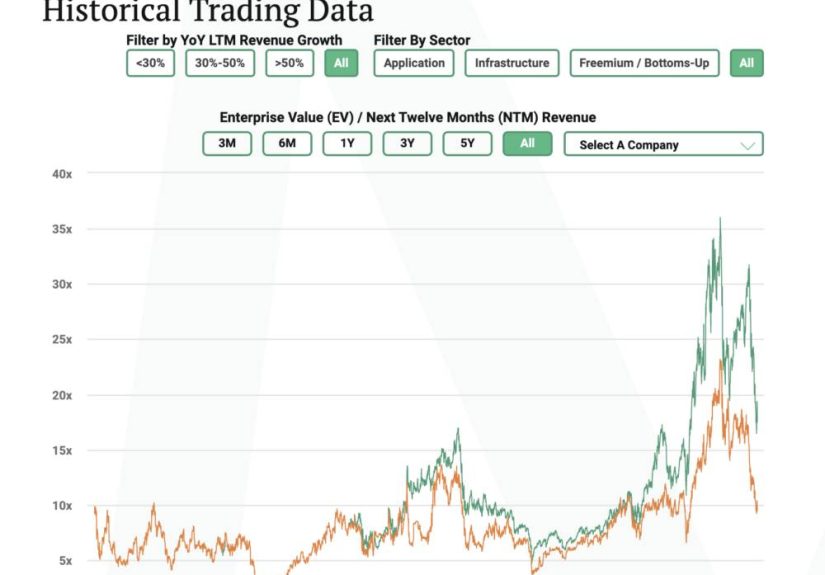
The cleanest sign that the old regime is behind us is not a dramatic speech from Wall Street. It is the reset in the numbers. At the peak cloud-enthusiasm stage, investors paid enormous revenue multiples for public software names because rates were low, future cash flows were heavily prized, and cloud still felt like an unstoppable migration story with almost unlimited upside.
Today, the tone is different. Investors still love growth, but they want growth with proof, durability, margins, and increasingly, an AI angle that strengthens the product rather than simply decorating it. A company cannot just be “in cloud” and expect applause. It has to show why it deserves premium economics in a market that has become smarter, harsher, and far less romantic.
In other words, the market has moved from “cloud is enough” to “show me the quality of the cloud business.” That is not a tiny shift. That is a regime change wearing loafers and carrying a spreadsheet.
Cloud is now a mature category, not a novelty premium
Another reason high multiples are unlikely to return broadly is that cloud is no longer a shiny disruption story by itself. It is foundational infrastructure. That sounds flattering, and it is, but mature categories do not automatically get novelty premiums forever. At some point, the market stops rewarding a category simply for existing and starts judging it by competition, execution, efficiency, and differentiation.
That is exactly what has happened. The cloud market is huge, but also more crowded. Buyers are more experienced. Procurement teams are sharper. CFOs now ask questions that used to ruin the mood, such as: “What exactly are we paying for?” and “Why did our cloud bill grow faster than our revenue?” Those are not anti-cloud questions. They are adult questions.
What Broke the Multiple Expansion Story
Interest rates ended the free-lunch part of the movie
When money was cheap, investors were more willing to pay far ahead for growth that might arrive several years later. Higher-rate conditions changed that equation. Future profits became worth less in present-value terms, and suddenly the market cared much more about operating leverage, cash generation, and the path to durable profitability.
That does not mean growth stopped mattering. It means growth alone stopped being enough. A cloud company growing fast but burning capital with unclear monetization is no longer seen as a heroic moonshot. It is now seen as a risk with a nice dashboard.
AI made the software leaderboard more selective
Artificial intelligence has not just created new upside. It has also created new fear. Bain has argued that the reset in software valuations reflects AI-driven disruption, slowing retention, and a widening gap between incumbents and future winners. That matters because it changes how investors price the whole sector.
In the old setup, many software names benefited from being part of a broad cloud basket trade. In the new setup, AI is acting like a sorting machine. Some companies will use AI to deepen moats, raise wallet share, and become dramatically more valuable. Others will discover that AI weakens seat-based pricing, compresses product differentiation, or shifts budgets toward platforms with stronger data, distribution, or infrastructure advantages.
That is why broad sector multiples can stay lower even while individual winners become monsters. The market is no longer saying, “All cloud is gold.” It is saying, “A few cloud companies may be gold. The rest had better bring receipts.”
Retention and seat expansion are not what they used to be
For years, the software dream rested on a lovely formula: land customers, expand seats, keep retention high, repeat until someone rings the bell at the stock exchange. But that engine has become less automatic. Penetration curves have flattened in many core categories, and seat growth is no longer the reliable escalator it once was.
That matters because high multiples require confidence that revenue can compound for a long time without ugly surprises. If retention softens, if seats grow slower, or if AI tools reduce the need for headcount in some workflows, investors will not pay 2021-style prices just because a business still looks respectable.
Cloud cost discipline became a board-level topic
There is another uncomfortable truth: companies still want cloud, but they do not want surprise cloud invoices that look like ransom notes. Cost management has become central to the cloud story. Enterprises are adopting FinOps disciplines, measuring unit economics more carefully, and asking vendors to prove ROI with more precision than before.
That discipline is healthy for the industry, but it also limits the kind of carefree valuation exuberance that used to accompany cloud narratives. When buyers become more disciplined, vendors have to be more disciplined, and investors follow suit.
Why Epic Growth Can Still Be Ahead
The cloud market is still enormous and growing
Now for the part that keeps this from becoming a funeral. The growth case for cloud is still very much alive. Public cloud spending continues to rise, and infrastructure demand has accelerated again thanks to AI workloads, ongoing migrations, and the need for modern data architectures. This is not a market running out of oxygen. It is a market shifting from adolescence to heavyweight adulthood.
That distinction matters. Mature does not mean finished. In technology, mature can simply mean “important enough that everybody depends on it.” Electricity is mature. Nobody interprets that as bearish for electricity.
The same is true for cloud. It has become the operating environment for modern software, analytics, security, developer tools, and now generative AI deployment. The category may no longer deserve blanket euphoria, but it still deserves serious respect.
The hyperscalers are not acting like growth is over
If epic growth were gone, the largest cloud platforms would not be spending, building, and signaling the way they are today. Microsoft continues to report massive cloud demand. Google Cloud has accelerated sharply on enterprise AI infrastructure and AI solutions. Oracle has become one of the fastest-growing major cloud vendors in specific AI-heavy workloads. Amazon is openly talking about surging AI demand inside AWS and capacity constraints that suggest there is still more demand than supply in key areas.
That is not the language of a category hitting the wall. It is the language of a category entering a new capital-intensive chapter where growth is real, but the winners may be fewer and larger.
The runway is bigger than many investors remember
One of the strongest long-term bullish arguments is also one of the simplest: an enormous amount of IT spending still has not fully moved to modern cloud environments. Traditional infrastructure, legacy applications, regulated workloads, industry-specific systems, and fragmented enterprise architectures still leave a huge amount of migration and modernization work undone.
So even though cloud is now mainstream, the total opportunity is still not fully harvested. Add AI to that equation and the story gets even bigger. AI does not replace cloud. In many cases, it increases the need for cloud-native infrastructure, storage, orchestration, data pipelines, observability, governance, and security. AI is not stealing the stage from cloud. More often, it is buying cloud a larger theater.
Private Markets Show the Difference Between “Lower Multiples” and “No Opportunity”
The top end is still very much alive
One of the easiest mistakes in this debate is confusing a reset in average multiples with a collapse in top-end value creation. Private cloud and AI leaders are still capable of achieving extraordinary scale. The difference is that the market is becoming far more selective about who gets those elite valuations.
That selectivity is actually rational. Investors are willing to pay up for companies that combine real growth, strong product-market fit, AI-enabled expansion, and credible economics. They are much less willing to spray premium multiples across the entire sector just because the company sells software from the internet instead of shipping it in a box like it is 2003.
The top of the market can therefore remain spectacular even while the median company gets priced more soberly. That is not a contradiction. It is how maturing markets usually behave.
Infrastructure scarcity can create new premium pockets
There is also a practical reason some parts of the market may still deserve higher valuations than others: scarcity. AI growth depends on data center capacity, power availability, networking, chips, and physical buildouts that are not infinitely scalable overnight. That means select infrastructure providers, platforms, and cloud ecosystems may capture premium economics even if the average software multiple stays lower than in the boom years.
In plain English, not every company gets a premium anymore. But the companies that control scarce, strategic bottlenecks might.
What the New Valuation Framework Looks Like
Growth quality beats growth theater
The new market wants quality of growth. Investors care more about retention, product depth, multi-product expansion, usage quality, cost structure, and whether AI increases customer value rather than just inflating compute spend. Revenue is still important, but the market is increasingly asking whether that revenue is durable, profitable, and strategically advantaged.
AI has to improve the business model, not just the marketing page
Putting “AI-powered” in bold type no longer guarantees a standing ovation. The better question is whether AI improves product differentiation, pricing power, customer outcomes, or workflow ownership. If it does, the business can deserve a premium. If it merely raises costs or turns the product into a commodity with a chatbot attached, the market will eventually notice.
Cash flow and capital discipline matter again
Cloud companies are now judged not only by how fast they can grow, but by how intelligently they can grow. Can they scale while improving margins? Can they manage infrastructure costs? Can they explain where AI investment turns into revenue? Can they avoid turning every product launch into a beautiful science experiment with no commercial ending?
That is the new game. Less fairy dust. More evidence.
So, Are High Cloud Multiples Behind Us?
Broadly speaking, yes.
The old era of routinely assigning giant revenue multiples to large swaths of the cloud universe looks finished. Interest rates, buyer discipline, AI-driven disruption, slower retention dynamics, and a more mature market have changed the rules. The average company is unlikely to enjoy the kind of blanket premium that once floated across the sector like confetti.
But that does not mean cloud has become a low-growth story. Far from it. Cloud remains central to enterprise modernization, data strategy, cybersecurity, developer tooling, and AI deployment. The infrastructure buildout ahead is enormous. Hyperscalers are still growing at impressive rates. Private market outliers are still reaching astonishing valuations. And a meaningful share of enterprise technology still has not fully moved into the cloud-first, AI-native future that vendors are building toward.
So the smarter conclusion is this: high average cloud multiples are behind us, but epic cloud growth may still be in front of us. The market is not abandoning cloud. It is simply becoming choosier about which cloud stories deserve premium prices.
That may feel less exciting than the old days. It is also a lot more real.
Experience From the Field: What This Debate Looks Like in Real Life
One of the most revealing things about this topic is how often the same scene plays out inside companies. The product team is excited because usage is rising. The finance team is nervous because infrastructure costs are rising faster. The sales team says customers love the roadmap. The customer says, “Great, but can you prove ROI before renewal?” Nobody is wrong. That is just what the cloud market looks like now.
In one common version of the story, a software company discovers that its “good growth” is no longer enough to impress investors. Revenue is still growing, churn is not catastrophic, and the customer logos look shiny on slides. But when people look closer, the expansion motion is weaker than it used to be, sales cycles are longer, and AI features are helping the product stay relevant rather than creating a totally new category. Five years ago, that company might have received a heroic multiple anyway. Today, it gets a more skeptical audience and a lot more follow-up questions. The business may still be healthy. The valuation mood, however, has become deeply sober.
On the buyer side, the experience is just as telling. Enterprises still want cloud and AI, but they increasingly behave like seasoned travelers instead of first-time tourists. They are not dazzled simply because a vendor says “modern platform.” They ask what gets automated, what gets cheaper, what gets faster, and what risk gets reduced. They want contracts with flexibility, deployment with governance, and usage that maps to measurable business outcomes. This has made the market tougher for undifferentiated vendors, but stronger for companies that actually solve painful problems. In that sense, the reset has been healthy. It removed some of the fluff and put value back in fashion.
Then there is the infrastructure experience, which may be the most dramatic of all. Across the ecosystem, teams are discovering that demand can be huge while capacity is still constrained. You can have a giant opportunity and still run into limits on power, chips, networking, or deployment timelines. That creates a strange modern cloud paradox: some of the biggest growth opportunities in tech are real, urgent, and monetizable, but they cannot always be served instantly. So companies are learning to think not just like software firms, but like industrial planners. That is not exactly the glamorous side of technology, but it is where much of the next decade’s value may be created.
The investor experience has changed too. The old basket-trade mentality is weaker. People are less interested in buying “cloud” as a broad theme and more interested in identifying the few businesses with durable moats, AI leverage, efficient cost structures, and the power to own important workflows. The reward for being right may still be huge. The penalty for being lazy is just much more immediate now.
That is why this moment feels less like the end of a story and more like the end of an easy chapter. Cloud is no longer effortless. It is more demanding, more capital aware, more ROI-driven, and more selective. But for the companies that can navigate that environment, the upside is still enormous. The champagne tower is smaller. The opportunity, somehow, may be bigger.
Conclusion
The cloud market is no longer living in its multiple-expansion fantasy era, and that is probably a good thing. Investors are demanding better economics, clearer differentiation, and proof that AI is a business accelerator rather than a margin-destroying science fair project. Average valuations have reset. Broad optimism has narrowed. Easy premiums are harder to find.
Yet the long-term demand picture remains powerful. Cloud spending keeps climbing. AI is intensifying infrastructure needs. Hyperscalers are still posting strong growth. Private market leaders are still creating staggering value. And much of the world’s technology stack still has meaningful distance to travel before it reaches a truly modern, cloud-first architecture.
So yes, high cloud multiples are behind us. But the next great era of cloud growth may still be aheadjust with fewer passengers in first class.