Table of Contents >> Show >> Hide
- What Is Termite Damage?
- What Is Wood Rot?
- Termite Damage vs. Wood Rot: The Quick Comparison
- How to Inspect Damaged Wood Safely
- Where Termite Damage Is Commonly Found
- Where Wood Rot Is Commonly Found
- Can Termite Damage and Wood Rot Happen Together?
- When to Call a Professional
- How to Fix Termite Damage
- How to Fix Wood Rot
- Prevention Tips for Both Problems
- Real-Life Experience: What Homeowners Often Notice First
- Conclusion
Few homeowner discoveries create the same stomach-drop moment as finding crumbly wood. One minute you are casually checking a windowsill, deck post, baseboard, or crawl space beam. The next minute, your screwdriver sinks into the wood like it just found pudding. Naturally, your brain jumps to the dramatic option: termites. Tiny house-eating villains. Six-legged demolition contractors. The stuff of real estate nightmares.
But not every damaged board means termites are throwing a buffet in your walls. Sometimes the culprit is wood rot, which is caused by moisture and fungi slowly breaking down the structure of the wood. Termite damage and wood rot can look similar at first glance because both weaken wood, both may hide under paint, and both can show up in damp, forgotten places where humans rarely go unless something already smells suspicious.
The difference matters. Termites require pest control and often a professional inspection to confirm whether the colony is active. Wood rot requires moisture control, drying, repair, and sometimes replacement of the damaged material. Treat the wrong problem and you may spend good money fixing the visible symptom while the real trouble continues wearing a tiny hard hat behind the scenes.
This guide explains how to compare termite damage vs. wood rot, what signs to look for, where each problem usually appears, and when to call a professional. Grab a flashlight, a small screwdriver, and your bravest homeowner face. Let’s investigate.
What Is Termite Damage?
Termite damage happens when termites feed on cellulose, the organic material found in wood, paper, cardboard, and other plant-based products. In the United States, subterranean termites are among the most common structural pests. They usually live in soil and travel to wood through hidden pathways, cracks, foundation gaps, or mud tubes. Drywood termites are different because they can live inside dry wood without needing soil contact, but subterranean termites are the classic “foundation and crawl space” suspects.
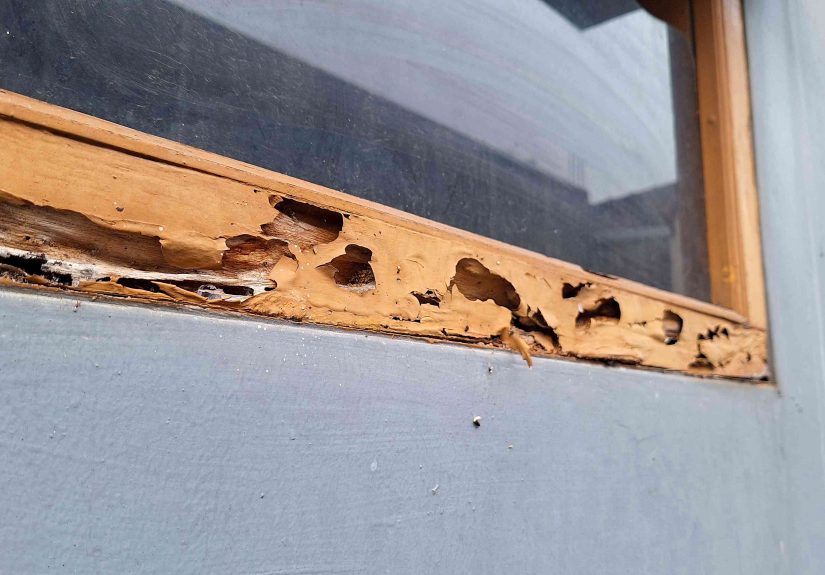
Termites often damage wood from the inside out. That is what makes them so annoying. A beam, trim board, or door frame may look fairly normal on the surface while the interior has been carved into galleries. By the time the outer layer cracks, blisters, or collapses, the damage may be more advanced than it first appears.
Common Signs of Termite Damage
Termite damage often has several clues working together. Look for hollow-sounding wood, thin blistered surfaces, tunneling patterns, mud tubes on foundation walls, discarded wings near windows or doors, and small piles of termite droppings known as frass. With subterranean termites, damaged wood may contain soil or muddy material because they need moisture and protected travel routes. With drywood termites, you may see tiny pellet-like droppings near kick-out holes.
Another clue is the shape of the damage. Termites tend to eat along the grain of the wood, leaving layered channels, galleries, or honeycomb-like sections. The surface may be thin and papery, while the inside is hollow. Tap it gently and it may sound dull or empty, as if the wood is pretending to be solid but forgot its lines.
What Is Wood Rot?
Wood rot is fungal decay. It happens when wood stays wet long enough for fungi to grow and digest parts of the wood structure. Despite the common phrase “dry rot,” significant wood decay still requires moisture at some point. Dry rot does not mean the wood magically rotted in the desert while sipping iced tea. It usually means the wood was wet enough for decay to begin, then later dried out while the damage remained.
Wood rot is most common where water hangs around: leaky roofs, failing gutters, poor flashing, wet crawl spaces, deck posts, window trim, door thresholds, bathroom subfloors, basement framing, and exterior siding. If moisture has a favorite hiding spot, rot may eventually send it a thank-you card.
Common Signs of Wood Rot
Rotted wood often feels soft, spongy, crumbly, or punky. It may darken, lighten, crack into cube-like patterns, grow fungal strands, smell musty, or shed flakes when touched. Paint may bubble, peel, or crack because moisture is moving through the wood underneath. In advanced cases, the wood may break apart with very little pressure.
There are different types of rot. Brown rot often makes wood darker, brittle, and crumbly, sometimes with cubical cracking. White rot may leave the wood lighter, fibrous, or stringy. Soft rot often appears in persistently damp conditions and may progress more slowly. Homeowners do not need to become fungi professors, although that would make dinner conversation oddly specific. The practical point is simple: rot points to moisture, and moisture points to a source that must be fixed.
Termite Damage vs. Wood Rot: The Quick Comparison
| Feature | Termite Damage | Wood Rot |
|---|---|---|
| Main cause | Termites feeding on cellulose | Fungi breaking down damp wood |
| Moisture connection | Subterranean termites need moisture and often use mud tubes | Moisture is the central trigger |
| Texture | Hollow, layered, thin-shelled, tunneled | Soft, spongy, crumbly, brittle, or fibrous |
| Visible clues | Mud tubes, discarded wings, frass, live termites, galleries | Discoloration, musty smell, fungal growth, peeling paint, cracking |
| Damage pattern | Tunnels or galleries often running with the grain | General decay, cracking, shrinking, softening, or breaking apart |
| Best first response | Call a licensed pest professional for inspection | Find and stop the moisture source, then repair damaged wood |
How to Inspect Damaged Wood Safely
Before you begin, remember that some damaged wood may be structural. Do not aggressively dig into beams, joists, sill plates, or support posts. Your goal is to identify clues, not audition for a demolition show.
1. Look for Water First
Start by checking for moisture clues. Is the damaged area below a window, near a door, under a bathroom, beside a plumbing line, close to a roof leak, or near a gutter problem? Is the crawl space humid? Is mulch piled against siding? Is the deck post sitting directly in soil? If the answer is yes, wood rot becomes more likely.
That said, moisture can also attract termites or make conditions easier for them. Water does not choose sides. It simply makes wood problems more dramatic.
2. Search for Mud Tubes
Mud tubes are one of the strongest signs of subterranean termite activity. They may look like narrow, brown, pencil-width tunnels running up foundation walls, piers, crawl space surfaces, or along cracks. Termites use these tubes to travel while staying protected from dry air and predators. If you break a small section and it is rebuilt later, that can suggest active termites.
Wood rot does not build mud tubes. Fungi may be talented, but masonry tube construction is not their department.
3. Tap and Listen
Use the handle of a screwdriver or a small tool to tap the wood gently. Termite-damaged wood may sound hollow because termites often consume the interior while leaving a thin outer layer. Rotted wood may sound dull too, but it usually feels soft or gives way when probed. Sound alone is not proof, but it is a helpful clue when combined with other evidence.
4. Probe Lightly
Press a screwdriver, awl, or pocketknife gently into the damaged area. If the surface breaks into crumbly chunks, flakes, or soft fibers, rot may be involved. If the tool breaks through a thin shell and reveals hollow galleries, mud, or layered channels, termite damage becomes more suspicious. Do this carefully. If the wood is load-bearing, stop and call a pro.
5. Look for Frass or Wings
Drywood termites often leave small, hard, pellet-like droppings called frass. Subterranean termites are more associated with mud tubes and muddy galleries. Discarded wings near windowsills, doors, light fixtures, or vents can indicate termite swarmers. Wood rot does not create insect wings or pellet piles. If your damaged wood comes with bug evidence, pay attention.
Where Termite Damage Is Commonly Found
Termites often appear where wood and soil are close together or where hidden entry points exist. Common areas include crawl spaces, sill plates, foundation edges, porch posts, deck connections, garage framing, basement walls, subfloors, and areas around plumbing penetrations. They may also enter through cracks in foundations or gaps around utility lines.
Inside the home, signs may appear as bubbling paint, sagging floors, stuck doors, distorted trim, or damaged baseboards. These symptoms can also come from moisture movement, settling, or poor installation, so they are not automatic termite proof. The strongest case for termites usually includes multiple signs: hollow wood plus mud tubes, discarded wings, frass, live insects, or visible galleries.
Where Wood Rot Is Commonly Found
Wood rot prefers areas that get wet and stay wet. Exterior trim is a frequent victim, especially around windows and doors where caulk, flashing, or paint has failed. Deck boards, stair stringers, fence posts, fascia, soffits, and porch columns are also common trouble spots. Inside, rot may appear around tubs, toilets, dishwashers, washing machines, water heaters, basement walls, and poorly ventilated crawl spaces.
A helpful rule: if the damaged wood is near a known water source, rot should be high on your suspect list. If the damage is hidden, hollow, muddy, or comes with insect evidence, termites deserve a closer look.
Can Termite Damage and Wood Rot Happen Together?
Yes, and this is where the plot thickens. Moisture can lead to wood rot, and damp or weakened wood can make an area more attractive to certain wood-destroying pests. Carpenter ants, for example, often excavate damp or decayed wood to build galleries, although they do not eat wood the way termites do. Termites may also exploit moisture-prone areas around foundations, leaks, or crawl spaces.
In real homes, damage is not always polite enough to be one thing. A porch post can have rot at the base, termite galleries inside, and peeling paint outside. That is why a proper diagnosis matters. You are not just asking, “What does this damaged board look like?” You are asking, “What conditions created this, and are they still active?”
When to Call a Professional
Call a licensed pest control professional if you see mud tubes, live termites, discarded wings, frass, hollow structural wood, or unexplained damage near the foundation. Termite colonies can remain hidden, and surface repairs alone will not eliminate an active infestation. A professional can identify the termite species, determine whether activity is current, and recommend a treatment plan.
Call a qualified contractor, home inspector, or structural specialist if damaged wood is part of the foundation, framing, joists, beams, stairs, deck supports, porch columns, or subfloor. Even if the cause is only rot, weakened structural wood is not a “patch it and hope” situation. Hope is not a building material.
How to Fix Termite Damage
The first step is treatment, not cosmetic repair. If termites are active, replacing wood before controlling the colony can turn your new lumber into a complimentary dessert tray. Depending on the situation, treatment may involve bait systems, liquid termiticides, localized drywood treatment, or other professional methods.
After termite activity is controlled, repair depends on the severity of damage. Minor non-structural trim may be replaced. Heavily damaged framing may need sistering, reinforcement, or full replacement. A contractor should evaluate whether the wood still has enough strength. In many cases, repairs are best done after both the pest issue and any moisture issue have been corrected.
How to Fix Wood Rot
The first step in fixing wood rot is stopping the water. Repair the leak, improve drainage, clean gutters, correct flashing, reduce crawl space humidity, or improve ventilation. If the moisture source remains, any repair is temporary. It is like mopping the floor while the bathtub is still overflowing. Technically active, emotionally pointless.
Small areas of non-structural rot may be repaired with wood hardener and exterior-grade filler after all soft material is removed and the area is dry. Larger or structural areas should be cut out and replaced with sound, properly protected wood. Exterior repairs should include primer, paint, flashing, sealant, and proper drainage details so water does not return for a sequel.
Prevention Tips for Both Problems
The best termite and wood rot prevention strategy is moisture control. Keep gutters clean and downspouts directed away from the foundation. Maintain proper grading so water drains away from the home. Avoid wood-to-soil contact when possible. Keep mulch below siding and away from direct contact with wood trim. Store firewood away from the house and off the ground. Ventilate crawl spaces appropriately and repair plumbing leaks quickly.
Inspect exterior trim, decks, porch posts, and crawl spaces at least once or twice a year. Look after storms, snowmelt, or long humid periods. A five-minute flashlight check can save you from a five-figure repair bill, which is the kind of math no homeowner enjoys.
Real-Life Experience: What Homeowners Often Notice First
In real homes, the first clue is rarely dramatic. Most people do not walk into the kitchen and find termites waving tiny flags. More often, they notice something ordinary: a window that suddenly sticks, a baseboard that looks swollen, a deck board that feels spongy, or paint that bubbles even though it was touched up last year.
One common experience is finding damage during a simple weekend project. A homeowner decides to repaint exterior trim, scrapes a loose paint edge, and suddenly the tool sinks into soft wood. At first, it looks like termites because the wood crumbles. But after checking the area, the real culprit turns out to be a leaking gutter above the window. Water has been running down the trim after every storm, soaking the wood behind the paint. There are no mud tubes, no wings, no frass, and no galleries packed with soil. That points toward wood rot. The correct fix is not termite treatment; it is gutter repair, drying, replacement of the rotted trim, priming all sides of the new board, and repainting.
Another common experience happens in crawl spaces. A homeowner or inspector sees a narrow brown tube climbing a foundation pier. The nearby sill plate sounds hollow, and when a small damaged area is opened, there are tunnels with muddy material inside. That combination strongly suggests subterranean termite activity. Even if some moisture is present, the mud tubes and galleries are the big clues. In that case, the right first move is a professional termite inspection, followed by treatment and then structural repair if needed.
Decks create plenty of confusion too. A post base may be soft because it has been sitting against wet soil for years. That is classic rot territory. But if there are hidden tunnels running through the post, mud shelter tubes nearby, or active insects, termites may also be involved. The lesson is that location matters, but evidence matters more. Wet wood tells you rot is possible. Termite signs tell you pests may be active. When both appear, do not choose your favorite theory and run with it. Let a qualified inspector confirm the cause.
Homeowners also learn that paint can be a sneaky cover-up artist. Fresh paint over damaged wood may look fine for a short time, but it cannot restore strength. If the wood underneath is punky, hollow, or crumbly, paint is just a cheerful little blanket over a problem. The same goes for caulk. Caulk can seal gaps, but it cannot rescue a board that has already lost its structure.
The most useful habit is to think like a detective, not a panicked homeowner. Ask where the water could be coming from. Look for insect evidence. Compare the texture. Check whether the damage follows the grain in tunnels or breaks down more generally into soft decay. Notice whether the damage is isolated around a leak or connected to foundation access points. These observations help you decide whether you need a pest professional, a repair contractor, or both.
Finally, take photos before disturbing the area. Good photos help inspectors understand what you saw originally, especially if you accidentally break a mud tube, sweep away frass, or remove damaged trim. Include wide shots for location and close-ups for texture. Your future self will thank you, probably while wearing gloves and pretending not to be grossed out.
Conclusion
Termite damage and wood rot can both make wood weak, ugly, and expensive to repair, but they leave different clues. Termites often create hollow galleries, mud tubes, discarded wings, frass, and damage hidden beneath a thin surface. Wood rot usually points to moisture, fungal decay, softness, musty odor, discoloration, peeling paint, and crumbly or spongy texture.
The smartest approach is not guessing from one clue. Look at the whole picture: moisture, location, texture, insects, tunnels, smell, and nearby building conditions. If you see signs of termites, call a licensed pest professional. If you see signs of rot, find and stop the water source before repairing the wood. If structural wood is involved, bring in a qualified contractor or inspector. Your house is tough, but it should not have to fight fungi and termites alone.