Table of Contents >> Show >> Hide
Some headlines sound like movie trailers. This one sounds like a comeback.
A teenage girl is mocked for the color of her skin. Kids say cruel things because kids, unfortunately, can sometimes behave like tiny unpaid internet trolls. She grows up hearing that she is “too dark,” too different, too outside the narrow beauty script that society keeps photocopying. And then, in one of life’s most satisfying plot twists, she becomes a model.
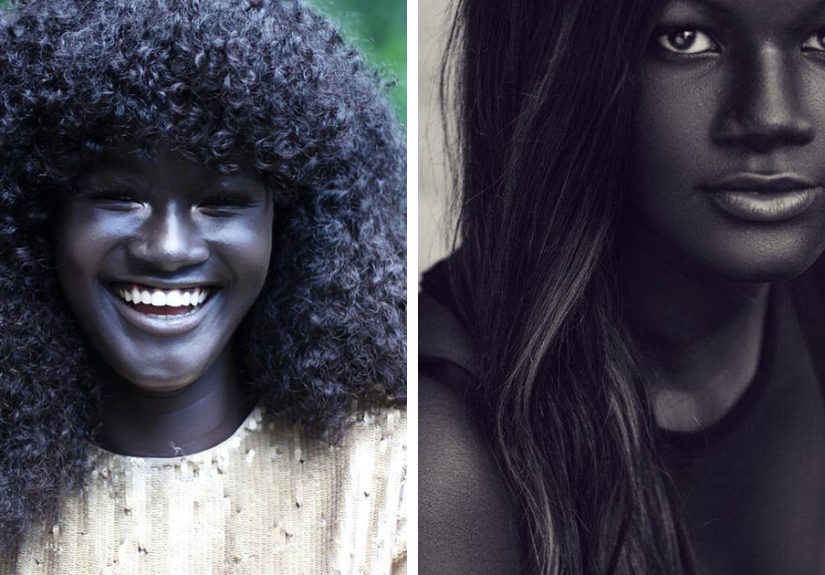
That story is often associated with Khoudia Diop, the Senegal-born model who turned years of color-based teasing into a public celebration of dark skin, self-respect, and visibility. But her rise is not just one girl’s glow-up story. It is also a story about colorism, bullying, beauty standards, and what happens when someone stops apologizing for the very thing the world told her to hide.
It is tempting to read a headline like this and file it under inspiring, then move on. But that would miss the bigger picture. Stories like Diop’s matter because they expose a hard truth: for many dark-skinned girls, the pressure starts early. It can come from classmates, strangers, media, and sometimes even from communities that should know better. When one of those girls grows up and claims space in an industry that once ignored her, it is not just personal success. It is cultural pushback in high heels.
The Story Behind the Headline
Khoudia Diop became widely known after speaking openly about being bullied for her deeply melanated skin. Born in Senegal and later living in Paris, she described growing up with comments and mockery aimed directly at her complexion. Instead of shrinking herself to make others comfortable, she eventually chose the opposite path: she made her skin the centerpiece of her identity rather than something to be hidden.
That pivot did not happen overnight. It rarely does. Confidence is usually less like a lightning bolt and more like assembling furniture without instructions: frustrating, slow, and full of moments where you wonder whether you are holding the right pieces. For Diop, part of that process was learning to reject the idea that beauty had to look lighter, softer, or more “acceptable” to mainstream eyes.
As she moved into fashion and beauty work, the same feature that had once made her a target became the reason many people noticed her. Her dark skin did not need to be corrected, softened, filtered, or explained. It was striking, elegant, and market-changing. That reversal is part of why her story resonated so strongly online. People were not just reacting to a beautiful face. They were reacting to the sight of someone rewriting the rules in public.
From Teasing to Self-Definition
One of the most powerful parts of Diop’s story is that she did not simply “overcome insecurity” in a neat, motivational-poster kind of way. She actively redefined herself. She embraced the nickname “Melanin Goddess,” turning language into armor and visibility into a form of resistance. That matters because bullying often works by making a person feel small, embarrassed, or permanently flawed. Reclaiming identity breaks that spell.
In a culture where darker skin has often been treated as a disadvantage, naming it as beautiful is not vanity. It is defiance.
Why Modeling Mattered
Modeling was not important because it “proved the bullies wrong,” though that part is admittedly satisfying. It mattered because fashion is one of the loudest visual industries in the world. When a dark-skinned teen grows up to appear in campaigns and editorials, she is no longer just surviving other people’s bias. She is becoming part of the image system that shapes how millions of others see beauty.
That kind of visibility can ripple outward. A girl scrolling on her phone sees someone who looks like her. A makeup brand realizes darker shades are not optional. A casting director’s “type” suddenly starts looking suspiciously outdated. Progress in beauty culture is rarely perfect, but representation still changes what feels possible.
This Is Bigger Than One Teen
The headline works because it is personal. The issue is bigger because it is structural.
Colorism is different from racism, though the two are closely connected. Colorism refers to discrimination or bias based on skin tone, often within the same racial or ethnic group, where lighter skin is treated as more desirable, more feminine, more professional, or more socially valuable. Darker-skinned girls often absorb those messages early, long before they have the language to describe what is happening.
That is why stories like this land so hard. They are not just about mean comments in a hallway. They are about a whole system that teaches children to rank beauty on a shade scale like it is a home paint sample. And let’s be honest: that system has had a bizarrely long run for something so ridiculous.
What Bullying Does Beneath the Surface
Bullying is often described casually, as if it were simply “part of growing up.” It is not. Repeated humiliation can shape self-esteem, mental health, academic confidence, social trust, and body image. When the bullying is tied to visible traits such as skin tone, it can become especially difficult to escape because the target is being told, over and over, that something fundamental about her appearance is wrong.
That message can linger even after the bullies are gone. A teenager may stop raising her hand in class, avoid cameras, shrink in group settings, or become hyperaware of how light hits her skin in photos. None of that is superficial. It is what happens when appearance-based bias gets under a person’s skin emotionally, socially, and psychologically.
This is one reason public self-acceptance matters so much. When someone like Diop stands in front of the camera with pride, she is not just modeling clothes or beauty products. She is modeling a different relationship to selfhood.
How Fashion Helped Create the Problem and Sometimes Helps Fix It
Fashion and beauty have a complicated record here. For years, dark-skinned women were either underrepresented or presented in narrow, exoticized ways. They were visible when the industry wanted to look edgy, invisible when it wanted to look “classic,” and underserved when it came to foundation shades, hairstyling, and backstage expertise. In other words, the invitation was sometimes there, but the infrastructure was missing.
That is why Diop’s rise was meaningful beyond the headline. She did not arrive in a perfectly inclusive industry. She entered one that was still learning, often badly, how to serve dark-skinned talent with respect. Her success helped expose both the progress and the gaps.
The Good News
Inclusive campaigns and conversations did begin to shift the landscape. Diop’s work with projects centered on women of color and with mainstream beauty campaigns showed that there was a real audience for richer, darker shades and broader definitions of beauty. Her image did not need to be “explained” to resonate. It resonated because it was powerful, modern, and memorable.
Other young figures helped widen that opening too. Kheris Rogers transformed her childhood pain into the phrase “Flexin’ In My Complexion,” building a brand around affirmation and self-love after being bullied for her skin tone at school. Her story made it clear that representation does not only happen on luxury runways. Sometimes it starts with a T-shirt, a sister’s encouragement, and a refusal to let shame be inherited.
The Reality Check
Even as representation improves, darker-skinned models still report unequal treatment. The industry may cast them, then fail to stock the right makeup shades. It may celebrate diversity in campaigns while sending unprepared hair and makeup teams backstage. It may praise melanin in marketing copy and still center lighter, safer versions of beauty when real money is on the line.
So no, the problem is not solved because a few famous faces broke through. Progress is real, but it is patchy. Think less “mission accomplished” and more “the Wi-Fi connected, but the signal still drops in three rooms.”
Why Her Story Resonates
There is a reason people keep sharing stories like this. They offer a rare emotional combination: pain, dignity, and reversal. We see someone who was made to feel lesser become unmistakably visible. That arc is satisfying, but it is also instructive.
Diop’s story resonates because it does not say, “Beauty won.” It says something better: “The standard was wrong.” That distinction matters.
If a girl is bullied for dark skin and later becomes a model, the lesson should not be that she finally became valuable because the fashion world approved of her. Her value existed the whole time. The deeper victory is that she refused to accept a false ranking of human worth. Modeling just gave the world a bigger screen on which to witness that refusal.
Visibility Can Heal, But It Also Challenges
Stories like this also challenge readers to think about what we reward. Why does a dark-skinned girl becoming conventionally successful feel newsworthy in the first place? Because we still live in a culture where darker skin is too often treated as a surprise in spaces that claim to celebrate beauty. The fact that this still feels like a headline tells us the work is not done.
At the same time, success stories can genuinely help. They give language to people who have felt isolated. They make it harder for dismissive adults to act like color-based teasing is harmless. They create counter-images for younger viewers who are still figuring out whether the world has room for them exactly as they are.
What Parents, Schools, and Media Should Learn
This story should not only inspire applause. It should trigger better behavior.
Parents need to recognize color-based comments early, whether those comments come from peers, relatives, social media, or the child herself. Schools need to treat appearance-based bullying as serious, especially when it intersects with race and colorism. Media and brands need to stop acting as though inclusion begins and ends with one campaign during one particularly enlightened quarter.
Children build self-concept from repetition. If the repeated message is that dark skin is less beautiful, less gentle, less feminine, or less worthy of celebration, that message does damage. But repetition can also work in the opposite direction. Repeated affirmation, repeated visibility, repeated images of dark-skinned joy and success can help loosen the grip of old standards.
That does not mean every girl who has been bullied needs to become a model, an influencer, or a symbol. Absolutely not. The goal is not to turn pain into a personal brand. The goal is to build a culture where dark-skinned girls do not need a redemption arc to be treated with dignity in the first place.
More Experiences That Echo This Story
Khoudia Diop’s journey is powerful, but it is not isolated. Across fashion, media, and online culture, other young women have described experiences that sound painfully familiar. Their stories help explain why the headline keeps circulating: too many girls still recognize themselves in it.
Kheris Rogers is one of the clearest examples. As a child in Los Angeles, she was bullied for her darker complexion and reached a point where the hurt was serious enough to affect how she saw herself. Instead of allowing that pain to define her, she and her family transformed it into a message of pride. “Flexin’ In My Complexion” became more than a slogan. It became a public refusal to let colorism write the script for a young girl’s identity. Rogers moved into fashion spaces while still very young, proving that affirmation can be built intentionally, not just discovered by accident.
Nyakim Gatwech’s experience echoed a different side of the same issue. She has spoken about being treated as “too dark” and even facing suggestions that her skin should be lightened. Her response was unapologetic pride. What makes stories like hers so important is that they reveal how colorism does not disappear with age or success. It simply changes costumes. Sometimes it shows up as schoolyard teasing. Sometimes it arrives dressed as “advice,” “preferences,” or beauty industry marketing. Same nonsense, better packaging.
Anok Yai’s rise adds another layer. She has discussed growing up dark-skinned in New Hampshire and feeling like an outsider before becoming one of fashion’s biggest names. Her story shows that even extraordinary success does not erase the memory of being made to feel different. But it also proves that difference can become creative power. In her case, fashion became a place not to hide but to sharpen identity.
There are also stories from outside the spotlight’s center that matter just as much. Aspiring model Mimi Mbah gained attention after responding confidently to a comment suggesting she would look better with lighter skin. That moment mattered because it was so familiar: a dark-skinned girl being told that beauty is conditional, then rejecting the condition altogether. Likewise, conversations in beauty media have shown that dark-skinned models are still too often underserved backstage, especially when it comes to foundation, lighting, and hair care. Representation in front of the camera means little if respect disappears behind it.
Taken together, these experiences make one thing clear. The problem is not a lack of beautiful dark-skinned girls. The problem has never been the girls. It has been the bias. And every time one of them steps into public view without apology, she does more than succeed. She interrupts the lie.
Conclusion
“Teen Bullied For Her Dark Skin Color Becomes A Model” sounds like a triumphant ending, and in many ways it is. But the real power of the story is not that the bullied girl became famous enough to earn public approval. It is that she learned the approval was never the point.
Khoudia Diop’s journey, and the journeys of others like her, expose the cruelty of colorism while also offering a blueprint for resistance: name the bias, reject the shame, take up space anyway. Fashion did not create her worth. It merely gave the world a better angle from which to see it.
That is why this story endures. It is not just about modeling. It is about what happens when a girl who was told to dim her light decides, very inconveniently for the old beauty standard, to become impossible to ignore.