Table of Contents >> Show >> Hide
- Why Vintage French Linen Napkins Still Steal the Table
- What Makes French Linen Special?
- Why Linen Napkins Beat Disposable Napkins
- Popular Styles of Vintage French Linen Napkins
- How to Choose Vintage French Linen Napkins
- How to Style Vintage French Linen Napkins
- Simple Napkin Folds That Work Best
- How to Wash and Care for Vintage French Linen Napkins
- Decorating Beyond the Dinner Table
- Common Mistakes to Avoid
- Are Vintage French Linen Napkins Worth It?
- Experience Notes: Living With Vintage French Linen Napkins
- Conclusion: Small Squares, Big Tabletop Energy
- SEO Tags
Note: This article is written for web publication in standard American English and synthesizes real information about linen history, French table linens, textile care, tabletop styling, and vintage buying best practices.
Why Vintage French Linen Napkins Still Steal the Table
Some tabletop pieces whisper. Vintage French linen napkins clear their throat, sit up straight, and politely ask why everyone else is using paper. These napkins are not just squares of fabric; they are tiny domestic heirlooms with hems, monograms, texture, and a talent for making even scrambled eggs feel like brunch in Provence.
The appeal of vintage French linen napkins comes from a lovely mix of beauty and usefulness. Linen is made from flax, a natural fiber known for strength, absorbency, and that relaxed wrinkle that somehow looks expensive instead of lazy. French households have long valued table linens not only for function but also for hospitality, family tradition, and everyday elegance. A stack of old linen napkins can carry traces of embroidery styles, hand-finished hems, regional tastes, and generations of meals that were probably served with better cheese than most of us keep in the refrigerator.
For modern homes, they offer something rare: character without clutter. A set of antique or vintage linen dinner napkins can soften a minimalist table, add soul to farmhouse decor, balance polished dinnerware, or bring warmth to a holiday setting. They are sustainable, reusable, durable, and charmingly imperfect. A tiny slub in the weave? Personality. A faint crease? French confidence. A monogram that is not yours? Congratulations, you have inherited mystery.
What Makes French Linen Special?
Linen begins with flax, a plant fiber that has been used for thousands of years. Compared with many other textiles, linen is prized because it is strong, absorbent, quick-drying, breathable, and naturally textured. It does wrinkle, but that wrinkle is part of its charm. Unlike synthetic fabrics that try very hard to look perfect, linen relaxes into the table like it knows the menu already.
French linen has a particularly romantic reputation because France has a deep relationship with fine textiles, embroidery, lace, and household linens. Traditional French linen closets often included tablecloths, napkins, sheets, towels, and embroidered pieces that were saved, used, repaired, and passed down. In many older pieces, you may find hand-stitched initials, ladder-stitch borders, drawn-thread work, damask patterns, scalloped edges, or simple heavy hems made to withstand years of washing.
Vintage vs. Antique: What Is the Difference?
In everyday shopping language, “vintage” usually refers to items from a previous era, often at least a few decades old. “Antique” is commonly used for pieces that are roughly 100 years old or more. With French linen napkins, sellers sometimes use the terms loosely, so it is smart to look beyond the label. The fabric, stitching, condition, and provenance matter more than a romantic product title that sounds like it was written by a candle.
A true vintage French linen napkin may show age in subtle ways: softened fibers, slight color variation, handwork, old monograms, or a heavier weave than many new napkins. Some are crisp white; others are ivory, oatmeal, flax beige, pale blue, or gently faded pastels. The best ones feel substantial but not stiff, elegant but not fussy.
Why Linen Napkins Beat Disposable Napkins
Disposable napkins are convenient, but linen napkins bring ceremony to the table. They also perform better. A well-made linen napkin is absorbent, pleasant on the skin, reusable, and durable enough for regular meals. It does not collapse into sad confetti when faced with salad dressing. It does not pretend to be fancy by being folded into a triangle next to plastic forks.
Using cloth napkins also supports a more sustainable tabletop routine. Instead of throwing paper away after every meal, you wash and reuse linen for years. Vintage napkins go one step further because they already exist. Buying secondhand or antique table linens keeps beautiful textiles in use and reduces demand for newly manufactured goods. It is eco-friendly with better manners.
Popular Styles of Vintage French Linen Napkins
Monogrammed Linen Napkins
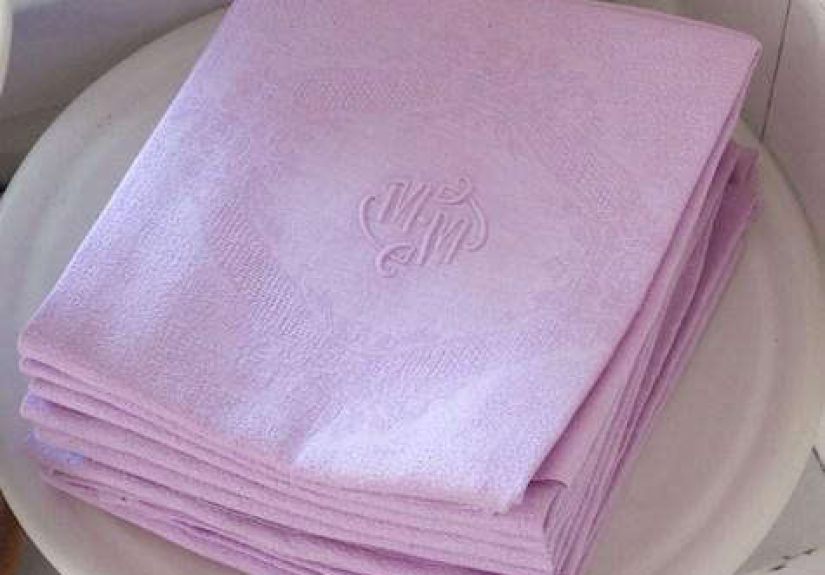
Monogrammed linen napkins are among the most beloved French table linens. The initials may be embroidered in white-on-white thread, red cotton, blue thread, or elaborate satin stitch. Do not worry if the initials do not match your name. A vintage monogram can feel decorative rather than literal. Think of it as borrowing elegance from someone named Marguerite, Marcel, or possibly both.
Damask Linen Napkins
Damask napkins have woven patterns that appear through contrast in the weave rather than printed color. Floral motifs, wreaths, scrolls, vines, and geometric borders are common. These napkins are wonderful for formal dinners because they catch candlelight beautifully without shouting for attention.
Rustic Homespun Linen Napkins
Homespun linen has a more relaxed, country-style texture. It may be slightly nubby, heavier, and less refined than damask. These napkins work beautifully with stoneware, wood boards, simple glassware, and casual meals. They are the tabletop equivalent of a linen shirt worn with confidence and excellent bread.
Hemstitched and Embroidered Napkins
Hemstitching, drawn-thread work, and delicate embroidered borders add quiet detail. These napkins are ideal for weddings, spring lunches, tea tables, and holiday meals. They look special without making guests feel like they need to speak in whispers.
How to Choose Vintage French Linen Napkins
Shopping for antique French linens is part treasure hunt, part textile inspection, and part self-control exercise. Before buying, consider how you plan to use them. Daily family dinners need sturdy, washable napkins. Formal occasions can handle more delicate embroidery. A collector may prioritize rare handwork, while a practical host may simply want a generous set that survives tomato sauce.
Check the Size
Dinner napkins are often around 18 to 22 inches square, though vintage sizes vary. Luncheon napkins may be smaller, and oversized napkins can feel luxurious on a formal table. If you are buying a set, make sure the sizes are close enough to look intentional. A little variation is charming; a napkin the size of a sail beside one the size of a tissue may raise questions.
Inspect the Fabric
Good linen feels cool, textured, and strong. It may have natural slubs or tiny irregularities in the weave. That is normal. Watch for thinning areas, brittle fibers, large holes, harsh discoloration, or repairs that may not hold up to use. Hold the napkin up to light if possible. Thin spots will reveal themselves quickly.
Look Closely at Stains
Small age marks are common in vintage linens. Pale tea-colored spots, storage marks, or faint discoloration may improve with careful washing, but dark grease stains, rust marks, and mystery stains can be stubborn. If you love the napkins anyway, use them casually or dye them. Not every linen needs to live a museum life.
Buy Sets or Mix Singles
A matched set is classic, especially for formal entertaining. But mismatched vintage French linen napkins can look relaxed and stylish when tied together by color, texture, or embroidery style. For example, mix white monogrammed napkins with ivory hemstitched ones, or combine several pale blue pieces for a collected table. The secret is repetition. If every napkin is different but they share a mood, the table looks curated rather than confused.
How to Style Vintage French Linen Napkins
The beauty of French table linens is that they adapt. They can look grand with silver and porcelain or casual with breadboards and stoneware. The same napkin that works under a roast chicken on Sunday can dress up oysters, pasta, or takeout noodles on a Thursday night. Linen does not judge the menu.
For a French Country Table
Pair natural linen napkins with white plates, woven placemats, simple glassware, and fresh herbs in small jars. Add a striped table runner or a washed linen tablecloth. Keep the palette soft: cream, flax, faded blue, sage, or warm gray. The result feels relaxed, sunlit, and very “I just casually made a tart.”
For a Formal Dinner
Choose crisp white damask or monogrammed napkins. Iron them lightly while damp for a polished look. Place one napkin on the plate, to the left of the forks, or in a napkin ring at the center of each setting. Add candles, polished flatware, and low flowers. The key is restraint. Let the texture and handwork do the talking.
For a Modern Minimalist Table
Use plain vintage linen napkins in ivory, charcoal, oatmeal, or white. Fold them simply into rectangles or loose knots. Pair with matte dinnerware and clear glass. Vintage linen adds softness to modern lines, preventing the table from looking like a design showroom where nobody is allowed to eat soup.
For Holidays
Vintage French linen napkins shine during holidays because they create a sense of occasion. For Thanksgiving, pair flax-colored napkins with amber glass, pears, walnuts, and taper candles. For Christmas, white monogrammed napkins look beautiful with greenery and brass. For Easter, pale linen with embroidered edges feels fresh beside eggs, tulips, and lemon desserts.
Simple Napkin Folds That Work Best
Vintage linen does not need complicated folding. In fact, simple folds often show off the fabric better. Try a clean rectangle, a loose roll tied with ribbon, a relaxed knot, or a flat fold placed beneath a salad plate. If the napkin has a monogram, fold it so the embroidery sits visibly at the corner or center.
For formal meals, a pressed rectangle or triangle is timeless. For casual dinners, let the napkin fall naturally across the plate or tuck it under the fork. Napkin rings also work beautifully, especially if you use brass, wood, silver, ceramic, or woven styles. Avoid overly theatrical folds unless the occasion calls for drama. A linen swan may be memorable, but not always for the right reasons.
How to Wash and Care for Vintage French Linen Napkins
Caring for linen is not difficult, but vintage pieces deserve a gentler touch. First, check for weak spots, embroidery, lace, or delicate hems. If the napkins are sturdy, wash them in cool or lukewarm water with mild detergent. For fragile pieces, hand washing or a gentle cycle in a mesh laundry bag is safer.
Avoid harsh chlorine bleach, which can weaken fibers and yellow older fabric over time. Oxygen-based whiteners may be gentler for some white linens, but always test first. For food stains, treat quickly. Blot rather than rub. A little mild soap and cool water can do wonders if used before the stain settles in and starts paying rent.
Drying and Ironing
Air drying is safest for delicate vintage napkins. If you use a dryer, choose low heat and remove the napkins while slightly damp. Linen irons best when damp, so do not let it turn into a crispy rectangle of regret. For a relaxed look, skip ironing and smooth the napkin by hand. For a crisp dinner party finish, press with steam and fold neatly.
Storage Tips
Store clean, fully dry napkins in a cool, dry place. Avoid plastic bags for long-term storage because textiles need to breathe. Fold loosely, roll around acid-free tissue, or stack flat in a drawer. Add lavender sachets if you like a fresh scent, but keep direct oils away from the fabric. Rotate folds occasionally to prevent permanent creases.
Decorating Beyond the Dinner Table
Vintage French linen napkins are useful beyond place settings. Use one under a bread basket, line a tray, wrap a wine bottle, cover warm rolls, soften a bedside table, or layer beneath a vase. A beautiful napkin can also be framed as textile art, especially if it has embroidery or a monogram. Small damaged pieces can become lavender sachets, patchwork, pillow fronts, or gift wrap.
This flexibility makes them a smart buy. You are not purchasing a single-purpose object. You are collecting fabric with options. One day it is under a bowl of olives; the next, it is making a birthday cake look like it has a publicist.
Common Mistakes to Avoid
Saving Them Only for Special Occasions
The fastest way to make vintage linen sad is to hide it forever. Linen becomes softer with use and washing. Unless a piece is extremely fragile or museum-quality, enjoy it. Put it on the table. Let it meet butter.
Using Too Much Detergent
More detergent does not mean cleaner napkins. It can leave residue and make fabric feel stiff. Use a moderate amount of mild detergent and rinse well.
Over-Bleaching
Bright white linens are tempting, but aggressive bleaching can damage old fibers. Embrace gentle aging. Ivory linen often looks warmer and more elegant than laboratory white.
Ignoring Measurements
Vintage sellers may list napkins in centimeters or inches. Check the measurements before buying. Photos can be deceiving, especially when a napkin is styled beside tiny antique forks or a bowl that may or may not be dollhouse-sized.
Are Vintage French Linen Napkins Worth It?
Yes, especially if you value beauty, durability, sustainability, and tabletop personality. New napkins can be lovely, but vintage French linen napkins bring a depth that mass-produced textiles often lack. They have texture, history, and small details that make a table feel personal.
They are also surprisingly practical. Good linen can handle frequent washing, and many old French pieces were made for real household use. They were not designed to sit untouched while someone panicked over gravy. They were designed to serve meals, wipe hands, protect laps, and return to the linen closet ready for next time.
Experience Notes: Living With Vintage French Linen Napkins
The first time you use vintage French linen napkins, you may notice that the table changes before the food arrives. A plain dinner plate suddenly looks more thoughtful. A simple salad seems dressed for the occasion. Even a weeknight pasta dinner gains a little candlelit confidence. That is the magic of good table linens: they create atmosphere without asking you to remodel the dining room.
In everyday use, the best vintage linen napkins are the ones that feel sturdy enough to relax around. A very delicate embroidered napkin may be perfect for a tea party or anniversary dinner, but for regular meals, heavier linen is easier to love. It can handle crumbs, sauce, olive oil, and the occasional guest who uses the napkin like a small towel after meeting a very enthusiastic bowl of mussels.
One practical experience is that mismatched napkins often get more compliments than perfect sets. A table with eight identical napkins looks elegant, but a table with eight related vintage napkins feels collected. Guests notice the monograms, ask where they came from, and sometimes invent stories about them. Suddenly, the table has conversation built into it. That is especially useful if the main course is running late and the host needs a charming distraction.
Another lesson: linen rewards a relaxed attitude. If you expect flawless smoothness, you may spend too much time ironing and not enough time enjoying dinner. A gently wrinkled linen napkin can look beautiful, especially on a rustic or casual table. For formal meals, pressing the napkins while they are slightly damp gives them that crisp, hotel-dining-room look. For Sunday lunch, a soft fold is enough. Nobody has ever rejected dessert because the napkin had a crease.
Vintage linen also teaches better care habits. You learn to treat stains quickly, wash thoughtfully, and store textiles properly. After a while, the routine becomes simple: shake crumbs, pretreat spots, wash gently, dry carefully, fold loosely, repeat. The napkins become part of the rhythm of the home. They are not precious in a fragile way; they are precious because they are used.
For gifting, vintage French linen napkins are surprisingly personal. A set of four monogrammed napkins tied with ribbon makes a thoughtful housewarming gift. A mixed bundle in soft neutrals works well for someone who loves hosting. Even a single embroidered napkin can become a tray liner, bread cloth, or decorative accent. It feels more original than another scented candle named “Evening Fig Whisper,” although admittedly that candle probably smells nice.
The most enjoyable part is how easily these napkins fit different lifestyles. Apartment dwellers can use them to make a small table feel special. Families can use sturdy ones every night. Collectors can search for rare monograms and damask patterns. Minimalists can choose plain white or flax linen. Maximalists can mix embroidery, color, silver, flowers, and patterned plates until the table looks like a French flea market had a very tasteful dinner party.
Over time, vintage French linen napkins become less like decor and more like companions. They appear at birthdays, holidays, quiet breakfasts, noisy dinners, and late-night cheese boards. They soften, fade, and gather memories. That is why they remain so appealing: they make meals feel more human. In a world full of disposable convenience, a real linen napkin says, “Stay a little longer. The table is ready.”
Conclusion: Small Squares, Big Tabletop Energy
Vintage French linen napkins are more than pretty tabletop accessories. They are durable, reusable, storied pieces that bring texture, elegance, and personality to everyday meals and special occasions. Whether you prefer crisp white damask, rustic homespun linen, hand-embroidered borders, or mismatched monograms, these napkins add a layer of warmth that new tableware often tries to imitate.
The best part is that they do not require a château, a private chef, or a flawless roast chicken. They only need a table, a little care, and a willingness to use beautiful things in real life. Bring them out for holidays, weeknight dinners, casual brunches, and quiet breakfasts. Let them wrinkle a little. Let them soften. Let them do what good linen has always done: make ordinary moments feel worth noticing.