Table of Contents >> Show >> Hide
- What “Stage 4 Melanoma” Actually Means (In Plain English)
- Most Common Symptoms of Stage 4 Melanoma
- Symptoms Based on Where Stage 4 Melanoma Spreads
- What Stage 4 Melanoma “Looks Like” in Pictures (Descriptions You Can Compare Safely)
- Picture Pattern A: A Primary Melanoma That Looks Like a “Rule-Breaking Mole”
- Picture Pattern B: Nodular Melanoma (Often a “Bump,” Not a Mole)
- Picture Pattern C: Skin Metastases (New Nodules or Spots Away from the Original Site)
- Picture Pattern D: Surgical Scars and Treatment Sites
- Picture Pattern E: Under-the-Nail Melanoma (A Dark Line)
- Why Symptoms Can Be Subtle (Or Seem Unrelated to Skin)
- How Stage 4 Melanoma Is Diagnosed and Staged
- Treatment Overview (Because Symptoms and Treatment Are Linked)
- Prognosis and Survival (The Numbers, Without the Doom-Scroll)
- When to See a Doctor (and What to Say So You’re Taken Seriously)
- How to Do a Smart Skin Self-Check (No Magnifying Glass Detective Hat Required)
- of Real-World Experience: What People Often Describe (Patients, Families, and the “Support Squad”)
- Conclusion
Quick heads-up: This article is educational, not a diagnosis. If you’re worried about a spot on your skin (or symptoms that don’t add up), a clinicianespecially a dermatologistcan help you get real answers fast.
What “Stage 4 Melanoma” Actually Means (In Plain English)
Stage 4 melanoma (also called stage IV or metastatic melanoma) means melanoma cells have traveled beyond the original skin tumor and beyond the nearby (regional) lymph nodes to distant places in the body. That might be distant skin, faraway lymph nodes, or organs like the lungs, liver, brain, bones, or intestines.
Here’s the tricky partand why this topic scares people on Google at 2 a.m.: the symptoms of stage 4 melanoma can look wildly different from person to person. Some people still have an obvious changing mole. Some don’t. Some have new lumps under the skin. Others feel fine until a persistent cough, headaches, or unexplained fatigue shows up and refuses to leave.
Most Common Symptoms of Stage 4 Melanoma
Think of stage 4 melanoma symptoms in two buckets:
- Skin and lymph-node symptoms (things you can see or feel)
- Organ-related symptoms (signals from wherever melanoma has spread)
1) Skin Changes You Can See: The “New or Changing Spot” Problem
Many melanomas are first noticed because something on the skin changes. Classic warning signs are often summarized by the ABCDE rule:
- Asymmetry (two halves don’t match)
- Border irregularity (jagged, scalloped, or blurry edges)
- Color variation (multiple shadesbrown/black plus red, white, or blue tones)
- Diameter (often larger than about 6 mm, but smaller can still be melanoma)
- Evolving (changing in size, shape, color, bleeding, itching, or becoming raised)
But stage 4 content needs a bigger truth: advanced melanoma isn’t always “a textbook mole.” Some melanomas are amelanotic (not dark) and may appear pink, red, or skin-colored. Others pop up under a nail, on the scalp, or in hard-to-see areas. And some stage 4 cases are discovered after spread is found, even when the original skin spot isn’t obvious.
2) New Lumps on or Under the Skin
Melanoma that spreads can show up as:
- Firm bumps under the skin (subcutaneous nodules) that may be skin-colored, pink, reddish, purple-ish, or darker
- Multiple small nodules clustered near a prior melanoma site (sometimes called satellite or in-transit disease when near the original area)
- New spots that look unlike your other freckles or moles (the “ugly duckling” sign)
These lumps are often painless at first. If something feels new, firm, and persistentespecially if you’ve had melanoma beforeget it checked.
3) Swollen or Firm Lymph Nodes
Lymph nodes can become enlarged or feel firm when melanoma spreads through lymphatic channels. People most often notice this in the neck, armpits, or groin. Swollen nodes can happen for many non-cancer reasons (like infections), but if a node stays enlarged for weeks or keeps growing, it deserves medical attention.
4) Whole-Body Symptoms (The “Something’s Off” Category)
Stage 4 melanoma can cause general symptoms that are frustratingly non-specificmeaning they can mimic a lot of other conditions:
- Persistent fatigue
- Unintentional weight loss
- Loss of appetite
- Ongoing aches or unexplained pain
- Night sweats or feeling “run down”
Non-specific doesn’t mean “ignore it.” It means you look at the pattern: symptoms that persist, escalate, or cluster together deserve a professional evaluation.
Symptoms Based on Where Stage 4 Melanoma Spreads
Melanoma can spread almost anywhere, but certain sites are seen more commonly. Below are examples of symptoms clinicians often watch for, organized by location.
Stage 4 Melanoma in the Lungs
- Persistent cough that doesn’t improve
- Shortness of breath
- Chest discomfort or chest pain
- Recurrent respiratory infections
These symptoms can also come from asthma, infections, reflux, or other lung conditionsso the key is persistence, progression, and risk context.
Stage 4 Melanoma in the Liver
- Loss of appetite or feeling full quickly
- Nausea
- Abdominal swelling or discomfort (especially on the right side)
- Itching
- Yellowing of the skin or eyes (jaundice)
- Unexplained fatigue
Stage 4 Melanoma in the Brain
- Headaches that are new, worsening, or different from your usual pattern
- Nausea/vomiting alongside headaches
- Weakness, balance issues, dizziness, or clumsiness
- Vision changes or speech difficulty
- Seizures
- Personality or memory changes
Urgent note: sudden neurologic symptoms (seizure, sudden weakness on one side, severe confusion) are emergency-level problems. Don’t “wait and see.”
Stage 4 Melanoma in the Bones
- Deep, persistent bone pain (often worse at night)
- Fractures after minor injuries
- Spinal pain with numbness/weakness (when the spine is involved)
Stage 4 Melanoma in the Digestive Tract
- Abdominal pain
- Unexplained anemia or fatigue
- Changes in bowel habits
- Unintended weight loss
What Stage 4 Melanoma “Looks Like” in Pictures (Descriptions You Can Compare Safely)
You searched for pictures because you want certainty. That’s human. But melanoma photos can be misleading: lighting, skin tone, camera quality, and melanoma subtype change the look a lot. Still, here are common visual patterns seen in images labeled “stage 4 melanoma.”
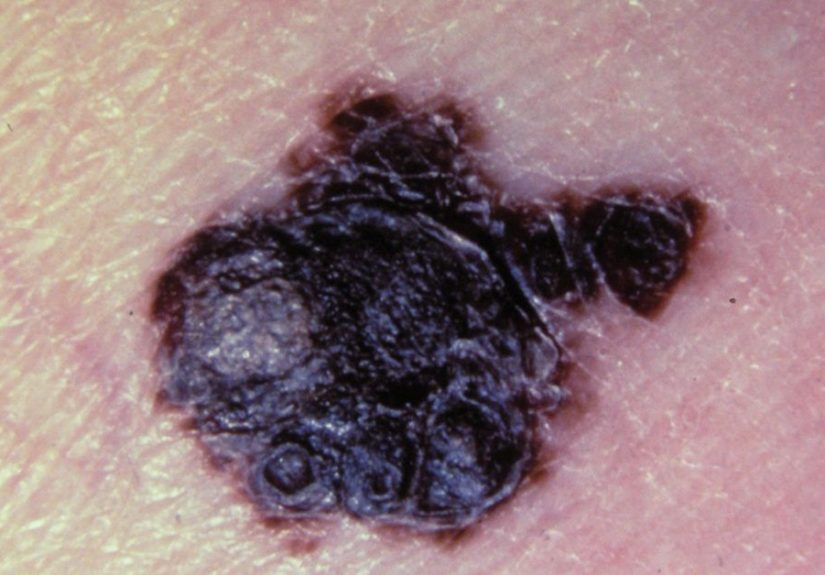
Picture Pattern A: A Primary Melanoma That Looks Like a “Rule-Breaking Mole”
- Irregular border and uneven color (multiple shades)
- Asymmetry
- Noticeable evolution over weeks to months
- Sometimes a surface that looks scaly, irritated, or prone to bleeding
Example: A mole that used to be flat and uniform becomes raised with mixed colors and a jagged edge.
Picture Pattern B: Nodular Melanoma (Often a “Bump,” Not a Mole)
Some melanomas look like a dome-shaped bumpfirm and growing. These may be dark, but they can also be pink or red. In photos, nodular melanoma often looks like a rounded lesion that seems to “arrive fast” compared with surrounding spots.
Example: A firm bump on the scalp or neck that grows noticeably over a month and may look like a sore that won’t heal.
Picture Pattern C: Skin Metastases (New Nodules or Spots Away from the Original Site)
In stage 4 melanoma, pictures sometimes show new skin lesions that represent spreadoften as multiple firm nodules. They may be:
- Skin-colored, pink, red, purple, or dark
- Round or irregular
- Single or multiple
- Sometimes clustered
Example: Several small, firm bumps appearing on the trunk or limb, not matching any prior moles.
Picture Pattern D: Surgical Scars and Treatment Sites
Many stage 4 melanoma photo galleries include scars from wide excision surgeries, lymph node procedures, or areas treated with radiation or injections. These photos can be startling, but they often reflect treatmentnot just disease.
Picture Pattern E: Under-the-Nail Melanoma (A Dark Line)
Some melanoma images show a dark vertical streak under a fingernail or toenail. This can have benign causes, tooso the key in photos is whether the line is new, widening, irregular, or associated with nail changes.
Important: Photos can’t confirm stage 4 melanoma. Staging requires imaging and medical evaluation.
Why Symptoms Can Be Subtle (Or Seem Unrelated to Skin)
Melanoma is famous for being sneaky. It can spread through lymphatic channels or bloodstream. By the time it causes symptoms, the symptoms often reflect the organ affectedlike cough (lungs) or headaches (brain)rather than the skin lesion that started it all.
That’s why doctors combine:
- Skin exams (dermoscopy, full-body checks)
- Biopsy of suspicious lesions or lymph nodes
- Imaging (CT, PET/CT, MRI brain, depending on the case)
- Lab tests and tumor profiling (for example, mutations like BRAF that can guide treatment)
How Stage 4 Melanoma Is Diagnosed and Staged
If clinicians suspect metastatic melanoma, the workup often includes:
- Biopsy (confirming melanoma cells under the microscope)
- Imaging to look for spread (the exact scans depend on symptoms and clinical judgment)
- Molecular testing for mutations (commonly BRAF; sometimes others)
- Blood tests that help with the overall picture (not diagnostic by themselves)
Treatment Overview (Because Symptoms and Treatment Are Linked)
Stage 4 melanoma treatment has changed dramatically over the last decade. Today, many people are treated with medications that aim to harness the immune system or target specific tumor mutations. Your plan depends on factors like where the melanoma is, whether it’s causing symptoms, mutation status, and overall health.
Immunotherapy (Checkpoint Inhibitors)
Checkpoint inhibitors can help the immune system recognize and attack melanoma. They’re often used as first-line therapy in many stage 4 cases, and some people experience long-lasting tumor control. These drugs can also cause serious immune-related side effects, so close monitoring matters.
Targeted Therapy (Often for BRAF-Mutant Melanoma)
For melanomas with certain mutations (commonly BRAF), targeted therapiesoften a BRAF inhibitor plus a MEK inhibitormay shrink tumors quickly. That speed can be important when symptoms need rapid relief.
Surgery and Radiation (For Selected Situations)
If there are only a few metastases, surgery might be considered in certain cases. Radiation can be used to reduce pain, protect function (for example, in bone or brain involvement), or treat areas causing symptoms.
Clinical Trials and Newer Approaches
Clinical trials may offer access to new combinations, vaccines, cellular therapies, or novel targets. For many people, trials are not a “last resort”they’re a smart option to discuss early.
Prognosis and Survival (The Numbers, Without the Doom-Scroll)
It’s natural to search “stage 4 melanoma survival rate.” The most widely used U.S. statistic groups melanoma by how far it has spread: localized, regional, or distant. In the U.S., the reported 5-year relative survival rate for distant (metastatic) melanoma is about 35% based on people diagnosed in 2015–2021.
Two critical reality-checks:
- These numbers are averages across many people. They can’t predict any one person’s outcome.
- Treatments continue to improve, and many people diagnosed today may do better than older statistics suggest.
When to See a Doctor (and What to Say So You’re Taken Seriously)
Make an appointment promptly if you notice:
- A new or changing mole/spot (especially one that evolves)
- A firm new lump under the skin
- Swollen lymph nodes that persist
- Unexplained symptoms that persist (cough, headaches, weight loss, fatigue)
Helpful script: “I have a spot/lump/symptom that’s new and persistent, and I’m concerned about melanoma. I’d like a focused exam and guidance on whether imaging or biopsy is needed.”
How to Do a Smart Skin Self-Check (No Magnifying Glass Detective Hat Required)
- Use good light and a full-length mirror (plus a hand mirror).
- Check the sneaky zones: scalp (part your hair), behind ears, between toes, soles, nails, and your back.
- Look for “ugly ducklings”spots that don’t match your other spots.
- Take monthly photos if you have many moles (same angle, same lighting).
- Don’t self-diagnose from one photo online. Use photos to notice change, then get it checked.
of Real-World Experience: What People Often Describe (Patients, Families, and the “Support Squad”)
People dealing with suspected or confirmed stage 4 melanoma often say the hardest part isn’t just the diagnosisit’s the emotional whiplash before and after it. Many describe a long stretch of “Is this something… or am I overreacting?” A spot changes slowly, or a bump appears that seems harmless, and life is busy, so it’s easy to postpone getting checked. Then the appointment happens, and suddenly time feels like it’s moving at double speed.
Another common theme: the symptoms can feel oddly ordinary. Someone might think they’re just exhausted from work, or they chalk up weight loss to stress. A cough is blamed on allergies. Headaches are blamed on screens. When people finally connect the dots, they often say, “I wish I’d trusted myself sooner.” The good news is that “sooner” can still be sooncalling a doctor because something is persistent is not being dramatic; it’s being practical.
When photos enter the picture, it can get complicated. People often search for melanoma images hoping to find an exact match, like the internet is a visual vending machine: insert anxiety, receive certainty. But real life is messier. A spot might look different depending on the camera, lighting, or skin tone. And some melanomas aren’t dark at all, which throws people off. Many patients say the most useful “photo habit” wasn’t comparing to strangers onlineit was taking consistent pictures of their own skin to notice change over time.
Families and friends also talk about learning a new language overnight: PET scans, MRIs, immunotherapy, targeted therapy, side effects, infusion schedules. There’s often “scanxiety”the stress that shows up before imaging results. People describe trying to stay normal while waiting for calls, refreshing portals, and doing the mental math of appointments. If there’s a bright spot, it’s how many care teams now include not just oncologists and dermatologists, but nurses, social workers, and support services that help with the non-medical load.
On treatment days, experiences vary. Some feel okay and keep living life between appointments. Others deal with fatigue or side effects that arrive like an uninvited guest who also eats your snacks. Many patients say the most helpful support wasn’t perfect adviceit was specific help: rides, meals, childcare, or simply someone willing to sit quietly without forcing optimism. There’s room for hope and realism in the same sentence.
And almost everyone mentions one unexpected takeaway: stage 4 melanoma is serious, but it isn’t a single story. People respond differently, treatments have advanced, and plans evolve. The most “experienced” advice tends to be simple: get evaluated early, ask questions, bring a trusted person to appointments, and don’t carry the whole thing alone.
Conclusion
Stage 4 melanoma symptoms depend heavily on where melanoma has spreadskin changes, new lumps, swollen lymph nodes, and organ-specific symptoms like persistent cough, headaches, or bone pain. Pictures can help you recognize patterns (ABCDE changes, fast-growing bumps, clusters of skin nodules), but staging can’t be done from images alone. If something new is evolving or persistent, a prompt medical evaluation is the fastest path to clarityand, when needed, to treatment.