Table of Contents >> Show >> Hide
When a scientist becomes a household name, it’s usually because they won a Nobel Prize, wrote a best-selling book, or gave a TED Talk that made everyone cry.
Steven Hatfill’s rise to public fame (or infamy, depending on who you ask) took a very different route: being labeled a “person of interest” in the 2001 anthrax attacks, later being officially cleared and compensated, and then reappearing in the spotlight during the COVID-19 pandemic as a controversial voice on treatments and vaccines.
This article doesn’t rank Steven Hatfill as “hero” or “villain”real life is messier than a simple score out of 10. Instead, we’ll walk through who he is, how different institutions and commentators have effectively “ranked” him over time, and what those shifting opinions say about government power, media responsibility, and scientific debate in a crisis.
Who Is Steven Hatfill?
Steven Jay Hatfill is an American physician and biological weapons expert born in 1953 in St. Louis, Missouri.
After undergraduate studies in the United States, he pursued medical education and additional training in what is now Zimbabwe and South Africa, including work in rural hospitals and a stint supporting a South African Antarctic expedition.
Later, he completed graduate work in microbiology and moved into research related to infectious diseases, biodefense, and biosecurity.
By the late 1990s and early 2000s, Hatfill was working in and around the biodefense world, including at the U.S. Army Medical Research Institute of Infectious Diseases (USAMRIID) and for a defense contractor designing training programs related to biological weapons and terrorism.
He was part of a small circle of experts who thought deeply about what a bioterror attack on the United States might look likeand how to prepare for it.
Ironically, it was exactly that expertise that later made him a target of suspicion when a real bioterror event unfolded.
The Anthrax Era: How Investigators And Media “Ranked” Him
From Expert To “Person Of Interest”
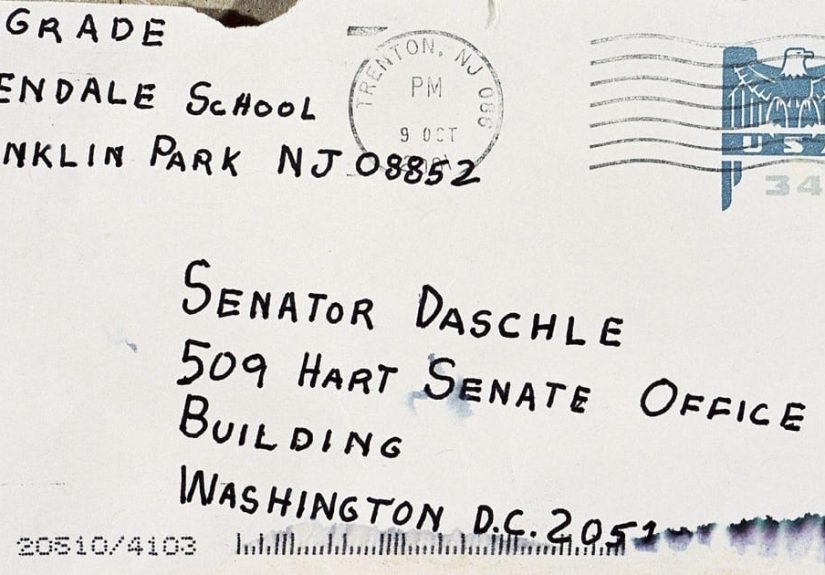
After the September 11 attacks in 2001, letters laced with anthrax spores were mailed to media outlets and political offices, killing five people and sickening many others.
Under immense pressure to find the perpetrator, federal investigators focused at various points on scientists with access to anthrax and expertise in biological agents.
In 2002, then–Attorney General John Ashcroft publicly labeled Steven Hatfill a “person of interest” in the case.
No charges were ever filed against him.
Nonetheless, the label had a powerful effect: it placed him at the center of one of the highest-profile investigations in the country, and it did so in front of an anxious public that was already on edge.
Informally, this was a kind of “ranking” by the government: out of millions of Americans, Hatfill was singled out as someone the public should pay attention toand perhaps worry about.
In the court of public opinion, that label alone can feel like a verdict.
Lawsuits, Settlements, And Official Exoneration
Hatfill strongly denied any involvement in the anthrax mailings and eventually sued the Department of Justice and FBI officials, arguing that leaks and public statements had violated his privacy and damaged his reputation.
In 2008, the U.S. government reached a multimillion-dollar settlement with Hatfill, combining a lump sum payment and an annuity to resolve claims related to those leaks and the way information about him had been handled.
Separate legal battles involved major media outlets that had reported aggressively on him during the investigation.
Some of those cases ended in settlements; others were dismissed.
Regardless of the legal technicalities, the arc of the story is clear: the government ultimately acknowledged that Hatfill had been wrongly swept up in the investigation and that its handling of his privacy had crossed the line.
If we were to “rank” how institutions treated him during this phase, it might look something like this:
- Initial investigative handling: Low marks, due to leaks and premature public labeling without charges.
- Later legal resolution: Higher marks, as settlements and statements made clear he was not responsible for the attacks.
- Human outcome: Mixed at bestno criminal conviction, but years of damage to his career, finances, and personal life.
For many civil liberties advocates, the Hatfill saga became a cautionary tale about what happens when the government’s desire to reassure the public collides with the rights of individuals who have not been charged with any crime.
Rebranding And Return: From Biodefense To Pandemic Politics
After the anthrax chapter closed, Hatfill continued his work in research, teaching, and consulting.
He took on academic roles, contributed to training materials, and remained active in biodefense and emergency preparedness circles.
Then came another global crisis: COVID-19.
This time, he wasn’t a suspected culprithe was an outspoken commentator and advisor.
And once again, public opinion split sharply around his name.
COVID-19, Hydroxychloroquine, And Controversy
During the early months of the pandemic, Hatfill advocated for the early use of hydroxychloroquine (and at times other drugs) to treat COVID-19, emphasizing his view that the federal government wasn’t doing enough to make such treatments widely available.
He advised Trump administration officials and often appeared on right-leaning media to push this stance.
The problem? As the pandemic progressed, high-quality clinical trials and regulatory reviews concluded that hydroxychloroquine did not provide meaningful benefit against COVID-19 and carried real risks, especially related to heart rhythm problems.
Major health agencies revoked emergency authorizations and advised against its routine use for the infection.
Hatfill, however, remained committed to his position, arguing that the evidence was stronger than mainstream health authorities acknowledged.
Later, he emerged as a critic of mRNA vaccines, claiming that they were more dangerous than COVID-19 itselfa view that runs directly counter to the consensus of large-scale safety data and global public health assessments.
This put him in a new kind of spotlight: not as a wrongly accused suspect, but as a polarizing figure in the ongoing battles over pandemic policy, scientific authority, and misinformation.
Government Roles And Public Backlash
In the 2020s, Hatfill re-entered government-adjacent roles, including positions connected to the Department of Health and Human Services and federal preparedness efforts.
His appointments drew criticism from many public health advocates and scientists, who questioned whether someone so publicly associated with debunked COVID-19 treatments and anti–mRNA vaccine rhetoric should hold a senior role in pandemic planning.
Ultimately, he was pushed out of a senior advisory post after internal disputes and mounting controversy around his views on vaccines and his role in efforts to reshape federal funding priorities away from mRNA-based projects.
Once again, different communities “ranked” him in radically different ways:
- Supporters: A straight-talking expert willing to challenge “establishment” science and bureaucracy.
- Critics: A high-profile promoter of treatments and positions that conflicted with the best available evidence, risking public health.
- Institutions: A complicated asset whose presence created both insider influence and public controversy.
Rankings, Reputation, And The Problem With Simple Scores
The phrase “Steven Hatfill rankings and opinions” suggests that there might be a neat leaderboard somewhere: perhaps a list of experts rating his credibility, or a poll of how the public feels about him.
In reality, what we have instead are overlapping, often conflicting narratives:
- The wrongly accused scientist: A man who suffered immensely from being publicly labeled a “person of interest,” only to be exonerated and compensated years later.
- The crisis communicator: A biodefense specialist who tried to sound alarms and propose solutions in times of national fear.
- The COVID-19 contrarian: An advisor and commentator who embraced controversial positions on drugs and vaccines that diverged sharply from the scientific mainstream.
Each of these narratives invites its own “ranking.”
If you prioritize civil liberties and worry about governmental overreach, you might see Hatfill primarily as a victim of institutional failure.
If you’re focused on rigorous clinical data and public health messaging, you may judge his pandemic-era advocacy much more harshly.
The lesson here is less about whether Hatfill is “good” or “bad” and more about how we form opinions in the first place.
Complex lives don’t fit cleanly into online star ratings, and neither do complicated public figures.
How To Evaluate Public Figures Like Steven Hatfill
If you’re trying to make sense of Steven Hatfilland similar high-profile, high-controversy personalitieshere are a few practical guidelines:
1. Separate Allegations From Findings
The anthrax investigation shows how dangerous it can be to treat early suspicion as settled fact.
Being a “person of interest” is not the same thing as being charged, let alone convicted.
When you see old headlines or social media posts about any public figure, ask: was this allegation ever proven, or did later evidence tell a different story?
2. Follow The Evidence, Not Just The Personality
During COVID-19, Hatfill’s high-profile advocacy for specific treatments made it easy to focus on him as a character rather than on what the data actually showed.
Whether you ultimately agree or disagree with his positions, the key question should always be: What do high-quality studies and independent reviews say?
3. Notice How Different Groups “Rank” The Same Person
Politicians, agencies, media outlets, professional peers, and the general public may all evaluate the same figure differently.
Those “rankings” often reveal as much about the priorities and biases of the group doing the judging as they do about the person being judged.
4. Make Room For Contradictions
It’s entirely possible for someone to be both a wronged individual in one context and a problematic advocate in another.
Real people can be brave and flawed, insightful and misguided, helpful and harmfulsometimes all in the same decade.
Personal And Public Lessons From The Hatfill Story
Beyond the timelines and legal documents, the story of Steven Hatfill offers powerful lessons about what it feels like to live under the microscope of national attentionand what the rest of us can learn from that.
Experience #1: Being On The Receiving End Of A Narrative
Imagine waking up one day to discover that your name is suddenly everywhere, framed through a lens you did not choose.
Neighbors look at you differently.
Your career stalls.
Every move you make is examined for “clues.”
Whether or not you ever see the inside of a courtroom, you’re on trial in the media and in the minds of millions.
That’s the kind of experience Hatfill has described in interviews and accounts of his anthrax ordeal.
Even after financial settlements and official statements clarified he was not the perpetrator, the emotional and reputational damage couldn’t simply be reversed with a press release.
For the rest of us, there’s a clear takeaway: when we consume news, especially in moments of national fear, we should be cautious about mentally “ranking” people as guilty or dangerous based on incomplete information.
It’s easy to forget that behind every headline is a human being whose life can be reshaped by our assumptions.
Experience #2: The Temptation To Become A Symbol
After being wrongly suspected and later compensated, Hatfill’s story could have ended with a relatively quiet return to private life.
Instead, he became a symbol in multiple debates: a symbol of government overreach in the anthrax era, and later a symbol of contrarian COVID-19 views around drugs and vaccines.
When a person becomes a symbol, supporters and critics alike can stop engaging with their ideas in a nuanced way.
To fans, they’re a truth-teller.
To opponents, they’re a cautionary tale or even a villain.
In the middle of that symbolic tug-of-war, it can be easy for the actual evidence, context, and uncertainties to get lost.
That dynamic is important for anyone who follows scientific or political debates.
When we discover that we’re reacting primarily to the persona of a figure like Hatfill instead of the data and arguments on the table, that’s a sign we might be treating a complex human being as a two-dimensional avatar in our favorite culture war.
Experience #3: The Cost Of Being Wrong In Public
Part of what makes pandemic-era controversies so intense is that they involve life-and-death stakes.
When a public figure backs a medical intervention that later turns out to be ineffective or risky, the consequences aren’t just reputationalthey can influence how real people behave when they are sick or scared.
In Hatfill’s case, his strong public support for hydroxychloroquine and his harsh criticism of mRNA vaccines have come under fire precisely because they clash with the best available evidence on safety and effectiveness.
Whether you view him as a courageous skeptic or a dangerous amplifier of misinformation, the core issue is the same: when you speak loudly during a crisis, you take on a heavy responsibility to be as accurate and evidence-based as possible.
The experience here is not just Hatfill’sit’s ours too.
We live in an era where anyone, from a world-famous scientist to a random social media user, can contribute to the information landscape during an emergency.
The Hatfill story is a reminder that “I’m just asking questions” isn’t always neutral when millions of people are listening.
Experience #4: What We Can Do As Everyday “Rankers”
Ultimately, “rankings and opinions” about public figures don’t live on a secret scoreboard; they live in our conversations, our social feeds, and our voting booths.
Each of us is constantly assigning credibility pointsdeciding whose advice to trust, whose warnings to heed, and whose takes to ignore.
If we want to learn from the saga of Steven Hatfill, we can:
- Be slower to assume guilt based on early investigative speculation.
- Be quicker to check whether a dramatic claim lines up with strong scientific evidence.
- Be humble enough to update our opinions when new facts emerge.
- Be aware of how emotionsfear, anger, tribal loyaltyshape our “rankings” of public figures.
Steven Hatfill’s life trajectoryfrom biodefense researcher to wrongly suspected anthrax figure to controversial COVID-19 advisordefies any simple label.
Maybe that’s the real answer to the search for “Steven Hatfill rankings and opinions”: the most honest ranking is an incomplete one, constantly revised as we learn more, ideally grounded in both empathy and evidence.
And if nothing else, his story should at least nudge us to think twice the next time we’re tempted to turn a complicated human being into a one-line hot take or a five-star rating.