Table of Contents >> Show >> Hide
- Quick refresher: What Season 2 was really about
- The finale in plain English: How the plan becomes a disaster
- Why Jung-bae’s death matters more than any other
- The off-island twist: Trouble on Jun-ho’s rescue boat
- The mid-credits scene: What it’s teasing (without overcomplicating it)
- Who lived & who died in Squid Game Season 2
- What the ending is really saying (and why it hits so hard)
- 500+ words of “viewer experience” energy: How that ending feels in real life
Spoiler warning: This article contains full spoilers for Squid Game Season 2, including the finale and mid-credits tease. If you haven’t finished Season 2 yet, consider this your last friendly “turn back now” sign.
Quick refresher: What Season 2 was really about
Season 1 asked, “How far will people go for money?” Season 2 adds, “Okay… but what if one guy tries to stop the whole thing and the system basically replies, ‘That’s adorable.’”
Seong Gi-hun (Player 456) returns with a mission: expose the operation, break it, end it. He’s not here for the prize; he’s here to pull the plug. The problem is, the game isn’t just a building full of masked guards. It’s a machine designed to turn human desperation into entertainmentand it has safety features.
Two Season 2 changes matter most for the ending:
- The voting system: Players can vote after rounds to continue or stop, splitting the pot accumulated so far if they leave.
- Social engineering on steroids: The game doesn’t merely “allow” conflict; it incentivizes it, pushing players into factions and feeding paranoia.
The finale in plain English: How the plan becomes a disaster
The finale doesn’t end with a neat winner. It ends with a lesson delivered in the cruelest possible way: Gi-hun tries to fight the system directly, and the system reminds him it wrote the rules, built the walls, owns the cameras, andoh yeahcan wear a friendly face while doing it.
Step 1: The dorm turns into a pressure cooker
By the time we reach the finale, the players are split into rival camps, and the vote to continue has turned into a numbers game. Fear does what fear does best: it convinces people that violence is “preventive,” “strategic,” or “unavoidable.” The result is chaos in the dormexactly the kind of chaos the organizers can profit from and control.
Step 2: Gi-hun tries something radical: “Let’s go after the engine, not each other.”
Instead of playing along, Gi-hun pushes for a rebellionan attempt to seize weapons from guards, move through the facility, and reach whoever’s actually running the show. For one bright, reckless moment, it almost feels possible. That’s the trick: the game lets hope stand up just long enough to make the fall hurt more.
Step 3: The betrayal that isn’t a twistbecause it was always the plan
The rebellion fails for practical reasons (limited ammo, limited manpower, trained opposition), but it collapses for a more personal one: Gi-hun doesn’t realize that “Young-il” (Player 001) is not a fellow victim at all.
Young-il is the Front Man. He entered the game disguised, embedded himself near Gi-hun, and waited for the moment when hope would peakso he could crush it with maximum impact. It’s not just sabotage; it’s psychological warfare.
Step 4: The Front Man’s message is delivered with a bullet
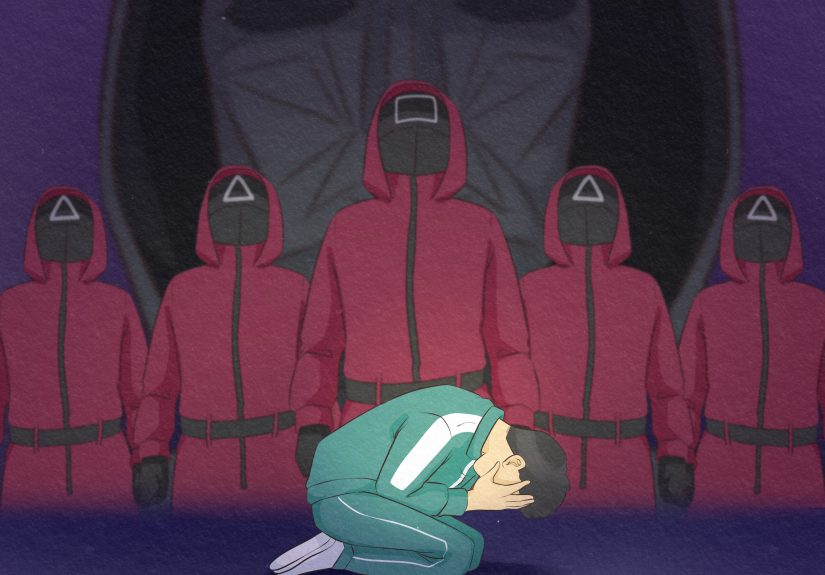
When the rebellion is cornered and surrender becomes inevitable, the Front Man steps fully back into his rolemask, authority, cold certainty. Then he does the thing that makes Season 2’s ending feel like a punch to the soul:
He kills Jung-bae right in front of Gi-hun.
It’s not random. It’s not “because the Front Man is evil” (though, yes). It’s because Jung-bae is the emotional proof Gi-hun still has something worth fighting for: trust, loyalty, warmth, the idea that people can change. The Front Man’s move is basically: “You want a reason to keep believing? Great. Watch it die.”
Why Jung-bae’s death matters more than any other
Plenty of people die in Squid Game. That’s the brand. But Jung-bae’s death is different because it’s not just a casualty of the gameit’s a targeted consequence meant to reshape Gi-hun’s identity.
Think of it like this: the organizers don’t merely want players to lose. They want players to learn the lesson the organizers prefernamely, that hope is a scam, solidarity is temporary, and “heroism” is a story you tell yourself right before reality collects its fee.
The finale makes a point: the Front Man could kill Gi-hun, but chooses not to. Death is too easy. Living with guilt, grief, and failure? That’s the long game.
The off-island twist: Trouble on Jun-ho’s rescue boat
While Gi-hun is trapped inside the arena’s nightmare, Jun-ho’s search continues outside. Season 2 makes it clear: the conspiracy is bigger than one facility, and the danger isn’t only behind locked doorsit’s sitting at the helm of the boat you trust.
The finale reveals that Captain Park, who has been helping Jun-ho search, is sabotaging the operation. When a crew member gets suspicious, the captain kills him and disposes of the body during a storm. It’s a clean, quiet kind of horror: not a spectacle, not a game, just a reminder that betrayal doesn’t need a mask.
The mid-credits scene: What it’s teasing (without overcomplicating it)
Just when you think the episode is done emotionally mugging you in a dark alley, the mid-credits scene shows the game’s iconography returning with fresh nightmare fuel: the familiar giant doll imagery (Young-hee) and a new boy doll, plus the ominous glow of a green light. The message isn’t subtle: the machine is still on, and it’s already loading the next round.
Who lived & who died in Squid Game Season 2
Let’s do what your brain has been begging for: a clear list. (You’re welcome. Your group chat can Venmo me later.)
Alive at the end of Season 2
- Seong Gi-hun (Player 456): Alive, but emotionally wrecked and cornered by the consequences of the failed rebellion.
- The Front Man (Hwang In-ho / “Young-il,” Player 001): Alive and fully back in control.
- Hyun-ju: Survives the finale and remains a key figure going forward.
- Dae-ho: Alivehis panic and retreat are a big reason the rebellion collapses.
- Jun-hee: Survives, with her storyline still very much unresolved.
- Myung-gi: Alive; his choices ripple through the season’s conflicts and casualties.
- Geum-ja and Yong-sik (mother-son duo): Both survive Season 2.
- Min-su: Alive by the end of the season.
- Seon-nyeo (the shaman): Alive at Season 2’s end.
- Nam-gyu: Alive by the end of Season 2.
- Hwang Jun-ho: Alive, but still chasing the truth with a dangerous blind spot on his own team.
- No-eul: Presented as surviving in many recaps, with the show implying her story isn’t finished (even when some details are kept frustratingly off-screen).
Died by the end of Season 2
- Jung-bae: Killed by the Front Man to punish Gi-hun and shatter his resolve.
- Gyeong-seok: Dies as the rebellion is crushed and the organizers reassert control.
- Thanos: Killed during escalating conflict among players (a death that signals the dorm has become its own battlefield).
- Se-mi: Killed during the violent dorm conflict that spirals as factions clash.
- Young-mi: Dies after the “mingle” game (a brutal reminder that even “party” aesthetics can be lethal here).
- Players 047 and 015: Killed by the Front Man while he’s still operating under the Player 001 disguise, cutting off paths and forcing surrender.
- Players 145 and 246: Killed as the guards mop up after the failed revolt.
- A member of Jun-ho’s crew (drone pilot/crewman): Killed by Captain Park during the sabotage reveal.
- The Salesman/Recruiter (off-island storyline): Dies during Gi-hun’s collision course with the people who recruit players into the game.
Note: Dozens of unnamed or lightly featured players also die throughout the season and during the finale’s violence, but the list above focuses on the deaths most recaps treat as “major” story beats.
What the ending is really saying (and why it hits so hard)
On the surface, Season 2 ends with: “Rebellion fails, friend dies, villain wins (for now).” But under that, it’s making a sharper argument:
- The system adapts faster than the hero can plan. Gi-hun isn’t dumbhe’s just up against an institution built to absorb resistance.
- Solidarity is the only real threat to the game. That’s why the game constantly forces players into suspicion, scarcity, and faction math.
- Power doesn’t just kill bodiesit targets meaning. Jung-bae’s death is an attack on Gi-hun’s belief that people can change together.
And the cruelest part? The ending almost dares you to agree with the Front Man. It tempts you to say, “See? Hope is pointless.” That’s why the ending lingersbecause it tries to recruit you, too.
500+ words of “viewer experience” energy: How that ending feels in real life
If you watched the Season 2 finale and immediately stared at the credits like they personally owed you money, congratulations: you experienced the show exactly as intended.
There’s a special kind of frustration that comes from seeing a character do the “right” thing in a world designed to punish righteousness. That’s the emotional treadmill of this finale: Gi-hun tries to stop the violence, tries to redirect anger upward, tries to make people act like a community instead of a crowdand the show responds with the narrative equivalent of a referee blowing the whistle and saying, “Actually, the house wins.”
For a lot of viewers, the immediate experience is a three-stage reaction:
- Stage 1: Hope. “Wait… is he really doing it? Are we actually storming the place?” The episode builds momentum like a heist movie, and your brain starts drafting victory speeches.
- Stage 2: Dread. You notice the practical problemsammo, manpower, the maze-like corridorsand you start whispering, “This isn’t going to work,” even while you want it to.
- Stage 3: Emotional damage (with a side of yelling). When Jung-bae is killed, it lands less like a plot twist and more like the show slamming a door on your fingers for daring to feel optimistic.
Then comes the post-episode ritual: rewinding key scenes, pausing to catch who’s in the background, and doing mental math on who’s still alive. People don’t just ask “What happened?”they ask “Who’s left?” because survival in Squid Game is practically a language of its own. You start tracking names the way you track groceries in a storm: tightly, anxiously, with a growing sense that something’s going to fall out of the bag anyway.
Socially, the finale is built for debate. Some viewers come away furious at the rebellion’s flaws (because yes, it’s messy and desperate). Others argue that the point is the messthat resistance in a rigged system rarely looks like a clean movie montage. And almost everyone circles back to the same emotional core: Jung-bae didn’t just “die.” He represented the version of Gi-hun that still believed in people, and the finale makes you watch that belief get punished.
Even the mid-credits scene adds to the experience. It doesn’t give relief; it gives a chill. It’s the show’s way of tapping you on the shoulder as you’re trying to recover and saying, “Hey… you’re not done. Also, the dolls are back. Sleep tight.”
In other words: the finale doesn’t just end Season 2. It creates a shared viewer moodhalf grief, half disbelief, half frantic theorizing (yes, that’s three halves; the finale broke math too). And that’s why people keep searching for explanations. Not because the plot is impossible to follow, but because the emotions are too loud to process alone.