Table of Contents >> Show >> Hide
- What the reports say (and what they don’t)
- Why “Weekend Update” is SNL’s most valuable real estate
- What a “screen test” means at SNL
- Why now: the post–Season 50 ripple effect
- The names at the center of the screen-test story
- How past “Update” handoffs hint at what could come next
- What changes when anchors change
- What to watch for on-air: the “soft audition” clues
- What it would take to follow Jost and Che
- Experiences: What “Update” feels like when you sense a changing of the guard
- Conclusion
The most powerful chair in late-night comedy isn’t a talk-show desk. It’s two stools, a fake newsroom backdrop,
and the ability to say the wildest sentence you’ve ever heard… with the calm energy of an airport gate agent.
We’re talking about Weekend Update, the beating satirical heart of Saturday Night Live.
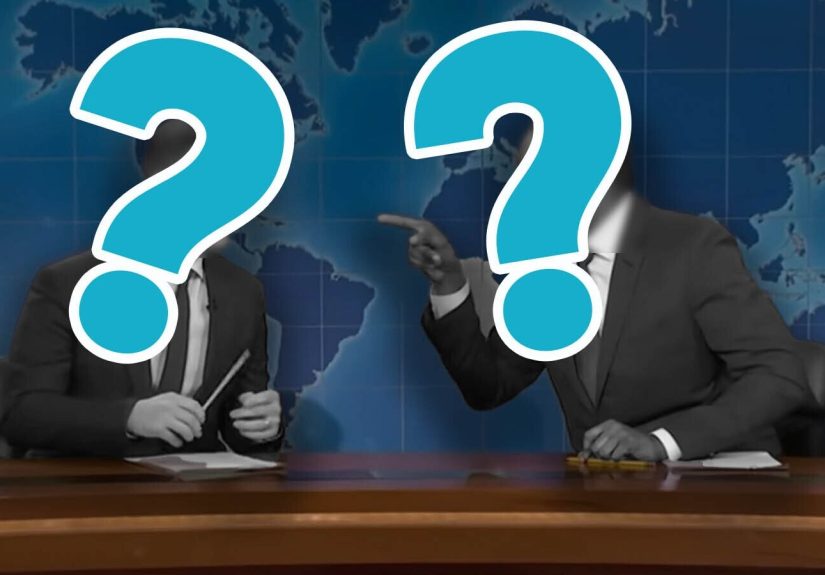
So when multiple entertainment outlets reported that SNL has been screen-testing potential new “Weekend Update” anchors,
it wasn’t just celebrity gossip. It was a flare in the sky: the show is at least planning for a post–Colin Jost and Michael Che era,
even if that future doesn’t arrive this season.
What the reports say (and what they don’t)
The core claim is simple: an “Update” desk screen test was taped with cast member Michael Longfellow
and “Update” writer/stand-up comic KC Shornimareportedly filmed back in May, then reported publicly later.
That’s the kind of behind-the-scenes audition SNL has used before when it’s considering a transition.
The important “what they don’t say” part: a screen test isn’t a job offer, and it isn’t a farewell postcard for the current anchors.
In fact, later reporting around Season 51 indicated Jost and Che were returning as anchors, which means the test (at least for now)
was more “future-proofing” than “moving truck parked outside Studio 8H.”
Translation: Weekend Update may not be changing tomorrow, but the show is doing what it always doesquietly trying options, collecting tape,
and keeping a Plan B (and C and D) in the drawer next to the cue cards.
Why “Weekend Update” is SNL’s most valuable real estate
Sketches can flop and vanish into the great recycling bin of comedy history. Musical guests rotate. Hosts come and go.
But Weekend Update is the show’s weekly promise: “No matter what else happens tonight, we’ll at least roast the news.”
It also does something most SNL sketches can’t: it creates a relationship. Anchors become familiar.
Their rhythm becomes the show’s rhythm. That’s why long-running Update erasthink Seth Meyers, or the Jost/Che partnershipfeel like chapters,
not just casting choices.
And if you want a single example of how big the segment has become, look at how “joke swap” bits routinely turn into next-day conversation starters.
When the anchors change, that whole ecosystem changes with them.
What a “screen test” means at SNL
It’s not just reading jokes
A real Update audition is closer to a stress test than a monologue. Can you deliver punchlines cleanly? Sure.
But can you recover when the audience laughs longer than expected, or doesn’t laugh at all?
Can you keep the pace moving without sounding like you’re trying to outrun your own joke?
The best Update anchors are “believable” in the way a good sitcom apartment is believable: it’s obviously fake, but you relax inside it anyway.
That credibility is what lets the show make absurd jokes feel sharp instead of sloppy.
Chemistry is the product
Some Update eras work because the anchor is a solo sniper. Others work because the duo is a two-person ping-pong match.
Jost and Che’s dynamicpart newsroom banter, part sibling rivalrydoesn’t happen by accident. It’s built over time.
That’s also why a screen test pairing matters. The show isn’t only evaluating two individuals; it’s evaluating the
space between them. Who sets up? Who spikes? Who can take a hard joke and keep smiling like it’s totally fine (it’s not fine)?
SNL has tested “Update” combos before
Historically, SNL has used a mix of cast members, writers, and occasionally outside comics when it’s searching for the right fit.
And it’s not unusual for the show to experiment before a transition is even official. A test can be preparation, not a countdown.
Why now: the post–Season 50 ripple effect
Season 50 was a milestone yearbig nostalgia energy, big expectations, big “remember when?” vibes.
Around that period, reporting also pointed to a broader shake-up ahead of Season 51, including cast changes and creative recalibration.
In that context, a rumored Update screen test reads less like a surprise and more like housekeeping.
If you’re steering a 50-year-old institution that still needs to feel new, you don’t wait until the day someone quits to start thinking about succession.
You quietly build a bench.
The names at the center of the screen-test story
Michael Longfellow: the “Update deskpiece” who looked like he belonged there
Longfellow became a familiar face at the Update desk through commentary segmentsexactly the kind of appearances that double as a subtle audition.
The deskpiece lane is a classic SNL pathway: if you can command the audience with just you, a microphone, and a deadpan stare,
you might be able to command the whole segment.
The twist: later reports indicated Longfellow departed ahead of Season 51.
That doesn’t make the screen test “fake”it just shows how messy real-life TV decisions are.
Screen tests don’t always lead to promotions. Sometimes they lead to “we liked you, but the puzzle pieces changed.”
KC Shornima: a writer with stand-up timing
One reason the Shornima angle got people talking is that it fits a proven SNL pattern:
the writer who becomes a face. Tina Fey is the most famous example, but she’s not the only one.
Writers who understand the show’s cadenceand can performoften make the cleanest transition into an anchor role.
Reported details about Shornima’s backgroundwriting for Update, stand-up credentials, and prior TV writingmake her a plausible candidate
in the way SNL candidates are often plausible: not a household name (yet), but already fluent in the show’s language.
How past “Update” handoffs hint at what could come next
If you want to understand why SNL would test a new duo while keeping the current one, look at the show’s history:
Weekend Update has changed hands many times, and those shifts are often preceded by experimentation.
The 2014-era lesson: the show tests until it finds “the identity”
Around the transition from Seth Meyers to Colin Jost (and then to the Jost/Che pairing),
reporting at the time described SNL trying different combinations to land on a version that felt right.
The show wasn’t just swapping people; it was shaping a new “Update” identity for that era.
That same logic applies now. Even if Jost and Che remain in place, SNL can still test for what the next identity might be
especially when the current duo has already become an all-time long-running pairing.
What changes when anchors change
Swapping Update anchors isn’t like swapping a sketch performer. It’s closer to changing the show’s thermostat.
A few degrees and everything feels different:
- Joke shape: Some anchors favor quick jabs; others lean into longer builds and “I can’t believe you just said that” pauses.
- Political tone: The segment can feel sharper, sillier, more cynical, more hopefuldepending on who’s steering.
- Deskpiece culture: Certain anchors attract recurring characters and commentaries because they play well off a specific vibe.
- Audience trust: Update works when viewers believe the anchor is in controleven when the joke is chaos.
That’s why producers don’t gamble blindly. A screen test is a way to see whether a new pairing can hold the room,
hold the pace, and hold the show together when something goes sideways (as live TV always does).
What to watch for on-air: the “soft audition” clues
Even if SNL never announces “we’re testing anchors,” viewers can sometimes spot the breadcrumbs:
- More desk commentaries for a specific performer, especially ones that lean into news-reading structure.
- New writers getting camera time through correspondent roles or on-desk appearances.
- Shift in joke distribution (one anchor carrying more, or experimenting with different pacing).
- New recurring correspondents designed to live at Update rather than in sketches.
None of this is proof of a transition. But it’s the same way you can tell a restaurant is considering a new menu:
suddenly there are “specials” every week and your server seems very interested in your opinion.
What it would take to follow Jost and Che
Anyone stepping into the Update desk after a decade-plus duo inherits a very specific set of expectations:
You’d need precision (to make dense news jokes land), nerve (to do it live), and chemistry
(because the audience will compare you to the last pairing whether you asked for that or not).
You’d also need to steer a segment that functions as both comedy and commentarywithout turning it into a lecture or a shrug.
The upside is huge. The Update desk has historically been a launchpad for careers inside and outside SNL.
The downside is also huge: when it doesn’t work, everyone can feel it immediately.
Experiences: What “Update” feels like when you sense a changing of the guard
Even if you’ve never stepped inside Studio 8H, you can still recognize the sensation of a potential Update transitionbecause the show
starts to feel like it’s trying on jackets in front of a mirror. If you watch live, the first clue is often energy.
Not the big, obvious “new cast member!” energy, but the quieter kind: a deskpiece who suddenly looks more relaxed,
a writer who pops up on camera, a performer who gets a second Update commentary in a short span of episodes.
It can feel like SNL is asking the audience, without asking the audience: “How does this look? Too big? Too small?
Does this fit the show’s shoulders?”
From the viewer side, that experience is half detective work and half group project. Someone texts, “Was that a test run?”
Another person replies with a screenshot. A third person sends a clip and says, “Okay, but they actually had chemistry.”
Suddenly, you’re not just watching jokesyou’re watching casting gravity in action.
And because Weekend Update is so consistent week to week, even small changes stand out.
It’s like if your favorite pizza place didn’t change the recipe, but the slice was cut differently.
You notice. Immediately.
There’s also the comedy-nerd experience of watching Update like it’s a master class. When you suspect a “soft audition,”
you start listening for the skills that matter at that desk: clean transitions, confident resets after laughter, and the ability to
sell a punchline without selling your soul to it. Great Update delivery has a specific magic trick:
it can make a ridiculous joke sound like the most reasonable thing in the world, and make a real headline sound like it was written by a prankster.
When a performer shows they can ride that line, you can almost feel the room lean in.
On the performer sideat least as it’s been described by comics and writers over the yearsthe “Update” moment can be uniquely intense
because it’s exposed. Sketches have costumes, blocking, characters, and other people to share the load.
At the desk, it’s just you and the room. If the joke hits, you feel like a genius.
If it doesn’t, you still have to keep going, calmly, like your microphone isn’t suddenly the loudest object on Earth.
That’s why the idea of a screen test makes sense: producers aren’t only judging whether someone is funny.
They’re judging whether someone can stay steady when the funniest part of the room is the silence between jokes.
And then there’s the bittersweet part of the experience: realizing that even the best eras don’t last forever.
Fans get attached to an Update duo the way they get attached to a favorite band lineup. You know changes are normal.
You know the show survives by changing. But you also know what you’ll miss: the particular rhythm, the running bits,
the way one anchor raises an eyebrow and the other one knows exactly what that eyebrow means.
When you hear “screen testing,” you’re not just thinking about who’s nextyou’re thinking about what kind of Update you want to live with next.
Sharper? Sillier? More chaotic? More controlled? Either way, the moment SNL starts testing, it’s a reminder that the desk is never truly “owned.”
It’s borrowedthen handed off, like a microphone that’s been passed from generation to generation, still warm.
Conclusion
The headline “SNL is screen-testing new Weekend Update anchors” doesn’t automatically mean a change is imminentbut it does mean
the show is doing what it has always done: preparing for the next era while the current one still works.
A reported test with Michael Longfellow and KC Shornima reads like a real internal stepone that signals planning, not panic.
And even if the Update desk stays put this season, the message is clear: SNL is keeping its options open.
Because on a show built around live risk, the smartest move is having tomorrow’s possibilities taped, timed, and readyjust in case.