Table of Contents >> Show >> Hide
- What Is ShakeAlert?
- How Can ShakeAlert Give About 10 Seconds Of Warning?
- What ShakeAlert Is Not
- How People Receive ShakeAlert Warnings
- What Should You Do When You Get A ShakeAlert?
- Why 10 Seconds Can Matter
- Where ShakeAlert Works Now
- Why ShakeAlert Cannot Warn Everyone Equally
- ShakeAlert For Schools, Workplaces, And Public Spaces
- Common Myths About ShakeAlert
- How To Make Sure You Are Ready
- The Future Of Earthquake Early Warning
- Real-World Experience: What A 10-Second Warning Feels Like
- Conclusion
Ten seconds does not sound like muchunless the floor is about to start acting like a trampoline with anger issues. In earthquake country, a short warning can be the difference between standing under a glass cabinet and getting under a sturdy table. That is the promise behind ShakeAlert, the earthquake early warning system designed to notify people and automated systems before strong shaking arrives.
ShakeAlert does not predict earthquakes. It is not a crystal ball, a psychic app, or a geologist sitting in a bunker whispering, “I have a feeling.” Instead, it detects an earthquake that has already started, estimates where shaking is headed, and sends alerts when damaging shaking may be on the way. For many people, that warning may be around 10 seconds. Sometimes it may be more. Sometimes it may be less. For people very close to the epicenter, there may be no warning at all.
Still, even a few seconds can be powerful. It can give someone time to drop, cover, and hold on. It can allow a surgeon to pause a procedure, a train to slow, a school announcement to play, or a firehouse door to open before it jams. ShakeAlert’s message is simple: earthquakes cannot be stopped, but surprise can be reduced.
What Is ShakeAlert?
ShakeAlert is the United States earthquake early warning system managed by the U.S. Geological Survey in partnership with state agencies, universities, and technology providers. It currently serves California, Oregon, and Washington, three states that know a thing or two about fault lines, tectonic stress, and emergency preparedness.
The system uses a network of ground-motion sensors placed across the West Coast. When an earthquake begins, these sensors detect the first energy waves and send data to processing centers. Computer algorithms quickly estimate the earthquake’s location, magnitude, and expected shaking intensity. If the event meets alert thresholds, ShakeAlert messages are sent to approved delivery partners.
Those partners then deliver warnings through channels such as Wireless Emergency Alerts, the MyShake app, Android Earthquake Alerts, public-address systems, and automated infrastructure controls. In plain English: ShakeAlert is the brain, and apps, phones, and machines are the megaphones.
How Can ShakeAlert Give About 10 Seconds Of Warning?
The secret is speednot magic. Earthquakes release different types of seismic waves. The first waves, called P-waves, travel quickly but usually cause less damage. The more destructive shaking often comes from slower waves that arrive moments later. ShakeAlert tries to detect the faster waves, analyze the event, and send a warning before the stronger shaking reaches people farther away.
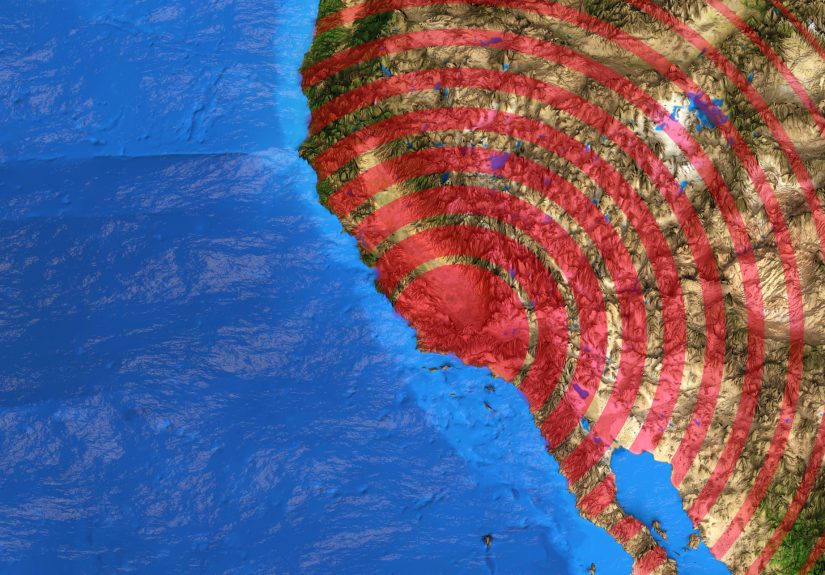
That time gap is where the “about 10 seconds” idea comes from. If you are far enough from the earthquake’s starting point, the alert may beat the strongest shaking to your location. If you are closer, the warning may be very short. If you are directly above the rupture, the ground may arrive before the notification does. Earthquake physics is not sentimental.
In ideal cases, some users may receive more than 10 seconds. In other cases, a warning may arrive only a few seconds before shaking. The system’s value is not that every person gets the same countdown. Its value is that it can give many people and systems a useful head start.
What ShakeAlert Is Not
One of the most important things to understand is that ShakeAlert is not earthquake prediction. It cannot tell you on Monday that a quake will happen on Friday at 3:17 p.m., just after you pour coffee on your white shirt. No system can do that reliably.
ShakeAlert only acts after an earthquake has already begun. That distinction matters because it sets realistic expectations. The system is not promising to prevent earthquakes. It is promising to recognize them fast enough to warn people before strong shaking reaches some locations.
It Is Not A Personal Safety Bubble
A ShakeAlert-powered warning does not make buildings stronger, secure bookcases, or turn a glass chandelier into a pillow. Preparedness still matters. People in earthquake-prone areas should secure heavy furniture, know safe spots in each room, keep emergency supplies, and practice what to do when shaking starts.
It Is Not Always A Long Countdown
Some people hear “early warning” and imagine a dramatic movie countdown: “Ten, nine, eight…” Real life is less cinematic. The warning may be a buzz, a tone, or a short instruction to take protective action. The correct response is not to film the moment for social media. It is to protect your head and neck immediately.
How People Receive ShakeAlert Warnings
In California, Oregon, and Washington, residents and visitors can receive ShakeAlert-powered warnings in several ways. The most familiar is through a phone. Wireless Emergency Alerts can appear automatically on compatible phones when emergency alerts are enabled. These are similar to AMBER Alerts or severe weather warnings.
Another option is the MyShake app, developed by UC Berkeley and used in partnership with USGS ShakeAlert and emergency-management agencies. MyShake can deliver earthquake early warnings and also provides preparedness information, earthquake maps, and safety guidance.
Android users in supported regions may also receive ShakeAlert-powered alerts through Google’s built-in Android Earthquake Alerts feature. This means some people can receive alerts without downloading a separate app, as long as their phone settings allow emergency and earthquake alerts.
What Should You Do When You Get A ShakeAlert?
The safest response is simple: Drop, Cover, and Hold On. Drop to your hands and knees so the shaking is less likely to knock you over. Cover your head and neck, ideally under a sturdy table or desk. Hold on until the shaking stops.
If there is no table nearby, move away from windows and objects that could fall, then cover your head and neck with your arms. If you are in bed, stay there and protect your head with a pillow. If you use a wheelchair or mobility device, lock your wheels if possible and cover your head and neck.
The key is speed. A 10-second warning is not an invitation to run across the room, grab your laptop, rescue a decorative plant, and debate whether your shoes match the emergency. It is time to protect yourself immediately.
Why 10 Seconds Can Matter
Ten seconds can sound tiny in ordinary life. It is barely enough time to skip an ad. But in an earthquake, ten seconds can be meaningful. It can allow a teacher to shout instructions, a family to get away from windows, or a worker to step back from hazardous equipment.
For automated systems, seconds may be even more valuable. ShakeAlert messages can trigger actions such as slowing trains, opening firehouse doors, closing water valves, starting backup generators, or stopping sensitive industrial processes. Machines do not panic, check group chats, or ask, “Wait, was that my phone?” They simply act.
This is where earthquake early warning becomes more than a phone notification. It becomes part of a larger safety network for transportation, utilities, schools, hospitals, businesses, and public agencies.
Where ShakeAlert Works Now
ShakeAlert is available to residents and visitors in California, Oregon, and Washington. These states sit along some of the most active earthquake zones in the continental United States, including the San Andreas Fault system and the Cascadia Subduction Zone.
California launched statewide public earthquake early warning in 2019. Oregon and Washington followed in 2021, completing public alert availability across the West Coast. Together, these states include more than 50 million residents and visitors who may benefit from ShakeAlert-powered warnings.
The system continues to evolve as agencies improve sensors, algorithms, public education, and delivery methods. Earthquake early warning is not a finished gadget sitting on a shelf. It is an active public-safety system that gets refined as scientists learn from real events, tests, and user behavior.
Why ShakeAlert Cannot Warn Everyone Equally
The warning time depends on several factors: the earthquake’s location, depth, magnitude, how close you are to the fault, how quickly sensors detect it, and how fast the alert reaches your device. A person 80 miles away may receive useful warning time. A person five miles away may feel shaking almost immediately.
There is also a balance between speed and accuracy. Send alerts too slowly, and people lose precious seconds. Send them too quickly, and the system risks more false or unnecessary alerts. ShakeAlert’s challenge is to make fast decisions with limited early data while still being reliable enough for public trust.
That is not easy. Earthquakes are messy. Faults rupture in complex ways. Early estimates can change as more data arrives. The system must act quickly, even though the earthquake is still unfolding.
ShakeAlert For Schools, Workplaces, And Public Spaces
Schools are one of the clearest examples of where ShakeAlert can help. A few seconds can allow staff to trigger an announcement and students to get under desks before stronger shaking begins. But technology alone is not enough. Schools still need drills, clear instructions, and staff who understand what the alert means.
Workplaces can also benefit. Warehouses, hospitals, laboratories, factories, and offices may use earthquake early warning to pause risky activities. For example, a lab can protect delicate equipment, a warehouse worker can step away from tall shelving, and a hospital team can stabilize a patient or stop movement during a procedure.
Public spaces such as transit stations, museums, airports, and stadiums have additional challenges because crowds do not always behave like calm safety brochures. Clear messaging matters. The warning must be short, direct, and familiar: earthquake expected, take protective action now.
Common Myths About ShakeAlert
Myth 1: ShakeAlert Predicts Earthquakes
No. ShakeAlert detects earthquakes after they begin. It is an early warning system, not a prediction system.
Myth 2: Everyone Gets Exactly 10 Seconds
No. Warning time varies. Some people may get more, some less, and some none. Ten seconds is a useful way to understand the promise, not a guaranteed timer.
Myth 3: If I Get An Alert, I Should Run Outside
Usually, no. Running during shaking can expose you to falling glass, bricks, signs, and power lines. In most indoor situations, Drop, Cover, and Hold On is the recommended action.
Myth 4: One App Is Enough Preparedness
No. Alerts are helpful, but preparedness includes securing your space, making a family plan, storing emergency supplies, and knowing what to do after the shaking stops.
How To Make Sure You Are Ready
If you live in or travel through California, Oregon, or Washington, check your phone settings. Make sure emergency alerts are enabled. Consider installing the MyShake app if it is available for your device. Android users should confirm that earthquake alerts are turned on in safety or location settings, depending on the phone model.
Next, practice the response. This sounds boring until the ceiling light starts swinging like it has joined a dance competition. Practice Drop, Cover, and Hold On at home, school, and work. Know safe spots in each room. Move heavy objects away from beds and seating areas. Secure bookcases, water heaters, televisions, and anything else that could become airborne furniture.
Finally, talk about earthquakes before they happen. Families should know where to meet, how to communicate if cell service is overloaded, and what supplies are available. Businesses should train employees and test alert procedures. A warning is only useful if people know what to do with it.
The Future Of Earthquake Early Warning
ShakeAlert is part of a larger shift in disaster preparedness. Instead of only reacting after damage occurs, communities are building systems that act in the narrow window between detection and impact. That window may be small, but it is real.
Future improvements may include denser sensor networks, faster data processing, better alert targeting, more automated infrastructure actions, and wider public education. As more institutions connect to ShakeAlert-powered systems, the benefits may extend beyond individual phones to entire communities.
The goal is not to create panic. The goal is to create trained reflexes. When an alert arrives, people should not wonder what it means. They should immediately know what to do.
Real-World Experience: What A 10-Second Warning Feels Like
Imagine sitting at your kitchen table on an ordinary morning. Coffee is warm, email is annoying, and the dog is staring at you with the emotional intensity of someone who has never been fed, despite breakfast happening 14 minutes ago. Suddenly, your phone makes a sharp alert sound. The screen says earthquake shaking is expected. You have seconds.
At first, your brain may try to negotiate. Is this real? Is it a test? Did I accidentally subscribe to an extremely dramatic weather app? That hesitation is normal, but it is also why practice matters. If you have rehearsed what to do, your body can move before your brain finishes writing a committee report.
You drop to your hands and knees, move under the table, cover your head and neck, and hold on. A few seconds later, the light fixture begins to sway. Cabinets rattle. The dog changes from philosopher to rocket. The shaking may last only moments, but the warning gave you time to get out from under hanging glass and away from shelves.
In an office, the experience may be different. A phone alert sounds across several desks. Someone says, “Earthquake,” and people move under workstations. A trained team does not debate whether to evacuate during shaking. They take cover. Afterward, they check for injuries, avoid elevators, look for hazards, and follow the emergency plan.
In a school, a ShakeAlert-powered announcement could give a teacher enough time to say, “Drop, cover, hold on,” before students feel the strongest motion. That short command matters because children respond better to familiar instructions than surprise. Drills may feel repetitive, but repetition builds calm.
For a transit system, the experience is less visible but just as important. A ShakeAlert message can help trigger automated actions, such as slowing trains. Passengers may not know that a warning system acted in the background, but that is the point. Good safety technology often does its best work quietly.
One of the biggest lessons from earthquake early warning is that people should treat every alert as real. False alarms are possible in any automated warning system, but the cost of taking cover for a short time is small compared with the cost of ignoring a valid warning. Nobody has ever looked cool arguing with an earthquake.
Another lesson is that warning time is not relaxation time. Ten seconds is not for collecting valuables, finding pets, opening doors, or running downstairs. It is for immediate protective action. If your phone gives you a few seconds, spend them wisely: Drop, Cover, and Hold On.
The best experience with ShakeAlert is one where the alert feels familiar, the action feels automatic, and the people around you know the same routine. That does not happen by accident. It happens because households, schools, workplaces, and communities decide that earthquake preparedness is not paranoia. It is practical planning in a shaky neighborhood.
Conclusion
ShakeAlert’s promise of about 10 seconds of earthquake early warning may sound modest, but in an emergency, modest can be mighty. The system cannot predict earthquakes, stop damage, or guarantee equal warning time for everyone. What it can do is detect significant earthquakes quickly and help deliver warnings before strong shaking reaches many people and systems.
Those seconds can help people take cover, schools protect students, trains slow down, water systems close valves, and emergency facilities prepare for impact. The real power of ShakeAlert is not just technology. It is technology plus preparation. A warning works best when people already know what action to take.
If you live, work, study, or travel on the West Coast, make sure your alerts are enabled, consider using a ShakeAlert-powered app, and practice Drop, Cover, and Hold On. Earthquakes may not make appointments, but with ShakeAlert, they do not always get to arrive completely unannounced.