Table of Contents >> Show >> Hide
- Why this cartoon works as “law comedy” (instead of just “comedy in a courtroom”)
- 1) “Deadomutt” and the accidental crash course in criminal procedure
- 2) “Blackwatch Plaid” and the world’s funniest workplace-privacy nightmare
- 3) “Devlin Made Me Do It” and the bleakly accurate logic of tort law
- 4) “Harvey’s Civvy” and the sneaky class-action satire
- 5) “Death by Chocolate” and due process dressed as federal-agent panic
- 6) “Back to the Present” and the surprisingly coherent climate-lawsuit riff
- 7) “Shaggy Busted” and the legal power of “acting suspicious”
- 8) “Harvey Birdman, Juror in Court” and the conflict-of-interest comedy grenade
- What the show “gets right” about law (even while getting everything else delightfully wrong)
- Conclusion
- Extra: Viewer “experience notes” (about of oddly relatable legal joy)
- SEO Tags
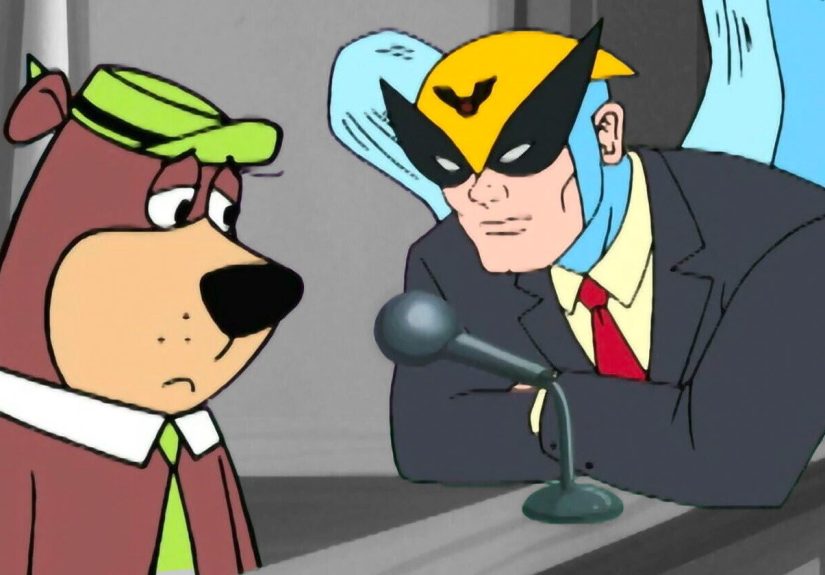
If you’ve ever watched Harvey Birdman, Attorney at Law and thought, “This is just a bunch of
old cartoons getting dunked on in a courtroom,” congratulations: you are both right… and missing the joke.
Because underneath the chaosunder the sun-powered wings, the villains with HR complaints, and the legal
strategies that sometimes feel like they were drafted on a napkin at 2 a.m.the show sneaks in a surprising
amount of real-law thinking.
Not “this will help you pass the bar exam” (please do not cite “because a talking ape said so” on your final),
but the kind of law-adjacent truth that’s hard to teach: how courts tell stories, how attorneys frame facts,
how procedure becomes strategy, and how the legal system can feel both deadly serious and deeply ridiculous
sometimes in the same ten-minute episode.
Below are eight quietly clever legal moments the show pulls off while pretending it’s only here to roast your
childhood. We’ll keep it fun, keep it grounded, and keep our objections timely.
Why this cartoon works as “law comedy” (instead of just “comedy in a courtroom”)
A lot of shows use court as a set: wooden benches, dramatic pauses, someone shouts “Objection!” and the judge
sighs like they’ve aged five years since lunch. Harvey Birdman does something sharper. It treats law as a
machine that transforms nonsense into official reality. Once a problem is filed, argued, and ruled on, it becomes
a “case,” and a case demands logiceven if the facts are a crime-scene copy machine and an office bird-person
who looks guilty because… well, he kind of does.
That’s the secret sauce: the show understands that law isn’t just rules; it’s a structured argument about what
happened and what should happen next. And the best jokes come from watching that structure try to survive
clients who were never designed for adulthood, much less litigation.
1) “Deadomutt” and the accidental crash course in criminal procedure
When a copy machine becomes Exhibit A and the stakes jump to “electric chair”
In the two-parter where a coworker ends up mangled in a copy machine and our winged counselor gets arrested,
the show does a great job parodying how quickly a criminal case can become pure momentum. There’s an arrest,
a trial, a verdict, and a sentence so extreme it feels like the writers spun a wheel labeled “Most Dramatic Court Outcome.”
(It lands on “Yes.”)
The clever part isn’t that it’s exaggeratedit’s that the exaggeration mirrors a real fear defendants have:
once the state starts pushing, you can feel like the story writes itself about you, not from you.
Criminal cases place the burden on the government, and the standard is high (“beyond a reasonable doubt”),
but the show’s satire points at something emotional rather than technical: how a courtroom can feel like a
narrative engine, especially when the “facts” are messy, visual, and easy to misread.
It’s also a reminder that procedure is power. Who gets charged, what gets emphasized, and what the trier of fact
thinks happened can matter as much as what actually happenedparticularly in a world where everyone is already
a cartoon stereotype waiting to be weaponized.
2) “Blackwatch Plaid” and the world’s funniest workplace-privacy nightmare
Security theater, surveillance, and the legal instinct to over-collect
The episode that turns a law office into a paranoid security regimecomplete with monitoring, searches, and
a general “we have absolutely lost the plot” vibeaccidentally nails a modern legal tension:
organizations love surveillance because it feels like control.
Here’s the twist: the A-plot also includes a client on trial for what amounts to public indecency-by-gadgetry
(a trench coat with “equipment” on display). That’s classic Harvey Birdman: taking a cartoon premise and
dragging it into a real-world legal category where intent, exposure, and context matter. It’s not a lecture on
criminal statutes, but it does highlight how quickly “weird behavior” becomes “chargeable behavior” once it’s
filtered through legal definitions.
Meanwhile the workplace side shows the other half of the system: compliance impulses can become self-parody.
Lawyers often advise collecting records “just in case,” but the episode jokes that the “just in case” mindset
can metastasize into invasive nonsense that harms morale, productivity, andironicallythe very safety it claims
to protect.
3) “Devlin Made Me Do It” and the bleakly accurate logic of tort law
Foreseeability, duty, and the lawsuit everyone saw coming (except the defendant)
When a washed-up stunt performer gets sued because a kid injures himself trying to copy a dangerous stunt,
the show taps into one of tort law’s most enduring arguments: who is responsible for predictable harm?
The premise is absurd, but the legal shape is familiar: someone did something risky, someone else copied it,
and a court must decide whether the original actor owed a duty to prevent that downstream injury.
Tort cases often turn on foreseeabilitywhether a reasonable person would anticipate the harmand on the chain
of causation: did the defendant’s conduct meaningfully cause the injury, or did something else break the chain?
The episode lampoons how attorneys can weaponize sympathy and disgust: the injured party is sympathetic, the
defendant is a mess, and the courtroom becomes a contest over whose story “feels” more responsible.
The show’s joke about attacking the kid on the stand is intentionally gross, but it also reflects a truth about
litigation: lawyers sometimes test narratives by pushing on weak points, and juries react not only to facts,
but to the perceived decency of the people presenting them.
4) “Harvey’s Civvy” and the sneaky class-action satire
When “this happened to me” becomes “this happened to everyone”
In the episode where an old grudge turns into a lawsuit and then blossoms into a class action, the show
is doing more than piling on the chaos. It’s making a point about scale. A single claim is manageable:
one plaintiff, one defendant, one story. A class action changes the geometry: now the court is asked to treat
many similar harms as one legal problem, because it’s more efficient (and sometimes the only realistic way
to litigate small-but-widespread injuries).
What makes the episode feel sharp is how it captures the emotional whiplash defendants experience:
you think you’re arguing about one event, and suddenly you’re arguing about a pattern, a practice, a system.
That’s the heart of class actions: they’re less about one wrong and more about whether the defendant’s behavior
should be judged at a societal level.
The comedy lands because it mirrors the genuine strategic pivot class actions createespecially the pressure
to settle when risk multiplies, even if the defendant thinks the original case is defensible.
5) “Death by Chocolate” and due process dressed as federal-agent panic
When “investigation” becomes “vibes,” and everyone pays for it
An episode involving federal agents surrounding a cave and slapping a terrorism-flavored label on a case
is a parody of institutional overreactionbut it also highlights a real rule-of-law idea: accusations are not
proof, and procedure exists because power tends to overshoot.
The show’s brilliance is that it uses an over-the-top charge to expose a very normal problem:
once an authority figure frames a narrative (“This is dangerous,” “This is political,” “This is urgent”),
everything downstreamsearches, arrests, public perceptioncan start behaving as if the conclusion is already known.
Due process is supposed to resist that momentum by forcing evidence into the open and allowing testing,
cross-examination, and contradiction.
It’s not a documentary about federal practice (thank goodness), but the satire lands because it understands
the psychological side of prosecution: labeling something a threat can become a shortcut around skepticism.
The courtroom is where the shortcut is supposed to hit a wallideally before everyone starts acting like
the word “terror” is a substitute for proof.
6) “Back to the Present” and the surprisingly coherent climate-lawsuit riff
Causation at planetary scale (and why it’s hard even when you’re right)
When future-dwellers show up to sue the present for wrecking the planet, the show is playing with a real
legal headache: large-scale harm is obvious in outcome and brutal in attribution.
“The world is flooded” is a vivid injury. But courts still have to wrestle with questions like:
Who caused what portion? Who had what duty? What’s the remedymoney, behavior change, something else?
The episode’s joke is that the future arrives with a tidy lawsuit, as if civilization collapse comes with
a pre-filled complaint and a court date. But the underlying point is real: modern law is constantly trying
to adapt old tools (torts, statutory claims, regulatory frameworks) to harms that are distributed across
millions of decisions over decades.
Even in parody form, it captures why these cases are so hard:
causation isn’t a straight line; it’s a web. And a web makes storytellingthe core skill of litigationboth
essential and painfully complicated.
7) “Shaggy Busted” and the legal power of “acting suspicious”
Probable cause, stereotypes, and why “they looked guilty” is not a legal test
A character gets arrested for suspected drug use because he’s behaving… like himself. It’s funny because it’s
unfair, and it’s unfair because it’s recognizable: legal systems deal in behavior, and humans are terrible at
separating “unusual” from “criminal.”
The episode’s legal cleverness lives in its core conflict:
the defense is basically arguing, “Your Honor, that’s not intoxicationthat’s personality.” In real law,
suspicion can justify an initial stop only when it’s tied to articulable facts, not vibes.
But the show uses parody to highlight how vibes can become “facts” once an officeror any authoritydecides
they mean something.
The satire also pokes at how courtroom arguments sometimes become semantic battles:
what does “under the influence” mean, what evidence supports it, and how much of the case is really about
the defendant versus what the audience already thinks they “are”?
8) “Harvey Birdman, Juror in Court” and the conflict-of-interest comedy grenade
When one person is both advocate and juror (and the show knows exactly why that’s a problem)
The premisedefending a client while also being called to serve on a jurytakes a real legal principle
(juror impartiality) and detonates it for laughs. Then the show adds a duplicate of the attorney so he can do
both, which is the kind of “solution” only a cartoon would propose… and which is precisely why the joke works.
Jury service depends on the idea that jurors are neutral fact-finders who evaluate evidence presented by advocates.
An advocate is, by design, not neutral. Combining the roles is like asking a referee to also be the quarterback.
Everyone can pretend it’s fine for three seconds, but the whole premise collapses under its own obviousness.
The episode is secretly smart because it understands that the justice system is built on role separation:
judge, jury, counsel, witness. Mix them up and you don’t just break a ruleyou break the legitimacy of the outcome.
The show turns that legitimacy problem into slapstick, but the underlying logic is real.
What the show “gets right” about law (even while getting everything else delightfully wrong)
The legal brilliance of Harvey Birdman isn’t that it models perfect doctrine. It doesn’t. It’s that it
repeatedly nails how legal thinking behaves under pressure:
- Law is storytelling with rules. Facts matter, but framing decides which facts feel central.
- Procedure is strategy. Who speaks when, what gets admitted, and what gets excluded changes outcomes.
- Evidence is fragile. Courts don’t just want “truth”; they want truth presented in a reliable way.
- Scale changes everything. A single lawsuit is a dispute; a class action is a social judgment.
- Power hates friction. Due process exists because the urge to “just do something” is always present.
In other words, the show understands the system well enough to mock it preciselyand to remind you that real
courtrooms, while less winged, can be just as surreal.
Conclusion
The funniest legal jokes aren’t the ones where someone screams “Objection!” They’re the ones where the show
quietly reveals what law actually is: a formal way of turning messy human behavior into categories, arguments,
and consequences. Harvey Birdman, Attorney at Law succeeds because it respects the structure it’s mocking.
It knows that court is where society decides what counts as a harm, what counts as proof, and what counts as
“reasonable”even when the defendant is a sun-powered ex-superhero and the witness might be a talking animal
with a grievance.
So yes, it’s a nostalgia blender. But it’s also a satire with teeth: it laughs at the legal system while
understanding why it exists. Which is, honestly, the most lawyerly form of comedy there is.
Extra: Viewer “experience notes” (about of oddly relatable legal joy)
Watching Harvey Birdman hits differently depending on what kind of brain you bring to it. If you watch it
like a pure comedy, it’s a rapid-fire parade of absurd premises, hard cuts, and jokes that land so fast you
sometimes laugh half a beat latelike your brain needed a moment to file the punchline with the proper court clerk.
But if you watch it with even a tiny bit of legal curiosity, the experience becomes a scavenger hunt for
“Wait… that’s actually a thing.”
One oddly satisfying part is noticing how the show mimics legal rhythm. A case starts with a dispute, someone
frames an accusation, the defense tries to reframe it, the judge becomes the human embodiment of “I have seen
everything and I regret it,” and the episode ends with a ruling that feels both arbitrary and inevitable.
That’s not accidental. Real litigation often feels like that from the inside: you build a careful argument, and
the outcome can still hinge on a tiny momentan impression, a credibility call, a procedural quirk, or a judge’s
appetite for nonsense on that particular day.
If you’ve ever worked in an office, the law-firm setting also delivers a special kind of catharsis.
The show exaggerates workplace paranoia, but the emotional experience is familiar: leadership panics,
policy becomes performative, and everyone downstream adapts by becoming either hyper-compliant or creatively evasive.
In that sense, the “legal moments” aren’t only courtroom scenes; they’re the smaller choices that feel like
risk managementdocumenting everything, watching what you say, worrying that the wrong email will become Exhibit A
in a future disaster you can’t yet imagine.
Rewatches are where the brilliance really shows up. The first time through, you laugh at the obviousridiculous
clients, surreal testimony, the sheer audacity of turning childhood cartoons into litigants. The second time,
you start appreciating the craftsmanship: how a joke is built like a closing argument, how a callback works like
precedent, how a running gag functions the way legal doctrine sometimes doesshowing up again and again until it
becomes a weird kind of “rule” inside the universe.
And if you’ve ever felt intimidated by legal language in real life, this show offers a strange comfort:
the law can be intimidating because it’s formal, but the human behavior underneath it is messy and often silly.
Watching a cartoon treat lawsuits as both serious and absurd can make you feel less like the legal system is a
monolith and more like it’s a stageone where people argue, persuade, posture, and occasionally reveal the truth
by accident. That’s a surprisingly useful lesson to take from a show where “professionalism” sometimes means
showing up at all.