Table of Contents >> Show >> Hide
- The Space Object Behind the Buzz Is ‘Oumuamua
- So Where Did the “Dead Civilization” Theory Come From?
- Why Most Astronomers Still Lean Natural
- Did Anyone Actually Search It for Alien Signals?
- What Scientists Actually Agree On
- If It Were Artificial, What Would That Mean?
- Why This Mystery Matters Even If the Answer Is Completely Natural
- The Experience of Encountering a Mystery Like ‘Oumuamua
- Conclusion
Every few years, space hands us a mystery so strange it makes even sober astronomers sound like they accidentally wandered into a science-fiction writers’ room. The object at the center of this particular cosmic drama is ‘Oumuamua, the first confirmed interstellar visitor ever seen passing through our solar system. It arrived fast, looked weird, ignored several expectations, and left before scientists could interrogate it properly. In other words, it behaved like the galaxy’s most suspicious hit-and-run tourist.
Then came the headline-grabbing idea: what if this thing was not just unusual, but artificial? What if it was debris, a probe, or the leftover hardware of a long-gone civilization? That suggestion launched a debate that still refuses to die, mostly because ‘Oumuamua checked several boxes that made scientists scratch their heads hard enough to need better shampoo.
But here is the important truth up front: the “dead civilization” angle is a speculative interpretation, not a scientific consensus. Some researchers have argued that the object’s behavior is at least consistent with an artificial origin, while many others say natural explanations, although messy and incomplete, are still more likely. The real story is not that astronomers found alien junk mail. The real story is that one bizarre object exposed the edges of what we know about interstellar visitors.
The Space Object Behind the Buzz Is ‘Oumuamua
‘Oumuamua was discovered in October 2017 after it had already swung around the Sun and started heading back out of the solar system. Its name comes from Hawaiian and is often translated as something like “a messenger from afar arriving first,” which, frankly, is a lot more poetic than “weird rock doing weird stuff.” Scientists quickly realized it was not bound to the Sun the way ordinary asteroids or comets are. Its path showed that it came from outside our solar system, making it the first confirmed interstellar object ever observed.
That alone would have been a huge deal. Imagine getting a sample from another planetary system without leaving home. Astronomers suddenly had a chance to study material that formed around a distant star. The problem was timing: ‘Oumuamua was already leaving, fading fast, and not exactly waiting around for a press conference.
Why Scientists Found It So Odd
Several features made ‘Oumuamua stand out.
First, it appeared unusually elongated or flattened. Early descriptions often compared it to a cigar, but later modeling also supported a pancake-like shape. Either way, it did not look like the average lumpy space potato we are used to seeing. Space has many oddballs, sure, but this one looked like it came from the special shelf in the cosmic thrift store.
Second, it seemed to tumble rather than spin neatly. That made it harder to model and more unusual than a simple rotating asteroid.
Third, and most controversially, ‘Oumuamua showed a small amount of non-gravitational acceleration. In plain English, it sped up slightly in a way that gravity alone did not fully explain. That sort of thing often happens with comets, because sunlight heats their surface and escaping gas acts like a tiny thruster. But in this case, telescopes did not detect the obvious dusty coma or tail astronomers typically expect from a comet.
That was the moment the debate turned from “cool discovery” to “everybody please put down your coffee and look at this.”
So Where Did the “Dead Civilization” Theory Come From?
The most famous proponent of the artificial-origin idea is Harvard astrophysicist Avi Loeb, who argued that ‘Oumuamua might have had an unusually high area-to-mass ratio. If true, sunlight itself could have pushed it along through radiation pressure, much as a solar sail works. That led to the provocative possibility that the object was not a natural rock or comet fragment at all, but a thin artificial structure.
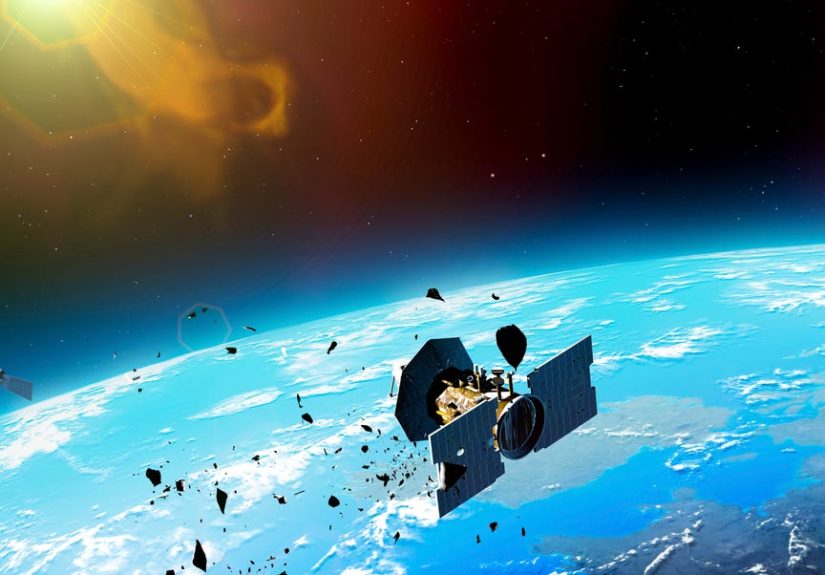
And once you open that door, imagination does not exactly tiptoe. If the object was artificial, it might have been operational technology, a derelict probe, broken sail material, or plain old interstellar trash. The phrase “from a dead civilization” is not a formal scientific label. It is a dramatic shorthand for the idea that the object could be leftover tech from a civilization that no longer exists, much like archaeologists on Earth study ruined cities and wonder who built them and why they vanished.
It is a powerful image: a relic drifting silently between stars long after its makers are gone, the galaxy’s loneliest bottle floating in the darkest ocean imaginable.
Why the Idea Caught Fire
The artificial-origin hypothesis did not become famous just because people love aliens. It became famous because ‘Oumuamua really was weird in multiple ways at once. It did not fit comfortably into the tidy boxes astronomers already had. If a natural explanation requires a very unusual object of a type never seen before, some researchers argue it is fair to at least ask whether an artificial explanation deserves a hearing too.
That question is scientifically legitimate. The trouble starts when a legitimate question gets translated into a definitive headline. “Could this be artificial?” is not the same sentence as “Scientists found alien technology,” and the distance between those two ideas is approximately the width of the Milky Way.
Why Most Astronomers Still Lean Natural
Science has a boring but useful habit: it tends to prefer natural explanations until the evidence absolutely refuses to cooperate. This is not because scientists hate fun. It is because the universe is already very good at producing bizarre phenomena without help from extraterrestrial engineers.
In the case of ‘Oumuamua, many astronomers think the object was unusual but still natural. The main counterargument is simple: we observed it only briefly, from far away, after it had already passed its closest point to the Sun. That means the data set is thin, the uncertainty is real, and strong claims should wear a seatbelt.
Natural Explanation #1: A Strange Kind of Comet
One family of explanations says ‘Oumuamua may have been comet-like, but in a way that did not produce the familiar bright, dusty tail. Some researchers have proposed that invisible gases, or outgassing from unusual ices, could have supplied the extra push without making a dramatic visual show. That would explain the acceleration without requiring alien engineering.
This is one reason the object has often been described as behaving like a comet while looking more like an asteroid. It did not read the textbook, and everyone has been annoyed ever since.
Natural Explanation #2: Hydrogen, Nitrogen, or Other Exotic Ice
Scientists have proposed several specific models over the years. One idea suggested solid hydrogen could explain the odd acceleration, although that interpretation faced serious challenges. Another argued ‘Oumuamua might have been a fragment of nitrogen ice, possibly chipped off a Pluto-like world in another star system. More recently, researchers at UC Berkeley and elsewhere proposed a comparatively simple mechanism in which hydrogen produced by long-term radiation damage inside ice could have been trapped and later released as the object warmed near the Sun.
These ideas are not identical, and not all of them have aged equally well. But together they make an important point: nature has plenty of ways to be annoying, creative, and difficult to summarize in one sentence.
Natural Explanation #3: It May Belong to a New Class of Objects
Another intriguing development is the growing interest in “dark comets,” objects that move in ways suggestive of cometary outgassing but do not show obvious tails. That does not solve ‘Oumuamua outright, but it makes the object look less like a one-off cosmic prank and more like an example of a category astronomers are only beginning to understand.
That matters because the history of astronomy is basically one long lesson in humility. Time and again, something looks unique right up until scientists discover a dozen cousins hiding in the data.
Did Anyone Actually Search It for Alien Signals?
Yes. Researchers performed radio observations to look for artificial emissions from ‘Oumuamua. No confirmed technosignatures were detected. That does not prove the object was natural, and it certainly does not prove it was artificial. It simply narrows one possible line of inquiry.
This point is worth stressing because public conversations about strange space objects often jump straight from “we do not know” to “therefore aliens.” Real science is less dramatic and more patient. It checks, eliminates possibilities, checks again, argues in papers, drinks terrible coffee, and then checks one more time.
What Scientists Actually Agree On
For all the disagreement, there are several points most researchers can live with.
First: ‘Oumuamua was real, interstellar, and scientifically extraordinary.
Second: it showed behavior that is still not fully explained to everyone’s satisfaction.
Third: the evidence for an artificial origin is intriguing to some, but far from established.
Fourth: the object passed through too quickly for the kind of detailed follow-up astronomers would have loved to perform. We are, to a frustrating extent, arguing over a getaway car that already disappeared over the horizon.
That combination is exactly why the debate remains alive. ‘Oumuamua is not just an object; it is a stress test for scientific reasoning under uncertainty.
If It Were Artificial, What Would That Mean?
If the artificial-origin interpretation were ever supported by stronger evidence, the implications would be staggering. It would mean humanity had encountered technology not made on Earth. Even more hauntingly, if the object were genuinely derelict, then it might represent archaeology on a galactic scale: evidence not just of intelligence, but of intelligence that rose, built things, and perhaps vanished.
That is where the “dead civilization” phrasing gets its emotional power. It turns astronomy into a form of cosmic archaeology. Instead of digging up broken pottery in desert sand, you are watching the sunlight glint off possible debris from a long-silent species that no one will ever interview.
But that same emotional power is also why caution matters. Extraordinary interpretations can be thrilling and still premature. In science, goosebumps are not data.
Why This Mystery Matters Even If the Answer Is Completely Natural
Suppose ‘Oumuamua turns out to be a perfectly natural interstellar oddball. Would that make the story less exciting? Not really. It would still mean the galaxy can manufacture objects stranger than many scientists expected. It would still force astronomers to rethink how material forms, evolves, and gets ejected from other planetary systems. And it would still remind us that our solar system is not sealed off from the rest of the universe. Things from other stars can and do pass through our neighborhood.
That alone is a little mind-bending. Our species spent most of history wondering whether anything from another star system would ever come within reach. Then one did, and it refused to explain itself. Very rude, honestly.
The Experience of Encountering a Mystery Like ‘Oumuamua
Part of what makes the ‘Oumuamua story so magnetic is not just the object itself, but the experience of trying to understand something that appears once, behaves oddly, and vanishes. For astronomers, that is equal parts exhilarating and maddening. Imagine being handed a single blurry photograph of a stranger sprinting through your backyard at dawn and being asked to determine whether you saw a jogger, a magician, or the world’s most confident raccoon. That is not a perfect scientific analogy, but emotionally, it is in the neighborhood.
There is also a very human thrill in watching experts confront uncertainty in public. We are used to science being presented as a polished set of facts, all lab coat and confidence. But mysteries like this reveal science in its raw form: provisional, argumentative, creative, and deeply alive. One team models an icy fragment. Another team says the chemistry does not work. Someone else proposes a dust aggregate. Another says the mechanics look wrong. Meanwhile, the public stares up at the sky and thinks, “So the universe is still allowed to improvise?” Yes. Very much yes.
For students and casual space fans, ‘Oumuamua also offers a rare emotional cocktail: awe mixed with humility. It reminds us that the cosmos is not a tidy museum where every label is already printed. It is more like a giant attic filled with objects we have not cataloged, some of which may be perfectly ordinary once understood, and some of which may force us to invent better categories. That is a thrilling place to be intellectually, even when the answer turns out to be less “alien artifact” and more “deeply inconvenient comet.”
The object also tapped into something older than astronomy: the instinct to tell stories about visitors. Human beings have always attached meaning to whatever arrives from beyond the familiar horizon. Sometimes it is a ship, sometimes a meteor, sometimes a myth, and sometimes an interstellar object with a name most of us had to practice saying several times. The emotional pattern is the same. A stranger appears, acts oddly, and leaves behind questions. We fill the silence with theories, fears, jokes, and wonder.
Even the split between cautious scientists and more adventurous interpreters is part of the experience. One side says, reasonably, that nature should get first dibs on the explanation. The other says, also reasonably, that dismissing unusual possibilities too quickly can blind us to genuinely historic discoveries. Put those impulses together and you get the best version of scientific culture: skepticism with imagination, curiosity with brakes.
In that sense, ‘Oumuamua was more than an interstellar object. It was a mirror. It reflected how people think, how scientists argue, how headlines mutate, and how quickly the human mind turns one anomaly into a civilization-sized question. That may be the most unforgettable part of the whole episode. Not whether the object was artificial, but how instantly it made us feel the size of the universe and the smallness of our certainty.
And maybe that is why the mystery still lingers. Some cosmic events give us answers. Others give us perspective. ‘Oumuamua gave us a little of both, plus a lingering suspicion that the galaxy is under no obligation to make sense on our schedule.
Conclusion
So, could this space object be from a dead civilization? A few scientists think that possibility deserves consideration, especially because ‘Oumuamua displayed properties that do not fit neatly into familiar categories. But most astronomers still regard the artificial-origin idea as speculative, with natural explanations remaining more likely even if none has closed the case with a dramatic mic drop.
The smartest takeaway is not “aliens confirmed,” and it is not “case closed, boring comet.” It is that ‘Oumuamua revealed how much we still have to learn about objects from other star systems. Whether it was cosmic debris, exotic ice, a dark-comet cousin, or something stranger, it did exactly what great mysteries do: it made science sharper, public curiosity louder, and the universe feel a little bigger than it did the day before.
Note: This article is based on real scientific reporting and research. The idea that ‘Oumuamua came from a “dead civilization” is a speculative hypothesis, not an established scientific conclusion.