Table of Contents >> Show >> Hide
- What Happened in the Viral Toledo Road Rage Incident?
- Why This Story Went Mega-Viral
- What We Know, What We Don’t, and Why That Distinction Matters
- Road Rage in America Is Bigger Than One Viral Video
- What Her “Breaks Her Silence” Moment Really Means
- The Real Lesson: Never Get Out of the Car to Perform Your Anger
- Related Experiences Drivers Know All Too Well
- Conclusion
Some viral stories arrive with context. Others arrive like a flying hubcap: loud, chaotic, and already halfway across the internet before anyone knows what actually happened. This one was firmly in the second category. A road-rage confrontation in Toledo, Ohio, exploded online after video showed a woman confronting another vehicle, throwing a punch, and then getting body-slammed onto an icy street. The clip spread fast, the opinions spread faster, and the nicknames arrived at lightspeed.
The headline-friendly version is simple: a woman lashed out, a man hit back harder, and the internet turned the whole thing into a morality play with freeze-frame analysis, armchair legal theories, and the usual digital peanut gallery. But the real story is more interesting than the meme version. It is about what happens when everyday frustration mutates into public humiliation, when a traffic spat becomes a physical brawl, and when a few seconds of terrible decision-making become permanent online real estate.
Now, after the video’s viral run, follow-up reports say the woman at the center of the incident identified herself and said she had “learned her lesson.” That brief remark may be the most revealing part of the entire saga. Because beneath the sensational title, this story is not just about one road-rage blowup. It is about how anger travels in traffic, how quickly bystanders become an audience, and how a moment of impulse can turn into a lifelong internet souvenir nobody asked for.
What Happened in the Viral Toledo Road Rage Incident?
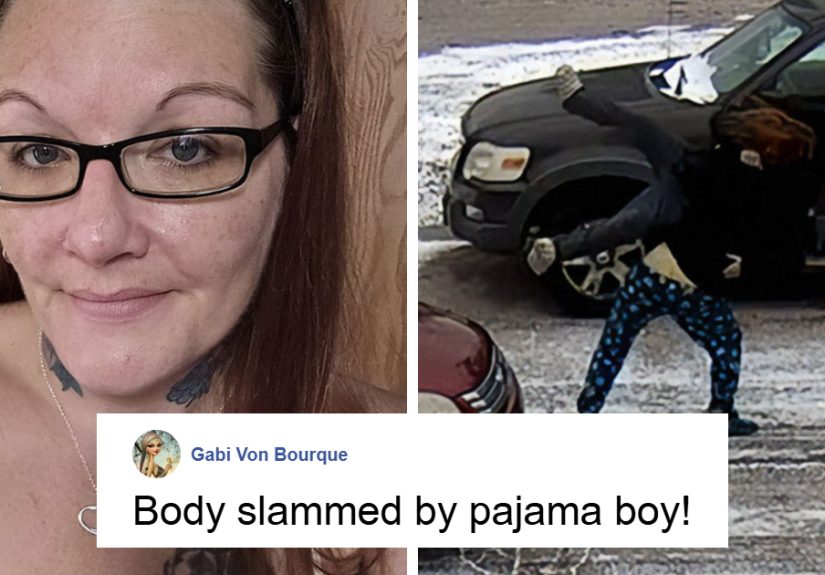
The now-famous clip appears to show an apparent road-rage confrontation on a Toledo street in early January 2025. In the footage, a woman in a blue sedan gets out and confronts people in a red car. A man exits from the other vehicle, tries to engage, and the argument escalates from shouting to physical contact in a hurry. The woman throws a punch. He responds with a punch of his own and then lifts and slams her onto the frozen pavement.
That sequence is why the video blew up. It has everything the internet loves and perhaps should love a little less: instant conflict, visible consequences, and just enough ambiguity before the first punch to keep people arguing in the comments for days. Was it self-defense? Was it excessive force? Was everyone making terrible choices? On social media, the answer was usually “yes,” “yes,” and “absolutely.”
Local reporting made one thing clear: police were not investigating the altercation because no report was made at the time. That detail matters. It means the public saw the video, but law enforcement did not automatically treat the clip itself as the start of a formal case. In other words, the internet held a trial long before any courtroom was even warming up the coffee pot.
Later viral follow-up stories reported that the woman had been identified as Katreena Aiken and that she acknowledged the incident online, saying she had learned her lesson. That statement was short, but it changed the tone of the story. Until then, she had been little more than a label in a viral headline. With that admission, however limited, the story shifted from anonymous internet villainy to something more human and more uncomfortable: a real person owning a deeply public mistake.
Why This Story Went Mega-Viral
Because it looked like instant karma in a five-second package
Let’s be honest: one reason this story spread so fast is that the video appears to offer what social media users consider the perfect plot twist. A person throws the first punch, and consequences arrive immediately, dramatically, and with all the subtlety of a folding chair in a wrestling match. Online, that structure is irresistible. It fits neatly into the internet’s favorite genre: play stupid games, win viral prizes.
But that neat little moral package can be misleading. Viral clips rarely begin at the real beginning, and they almost never end at the real end. We see the shove, not the stress. The hit, not the hours before it. The takedown, not the pain afterward. Video can clarify sequence, but it cannot always explain state of mind, prior behavior, fear, or whether somebody thought they were de-escalating when they were actually pouring gasoline on the problem with both hands.
Because the “Karen” label does half the storytelling for people
The word “Karen” has become internet shorthand for a certain kind of public entitlement, but it also flattens everything into cartoon form. Once that label gets attached, the audience often stops asking questions and starts assigning roles. Villain: cast. Hero: cast. Comment section jury: seated and loud. In this case, the nickname helped the clip travel, but it also made the story easier to consume than to understand.
That is part of the reason this article matters. If all we take away is “lady yells, man slams, internet cheers,” then we learn nothing except that smartphones have great frame rates. The more useful takeaway is that road rage can turn regular people into their worst selves in seconds, and the public rarely sees the damage until after the dust settles.
What We Know, What We Don’t, and Why That Distinction Matters
Here is what appears well-supported by reporting and the footage itself: there was an apparent road-rage confrontation in Toledo; the woman exited her car first; the argument became physical; she threw a punch; the man struck back and body-slammed her; and local police said the incident was not investigated because no one called it in. That much is the sturdy part of the table.
Here is what remains fuzzier: what happened before the camera started rolling, whether there had been vehicle contact, what exactly each person believed the threat level to be, the full extent of any injuries, and whether either side ever tried to pursue the matter later. Those gaps are not minor. They are the difference between watching a clip and understanding an event.
That is also why any serious analysis of this viral road-rage story has to resist the urge to hand out gold stars. Throwing the first punch was reckless. Slamming someone onto icy pavement could also carry frightening consequences. A fight does not become wise just because one side looked worse in the first eight seconds.
Road Rage in America Is Bigger Than One Viral Video
If this story feels dramatic, that is because road rage is dramatic. It is also common in milder forms and disturbingly ordinary in more dangerous ones. Aggressive driving lives on the same highway as tailgating, unsafe lane changes, speeding, brake-checking, obscene gestures, and the timeless classic of shouting through closed windows as if soundproof glass has ever calmed anybody down.
Recent traffic-safety research suggests this is not a fringe problem. A large AAA Foundation study released in 2025 found that 96% of drivers reported engaging in some form of aggressive driving or road-rage behavior at least once in the previous year, and 11% reported violent behaviors. Those numbers are less a red flag and more a giant billboard flashing, “Everybody chill, please.”
NHTSA draws an important distinction between aggressive driving and road rage. Aggressive driving involves patterns like following too closely, unsafe lane changes, or running red lights. Road rage is something more severe: an intentional assault connected to a roadway incident. That distinction matters because it helps explain why seemingly small frustrations can become much bigger threats. Most episodes start as aggressive driving. The worst ones graduate into assault.
Safety experts also point out that many road-rage incidents never make it cleanly into the data unless a crash occurs. The National Safety Council notes that extreme cases can spill out of the vehicle and become assault, which is exactly what this Toledo video appears to show. In other words, the viral clip did not reveal a bizarre one-off from another planet. It showed a familiar American problem at its ugliest point on the spectrum.
Psychologists say the emotional mechanics are just as important as the traffic mechanics. Cleveland Clinic has noted that road rage is often less about traffic itself and more about emotional regulation. A person who is already stressed, rushed, embarrassed, or angry gets into a car and suddenly every merge feels like an insult, every honk sounds personal, and every close pass becomes the final straw. It is not rational, but it is very human.
What Her “Breaks Her Silence” Moment Really Means
In celebrity gossip, “breaking your silence” usually means a magazine cover and a carefully lit interview. In internet chaos, it can mean a short online comment that essentially says, “Yep, that was me, and wow, that went badly.” If the follow-up reporting is accurate, that is what happened here. Not a polished redemption arc. Not a TED Talk from the school of hard knocks. Just a blunt acknowledgment that the moment was real, ugly, and costly.
That kind of statement matters because public shame is now part of the modern road-rage ecosystem. Years ago, a terrible roadside outburst might have ended as a private embarrassment, maybe retold at Thanksgiving by one cousin who never forgets anything. Today, it can become a forever clip, replayed by strangers who know your face, your car, your city, and your worst decision before lunch.
So when the woman reportedly said she had learned her lesson, the internet laughed, rolled its eyes, or applauded. But the sentence carries more weight than people think. It suggests a recognition that road rage does not just risk injury or arrest. It risks identity collapse. One moment you are an anonymous driver having a bad morning. The next, you are the main character in a viral headline nobody can scrub from search results.
The Real Lesson: Never Get Out of the Car to Perform Your Anger
If there is one lesson this story shouts louder than any horn in rush-hour traffic, it is this: once you leave the vehicle to confront someone, you are no longer “having a disagreement.” You are building a terrible stage for a worse outcome. Maybe it becomes a punch. Maybe it becomes an injury. Maybe it becomes a criminal case. Maybe it becomes a viral clip. Often, if you are unlucky and impulsive at the same time, it becomes all four.
Traffic-safety guidance is boring on purpose, because boring advice is how people keep their teeth. Do not engage. Do not escalate. Do not answer screaming with screaming. Do not try to win the moment. Give aggressive drivers space, stay inside a locked vehicle if possible, head to a public place if you feel threatened, and call 911 if someone is following or harassing you. None of those steps will earn applause in a comment section, but they are much more likely to get you home with your dignity intact.
And for the love of winter pavement, do not throw punches and then act surprised when physics joins the conversation.
Related Experiences Drivers Know All Too Well
What makes the Toledo confrontation so sticky in people’s minds is that it does not feel totally foreign. Most drivers have not ended up in a roadside wrestling match, thankfully, but many have brushed up against the emotional ingredients that create one. The experience often starts small. Someone follows too closely. Someone cuts in without signaling. Someone leans on the horn like they are trying to summon help from another dimension. Suddenly your pulse jumps, your jaw tightens, and your brain starts writing a speech nobody should ever give through a windshield.
One common experience is the tailgating spiral. A driver is already late, traffic is already awful, and the vehicle behind them keeps creeping closer. Instead of creating distance and moving away safely, the tempted response is to “teach a lesson” by slowing down, brake-checking, or refusing to let the other car pass. That is the moment everyday frustration starts cosplaying as authority. Nobody gets deputized by being annoyed.
Another familiar experience is the parking-lot continuation. A conflict begins in traffic, then both cars end up stopping at the same light, gas station, or corner store. One person rolls down a window. The other person gestures back. Now the scene has an audience, and pride becomes the dumbest passenger in the vehicle. This is where people stop thinking about safety and start thinking about winning. Winning, of course, is usually just another word for “making tomorrow much more complicated.”
There is also the especially dangerous winter-road version of road rage, which the Toledo clip seemed to capture visually. Ice, slush, poor traction, and stress are a brutal combination. On slippery roads, even a shove can become a head injury. Even a short fall can become a hospital visit. People imagine roadside fights the way movies choreograph them. Real life is less cinematic and more orthopedic.
Passengers can make these situations worse too. A boyfriend, spouse, friend, or relative in the car can unintentionally act like emotional lighter fluid. Someone says, “Don’t let them do that to you,” and suddenly the driver is no longer just angry. They feel watched. They feel challenged. They feel like backing down would be embarrassing. That is how a stupid moment becomes a catastrophic one.
Then there is the aftershock experience, which almost never appears in the first viral post. The adrenaline wears off. Kids ask questions. Employers see the video. Friends text links. Strangers make memes. The body hurts, the pride hurts more, and the internet remains undefeated at replaying the exact second a person wishes could disappear. In that sense, the woman’s reported “lesson learned” comment rings true even beyond this specific case. Plenty of people who have had roadside meltdowns, whether filmed or not, know exactly when the shame arrives: not during the yelling, but afterward, when the silence returns and the consequences start talking.
That is why stories like this matter beyond the spectacle. They are reminders that road rage is rarely about one insult, one merge, one horn, or one punch. It is usually stress, ego, fear, fatigue, speed, pride, and poor judgment all arriving at the same intersection. And once they do, the exit ramp gets very hard to find.
Conclusion
The viral Toledo road-rage clip may have been packaged online as instant karma, but the better reading is simpler and more sobering. It was a public breakdown with painful consequences, followed by a small acknowledgment that the lesson was learned the hard way. That does not make the story neat. It makes it human.
For readers searching this topic, the real takeaway is not whether the internet’s favorite nickname fits, or whether one side “won” the altercation. The takeaway is that aggressive driving can become assault in seconds, that being first to hit does not guarantee being the only one hurt, and that a moment of road-rage bravado can echo far beyond the street where it happened. In 2025, getting the last word in traffic is overrated. Getting home safely is the actual flex.