Table of Contents >> Show >> Hide
- What Is an Ekranoplan?
- Why Use LIDAR on an RC Ekranoplan?
- How Ground Effect Changes RC Flight
- The Role of LIDAR in Low-Altitude Stability
- Why the RC Ekranoplan Looks Like It Is Hovering
- Design Features That Make an RC Ekranoplan Work
- The Biggest Challenges: Wind, Waves, and Weird Readings
- Why This Project Matters Beyond the Hobby
- Real-World Interest in Wing-in-Ground-Effect Vehicles
- What Makers Can Learn From a LIDAR RC Ekranoplan
- Experience Notes: What It Feels Like to Work With an RC Ekranoplan
- Conclusion
Some RC aircraft look like birds. Some look like jets. And then there is the RC ekranoplan: a wonderfully strange machine that skims just above the ground or water like it knows a secret the rest of aviation forgot. Add LIDAR altitude sensing, autopilot tuning, and a little foam-board bravery, and suddenly this low-flying oddball becomes one of the most fascinating examples of hobby engineering meeting real aerodynamics.
The phrase “RC ekranoplan uses LIDAR to fly in ground effect” sounds like something invented by an overcaffeinated engineer during a long weekend. Yet the concept is very real. An ekranoplan is a wing-in-ground-effect vehicle, meaning it takes advantage of the aerodynamic cushion created when a wing flies very close to a surface. Instead of climbing high into the sky, it lives in that narrow, efficient zone where lift improves and induced drag drops. For full-scale craft, that zone may be several feet or meters above water. For a small radio-controlled model, it can be barely more than ankle height.
That is where LIDAR becomes the clever part. At RC scale, the margin between “smooth ground-effect flight” and “oops, that was the lawn” is tiny. A downward-facing LIDAR sensor can measure height above the surface in real time, giving the flight controller a better idea of where the vehicle actually is. The result is a small craft that appears to hover, skim, and float along the surface with the theatrical confidence of a sci-fi prop.
What Is an Ekranoplan?
An ekranoplan is a ground-effect vehicle designed to fly close to a surface, usually water. The term is strongly associated with Soviet experimental craft that looked like ships, airplanes, and engineering fever dreams all at once. These machines were not meant to fly like ordinary aircraft at cruising altitude. Instead, they skimmed low over the sea, using the interaction between their wings and the surface below to improve efficiency.
In simple terms, an ekranoplan is part airplane, part boat, and part aerodynamic loophole. It has wings, but those wings are optimized to work close to the surface. It may use a boat-like hull, but it is not merely floating. It can move faster than a vessel because it is lifted by air, yet it can be more efficient than an aircraft at low altitude because it reduces induced drag.
Why Ground Effect Matters
Ground effect happens when a wing flies close enough to the ground or water that the surface interferes with the normal airflow around the wing. Wingtip vortices are reduced, downwash changes, and the wing can produce lift with less induced drag. Pilots often notice ground effect during takeoff or landing, when an airplane seems to float above the runway longer than expected.
For a normal airplane, ground effect is a passing phase. For an ekranoplan, it is the main event. The vehicle is designed to stay in that sweet spot, where the surface helps the wing behave more efficiently. The lower the craft flies within safe limits, the more pronounced the benefit can become.
However, there is a catch, because of course aerodynamics enjoys drama. Ground effect is height-sensitive. Fly too high and the benefit fades. Fly too low and the craft may strike the surface, bounce, or become unstable. This is especially tricky for small RC models, where a few inches can make the difference between graceful flight and a foam-board cartwheel.
Why Use LIDAR on an RC Ekranoplan?
LIDAR, short for Light Detection and Ranging, uses laser pulses to measure distance. In a mapping aircraft, LIDAR can help create detailed 3D models of terrain. In an RC ekranoplan, the job is more modest but extremely useful: measure how far the aircraft is from the ground or water beneath it.
A traditional RC airplane often relies on the pilot’s eyes, barometric altitude, GPS, or inertial sensors. Those tools can be useful, but they are not always precise enough for an ekranoplan flying a foot or less above the surface. Barometers can drift. GPS altitude is too imprecise for this job. Human depth perception gets worse when a tiny craft is moving fast near uneven ground. LIDAR gives the autopilot a direct distance reading from the surface below.
The Autopilot Advantage
In the well-known RC ekranoplan project that inspired this topic, the builder used a Pixracer-style autopilot setup combined with a small LIDAR rangefinder. The flight controller was modified and tuned so the craft could maintain a very low altitude. Instead of the pilot constantly correcting every bump, gust, and attitude change, the autopilot helped hold the craft near the target height.
This does not make the model magical. It still has to deal with wind, terrain changes, sensor noise, and the basic reality that low-altitude flight leaves almost no room for laziness. But it makes the vehicle dramatically more controllable. The LIDAR acts like a very fast measuring tape pointed at the ground, while the autopilot uses that information to adjust pitch or throttle response.
How Ground Effect Changes RC Flight
Ground effect is familiar to full-scale pilots, but it behaves in a particularly interesting way with small RC aircraft. Many RC models have high power-to-weight ratios. In other words, they can brute-force their way through the air with more motor than dignity. That can make it hard to tell whether a model is truly benefiting from ground effect or simply flying low with enough thrust to stay out of trouble.
An ekranoplan design makes the difference clearer. It usually has a broad, low-mounted wing, a stabilizer placed where it can remain effective, and a layout intended to remain stable near the surface. When properly trimmed, it should feel happiest close to the ground, not high above it. The vehicle is not trying to climb like a trainer plane; it is trying to surf a cushion of air.
Scale Makes Everything Spicier
Full-scale wing-in-ground-effect craft have mass and momentum on their side. A small RC model is lighter, more twitchy, and more easily bullied by wind. A breeze that would barely bother a large craft can shove a foam model around like a leaf with a battery pack. That is one reason automatic altitude control becomes so valuable.
At RC scale, the ground-effect zone is also very small. If the vehicle’s wingspan is only a few feet, the useful altitude band may be measured in inches. Smooth grass, pavement, or calm water can work well. Bumpy terrain, tall weeds, waves, and sudden dips can confuse the sensor or abruptly remove the aerodynamic cushion.
The Role of LIDAR in Low-Altitude Stability
A downward-facing LIDAR sensor gives the aircraft one critical piece of information: real-time height above the surface. That sounds simple, but it solves a problem that many low-flying robots share. To control altitude close to the ground, the vehicle must know the difference between actual height and desired height. Without that data, the pilot or autopilot is guessing.
When the LIDAR reading says the craft is getting too low, the controller can command a correction. When it rises too high, the controller can reduce lift or adjust pitch. The goal is not to create a perfectly frozen altitude, because no real flight system is that polite. The goal is to keep the craft inside a useful ground-effect band long enough for stable flight.
Why Smooth Surfaces Help
LIDAR works best when the surface below gives consistent reflections and does not change too violently. Smooth pavement, short grass, or calm water can provide usable readings. Waves, tall grass, reflective puddles, and rough ground can introduce noise. If the sensor sees a sudden dip or spike, the autopilot may react in a way that feels jumpy.
This is one of the big lessons from RC ground-effect experiments: the sensor is only as useful as the environment allows. A beautifully tuned craft over a smooth field may look like alien technology. The same craft over uneven terrain may look like a nervous pancake trying to escape breakfast.
Why the RC Ekranoplan Looks Like It Is Hovering
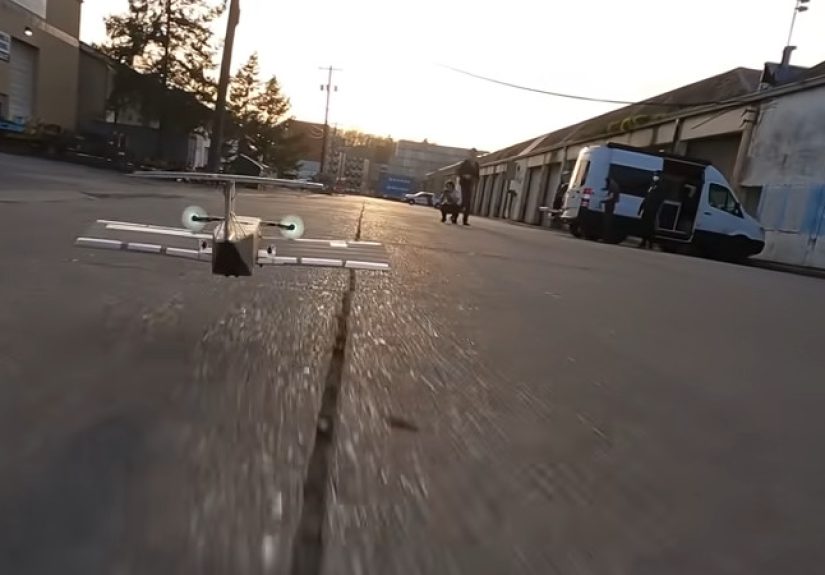
One of the most charming things about a LIDAR-assisted RC ekranoplan is its visual effect. Because it flies so low and so steadily, it can appear to hover. It is not hovering in the helicopter sense. The wings are still producing lift through forward motion. The propeller is still pulling or pushing the vehicle through the air. But the ground effect reduces drag and gives the flight a strange floating quality.
That illusion is part of the appeal. A normal airplane climbing away from the runway is familiar. A small ekranoplan skimming inches above the ground feels slightly impossible, as if someone patched the physics engine. It is exactly the kind of project that makes hobby aviation fun: educational, weird, and just impractical enough to be irresistible.
Design Features That Make an RC Ekranoplan Work
An RC ekranoplan does not need to be complicated, but it does need the right priorities. A broad wing helps generate lift at low speed. A low-mounted wing can make stronger use of ground effect. A stable tail or canard arrangement helps manage pitch. Some designs use endplates or wingtip floats to reduce leakage around the wingtips and improve the pressure cushion under the wing.
Weight distribution is crucial. If the center of gravity is too far forward, the craft may refuse to skim smoothly. If it is too far back, it may pitch up aggressively and leave the ground-effect zone. Thrust angle matters too. A motor that pushes the nose down or up too strongly can create a constant fight between propulsion and pitch control.
Foam Board: The Hero Material
Foam board is popular for experimental RC aircraft because it is cheap, light, and forgiving. When a prototype inevitably meets the ground in an unplanned handshake, repairs are often possible with glue, tape, and emotional resilience. For a ground-effect vehicle, foam board also allows rapid shape changes. Builders can test winglets, tail sizes, hull shapes, and sensor mounts without needing a professional workshop.
That accessibility is one reason the RC ekranoplan topic attracts makers. It combines serious aerodynamic principles with kitchen-table construction. You can learn about induced drag, stability, control loops, and sensor filtering without needing a wind tunnel or a degree in aerospace engineering.
The Biggest Challenges: Wind, Waves, and Weird Readings
Low-altitude flight is brutally honest. If the wind gusts, the vehicle reacts. If the terrain drops away, the craft may suddenly climb out of ground effect. If the LIDAR sensor receives noisy readings, the autopilot may chase false altitude changes. These problems do not ruin the concept, but they explain why ground-effect vehicles are harder than they look.
Water adds another layer of complexity. Calm water can be an ideal surface because it is flat and open. Choppy water, however, creates constantly changing reflections and physical hazards. A wave can be both a sensor problem and a runway problem. Full-scale WIG craft must consider sea state for the same reason: the surface is part of the flight environment.
Safety Is Not Optional
Any RC aircraft that flies fast and low should be operated far from people, roads, animals, and property. A ground-effect model may look harmless because it stays near the surface, but it still has a spinning propeller, mass, speed, and batteries. The best test area is wide, open, and controlled, with a clear buffer zone. The funniest RC projects are the ones that do not end with apologies.
Why This Project Matters Beyond the Hobby
At first glance, an RC ekranoplan with LIDAR altitude control may seem like a quirky maker project. It is quirky, absolutely. But it also demonstrates ideas that matter in robotics, aviation, marine transport, and autonomous control.
Modern vehicles increasingly depend on sensor fusion: combining data from cameras, inertial measurement units, GPS, barometers, radar, sonar, and LIDAR. A small ekranoplan shows why that matters. The aircraft needs accurate local height data, not just a rough estimate of altitude. It also needs the controller to interpret that data quickly and calmly.
The same broad principle appears in drones that follow terrain, autonomous boats that avoid obstacles, aircraft that land precisely, and robots that navigate uneven surfaces. The RC ekranoplan is a tiny laboratory for low-altitude autonomy.
Real-World Interest in Wing-in-Ground-Effect Vehicles
Wing-in-ground-effect craft have never become everyday transportation, but engineers keep returning to the idea because the physics are attractive. Flying low over water can reduce drag and potentially move cargo faster than ships while using less energy than conventional aircraft for certain missions. Large concepts such as DARPA’s Liberty Lifter explored how a seaplane-like vehicle might operate efficiently close to the ocean surface while still being able to fly higher when needed.
That does not mean giant ekranoplans are about to replace cargo ships next Tuesday. The challenges are serious: waves, corrosion, certification, maintenance, stability, port operations, and weather limits. Still, the continued research shows that ground effect remains more than an aviation curiosity. It is a tempting engineering compromise between air and sea.
What Makers Can Learn From a LIDAR RC Ekranoplan
The most useful lesson is that control matters as much as design. A well-shaped airframe can still be difficult to fly if it lacks good feedback. A precise sensor can still perform poorly if the software reacts too aggressively. Successful ground-effect flight depends on the partnership between aerodynamics, electronics, and tuning.
Another lesson is that “simple” vehicles are rarely simple once they move through the real world. A flat test field may hide small dips. A light breeze may appear at the worst possible moment. A sensor may work beautifully indoors and behave differently under sunlight or over reflective surfaces. The project rewards patient testing, cautious changes, and a willingness to treat every crash as data wearing a disguise.
Experience Notes: What It Feels Like to Work With an RC Ekranoplan
Spending time around an RC ekranoplan project feels different from flying a typical RC airplane. With a normal trainer or sport model, success often means climbing smoothly, making controlled turns, and landing without drama. With a ground-effect vehicle, success may mean holding a line just above the surface for a few seconds longer than last time. The victories are smaller, stranger, and somehow more satisfying.
The first experience is usually humility. On paper, ground effect sounds like free lift. In practice, it behaves like a coupon with fine print. The craft may skim beautifully in one direction, then wobble on the return pass because of a light crosswind. It may feel stable over one patch of pavement, then hop awkwardly when the surface changes. Every run teaches the same lesson: the vehicle is not flying in empty air; it is flying in a relationship with the ground.
The second experience is that altitude perception becomes surprisingly difficult. When the craft is only inches above the surface, watching from the side can be misleading. It may look low when it is safe, or safe when it is moments from scraping. That is where LIDAR changes the mood of the project. Instead of relying only on the pilot’s eyes, the aircraft has a direct measurement. Seeing the vehicle settle into a steady low path makes the technology feel less like a gadget and more like a missing sense.
The third experience is the joy of tuning. Small adjustments can make a big difference. A slightly calmer altitude response can turn a bouncing model into a smooth skimmer. A better sensor mount can reduce noisy readings. A small change in center of gravity can make the craft stop porpoising. Unlike some RC projects where the main goal is more speed or bigger motors, an ekranoplan rewards balance. Too much power can make it leave the ground-effect zone. Too much correction can make it hunt up and down. The sweet spot feels elegant.
There is also a certain comedy to the testing process. A good run looks futuristic. A bad run looks like a pizza box fleeing a leaf blower. That contrast is part of the charm. The craft is close enough to the ground that every wobble feels dramatic, but the engineering lessons are serious. You learn about airflow, sensor limits, control loops, and the importance of choosing a safe test site.
Perhaps the best experience is the moment when the model finally does what it was designed to do. It accelerates, lifts lightly, settles near the surface, and skims forward as if riding an invisible rail. For a few seconds, the awkward prototype becomes graceful. The LIDAR, autopilot, wing, tail, and motor all agree on the same idea. That moment explains why people build these things. It is not just because they are efficient or unusual. It is because they make familiar physics feel new again.
Conclusion
The RC ekranoplan that uses LIDAR to fly in ground effect is more than a neat internet build. It is a compact demonstration of aerodynamics, autonomy, and maker creativity. By combining a wing-in-ground-effect airframe with a downward-facing distance sensor and autopilot control, the project turns a notoriously delicate flight regime into something smoother and more repeatable.
Ground effect offers the promise of reduced drag and efficient low flight, but it demands precision. LIDAR helps provide that precision by measuring the exact distance to the surface below. The result is a model that does not merely fly low; it actively manages its place inside the narrow aerodynamic cushion that makes an ekranoplan special.
For hobbyists, engineers, and curious readers, this project is a reminder that innovation often happens at the intersection of old ideas and new tools. Ground effect has been studied for decades. LIDAR and autopilot systems are now accessible to hobby builders. Put them together, and a foam-board craft can suddenly teach lessons that connect backyard experimentation to serious aerospace research.