Table of Contents >> Show >> Hide
- What Is Galvanic Corrosion, Exactly?
- Why Water Cooling Loops Are Vulnerable
- Which Metals Are Usually Safe to Mix?
- The Best Way to Prevent Galvanic Corrosion
- Maintenance Habits That Keep Corrosion Away
- Common Builder Mistakes That Trigger Corrosion
- Real-World Example Scenarios
- Experience-Based Lessons From the Bench
- Conclusion
If you build custom PC loops long enough, you eventually learn an important truth: water cooling is part thermal engineering, part plumbing, and part “please do not turn my expensive hardware into a tiny chemistry experiment.” One of the biggest threats in that experiment is galvanic corrosion. It sounds dramatic, because it is. When the wrong metals share the same liquid cooling loop, the system can behave like a small battery, and one of those metals starts losing the argument fast.
If you want your custom loop to stay clean, efficient, and gloriously un-crusty, preventing galvanic corrosion should be on your shortlist right next to leak testing and not overtightening fittings like you are trying to win a tug-of-war with brass. The good news is that preventing galvanic corrosion in water cooling loops is not mysterious. It mostly comes down to choosing the right materials, using the right coolant, and keeping up with maintenance before your loop starts looking like it belongs in a shipwreck documentary.
What Is Galvanic Corrosion, Exactly?
Galvanic corrosion happens when three things come together: two dissimilar metals, direct electrical contact between them, and a conductive liquid called an electrolyte. In a water cooling loop, that electrolyte is your coolant. Once the circuit is complete, the less noble metal becomes the anode and corrodes faster, while the more noble metal becomes the cathode and is protected.
In plain English, one metal sacrifices itself so the other can keep looking handsome.
In PC liquid cooling, the classic troublemaker is aluminum mixed with copper, brass, or nickel-plated copper. Aluminum sits farther away from copper-family metals on the galvanic scale, which means it is far more likely to corrode when they share the same loop. That corrosion can create pitting, sludge, discoloration, blockages, poor flow, and eventually higher temperatures or outright component failure.
Why Water Cooling Loops Are Vulnerable
A custom water cooling loop looks simple from the outside. You have a water block, radiator, pump, reservoir, tubing, fittings, and coolant. But each of those components may contain different metals. Many high-quality custom loop parts are built around copper, brass, and nickel-plated copper, which generally play well together. Problems start when an aluminum part sneaks into that party uninvited.
And aluminum does sneak in. It can show up in budget parts, decorative components, combo kits, reused hardware, or off-brand radiators. Sometimes builders assume that “metal is metal,” which is a wonderfully efficient way to create a future cleaning project.
The bigger issue is that corrosion does not always announce itself with fireworks. It often begins slowly. A little cloudiness here. A little residue there. A slight temperature increase. Then one day you open the loop and find deposits that look like your coolant has been making cottage cheese in secret.
Which Metals Are Usually Safe to Mix?
Copper, Brass, and Nickel-Plated Copper
For most modern custom loops, the safest strategy is to stick with components made from copper, brass, and nickel-plated copper. These metals are commonly used in blocks, radiators, and fittings because they offer strong thermal performance and relatively good compatibility when used together in closed cooling systems.
That is why many premium loop ecosystems are built around this family of materials. Brass is common in radiator end tanks and fittings. Copper is the star of cold plates and radiator cores. Nickel plating is often added to copper parts for appearance and added corrosion resistance. In a properly built loop, that combo is normal.
When Aluminum Is Not Actually a Problem
Here is the important nuance: aluminum only becomes part of the galvanic problem if it contacts the coolant path. If a block has an aluminum top plate or accent trim that never touches liquid, that decorative aluminum is not participating in the electrochemical reaction. It may look suspicious, but looks can be deceiving. Some components are designed exactly this way so manufacturers can use aluminum externally without exposing it to the loop.
So the rule is not “never buy anything with aluminum on it.” The rule is “never let coolant flow across aluminum when the rest of your loop is copper-family metal.”
The Best Way to Prevent Galvanic Corrosion
1. Use One Compatible Metal Family Throughout the Loop
The single best prevention method is also the least glamorous: keep your coolant-wetted metals consistent. Before buying a part, check the material specs for the cold plate, radiator core, fittings, and any internal chambers the liquid touches.
A smart shopping checklist looks like this:
- CPU and GPU blocks: copper or nickel-plated copper
- Radiators: copper/brass construction
- Fittings: brass, often with nickel plating
- Reservoir and tops: acrylic, acetal, nylon, or other non-reactive materials are fine
- Avoid aluminum in any coolant-contact surface unless the entire loop is specifically designed around aluminum
Mixing copper and aluminum “just this once” is not a clever shortcut. It is more like scheduling future disappointment.
2. Use a Proper Coolant, Not Whatever Happens to Be Near the Sink
Coolant chemistry matters. A reputable pre-mix coolant designed for PC liquid cooling typically includes corrosion inhibitors and anti-bacterial additives. Those inhibitors help reduce electrochemical activity, protect metal surfaces, and keep the loop from turning into a petri dish with RGB.
Many experienced builders also use distilled water with the correct additive package. That can work well, especially in loops built entirely from copper, brass, and nickel-plated copper. But plain tap water, bottled water, or random “purified” water is a bad plan. Minerals and contaminants can increase conductivity, leave deposits, and encourage corrosion or biological growth.
Pre-mixed coolants are usually the simplest route for most builders because the chemistry is already balanced. If you prefer distilled water, pair it with a proven inhibitor and biocide that is compatible with your loop materials.
3. Do Not Treat Corrosion Inhibitors Like Magic Spells
Yes, corrosion inhibitors help. No, they are not wizard robes for an aluminum radiator stuffed into a copper loop. Additives can reduce corrosion risk, but they do not change the laws of electrochemistry. If your loop contains poorly matched metals, inhibitors may slow the problem, not erase it.
Think of additives as your seat belt, not your excuse to drive into a wall.
4. Flush New Components Before Installation
Brand-new radiators and blocks can contain manufacturing residue, flux, oils, fine particles, or plating debris. Even when those residues are not galvanic corrosion themselves, they can contaminate coolant, disrupt inhibitor chemistry, and create deposits that make diagnosing loop problems harder.
Before final assembly, flush radiators thoroughly and inspect blocks and fittings for debris. A clean loop starts with clean parts. Fancy coolant cannot compensate for a radiator that still has factory leftovers rattling around inside it.
5. Avoid Unnecessary DIY Material Experiments
Water cooling culture loves creativity, which is great right up until someone decides to integrate mystery-metal hardware, automotive leftovers, or an improvised aluminum part into a precision cooling loop. If a component was not designed for PC liquid cooling, verify every material in the wetted path before using it.
Custom does not have to mean chemically adventurous.
Maintenance Habits That Keep Corrosion Away
Inspect the Loop Regularly
You do not need to stare at your reservoir like it owes you money, but you should check the loop every few months. Look for:
- Cloudy or discolored coolant
- Metallic flecks or sediment
- White, gray, blue, or greenish deposits
- Pitting on metal surfaces
- Flaking or dull patches on plated parts
- Rising CPU or GPU temperatures
- Reduced flow or unusual pump noise
These signs do not always mean galvanic corrosion specifically, but they do mean your loop is unhappy and would like your attention immediately.
Change Coolant on a Sensible Schedule
There is no universal change interval because loop chemistry depends on materials, coolant type, temperatures, cleanliness, and how much dye or particulate is in the fluid. A good rule of thumb is to inspect regularly and plan a full coolant service roughly every 12 to 24 months, or sooner if the fluid becomes murky, separates, stains, or leaves residue.
Clear coolants often stay stable longer than flashy opaque fluids loaded with pigment. That does not mean colorful coolants are evil. It just means they may ask more from you in maintenance, which is fair. Drama has upkeep.
Clean Problems Early
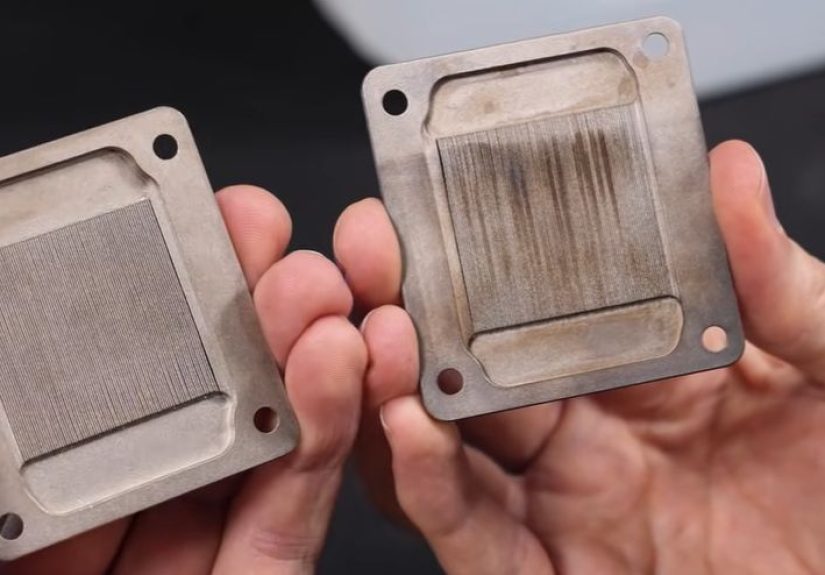
If you suspect corrosion, do not just top off the reservoir and hope for emotional growth. Drain the loop, inspect the blocks, flush the radiator, and replace any visibly damaged parts. If a plated surface is flaking badly or an aluminum part shows heavy pitting, replacement is usually wiser than pretending it will heal itself.
Once corrosion products circulate, they can clog microfins, reduce heat transfer, and wear on pumps. Early cleanup is almost always cheaper than delayed regret.
Common Builder Mistakes That Trigger Corrosion
- Mixing copper and aluminum: the most common and most preventable error
- Assuming decorative metal is safe without checking the coolant path: looks can fool you
- Using tap water: convenient, yes; smart, no
- Skipping radiator flushing: factory residue can contaminate the loop
- Ignoring maintenance for years: clear fluid today does not guarantee clean internals tomorrow
- Combining random parts from different ecosystems without checking material specs: brand mixing is fine, blind mixing is not
Real-World Example Scenarios
Good loop: nickel-plated copper CPU block, copper/brass radiator, brass fittings, acrylic reservoir, clear pre-mix coolant with inhibitors. This is the custom-loop equivalent of eating vegetables and getting eight hours of sleep.
Risky loop: copper CPU block, aluminum radiator, brass fittings, plain distilled water, no inhibitor. This may work for a while, but it is building toward a messy reveal.
Misunderstood loop: nickel-plated copper block with an external aluminum shell that never touches coolant, copper/brass radiator, brass fittings. This is generally fine because the aluminum is cosmetic, not part of the wetted loop.
Experience-Based Lessons From the Bench
In real-world water cooling, preventing galvanic corrosion usually comes down to boring decisions made before the first drop of coolant ever enters the loop. That is the funny part. The expensive disasters often begin with a very cheap shortcut. A builder finds a deal on a radiator, grabs a fitting from a different ecosystem, reuses an older part from another project, or assumes an aluminum accent is “probably just cosmetic.” Then the system runs perfectly for a few weeks or months, which creates false confidence. Temperatures look great. The reservoir glows like a sci-fi prop. Everyone feels brilliant.
Then the clues start. The coolant loses its crystal-clear look. A little haze appears in the tubing. Tiny specks collect in the reservoir. The pump sounds slightly rougher, but only sometimes, so it is easy to ignore. Maybe GPU temperature creeps up by a few degrees, which gets blamed on room temperature, dust, or “summer being rude.” When the loop is finally opened, the builder discovers the truth: the microfins are dirty, the cold plate has residue, and one metal has clearly been losing a chemical fistfight.
Experienced builders usually come away from that kind of teardown with the same three lessons. First, material compatibility matters more than marketing. Fancy branding does not make aluminum and copper become best friends. Second, maintenance is cheaper than replacement. A yearly flush feels annoying right up until you compare it with the price of a ruined block, radiator, or pump. Third, simplicity ages well. Clear coolant, known-good metals, and a clean loop may not be the flashiest choices, but they tend to produce the least drama over time.
Another common experience is discovering that not every scary-looking change is galvanic corrosion. Sometimes the issue is flux residue from a radiator, dye fallout from heavily pigmented coolant, or biological contamination from poor coolant choices. That is why seasoned loop builders inspect parts methodically instead of panic-posting pictures of every speck. They ask smarter questions: Which materials actually touch the coolant? Was the radiator flushed? Has the coolant been in there for two years? Did the loop start clean? Corrosion prevention is as much about diagnosis as it is about prevention.
There is also a practical mindset shift that happens after a few builds. Beginners often focus on peak temperatures and aesthetics. Veterans still care about both, but they also think about serviceability. They add a drain port. They keep records of coolant fill dates. They save spec sheets for blocks and radiators. They avoid mystery parts. They understand that the best water cooling loop is not just cool on day one. It is still clean, stable, and easy to maintain a year later.
That is really the heart of preventing galvanic corrosion in water cooling loops. It is not one magic coolant or one miracle fitting. It is a chain of smart choices: compatible metals, correct coolant, proper cleaning, regular inspection, and zero tolerance for “eh, it will probably be fine.” In custom cooling, “probably” is where chemistry starts laughing.
Conclusion
Preventing galvanic corrosion in water cooling loops is less about heroic troubleshooting and more about disciplined planning. If every coolant-contact surface in your loop belongs to a compatible metal family, your coolant contains the right inhibitors, and you stay on top of flushing and inspections, the odds of corrosion drop dramatically.
The best custom loops are not just high-performing. They are chemically boring. That is a compliment. In a world of pumps, blocks, radiators, and RGB bravado, boring chemistry is beautiful. Keep aluminum out of copper-based loops, use proper coolant, clean your hardware, and maintain the system like you actually want it to live a long life. Your temperatures, your wallet, and your future self holding a toothbrush over a dismantled water block will all be grateful.