Table of Contents >> Show >> Hide
- Why Donald Trump and Narcissism Get Talked About Together
- What Is Narcissism, Really?
- How Commentators Connect Trump and Narcissism
- Inside the PsychCentral Podcast “Donald Trump and Narcissism”
- Narcissism, Politics, and the Voter
- How to Listen to “Trump and Narcissism” Podcasts Without Burning Out
- Extra: What It’s Like to Binge “Donald Trump and Narcissism” Content
- Conclusion: Using the Conversation, Not Being Used by It
Few topics light up a conversation quite like Donald Trump. Add the word
“narcissism,” and suddenly you’ve got a full-blown podcast episode, a lively
group chat, and probably a family argument at Thanksgiving. The
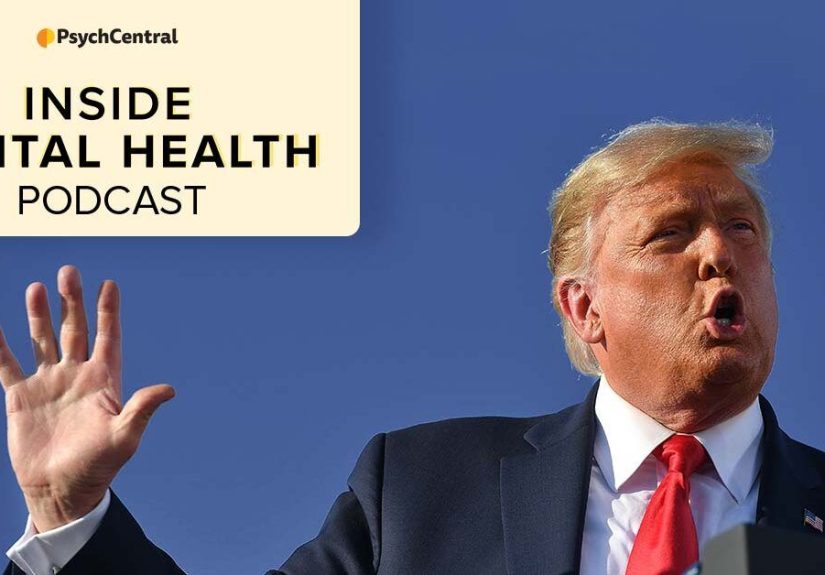
PsychCentral episode “Donald Trump and Narcissism” taps into that cultural
fascination, using Trump as a springboard to talk about what narcissism
actually is, why it shows up so vividly in politics, and how it affects
everyday people who get caught in the blast radius.
This article walks you through the key ideas behind that conversation:
what mental health professionals mean by narcissism, why public figures
like Trump often become lightning rods for diagnostic speculation, and how
to listen to podcasts on this topic without falling into armchair
diagnosis or pure outrage. Think of it as a guide for curious listeners
who want to understand the psychology behind the headlines, not
just react to them.
Why Donald Trump and Narcissism Get Talked About Together
Since Trump first descended the golden escalator in 2015, commentators
have reached for psychological language to explain his public persona:
words like “narcissist,” “grandiose,” “thin-skinned,” and “attention
seeking” show up constantly in headlines and hot takes. His larger-than-life
style, constant self-promotion, and very public feuds make him an obvious
candidate for conversations about narcissistic traits.
The PsychCentral podcast “Donald Trump and Narcissism” leans into this
public curiosity but also slows it down. Instead of just saying “Trump is
a textbook narcissist” and calling it a day, the episode invites a mental
health professional to explain what narcissism actually means, how it
shows up in relationships, and how people can heal after being close to
someone with strong narcissistic traits. Trump becomes a case study for
understanding patterns, not a patient on a therapist’s couch.
Trump as a cultural Rorschach test
One reason Trump and narcissism get paired so often is that he functions
as a kind of psychological Rorschach test. Supporters may see confidence,
strength, and unapologetic self-belief. Critics may see entitlement,
cruelty, and an inability to tolerate criticism. The same behaviors can be
read through completely different lenses, depending on your political
views and personal experiences.
That’s part of what makes podcast episodes on this topic so compelling:
listeners aren’t just analyzing Trump; they’re often, secretly, analyzing
their boss, their ex, or that one friend who somehow turns every story
into a story about themselves.
What Is Narcissism, Really?
Before we talk about Trump, it helps to understand the difference between
everyday narcissism and diagnosable Narcissistic Personality Disorder
(NPD).
Everyday narcissism vs. a personality disorder
A certain amount of narcissism is human and, frankly, useful. Feeling good
about yourself, being proud of your accomplishments, enjoying praise, or
wanting to make a mark on the world all of that can be perfectly
healthy. Many high achievers, entrepreneurs, and performers tilt a little
toward the narcissistic side. You don’t get on a debate stage or start a
billion-dollar company if you secretly think you’re terrible.
Narcissistic Personality Disorder, however, is something more rigid and
destructive. In clinical terms, NPD involves a long-standing pattern of
grandiosity, a strong need for admiration, and a lack of empathy, starting
by early adulthood and showing up across many areas of life. People with
NPD often:
- Exaggerate their achievements or talents.
- Expect to be recognized as superior without doing the work.
- Need constant admiration and become enraged or crushed by criticism.
- Exploit others, consciously or unconsciously, to meet their own needs.
- Struggle to see other people as fully real, with their own inner lives.
Podcasts about Trump and narcissism often use this checklist as a loose
reference point, pointing out the ways public behaviors might overlap with
these traits. But ethically, that’s very different from giving a formal
diagnosis.
The ethics of diagnosing public figures
One important nuance that good podcasts usually emphasize: professional
organizations in psychiatry and psychology discourage mental health
professionals from diagnosing public figures they haven’t personally
evaluated. That’s sometimes called the “Goldwater rule,” and it exists for
a reason. Diagnoses are complex; human beings are even more complex; and
slapping a label on someone from a distance can easily become a political
weapon.
So when you hear a psychologist or psychiatrist on a show talk about Trump
and narcissism, pay attention to how careful they are. Ethical guests tend
to say things like “he appears to show traits consistent with…” or “his
public behavior illustrates patterns that resemble…” rather than “he
definitely has Narcissistic Personality Disorder.” That distinction sounds
small, but it matters.
How Commentators Connect Trump and Narcissism
Over the years, writers, clinicians, and commentators have tried to make
sense of Trump’s personality using psychological concepts. Some emphasize
narcissistic traits, others argue that the conversation has gone too far,
and still others use him as a wider symbol for how narcissism shows up in
modern politics.
“Textbook narcissist” and the pushback
A number of mental health professionals have publicly argued that Trump
displays what they see as extreme or “malignant” narcissism a mix of
grandiosity, aggression, and lack of empathy that can be especially
harmful in leadership roles. Open letters and books have used his
speeches, tweets, and public conflicts as examples of these patterns, and
some podcast episodes lean heavily on their arguments.
At the same time, other experts including some who helped write the
diagnostic manuals clinicians use have warned against turning Trump into
a walking mental health diagnosis. They argue that calling him “mentally
ill” can stigmatize people with psychiatric conditions and distract from
more concrete questions: Is he truthful? Is he accountable? Does he respect
democratic norms? In that view, you don’t need a diagnosis to critique
behavior.
The media’s role: drama vs. understanding
Media coverage tends to reward drama, and “narcissism” makes a great
headline word. It sounds punchy, slightly scandalous, and more scientific
than simply saying “self-centered.” Not surprisingly, many articles and
podcasts use Trump to illustrate the concept of narcissism because he is
so familiar and polarizing.
The best episodes, like the one from PsychCentral, use that attention as
an entry point, then pivot toward education. Instead of lingering on
insults, they:
- Explain how narcissistic traits affect families and relationships.
- Describe common patterns like gaslighting, blame-shifting, and rage.
- Offer strategies for setting boundaries or recovering from emotional harm.
In other words, they take the energy generated by political drama and
recycle it into something more useful: psychological literacy.
Inside the PsychCentral Podcast “Donald Trump and Narcissism”
The PsychCentral episode “Donald Trump and Narcissism” brings on a
clinician who has written about the emotional aftermath of the Trump
years. Rather than just roasting a former president, the conversation digs
into what it’s like to live or work with someone who constantly needs to
be the center of attention and reacts badly to criticism.
Key themes the episode explores
-
Defining narcissism in plain language. The guest breaks
down what narcissistic traits look like day-to-day things like turning
every topic back to themselves, refusing to apologize, and rewriting the
story so they always come out on top. -
Trump as a mirror for family dynamics. Listeners who
grew up with domineering, controlling, or volatile caregivers may
recognize familiar patterns in Trump’s speeches and conflicts. The
episode uses that recognition to talk about how old wounds can be
reopened by public events. -
Healing after exposure to narcissistic behavior. A big
focus is on recovery: how people can process anger and fear, reconnect
with their own values, and step out of the emotional “gravitational
field” of someone whose needs constantly dominate the room.
The tone isn’t “let’s diagnose Trump together” so much as “let’s use this
very public figure to understand a pattern that might be affecting your
life in quieter ways.”
Why these conversations resonate with listeners
Podcasts about Trump and narcissism are popular not just because people
love political gossip, but because many listeners are trying to make sense
of their own experiences. If you’ve ever had a boss who took credit for
your work, a partner who never apologized, or a parent who needed constant
admiration, hearing experts talk through those patterns can feel
validating.
The Trump angle simply makes the psychological material easier to access:
everyone knows who he is; everyone has seen at least a few examples of his
style; everyone has an opinion. That shared reference point allows a
podcast to dig into complex emotional territory without feeling like a
classroom lecture.
Narcissism, Politics, and the Voter
Trump’s rise also raises a bigger question: why do narcissistic traits
sometimes thrive in politics? Researchers who study leadership and
personality note that certain qualities associated with narcissism
confidence, boldness, the ability to grab attention can be assets in
campaigns and media-driven democracies.
Charismatic leaders who project certainty can be deeply appealing in times
of anxiety or rapid change. But those same traits can create problems once
that leader is in power: difficulty accepting limits, a tendency to blame
others, and an obsession with personal loyalty over institutional rules.
Good podcasts acknowledge that narcissism is not unique to one politician
or one party. Instead, they frame it as a recurring risk in any system
where fame, spectacle, and constant attention are rewarded. Trump is a
striking example, but not the only one.
How to Listen to “Trump and Narcissism” Podcasts Without Burning Out
If you’re going to spend an hour listening to people discuss Trump’s
personality, it helps to go in with a few guardrails especially if the
topic brings up painful memories or strong political feelings.
1. Notice what the conversation stirs up in you
Do you feel angry? Vindicated? Exhausted? Sad? Sometimes the emotional
charge isn’t really about Trump at all; it’s about a parent who never
apologized, a partner who minimized your feelings, or a boss who punished
you for setting boundaries. If a podcast hits a nerve, that might be
useful information about where you’re still healing.
2. Separate description from diagnosis
There’s a difference between saying “he often reacts defensively to
criticism” and “he has Narcissistic Personality Disorder.” When listening
to experts, notice which kind of language they use. Describing observable
behavior is generally more reliable and less likely to slide into
speculative name-calling than assigning labels.
3. Take breaks from the outrage cycle
Political psychology content can easily become another form of doomscrolling.
If you notice you’re replaying upsetting clips in your head for hours
afterward, consider limiting how much you consume at once. A podcast
should leave you more informed, not completely wrung out.
4. Look for episodes that offer tools, not just takes
The most helpful shows don’t stop at “wow, that’s narcissistic.” They
offer guidance: how to spot gaslighting, how to set boundaries, how to
support friends or family members tangled up in similar dynamics. If an
episode leaves you feeling powerless, you might want to seek out one that
balances analysis with practical wisdom.
Extra: What It’s Like to Binge “Donald Trump and Narcissism” Content
Imagine you decide to spend a weekend really digging into the topic.
You’re curious, maybe a little anxious, and you queue up the PsychCentral
episode along with a handful of other shows that examine Trump’s public
behavior through a psychological lens.
At first, it’s strangely entertaining. You recognize familiar clips:
speeches, debates, off-the-cuff remarks. Hearing clinicians and journalists
dissect them feels like watching a director’s commentary on a movie you’ve
already seen. You catch details you missed the first time shifts in tone,
ways questions get deflected, how praise is demanded and criticism is
punished.
As the hours go by, the focus quietly shifts from Trump to you. One expert
describes the way narcissistic people rewrite history to put themselves in
the best light, and you flash back to an argument where your feelings were
dismissed as “crazy” or “overreacting.” Another explains how people around
a narcissistic leader start doubting their own perception of reality, and
suddenly you’re thinking about a past relationship or workplace where you
felt the same way.
By Sunday afternoon, you realize you’ve been on a very personal journey,
even though the topic was supposedly about a former president. The
podcasts have given you language “gaslighting,” “grandiosity,” “rage,”
“idealize and devalue” that helps make sense of situations you once
struggled to describe. You feel a mix of relief (“So it wasn’t just me”)
and sadness (“I stayed in that dynamic for a long time”).
Of course, there’s also a point where it all becomes too much. You notice
that your shoulders are tense, your jaw is clenched, and you’ve spent
three days steeped in stories about cruel remarks, broken norms, and
emotional fallout. That’s usually when you realize that understanding
narcissism is important but so is stepping away from it.
Maybe you close the podcast app, go for a walk, or text a friend about
something totally unrelated to politics. You might even decide to bring a
few of the insights to therapy, not as fuel for another argument about
Trump, but as a way to explore your own boundaries, self-worth, and
relationships.
That’s the paradox of “Donald Trump and Narcissism” content: at its best,
it isn’t really about Trump at all. It’s about the people listening how
they’ve been affected by narcissistic dynamics, how they can protect
themselves in the future, and how they can stay informed without being
consumed by someone else’s need for attention.
Conclusion: Using the Conversation, Not Being Used by It
The PsychCentral podcast “Donald Trump and Narcissism” and similar
episodes offer a powerful opportunity: to take something loud and divisive
in our politics and turn it into a deeper understanding of human
psychology. When they’re done well, these conversations:
- Clarify what narcissism actually is and what it isn’t.
- Highlight the ethical limits of diagnosing public figures from afar.
- Show how public behavior can echo private, often painful, experiences.
- Offer tools for healing, boundary setting, and emotional resilience.
You don’t have to agree with every expert or every interpretation. You
don’t have to turn your living room into a miniature psychological
newsroom. But if you listen thoughtfully, stay curious, and pay attention
to what’s happening inside you while you listen, the topic of
“Donald Trump and narcissism” can become less of a shouting match and more
of a mirror one that helps you understand power, personality, and your
own emotional landscape a little better.