Table of Contents >> Show >> Hide
- What Is Pieca?
- Why the Lenses Matter So Much
- The Raspberry Pi HQ Camera at the Heart of Pieca
- Design: Chunky, Charming, and Maker-Friendly
- Why Pieca Appeals to Photographers
- Why Pieca Appeals to Makers
- Pieca vs. a Regular Digital Camera
- Image Quality: Not Perfect, But Full of Character
- Software Is the Secret Ingredient
- The Real Lesson of Pieca
- Experience Notes: Living With a Pieca-Style Camera
- Conclusion: A Raspberry Pi Camera With a Photographer’s Heart
- SEO Tags
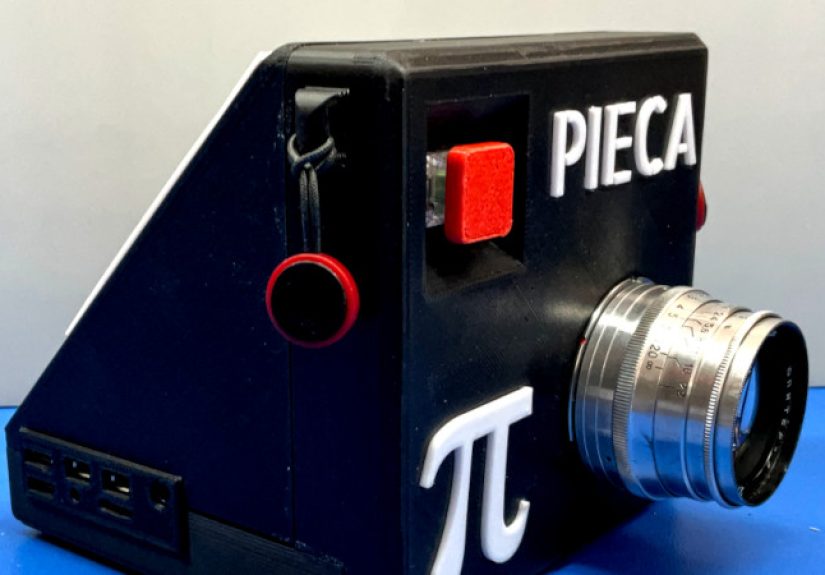
Some DIY camera projects look like they escaped from a science fair. Pieca looks like it escaped from a boutique camera shop, stopped by a 3D printer, and came back wearing a Raspberry Pi badge with confidence. It is a homemade digital camera built around a Raspberry Pi 4, the Raspberry Pi High Quality Camera module, a five-inch touchscreen, and one very charming idea: what if a tiny single-board computer could enjoy the elegance of Leica M-mount lenses?
That idea is exactly what makes Pieca fascinating. It is not just another Raspberry Pi camera project with a lens stuck on the front like a robot eye. It is a deliberate blend of maker culture, manual photography, 3D printing, and lens obsession. The result is chunky, clever, imperfect, and surprisingly stylishthe kind of camera that makes photographers ask technical questions and makers ask, “Can I print that by Saturday?”
What Is Pieca?
Pieca is a DIY Raspberry Pi camera system created by Tom Schucker of Tea and Tech Time. The name is a playful mashup of “Pi” and “Leica,” and yes, the pun is doing real work here. The camera uses a Raspberry Pi 4 as its computing brain, the Raspberry Pi High Quality Camera module as its image sensor, and a custom 3D-printed body that supports Leica M-mount lenses.
That last part is the headline. Most Raspberry Pi camera projects live in the world of tiny board cameras, C-mount lenses, CS-mount lenses, surveillance optics, or compact modules. Pieca wanders into a different neighborhood: manual rangefinder-style lenses from Leica, 7Artisans, TTArtisan, and other M-mount or adaptable lens makers. In other words, it gives the Raspberry Pi a front-row seat at the “nice glass” table.
The build includes a five-inch touchscreen for live view and manual controls, making it feel more like a self-contained digital camera than a bare electronics experiment. It is still very much a maker project, but it has a photographic soul. If a Raspberry Pi camera module is usually a tiny webcam wearing a backpack, Pieca is that same module after discovering street photography and espresso.
Why the Lenses Matter So Much
In photography, the lens is not just an accessory. It is the personality department. Sensors capture the light, but lenses decide how that light walks into the room. A sharp modern lens can feel clean and clinical. A vintage lens can add softness, flare, swirl, glow, or contrast that makes images feel more emotional. Pieca is interesting because it invites those lens personalities into the Raspberry Pi ecosystem.
The Raspberry Pi High Quality Camera already supports interchangeable lenses through C and CS mounts. That was a big leap beyond the earlier fixed-lens Pi camera modules. But Pieca goes further by adapting the camera body around the Leica M-mount concept. M-mount lenses are famous for being compact, mechanically satisfying, and optically expressive. They are also, in many cases, expensive enough to make your wallet whisper, “Please don’t.”
Fortunately, the M-mount world is not limited to legendary Leica glass. Third-party manual lenses from brands such as 7Artisans and TTArtisan have made the mount more accessible to experimental photographers. Pieca benefits from that ecosystem. It becomes less about creating a cheap Leica substitute and more about building a small, hackable camera that can accept serious manual lenses.
The Crop Factor Reality Check
There is one important technical detail: the Raspberry Pi HQ Camera sensor is much smaller than a full-frame 35mm sensor. That means lenses behave differently in terms of field of view. A 35mm lens on a small sensor will not look like a 35mm lens on a full-frame Leica. It becomes tighter, more like a telephoto framing experience. That is not bad, but it changes how you shoot.
This is where Pieca becomes both fun and slightly mischievous. A wide-angle M-mount lens may become more like a normal or short telephoto field of view. Street photography gets tighter. Portraits become easier. Wide landscapes become harder unless you use a very wide lens. The camera teaches you very quickly that “lens math” is not optional; it is the tiny goblin living inside every camera system.
The Raspberry Pi HQ Camera at the Heart of Pieca
Pieca is built around the Raspberry Pi High Quality Camera module, which uses a 12.3-megapixel Sony IMX477 sensor with a 7.9mm diagonal image size and a back-illuminated design. Compared with the earlier Raspberry Pi camera modules, the HQ Camera was a major upgrade because it made interchangeable lenses a practical part of Pi photography.
That matters because a camera is not only about resolution. A 12.3-megapixel sensor can produce useful, attractive images when paired with good optics, careful exposure, and stable handling. The HQ Camera also offers adjustable back focus, which is essential when experimenting with different lens systems and adapters. If the sensor-to-lens distance is wrong, focus can become a tragic comedy. Pieca’s entire concept depends on getting that optical geometry close enough to make the M-mount lenses usable.
Unlike mainstream digital cameras from Canon, Sony, Nikon, Fujifilm, or Leica, a Raspberry Pi camera is also a computer. That means Pieca can be changed at the software level. Want exposure bracketing? Add it. Want time-lapse controls? Add them. Want a weird interface that makes a shutter sound like a toaster achieving enlightenment? Technically possible, though perhaps not recommended for weddings.
Design: Chunky, Charming, and Maker-Friendly
Pieca does not pretend to be a pocketable luxury camera. It is chunky, partly because a Raspberry Pi 4 is not as tiny as a Pi Zero and partly because the camera body must hold a touchscreen, camera module, mount, wiring, and structural support. But the chunky shape gives it character. It looks less like a mass-produced gadget and more like a camera from an alternate universe where engineers replaced marketing departments.
The 3D-printed enclosure draws inspiration from classic camera shapes, including the wedge-like feel of instant cameras and the familiar black, white, and red color language associated with Leica-inspired design. It is playful without being sloppy. The front face emphasizes the lens mount, which is exactly where attention belongs. After all, when you attach a handsome manual lens to a Pi camera, it deserves to be the star of the show.
The touchscreen gives Pieca a modern workflow. Instead of relying only on terminal commands or remote access, the user can compose with live view and adjust settings directly. That is a major usability improvement for a DIY camera. A camera that requires a laptop every time you want to take a photo is less “creative tool” and more “portable homework assignment.” Pieca avoids that trap.
Why Pieca Appeals to Photographers
Photographers are often divided into two tribes: those who want perfect convenience and those who enjoy a little suffering if it comes with creative control. Pieca is for the second group. It offers manual focus, lens experimentation, and a slower shooting rhythm. You do not spray 400 frames and hope one works. You compose, focus, adjust, and shoot with intention.
That slower approach is not a weakness. It is part of the appeal. Manual lenses force you to look carefully. A small sensor changes the way familiar focal lengths behave. The touchscreen makes you aware of exposure. The homemade body reminds you that photography is not only about megapixels and autofocus points. Sometimes it is about building a tool that makes you curious again.
Pieca also gives photographers a new way to use old or affordable manual glass. Many vintage lenses have distinctive rendering that modern computational photography tends to smooth away. On Pieca, those lenses can produce images with unusual compression, contrast, and character. The result may not be technically perfect, but it can be visually memorable. In a world full of ultra-sharp smartphone photos, a little optical weirdness can feel refreshingly human.
Why Pieca Appeals to Makers
For makers, Pieca is exciting because it combines several satisfying disciplines: 3D printing, Raspberry Pi hardware, camera software, mechanical design, and photography. It is not just “plug in a camera and take a picture.” It asks you to think about body ergonomics, lens alignment, sensor distance, heat, power, controls, software, and physical durability.
A project like Pieca also encourages modification. Someone might redesign the grip. Another builder might change the battery system. Someone else might add a viewfinder, a different screen angle, a better shutter button, or a more compact body using newer Raspberry Pi hardware. This is the real beauty of open maker-style design: the first version is not the final answer. It is an invitation.
The Raspberry Pi camera ecosystem has grown significantly over the years. Today, builders can choose from the HQ Camera, Camera Module 3 with autofocus and HDR, Global Shutter Camera for motion-sensitive use cases, and AI Camera hardware for edge vision projects. Pieca belongs to the artistic side of that ecosystem. It is less about machine vision and more about making images with personality.
Pieca vs. a Regular Digital Camera
Let’s be honest: Pieca will not replace a modern mirrorless camera for most photographers. A regular digital camera offers better autofocus, better battery life, better image processing, better ergonomics, faster shooting, cleaner high-ISO performance, and fewer moments where you wonder whether a ribbon cable has betrayed you.
But that comparison misses the point. Pieca is not trying to be a Sony Alpha, Fujifilm X-series, Canon EOS R, or Leica M. It is a creative experiment. It is a camera for people who enjoy understanding how tools work. It rewards curiosity more than convenience. It turns photography into a conversation between optics, code, plastic, screws, and patience.
That makes it valuable in a different way. A commercial camera hides complexity so you can focus on shooting. Pieca exposes some of that complexity so you can learn from it. It is the difference between ordering a perfect pizza and building a backyard oven. One is easier. The other makes you talk about heat distribution at parties until people slowly back away.
Image Quality: Not Perfect, But Full of Character
Image quality from a Pieca-style camera depends heavily on the lens, lighting, sensor settings, and software processing. The Raspberry Pi HQ Camera’s 12.3-megapixel sensor is capable, but it is not a full-frame sensor. Dynamic range, noise performance, and shallow depth of field will not match high-end dedicated cameras. Still, that does not mean the images are boring.
Good lenses can bring sharpness, contrast, and tonal character. Manual exposure can preserve highlights. RAW capture workflows can improve editing flexibility. A stable body and careful focus can produce surprisingly polished photos. The combination of a small sensor and premium manual optics creates a look that is different from both smartphones and traditional mirrorless cameras.
In practical use, Pieca seems best suited for deliberate photography: still life, portraits, detail shots, controlled street scenes, product-style images, and experimental projects. It is not the first camera you grab for fast sports or unpredictable wildlife. But if your subject can wait half a second while you focus manually, Pieca can reward you with images that feel crafted rather than merely captured.
Software Is the Secret Ingredient
The hardware gets attention because lenses are glamorous. Software, meanwhile, sits quietly in the corner doing the dishes. But for Pieca, software is crucial. Raspberry Pi camera tools allow users to capture stills and video, adjust exposure, control image settings, and build custom workflows. Pieca’s own camera software adds a more user-friendly interface for touchscreen operation and expands practical features such as exposure bracketing and time-lapse shooting.
This is where a Pi-based camera becomes more than a novelty. A normal camera gives you the features the manufacturer decided to include. A Raspberry Pi camera can be rewritten. That means a photographer-programmer could create custom presets, interval shooting modes, focus aids, file naming systems, or even experimental computational photography tools.
Imagine a Pieca variant designed for black-and-white street photography with a simplified interface. Or a version that automatically shoots bracketed exposures for high-contrast scenes. Or a studio version that sends images directly to a local server. With a commercial camera, these ideas often require workarounds. With a Pi camera, they become weekend projectspossibly long weekends, but still weekends.
The Real Lesson of Pieca
Pieca is not important because everyone should build one. It is important because it shows what happens when photography becomes open-ended again. Modern cameras are extraordinary, but they can feel sealed, polished, and finished. Pieca feels unfinished in the best way. It says, “Here is a camera. Now what do you want it to become?”
That spirit is why Raspberry Pi projects remain so beloved. They turn technology into clay. A camera does not have to be a sealed black box. It can be a platform. It can be customized, repaired, expanded, and reimagined. Pieca proves that even a niche ideaputting elegant manual lenses on a Raspberry Pi cameracan become a delightful object when the design is thoughtful.
It also reminds us that photography is not only about chasing perfection. Sometimes the best camera is not the one with the highest score on a lab chart. Sometimes it is the one that makes you smile before you even press the shutter.
Experience Notes: Living With a Pieca-Style Camera
Spending time with a camera like Pieca would likely feel very different from using a phone or modern mirrorless body. The first lesson is patience. You do not simply tap a screen and let artificial intelligence rescue the scene. You think about focus. You think about exposure. You think about whether your lens choice makes sense on a small sensor. Then you take the picture and discover that the process itself was half the fun.
The second lesson is that ergonomics matter more than spec sheets suggest. A 3D-printed camera body can be charming, but comfort depends on small design choices: where your thumb rests, how easy it is to reach the shutter, whether the screen is visible outdoors, and how balanced the camera feels with a metal lens mounted on the front. A compact M-mount lens would probably feel wonderful. A heavier adapted lens might turn the camera into a front-heavy little brick with artistic ambitions.
Power management would also become part of the experience. A Raspberry Pi 4 needs more energy than a simple camera module, so battery planning matters. For casual shooting, an external USB power bank might work, but it changes the handling. A clean internal battery design would make the camera feel more complete. This is one of those maker problems that sounds boring until you are outside, the light is perfect, and your camera decides it would rather take a nap.
Focusing manual lenses through a touchscreen could be satisfying, especially for still subjects. Focus peaking or magnified live view would make the experience much better. Without those aids, critical focus can be challenging, particularly with faster lenses. Still, the slower pace can be creatively useful. It encourages you to previsualize the shot. Instead of collecting hundreds of almost-identical frames, you may come home with fewer images that feel more intentional.
Lens choice would shape the entire personality of the camera. A small 28mm or 35mm M-mount lens might become a tight everyday option because of the crop factor. A 50mm lens could become a portrait or detail lens. Wider lenses would be especially valuable if you want environmental scenes. This makes Pieca a great teaching tool because it turns abstract camera concepts into real decisions. Field of view, sensor size, flange distance, aperture, and focus are no longer textbook terms. They are things you feel while using the camera.
Editing the files would be another enjoyable step. Images from a Pi-based camera may need more attention than photos from a polished consumer camera. Color, contrast, noise, and sharpness might require careful adjustment. But that is not necessarily a downside. Many photographers enjoy a workflow where the final image feels handmade. Pieca fits that mindset perfectly. It is not a convenience machine; it is a creative instrument.
The most memorable experience would probably be social. Pull out Pieca in public and someone will ask about it. It looks unusual enough to start conversations. Photographers may recognize the lens mount. Engineers may notice the Raspberry Pi DNA. Curious strangers may simply ask why your camera looks like a tiny science project with expensive taste. That is part of its magic. Pieca is not invisible technology. It proudly shows its weirdness.
In the end, using a Pieca-style camera would likely be less efficient than using a normal camera and far more educational. It would make mistakes visible. It would make successes feel earned. It would turn every photo walk into a small experiment. And sometimes, that is exactly what creative people need: not another flawless device, but a tool that invites play, tinkering, and a little optical chaos.
Conclusion: A Raspberry Pi Camera With a Photographer’s Heart
Pieca is a wonderful reminder that cameras do not have to be predictable. By combining a Raspberry Pi 4, the Raspberry Pi High Quality Camera module, a touchscreen interface, a 3D-printed body, and Leica M-mount lens compatibility, it creates something that feels both nerdy and romantic. It is part computer, part camera, part lens playground, and part love letter to manual photography.
For photographers, Pieca offers a fresh way to think about lenses and image-making. For makers, it is a rich project full of mechanical, optical, and software challenges. For everyone else, it is proof that a tiny computer can become a surprisingly charismatic camera when paired with imagination and some very nice lenses.
No, Pieca is not the most practical camera in the world. That is not the point. It is the kind of project that makes technology feel personal again. It turns the Raspberry Pi from a board on a desk into a creative companion. And if that companion happens to wear a beautiful manual lens on the front, well, nobody should complain.