Table of Contents >> Show >> Hide
- Why Fear Makes Such Great Comic Material
- The Rise of “Deep Dark Fears” and Reader-Submitted Nightmares
- What These Comics Reveal About Human Anxiety
- Why Dark Humor Makes Fear Easier to Discuss
- Common Themes in Deepest and Darkest Fear Comics
- Why Readers Love Seeing Their Fears Illustrated
- How Artists Turn Fear Into Strong Visual Storytelling
- Why These Comics Work So Well Online
- Experiences Related to People’s Deepest And Darkest Fears Turned Into Comics
- Conclusion
Everyone has a fear that sounds ridiculous until it crawls into the room at 2:17 a.m. Maybe you worry that something is hiding behind the shower curtain. Maybe you imagine your phone camera watching you back. Maybe you cannot look at an escalator without briefly picturing yourself becoming a very unfortunate pasta noodle. Welcome to the strange, funny, and surprisingly comforting world of people’s deepest and darkest fears turned into comics.
Fear is not always a dramatic thunderclap. Sometimes it is a tiny thought wearing tap shoes inside your brain. That is what makes fear comics so fascinating: they take private anxietiesirrational fears, childhood nightmares, phobias, urban legends, awkward what-ifsand turn them into short, visual stories. Instead of hiding fear in the basement, comics invite it upstairs, give it a speech bubble, and make it just weird enough to laugh at.
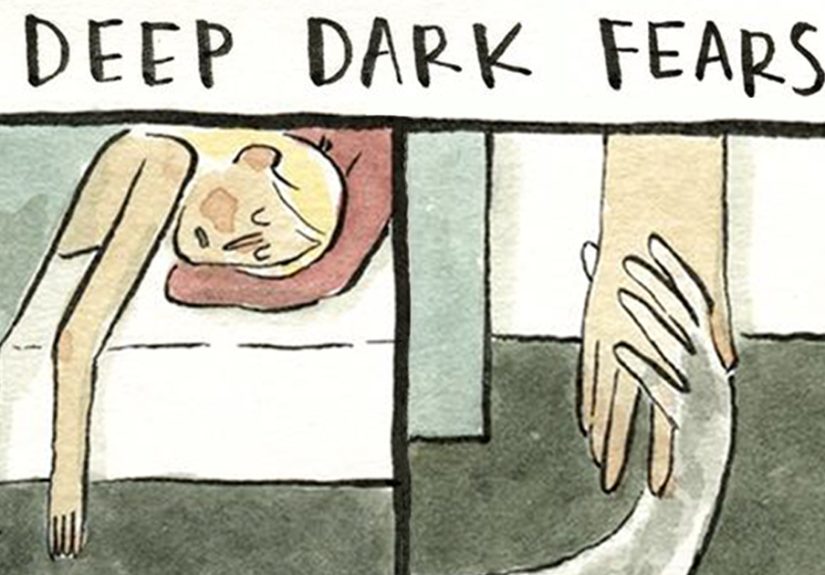
One of the best-known examples is Fran Krause’s Deep Dark Fears, a webcomic project built around real fears submitted by readers. The concept is wonderfully simple: people confess the odd things that haunt them, and Krause transforms those fears into brief, colorful, often darkly funny comic strips. The result is a gallery of human imagination at its most nervous and creative. It is creepy, yes, but also strangely wholesomelike a support group held inside a haunted house with excellent watercolor lighting.
Why Fear Makes Such Great Comic Material
Fear is visual by nature. When we are scared, the mind does not usually produce a neat paragraph. It produces an image: a shadow under the bed, a face in the window, a dark hallway, a spider with the confidence of a landlord. Comics are built for that kind of mental flash. A single panel can capture the moment before panic. A sequence of panels can stretch a harmless situation until it becomes hilariously unbearable.
Unlike film, comics let readers control the pace. You decide how long to stare at the creepy panel. You decide whether to rush ahead or linger on the joke. That makes fear comics uniquely personal. They can be spooky without overwhelming the reader, funny without dismissing the emotion, and intimate without becoming heavy-handed.
The Power of Small, Specific Fears
Big fearsdeath, isolation, pain, lossare universal. But small fears are where personality lives. Someone may fear that a doll moves when nobody is watching. Someone else may fear that a childhood stuffed animal feels betrayed after being donated. Another person may worry that a mirror is not reflecting reality but politely pretending to. These fears may not be logical, but they are memorable because they feel emotionally true.
That is why “deep dark fears comics” are so shareable. They make readers say, “Wait, I thought I was the only one.” The comedy comes from recognition. The horror comes from the fact that the fear was already living rent-free in someone’s head.
The Rise of “Deep Dark Fears” and Reader-Submitted Nightmares
Fran Krause’s Deep Dark Fears began as an online project where irrational fears could become illustrated stories. Rather than focusing on traditional monsters, the series highlights the monsters people invent for themselves: escalators, mirrors, dark water, public transportation, pets with secret knowledge, and all the household objects that become suspicious after midnight.
The project works because it treats fear as both serious and absurd. A fear may be impossible, but the feeling attached to it is real. A reader might understand that a subway turnstile is not waiting to slice them into ribbons, yet still feel a tiny spark of alarm walking through one. Fear comics do not need to prove that the fear is rational. They only need to show why it feels vivid.
Krause’s style often uses gentle colors, sketchy textures, and calm pacing, which makes the creepy ideas even better. The art does not scream. It whispers. Then it points at something ordinary and says, “Have you considered that this might be terrible?” That quiet delivery is part of the charm. The comics do not chase readers down a hallway; they quietly rearrange the furniture in the hallway until readers notice the door is open.
What These Comics Reveal About Human Anxiety
Fear is a survival tool, but it is not always a precise one. The brain is designed to detect threats quickly, not to write a balanced legal brief about them. That is useful when danger is real. It is less useful when the “danger” is a coat hanging on a chair that looks like a person who has strong opinions about your sleep schedule.
Specific phobias and intense anxieties often involve fear that is greater than the actual danger. Many people know their fear is exaggerated, but that knowledge does not automatically turn down the emotional volume. This gap between logic and feeling is exactly where fear comics thrive. They show the mismatch: the ordinary object and the extraordinary panic it creates.
Fear Turns Ordinary Places Into Horror Sets
A bathroom becomes suspicious because of the mirror. A swimming pool becomes terrifying because of imagined depth. A bedroom becomes dangerous because the closet door is slightly open. Comics can exaggerate these familiar spaces without needing expensive special effects. A few lines, a pause, and one perfectly placed shadow can turn a toaster into a villain with crumbs.
This is also why fear comics appeal beyond horror fans. They are not always about gore or shock. Often, they are about the tiny mental stories people carry around. The fear of being forgotten. The fear of being watched. The fear that technology knows too much. The fear that childhood objects had feelings all along. These are not just jump scares; they are emotional miniatures.
Why Dark Humor Makes Fear Easier to Discuss
Humor gives fear a handle. Without humor, a confession like “I am afraid my reflection might move after I walk away” can feel too vulnerable. With humor, it becomes a comic panel, and suddenly the reader can approach it safely. The joke does not erase the fear; it makes room around it.
Dark humor also helps people admit how imaginative anxiety can be. The brain is a gifted screenwriter, but it has terrible boundaries. It can turn a creaking floorboard into a full-budget supernatural thriller. Comics let us admire that creativity while gently roasting it. The fear becomes less like a secret shame and more like a strange postcard from the subconscious.
Laughing Without Mocking
The best fear comics do not mock people for being afraid. They mock the bizarre shapes fear can take. That distinction matters. A comic about someone fearing monsters under the bed is not saying the person is foolish. It is saying the human mind is capable of building an entire monster-management department under a mattress.
This compassionate humor is why readers often feel seen rather than judged. A good fear comic says, “Yes, that thought is strange. Also, welcome to the club. We meet on Thursdays and avoid basements.”
Common Themes in Deepest and Darkest Fear Comics
Although every submitted fear is personal, many fall into recognizable categories. These themes show up repeatedly because they tap into shared human concerns.
1. Fear of the Body Betraying You
Some fears involve eyes, teeth, bones, breathing, blinking, or the unsettling awareness that we are all piloting complicated meat vehicles with limited customer support. Comics can make these fears vivid by zooming in on small bodily details. A blink becomes a cosmic event. A nose becomes a tunnel of doom. A heartbeat becomes a drum solo nobody requested.
2. Fear of Hidden Things
Closets, drains, dark corners, deep water, and closed doors are classic fear machines. They work because they contain uncertainty. The viewer cannot see what is inside, so imagination helpfully provides twenty terrible options. Comics are perfect for this because the space outside the panel can feel just as threatening as the space inside it.
3. Fear of Being Watched
Modern life gives this fear plenty of material. Cameras, smart devices, social media, and glowing screens can all become symbols of surveillance. In comic form, a laptop camera can become an eye, a phone can become a witness, and a harmless notification can feel like a tiny ghost tapping on the glass.
4. Fear of Death and Disappearance
Many dark fear comics circle around mortality, memory, and vanishing. These are heavier themes, but comics can approach them through strange metaphors: a person erased from photos, a pet remembering secrets, a shadow becoming more permanent than its owner. The format allows big existential dread to fit inside a small, readable frame.
5. Fear of Childhood Objects
Dolls, stuffed animals, toys, puppets, and old photographs are powerful because they are supposed to be comforting. When comics turn them eerie, the effect is deliciously wrong. A teddy bear with feelings is cute until you remember how many years it spent facing the wall.
Why Readers Love Seeing Their Fears Illustrated
There is a special relief in seeing a private fear turned into art. It proves the fear is not unspeakable. It can be drawn. It can be framed. It can even be funny. For many readers, that transformation is the real magic of fear comics.
When a fear becomes a comic, it stops being a foggy sensation and becomes a story with edges. The monster has a shape. The anxiety has a beginning and an end. Even if the fear remains, it feels less infinite. A comic strip is a container, and some fears become easier to hold once they have borders.
This does not mean comics are a substitute for mental health care. Severe anxiety, phobias, panic, and trauma deserve professional support. But as a form of expression, fear comics can help people name strange emotions, share them safely, and recognize that their inner world is not as isolated as it sometimes feels.
How Artists Turn Fear Into Strong Visual Storytelling
Creating a memorable fear comic is not just about drawing something scary. The best strips use timing, contrast, and restraint. They often begin with an ordinary setup: walking home, brushing teeth, sitting on a train, looking into a pond. Then the comic introduces one unsettling thought. The fear does not need a complicated explanation. It only needs a tiny crack in normal life.
Panel Timing Creates Tension
A pause can be funnier and scarier than a monster. Comics can stretch a moment across several panels: a character hears a noise, turns slowly, sees nothing, relaxes, and then notices the one detail that changes everything. That structure mimics how anxiety works. The mind scans, reassures itself, then immediately files an appeal.
Color Can Soften or Sharpen the Fear
Bright, gentle color can make a dark idea more unsettling because it creates contrast. A sweet-looking drawing about a disturbing thought feels like finding a haunted note written in bubble letters. On the other hand, limited color and heavy shadows can push a comic toward traditional horror. Both approaches work, depending on whether the artist wants the reader to laugh, shiver, or do both at once.
Specific Details Make Irrational Fears Believable
The more specific the fear, the stronger the comic. “I am afraid of the ocean” is broad. “I am afraid that if I swim too far, the ocean will quietly decide I belong to it now” is a comic waiting to happen. Specificity gives fear texture, and texture gives readers something to remember.
Why These Comics Work So Well Online
Fear comics are built for internet culture. They are short, visual, emotionally direct, and easy to share. A reader can understand the premise in seconds, tag a friend, and say, “This is you,” which is one of the internet’s highest forms of affection and mild accusation.
They also invite participation. Reader submissions turn the project into a community archive of strange anxieties. Instead of one artist inventing every fear, the audience becomes part of the storytelling engine. That collaborative quality makes the comics feel alive. The next fear could come from anyone: a librarian, a dentist, a teenager, a parent, or a person who has never trusted mannequins and frankly has a point.
Experiences Related to People’s Deepest And Darkest Fears Turned Into Comics
Reading fear comics often feels like opening a diary that belongs to everyone. One reader might arrive for the spooky artwork and stay because a panel reminds them of something they never knew how to explain. Maybe they once sprinted up the basement stairs because the darkness behind them felt too large. Maybe they avoided looking out a window at night because a black pane of glass can become a mirror with bad intentions. When those experiences appear in comic form, they become easier to admit.
Many people have a childhood fear that never fully leaves; it simply learns to wear adult clothes. A child fears monsters under the bed. An adult knows there are no monsters, but still prefers not to let one foot hang over the edge. A child worries that toys come alive. An adult donates an old stuffed animal and feels a tiny pinch of guilt, as if the bear might write a disappointed memoir. These experiences are funny because they are irrational, but they are touching because they reveal how memory and imagination stay with us.
Fear comics also create a sense of social connection. Imagine someone reading a comic about being afraid that a mirror reflection might lag half a second behind. That reader laughs, then pauses, then thinks, “Hold on. I have checked that before.” The comic turns embarrassment into recognition. Suddenly the fear is not a private glitch; it is part of the strange software of being human.
Another common experience is the comfort of controlled fear. People enjoy haunted houses, scary movies, eerie podcasts, and creepy comics because the fear comes with boundaries. You can close the book. You can scroll away. You can turn on a lamp and pretend the lamp has solved every spiritual and architectural problem in the room. Fear comics offer that same safe distance. They let readers approach dark ideas without being trapped inside them.
For artists and writers, turning fears into comics can be surprisingly freeing. A fear that feels overwhelming in the mind may become manageable when broken into panels. First panel: the normal world. Second panel: the strange thought. Third panel: the emotional punchline. That structure gives anxiety a shape. It also gives the creator control. Instead of being chased by the fear, the artist directs it, casts it, lights it, and decides whether it gets a dramatic entrance or a silly hat.
For readers, the most memorable fear comics are often not the loudest or bloodiest. They are the ones that understand the quiet absurdity of dread. They know that a coat on a chair can become a figure in the dark. They know that silence in a house can feel crowded. They know that the human brain, left unsupervised, will invent a ghost, give it a backstory, and then ask why you cannot sleep. That honesty is what makes people’s deepest and darkest fears turned into comics so enduring: they make fear visible, shareable, and just funny enough to survive.
Conclusion
People’s Deepest And Darkest Fears Turned Into Comics is more than a catchy title. It describes a creative phenomenon that blends horror, humor, psychology, and community storytelling. Projects like Deep Dark Fears show that irrational fears are not always things to hide. Sometimes they are raw material for art. Sometimes they are invitations to laugh at the brain’s dramatic little theater. And sometimes, when drawn with empathy, they remind us that the weirdest fear in the room may be shared by more people than we think.
Fear comics work because they respect the emotion while enjoying the absurdity. They show that the mind can turn mirrors, escalators, toys, shadows, pets, technology, and deep water into tiny horror stories. But they also show that once a fear becomes a comic, it becomes less lonely. It has a frame, a punchline, a color palette, and an audience nodding in recognition.
Note: This article is written for web publication in original American English, based on synthesized research about fear comics, visual storytelling, reader-submitted comic projects, phobias, anxiety, and the psychology of creepiness.