Table of Contents >> Show >> Hide
- Why Stair Design Matters More Than People Think
- 10 Stair Ideas That Instantly Lift the Whole House
- 1. Start With a Statement Railing
- 2. Add a Stair Runner With Actual Personality
- 3. Use Paint and Stain to Create Contrast
- 4. Make Open or Floating Stairs Work for Modern Spaces
- 5. Treat the Risers Like Design Real Estate
- 6. Do Something Useful Under the Stairs
- 7. Give the Landing a Job
- 8. Let Lighting Do Some of the Decorating
- 9. Keep the Stair Style in Conversation With the House
- 10. Never Ignore Proportion, Comfort, and Safety
- Staircase Makeover Mistakes to Avoid
- How to Choose the Right Stair Refresh for Your Budget
- Conclusion
- Real-Life Experiences With Stair Inspiration: What Homeowners Actually Notice
Stairs are the overachievers of the home. They move people, frame first impressions, collect sunlight, and somehow still get treated like the hallway’s quieter cousin. That is a decorating crime. A good staircase does more than connect one floor to another. It sets the mood, sharpens the architecture, and gives your home a built-in chance to say, “Yes, I do have excellent taste, thanks for noticing.”
If you are looking for more stair inspiration, the smartest ideas right now balance style and function. The best staircases feel intentional from top to bottom: the railing suits the house, the runner makes practical sense, the landing is not wasted, and the whole setup feels polished instead of pieced together during a weekend panic. Whether your home is classic, coastal, modern, farmhouse, or somewhere in the glorious middle, there are plenty of ways to make your staircase look elevated without turning it into a museum exhibit nobody is allowed to touch.
Why Stair Design Matters More Than People Think
A staircase is one of the few architectural features that is almost always in motion. Your eye follows it up, down, and across the room. That means every choice matters: tread finish, railing profile, runner texture, wall treatment, lighting, and even what happens underneath the stairs. When all of those pieces work together, the staircase becomes a focal point. When they do not, it becomes visual background noise with a side of squeaking.
That is why current staircase design trends lean toward thoughtful layers rather than one dramatic gimmick. Designers are favoring warm woods, mixed materials, simple but sculptural railings, runners with subtle pattern, and stairwells that pull their weight with storage or display space. In other words, the staircase is no longer just a route. It is part of the room story.
10 Stair Ideas That Instantly Lift the Whole House
1. Start With a Statement Railing
If your stairs feel bland, the railing is often the missing ingredient. A railing can completely shift the personality of the staircase, even when the treads stay exactly the same. Black metal spindles with wood handrails create a crisp, timeless look. Full wood rail systems feel warm and classic. Glass railings look airy and modern. Cable rails bring in a sleek, architectural edge without shouting about it.
The trick is matching the railing style to your home instead of chasing a trend that looks amazing online and mildly confused in your foyer. A traditional home usually benefits from cleaner updated balusters rather than ultra-minimal glass. A modern home can handle floating treads and lighter visual barriers. The goal is cohesion, not a design identity crisis.
2. Add a Stair Runner With Actual Personality
Stair runners are doing a lot of heavy lifting these days, and frankly, they deserve applause. They soften sound, improve traction, protect the treads, and add color, pattern, and texture in one move. A runner can take a plain staircase from “builder basic” to “someone here knows what they are doing.”
Natural fibers like wool and sisal remain strong choices because they are durable and classic. If your home needs warmth, a textured neutral runner works beautifully. If the staircase feels forgettable, a striped runner, geometric pattern, or colored border can provide rhythm and movement. The best runners highlight the architecture rather than swallow it. Think tailored, not wall-to-wall carpet in disguise.
3. Use Paint and Stain to Create Contrast
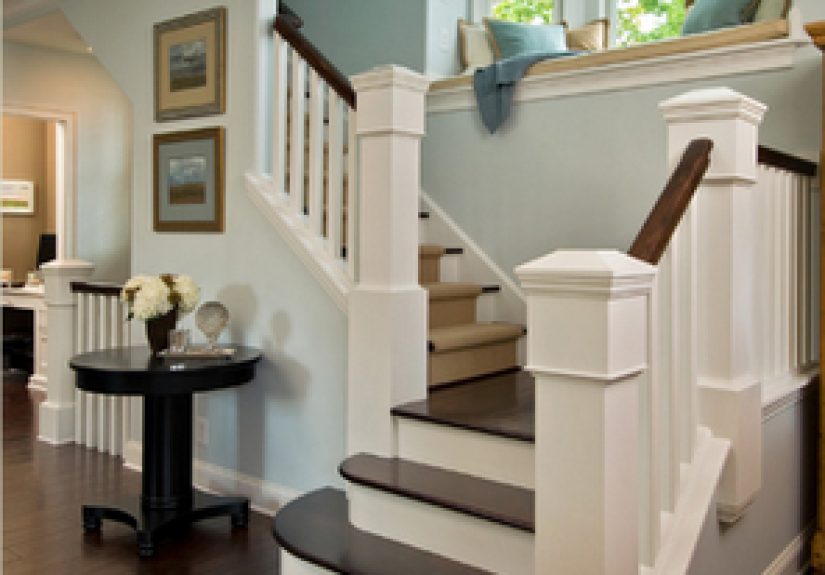
You do not need a full rebuild to get better stairs. Sometimes the glow-up is all about finish. Painted risers with stained treads remain a favorite because they add contrast without making the staircase feel too busy. Deep brown treads with soft white risers look crisp and traditional. Charcoal or black accents can feel moody and sophisticated. Natural oak paired with creamy paint feels fresh and expensive, even when the budget would strongly disagree.
For a more playful approach, paint the railing a bold color while keeping the treads neutral. Navy, forest green, soft black, and muted blue are especially strong options because they add drama without turning your staircase into a theme park ride.
4. Make Open or Floating Stairs Work for Modern Spaces
If you love a lighter, more architectural look, open-riser or floating stair styles are still among the most inspiring options. They allow light to pass through, reduce visual bulk, and make smaller entry areas feel less cramped. In contemporary homes, this kind of staircase can act like functional sculpture.
That said, floating stairs are not a one-size-fits-all miracle. They work best when the surrounding materials are clean and consistent. Pair them with simple railings, restrained finishes, and good lighting. Otherwise, the look can shift from sleek to “unfinished showroom” in a hurry.
5. Treat the Risers Like Design Real Estate
Risers are often ignored, which is funny because they are basically a row of mini canvases. If you want a staircase with personality, this is one place to add it. The update can be subtle, like a slightly different paint sheen, or more decorative, like wood cladding, wallpaper, or tile-inspired pattern used sparingly.
The best stair inspiration here is usually the most edited. A faux painted runner, tone-on-tone pattern, or soft contrast often ages better than anything too fussy. The goal is a staircase with charm, not one that looks like it got into a craft-supply cabinet unsupervised.
6. Do Something Useful Under the Stairs
The under-stair zone has officially entered its redemption era. What used to be dead space can become hidden storage, a bench nook, open shelving, a mini mudroom, a reading corner, a built-in bar, or even a compact desk setup. If your staircase sits near the entry, cabinets or cubbies can turn clutter into something that almost looks intentional.
This is one of the most practical staircase makeover ideas because it improves both function and appearance. When the base of the stairs looks integrated with the rest of the home, the whole area feels more custom.
7. Give the Landing a Job
Landings are often treated like pause buttons, but they can be much more than a place to turn left. A landing can hold a slim bench, a sculptural chair, a mirror, a small console, a plant, or a gallery wall that draws the eye upward. In homes with natural light near the stairs, the landing becomes prime real estate for creating a moment.
The smartest landing designs are scaled correctly. Do not cram in furniture just because there is technically room. One meaningful element usually works better than five decorative maybes.
8. Let Lighting Do Some of the Decorating
Good staircase lighting is part safety feature, part secret weapon. A pendant in a two-story entryway, a dramatic chandelier over a curved stair, wall sconces along a stairwell, or subtle step lights can completely transform how the space feels. Lighting adds depth, shadow, and focus. It also prevents your beautiful staircase from disappearing into the evening like it owes the room money.
If your staircase lacks architectural drama, lighting can create it. Even a simple stairwell becomes more memorable when the fixture above it feels intentional.
9. Keep the Stair Style in Conversation With the House
The most successful stair inspiration does not come from copying one photo perfectly. It comes from noticing what belongs in your home. A coastal home might favor pale wood, airy railings, and a relaxed runner. A Craftsman home may look best with sturdy wood details and classic proportions. A modern farmhouse can handle black accents, oak tones, and pared-back trim. A city townhouse might welcome a bolder runner or sharper metal profile.
Think of the staircase as an extension of the architecture, not a random side quest. When the stair materials echo flooring, trim, or hardware elsewhere in the home, everything feels more resolved.
10. Never Ignore Proportion, Comfort, and Safety
Here is the less glamorous but absolutely necessary part: the prettiest staircase in the world still has to work. Comfortable tread depth, consistent riser height, secure handrails, enough headroom, and slip-conscious surfaces matter more than any trend. A runner that looks amazing but puckers at the edge is not chic. A railing that feels loose is not “minimal.” A dramatic dark paint that makes every tread edge disappear is not mysterious. It is a lawsuit waiting for better lighting.
Beautiful stair design works best when safety and style stop pretending to be opponents. The sweet spot is a staircase that feels polished, intuitive, and easy to use every single day.
Staircase Makeover Mistakes to Avoid
One of the biggest mistakes is trying to force too many ideas into one staircase. A bold runner, patterned risers, ornate railing, gallery wall, statement lighting, and bright paint all at once can make the stairwell feel chaotic. Choose one or two stars and let the supporting elements stay calm.
Another common mistake is ignoring maintenance. High-gloss paint looks beautiful, but on heavily used stairs it can show scuffs fast. Open shelving under the stairs sounds lovely until it becomes a museum of unmatched shoes. Glass railings are stunning, but they are also fingerprints in architectural form. Good design still has to survive real life.
And finally, do not decorate the stairs like they exist in isolation. Look at what happens at the bottom, what happens at the top, and what the eye catches while moving through the space. A staircase should connect rooms visually just as well as it connects floors physically.
How to Choose the Right Stair Refresh for Your Budget
If you want the biggest impact for the least money, start with paint, a runner, wall treatment, or updated balusters. Those changes can dramatically improve the look of a staircase without a structural overhaul. If you have more flexibility, new railings, custom storage, upgraded treads, or better lighting can make the space feel truly transformed.
A simple formula works well here:
Small budget: paint, art, runner, and lighting updates.
Mid-range budget: new balusters, refinished treads, landing decor, and under-stair storage.
Larger budget: custom railings, rebuilt staircase details, floating stair systems, and integrated cabinetry.
You do not have to do everything at once. In fact, stairs often look better when updated in layers. Start with the bones, improve the function, then add personality.
Conclusion
The best stair inspiration is not about copying the grandest staircase on the internet and hoping your split-level ranch suddenly develops European estate energy. It is about using proportion, material, color, texture, and function to make your staircase feel like it truly belongs in your home. A beautiful stairway can be dramatic, quiet, rustic, refined, modern, traditional, or somewhere in between. What matters most is that it feels intentional.
So if your staircase has been sitting there looking mildly forgotten, consider this your sign. Update the railing. Add the runner. Paint the risers. Style the landing. Claim the under-stair space. One smart change can turn a pass-through into a feature, and a feature into one of the most memorable parts of the house. Not bad for something people usually notice only when they are carrying laundry.
Real-Life Experiences With Stair Inspiration: What Homeowners Actually Notice
The most interesting thing about a staircase makeover is how quickly people stop thinking of it as “just stairs.” Once a staircase is improved, it changes the mood of the entire entry or hallway. Homeowners often notice this first in the morning. Light hits the stairwell differently when the railing is more open, when the treads are refinished, or when the walls around the stairs have been given more intention. A once-forgotten passage starts to feel like part of the home’s personality. Even a simple update, like a runner with texture or a better paint color, can make the route upstairs feel calmer and more complete.
Another common experience is that practical upgrades end up feeling surprisingly luxurious. A runner softens footfall, which means the staircase sounds less like a marching band rehearsal. Better lighting makes late-night trips safer and less awkward. A sturdier handrail feels more comforting than people expect, especially in households with kids, older adults, or pets that believe the stairs belong to them. In many homes, the real win is not just how the staircase looks in photos but how much easier it is to live with every single day.
People also tend to discover that the area around the stairs matters just as much as the stairs themselves. Once the staircase gets attention, the landing, the wall, and the space underneath suddenly become impossible to ignore. Homeowners often realize they were wasting useful square footage. A built-in bench, closed storage, hooks for bags, or even a narrow console at the landing can make the whole zone more organized. This is especially true near entryways, where a staircase makeover often has the side effect of making the home feel less cluttered before anyone has even taken off their shoes.
There is also a visual lesson people learn quickly: restraint usually wins. Many homeowners begin with grand plans for patterned risers, dramatic wallpaper, ornate spindles, bold lighting, and a heavily decorated wall. Then they live with the space and realize that one standout choice is usually enough. Maybe the runner becomes the hero. Maybe it is the railing. Maybe the stairwell wall gets the spotlight through art or paneling. The most satisfying results tend to come from editing, not piling on. A staircase has movement built into it already, so it rarely needs every decorative trick in the book.
Finally, a refreshed staircase often changes how people feel about the whole house. That sounds dramatic, but it is true. Because stairs connect levels, they also connect design moments. When they look unfinished, the house can feel fragmented. When they look deliberate, the transition from one space to another feels smoother and more polished. Homeowners who invest in stair updates often say the same thing in different ways: the home feels more “finished.” Not fancier for the sake of showing off, but more thoughtful, more functional, and more like a place that has been cared for. And that may be the best kind of inspiration of all. The staircase does not just take you upstairs. It quietly raises the standard for the rest of the home.