Table of Contents >> Show >> Hide
- The incident at the center of the debate
- Why “obesity is a choice” became the internet’s go-to response
- Where discrimination can show up in airports (even when nobody calls it that)
- So… was it discrimination?
- What airports and airlines can do better (without turning travel into a circus)
- What plus-size travelers can do right now (practical, not preachy)
- The bigger truth behind the headline
- Real-World Experiences: What This Feels Like in the Wild
- Conclusion
Airports are weird little cities where everybody’s stressed, nobody’s hydrated, and the line to buy a sandwich feels like a social experiment.
Add one more ingredientpeople judging other people’s bodiesand you’ve got the recipe for a viral blowup that’s part travel headache, part culture war, and part “please, for the love of carry-ons, can we be normal?”
Recently, a plus-size traveler’s complaint about how she says she was treated by airport staff sparked a familiar internet chorus:
“Obesity is a choice.” That phrase hits like a tray table to the kneecapsharp, smug, and somehow always delivered by someone who’s never tried to wedge themselves into Seat 22B while apologizing to a stranger’s elbow.
Under the memes and the pile-ons, though, there’s a real issue worth unpacking: what does fair, humane treatment look like in an airport,
especially when you need assistanceand other people decide whether you “deserve” it?
The incident at the center of the debate
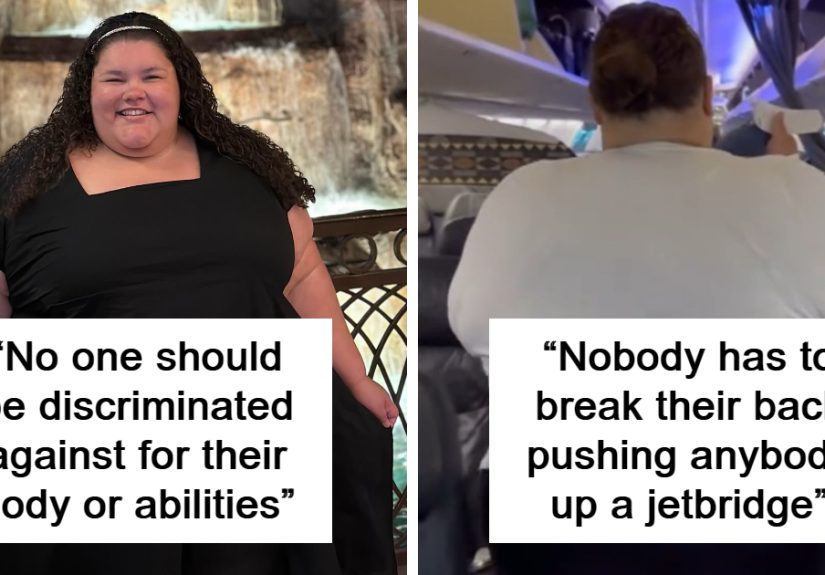
The story that lit the match involves plus-size travel influencer Jae’lynn Chaney, who alleged that after landing at Seattle–Tacoma International Airport (Sea-Tac),
an attendant assigned to provide wheelchair assistance refused to push her up the jet bridge, allegedly making comments about her size and walking away while she requested help. She said she was forced to walk a long jet bridge and nearly fainted before eventually being allowed to sit down. The account circulated widely after she posted about it and media outlets amplified the clip and claims. Importantly, this remains an allegation described in coverage and her own posts, not a court finding. Still, the reaction was immediate and intense.
Why? Because it touches three hot buttons at once: (1) airport accessibility and disability support, (2) the stigma around body size, and (3) the simmering resentment people feel about cramped travel, shrinking seats, and “who gets what” when everyone’s uncomfortable.
Why “obesity is a choice” became the internet’s go-to response
The phrase “obesity is a choice” sounds simple, which is exactly why it spreads. Simple statements travel fastlike rumors and gate-change notifications.
But weight is rarely that simple. Major medical and public health sources describe obesity as involving complex interactions among biology, genetics, environment, and behavior.
The CDC notes obesity is often multifactorial, shaped by genes and environmental factors working together. The NIH’s NIDDK describes multiple influences on weight, including family history, biology, and environment. And the American Medical Association has formally recognized obesity as a disease state with multiple pathophysiological aspects.
None of that means individual choices never matter. It means the “just choose differently” framing is incompleteand often used as a moral judgment rather than a helpful observation.
When that judgment enters the airport setting, it can morph into something uglier: deciding that someone’s need for assistance is “optional,” “self-inflicted,” or “not your problem.”
Where discrimination can show up in airports (even when nobody calls it that)
Discrimination isn’t always a dramatic slur shouted across Gate C12. More often, it looks like a series of small decisions:
the sigh, the eye-roll, the refusal to help, the “you can walk, right?” said like a diagnosis.
Airports run on scripts and systemsand when those systems are stressed, human bias fills the gaps.
1) Wheelchair assistance: access, not a morality test
Wheelchair support in airports is a logistics machine: requests are made, staff are assigned, and passengers are escorted.
Sea-Tac’s operator (the Port of Seattle) notes that SEA Airport provides complimentary wheelchair service to help travelers reach the ticket counter,
and its accessibility guidance encourages travelers to plan ahead and contact airlines in advance for assistance within the terminal and for boarding support.
Here’s the key point: needing wheelchair assistance is not the same thing as never being able to walk. Many people can walk short distances but cannot safely walk long jet bridges,
stand in multiple lines, or manage oxygen needs, pain, balance issues, or fatigue. Airports are basically endurance sports disguised as infrastructure.
When staff decide, on sight, that someone doesn’t “count” as needing help, the passenger can be put at riskphysically and emotionally.
2) The legal landscape: what protections exist (and where the gaps are)
In the U.S., the Air Carrier Access Act (ACAA) prohibits discrimination on the basis of disability in air travel, and DOT regulations (14 CFR Part 382) spell out obligations airlines have toward passengers with disabilities.
DOT also publishes an Airline Passengers with Disabilities Bill of Rights that summarizes fundamental protections.
One tricky nuance: “plus-size” is not automatically a protected disability category. But many conditions that coexist with larger bodiesmobility limitations, breathing issues, joint disorders, cardiovascular conditionscan qualify,
and people have a right to request assistance without being publicly interrogated like they’re on a talk show called Explain Your Body, Ma’am.
The broader trend line is clear: DOT has been tightening expectations around respectful, safe assistance for disabled travelers, including stronger rules addressing wheelchair handling and services.
A major DOT rule finalized in late 2024 focuses on improving accommodations for travelers with disabilities who use wheelchairs and strengthening training and accountability.
These efforts underline a core idea: assistance isn’t a favor; it’s part of making air travel usable for everyone.
3) Seating pressure: when “personal space” becomes public conflict
Even if nobody says the quiet part out loud, airline seats have gotten tighter over time, and that tightness fuels conflict.
Reporting has noted many carriers reduced seat widths over the yearsoften cited around 17 inches on some aircraftwhile seat pitch (legroom) has also decreased in many configurations.
Meanwhile, passengers come in all shapes, sizes, ages, and mobility levels. That mismatch turns boarding into a daily game of human Tetris.
Here’s where policies matter. Many airlines require passengers who cannot fit within a single seat (often defined by armrest boundaries) to buy an additional seat.
Southwest has long been known for an extra seat policy for “Customers of Size,” and its support materials explain how extra seats are handled.
At the same time, policy details can changeand in early 2026, Southwest’s “customers of size” approach became news again as changes rolled out alongside broader seating updates.
(That volatility is part of what makes travel stressful: the rules feel like they’re written in pencil… on a moving plane.)
TIME has previously summarized how U.S. airlines vary in their approaches, and why inconsistencies create confusion and anxiety for travelers of size:
you can do your homework, follow the rules, and still show up unsure whether you’ll be treated with dignity or like a problem to be solved.
4) TSA screening: the part nobody brags about
Security screening is another flashpoint. Some travelers report being flagged more often for secondary screening.
A fat frequent flier wrote about repeated pat-downs after body scanners, noting how invasive and exhausting it can feel.
TSA also provides formal routes for questions and complaints, including customer service channels, and promotes TSA Cares for travelers who want help preparing for screening when they have disabilities or medical conditions.
Add all these touchpoints togethersecurity, long walks, boarding, seating, and deplaningand you start to see why a single refused assistance moment can feel like the final straw, not an isolated inconvenience.
So… was it discrimination?
Without a complete investigation record, no outsider can conclusively label any specific incident. But we can say this:
when assistance is requested and an employee allegedly refuses based on body size or makes comments about size, that fits a pattern of bias that many larger travelers describe.
Even when it’s not illegal discrimination, it can still be unfair, unsafe, and humiliating.
And the “obesity is a choice” refrainwhether intended or notoften functions as a permission slip:
permission to treat someone’s access needs as negotiable, to shame them, or to deny help as a form of “tough love.”
Airports are not a bootcamp. They are a public service environment. The goal is safe movement, not moral correction.
What airports and airlines can do better (without turning travel into a circus)
Train for dignity, not just efficiency
Training shouldn’t be limited to “push chair from Point A to Point B.” It should include:
clear language (no body comments), respectful verification (quietly and privately), and de-escalation skills when passengers are stressed.
DOT’s direction of travel has been toward stronger training and accountability around disability services, especially for wheelchair users.
Make the request process simple and consistent
Confusion creates conflict. Airports and airlines can reduce friction by standardizing how requests are made, confirmed, and deliveredespecially across connections.
Port of Seattle’s guidance encourages travelers to coordinate with airlines ahead of time for in-terminal and boarding help, and it provides clear instructions for wheelchair services to ticketing.
The more transparent the system, the less “gatekeeper behavior” employees feel empowered to invent on the spot.
Stop treating seating as a personal failure
Seat-size debates frequently become moral debates, which is… not helpful.
If seats are shrinking and policies are inconsistent, passengers are pushed into awkward negotiations with strangerslike asking a fellow human being for a piece of their seat as if you’re splitting a mozzarella stick.
Clearer airline rules, fair pricing structures, and practical accommodations reduce the social tension that breeds harassment.
What plus-size travelers can do right now (practical, not preachy)
This isn’t a “fix yourself” list. It’s a “protect your peace” list.
1) Request assistance earlyand keep receipts (the paper kind)
If you may need wheelchair help, request it when booking or as soon as possible, and save confirmations.
If something goes wrong, documentation matters.
2) Know the policy before you fly
If you’re worried about seat fit, look up the airline’s approach ahead of time.
For example, Southwest publicly explains its extra seat policy and “customers of size” procedures on its support pages.
Policies differ across airlines, so treat this like checking baggage rules: boring, but protective.
3) If you feel mistreated, escalate calmlybut firmly
If an interaction becomes discriminatory or unsafe, ask for a supervisor and document names and times.
For disability-related issues, DOT describes passenger rights and complaint pathways under the ACAA, and TSA provides customer service channels for screening concerns.
You deserve help without a public debate about your body.
The bigger truth behind the headline
The internet loves a clean villain: “entitled passenger” vs. “lazy staff” vs. “snowflake culture.”
Real life is messier. Airport workers are under pressure; travelers are exhausted; systems are imperfect.
But none of that justifies body-based humiliation or refusal of assistance when it’s been requested and assigned.
And that’s the point. You can have opinions about health, responsibility, and airline seating economics without turning a person’s existence into a debate.
Dignity is not an upgrade you purchase at the counter.
Real-World Experiences: What This Feels Like in the Wild
If you’ve never traveled in a larger body, it’s hard to explain how quickly a normal trip can turn into a thousand tiny negotiations.
Not dramatic, not headline-worthyjust constant: shoulders turned sideways, breath held while squeezing down the aisle, eyes scanning for the one seatbelt extender that doesn’t feel like a public announcement.
Many plus-size travelers describe the airport as a place where you become hyper-aware of spaceyour space, their space, the space between the stanchions, the space between rows,
the space that exists in theory but disappears the moment someone wheels a cart of tiny pretzels through the terminal like it owns the runway.
The first “experience” often hits before the plane: security. The body scanner beeps, you step aside, and suddenly you’re doing the awkward dance of “I’m not hiding anything, my body is just… existing.”
Some travelers report secondary screening more frequently, and even when everyone is professional, it can feel exposing and exhausting.
It’s not just the pat-down; it’s the sense of being singled out for a body you didn’t bring to the airport for entertainment.
Then comes the walking. Airports are built like someone said, “What if we made distance a personality?”
Jet bridges can be long, gates can change, and connections can feel like a timed obstacle course.
For travelers who request wheelchair assistancewhether due to stamina, pain, breathing issues, or mobility limitsthe help isn’t a luxury.
It’s the difference between arriving okay and arriving wrecked.
That’s why a refusal, delay, or dismissive comment can land so hard: it’s not just rude; it’s risky.
Seating is its own emotional weather system. Even when you plan carefully, there’s the moment you sit down and silently hope the armrests cooperate.
You can be the most considerate person aliveboarding early, choosing a window, keeping elbows tucked like you’re auditioning for a role as “polite passenger #3”and still feel like you’re on trial.
People stare. People whisper. People sigh like your body personally invented turbulence.
And yes, sometimes the loudest critics are perched in a seat that, by modern standards, could generously be described as “a postcard-sized rectangle.”
The hardest part isn’t always the physical fit; it’s the social friction. You’re trying to be invisible in a system that makes bodies highly visible.
You’re trying to be calm in a place designed to produce cortisol.
So when an employee treats you like your need is optionallike help is something you must earn by passing a “deserving” testit taps into every previous trip where you felt reduced to a problem.
And yet, plenty of travelers also describe bright spots: a gate agent who quietly offers solutions without shaming, a flight attendant who hands over a seatbelt extender like it’s no big deal (because it shouldn’t be),
a wheelchair attendant who treats assistance as normal worknot a commentary on your worth.
Those moments matter. They prove the real fix isn’t complicated. It’s consistency, training, and a basic commitment to treating people like peopleeven when the terminal is loud,
the flight is delayed, and the Starbucks line is approaching sentience.
In other words: we can debate policy without debating someone’s humanity. And we can make travel safer and less humiliating without pretending anyone’s body is the problem that needs solving at Gate 14.
Conclusion
The “obesity is a choice” slogan may feel satisfying to type, but it doesn’t solve airport accessibility, shrinking seat dimensions, or the reality that assistance needs aren’t always visible.
What does help is clear policy, consistent training, and a culture that treats requested support as routinenot as a privilege granted by whoever is having the worst day on the concourse.
Air travel is already hard. It doesn’t need to be cruel.