Table of Contents >> Show >> Hide
- What Is This New Supermaterial?
- Why “Strong as Steel, Light as Styrofoam” Matters
- How Researchers Built It
- The Science Behind the Strength
- Possible Uses for Steel-Strong, Foam-Light Materials
- Why This Is Different From Earlier Wonder Materials
- The Big Limitation: Scaling Up
- What This Means for the Future of Materials Science
- Realistic Expectations: Breakthrough, Not Magic
- Experiences and Practical Reflections on This Supermaterial
- Conclusion
Imagine a material that can take a punch like carbon steel but weighs about as much as the foam cup holding your morning coffee. It sounds like something a comic-book inventor would announce while wearing safety goggles and ignoring three different lab alarms. Yet the idea is no longer just futuristic daydreaming. Researchers have developed a new class of nano-architected carbon materials that combine extreme strength with astonishingly low density, opening the door to lighter cars, more efficient aircraft, tougher protective structures, and engineering designs that once seemed physically unreasonable.
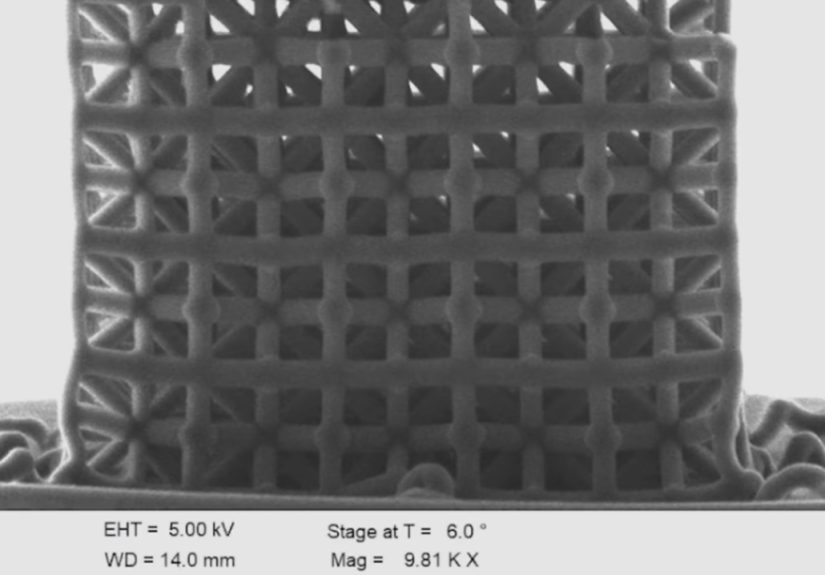
This new supermaterial is often described in simple terms as “as strong as steel and as light as Styrofoam.” Technically, it is a carbon nanolattice: a tiny, carefully designed 3D architecture made mostly of empty space, but arranged so intelligently that it can resist compression with remarkable efficiency. Instead of relying only on the chemistry of carbon, the breakthrough depends on structure, scale, and machine-learning-assisted design. In other words, the secret is not just what the material is made of. It is how every microscopic beam, opening, and connection is arranged.
What Is This New Supermaterial?
The material belongs to a family known as nano-architected materials. These are not ordinary solids like steel, aluminum, plastic, or wood. They are engineered frameworks built at incredibly small scales, where shape and geometry can matter as much as the base substance itself. A bridge truss is strong because triangles distribute force efficiently. A honeycomb is light because it uses empty space wisely. A nanolattice borrows the same general logic, then shrinks it down to dimensions far smaller than the width of a human hair.
The version attracting global attention is made from pyrolytic carbon and designed using machine learning, specifically optimization methods that can search through many possible lattice shapes faster than human trial and error. Researchers created tiny carbon frameworks with densities below 215 kilograms per cubic meter, a range comparable to foam-like materials, while achieving compressive strength levels associated with carbon steels. That combination is what makes the discovery so exciting: it breaks the usual trade-off between strength and weight.
Why “Strong as Steel, Light as Styrofoam” Matters
Engineers constantly fight a stubborn rule of reality: stronger materials are often heavier, while lighter materials often sacrifice strength. Steel is tough and reliable, but it is heavy. Foam is light and easy to shape, but nobody is building a suspension bridge out of packing peanuts. The dream is to get both benefits at once: steel-like mechanical performance with foam-like mass.
A high strength-to-weight ratio can transform design. In transportation, every pound removed from a vehicle can improve energy efficiency. In aerospace, lighter structural components can reduce fuel consumption or increase payload capacity. In robotics, lightweight strength can make machines faster, safer, and more energy efficient. In protective equipment, materials that absorb energy without adding bulk could improve safety systems. The point is not that this supermaterial will replace steel tomorrow morning. The point is that it gives engineers a new direction for solving old problems.
How Researchers Built It
Machine Learning Did the Heavy Thinking
The breakthrough was not created by randomly printing tiny carbon scaffolds and hoping for the best. Researchers used machine learning and Bayesian optimization to explore designs that balanced multiple goals at once. They wanted high strength, low density, and efficient mechanical behavior. That is a tricky combination because improving one property can hurt another. A thicker beam may increase strength but also add weight. A more open lattice may reduce density but weaken the structure.
Machine learning helped narrow the search. Instead of testing every possible design physically, the algorithm guided researchers toward promising geometries. This is one of the most practical uses of artificial intelligence in science: not replacing researchers, but helping them move through a huge design space more intelligently. Think of it as a very patient lab assistant that never complains, never needs coffee, and can compare thousands of microscopic structures without getting bored.
Nano-3D Printing Made the Designs Real
Once the optimized designs were selected, the researchers used advanced nanoscale 3D printing methods. These techniques can create incredibly precise polymer structures, which can then be converted into carbon through heat treatment. The result is a tiny carbon architecture with beams, nodes, and repeating patterns designed to spread stress efficiently.
This manufacturing process is not the same as printing a phone case on a desktop 3D printer. Nanoscale fabrication requires far more precision. The structures can be so small and delicate that their performance depends on details invisible to the naked eye. At that scale, flaws, beam thickness, and geometry can dramatically affect strength. That is why the combination of computational design and precise manufacturing is so important.
The Science Behind the Strength
Carbon is already famous in materials science. Graphene, carbon nanotubes, and carbon fibers have all shown extraordinary mechanical properties under the right conditions. But strong ingredients do not automatically create strong objects. A pile of excellent bricks does not make a stable building unless the architecture is good. The new carbon nanolattice uses a smart architecture to turn a lightweight carbon framework into a material with exceptional specific strength.
Specific strength means strength compared with density. This is the key measurement for lightweight materials. A material may not always beat steel in every possible test or application, but if it provides high strength at a fraction of the weight, it can be extremely valuable. The reported carbon nanolattices reached an exceptional specific strength while staying in a very low-density range. That makes them especially interesting for uses where weight is a major limitation.
Possible Uses for Steel-Strong, Foam-Light Materials
Aerospace and Aviation
Aircraft are among the most obvious candidates for ultralight strong materials. Every kilogram matters in aviation. Lighter parts can reduce fuel use, extend range, or allow aircraft to carry more equipment. A material like this could eventually inspire lightweight internal structures, impact-absorbing panels, or specialized components where stiffness and low mass are both critical.
However, aviation materials face brutal testing requirements. They must survive vibration, temperature swings, fatigue, moisture, impact, and long-term use. The new supermaterial is promising, but turning a laboratory sample into a flight-certified aircraft part is a long journey. In aviation, “cool in the lab” is step one. “Trusted at 35,000 feet” is a much bigger achievement.
Automotive Design
Cars, trucks, and electric vehicles could also benefit from strong lightweight materials. Reducing vehicle weight can improve range and efficiency, especially for EVs where battery weight is already a challenge. A material with excellent energy absorption could also be useful in crash structures, protective layers, or internal reinforcement systems.
The challenge is cost and scale. Automakers need materials that can be produced reliably in large quantities and at prices that make sense. A supermaterial that costs more than the entire car is not exactly a dealership-friendly feature. Still, new materials often begin in specialized applications before moving into broader markets as manufacturing improves.
Robotics and Drones
Robots and drones are hungry for lightweight strength. A drone that weighs less can fly longer. A robotic arm made from lighter components can move faster and use less energy. A small machine with strong, lightweight parts can carry more sensors, batteries, or tools without becoming clumsy.
Nano-architected materials could be especially valuable in micro-robotics, advanced sensors, and high-performance mechanical systems. If the material can be manufactured at useful scales, it could help engineers design machines that feel less like heavy metal skeletons and more like precision-built lightweight organisms.
Protective Equipment and Impact Absorption
Another exciting possibility is impact protection. Lattice materials can be designed to deform in controlled ways, absorbing energy while resisting catastrophic failure. That could matter for helmets, vehicle safety systems, aerospace panels, sports equipment, and protective packaging for sensitive electronics.
The key word is “designed.” A lattice can be tuned for different behaviors. Some structures may prioritize stiffness. Others may prioritize energy absorption. Others may be designed to fail gradually rather than suddenly. This customizability is one reason nano-architected materials are so interesting: they are not just materials, but programmable mechanical architectures.
Why This Is Different From Earlier Wonder Materials
Science headlines often introduce a “miracle material” that sounds ready to replace everything from bicycle frames to skyscrapers by next Tuesday. Reality is more patient. Graphene, carbon nanotubes, metallic microlattices, and 2D polymers have all generated excitement because they reveal new ways to combine strength, lightness, conductivity, stiffness, or flexibility. The new carbon nanolattice fits into this broader story, but it stands out because it uses machine learning to optimize the architecture rather than relying only on known shapes.
Earlier lightweight materials showed that geometry could create surprising mechanical properties. Metallic microlattices demonstrated how hollow, ordered structures could be extraordinarily light. Graphene-inspired designs showed that arranging carbon in clever patterns could multiply performance. MIT researchers also demonstrated strong lightweight polymer materials and 3D graphene structures that highlighted the importance of architecture. The latest carbon nanolattice research builds on this history while adding AI-guided optimization and nanoscale precision.
The Big Limitation: Scaling Up
The phrase “as strong as steel and as light as Styrofoam” is thrilling, but it should not be misunderstood. These materials are currently produced at very small scales using specialized fabrication methods. The challenge is not simply proving the physics. The challenge is manufacturing large, consistent, affordable pieces that keep the same mechanical advantages.
Scaling nano-architected materials is difficult because tiny features must remain precise across larger areas. Defects can weaken the structure. Production can be slow. Costs can be high. Quality control becomes demanding. A material that performs beautifully as a microscopic test sample may behave differently when expanded into a panel, beam, shell, or commercial part.
Still, this is how many technologies begin. Early carbon fiber was expensive and specialized. Today it appears in aircraft, sports equipment, cars, medical devices, and consumer products. Additive manufacturing also started as a niche process before becoming a major industrial tool. The new supermaterial may follow a similar path: first in high-value applications, then gradually in broader uses if production improves.
What This Means for the Future of Materials Science
The most important lesson may be bigger than one material. This research shows how materials science is becoming a design problem as much as a chemistry problem. Instead of asking only, “What substance should we use?” engineers can ask, “What structure should this substance have at the smallest useful scale?”
Artificial intelligence can accelerate that process. It can search for patterns humans might not consider, compare trade-offs, and suggest designs that maximize performance. Combined with advanced manufacturing, AI-assisted materials discovery could create new classes of lightweight, strong, heat-resistant, flexible, or energy-absorbing materials. The result may be a future where materials are not merely selected from a catalog, but designed for the exact job they need to perform.
Realistic Expectations: Breakthrough, Not Magic
This new supermaterial is exciting, but it is not magic dust. It will not instantly replace steel beams, car frames, aircraft parts, or construction materials. Steel is cheap, widely available, deeply understood, recyclable, and supported by more than a century of engineering standards. Any challenger must prove durability, safety, manufacturability, and cost-effectiveness.
The right way to understand this discovery is as a powerful proof of concept. It shows that machine learning and nanoscale architecture can push materials into performance zones that once seemed contradictory. It gives researchers a roadmap for designing future materials with extreme strength-to-weight ratios. And it reminds the rest of us that the future of engineering may look less like solid blocks of metal and more like microscopic cathedrals of carbon.
Experiences and Practical Reflections on This Supermaterial
The first time most people hear “as strong as steel and as light as Styrofoam,” the natural reaction is suspicion. It sounds too neat, too headline-friendly, almost like a phrase invented by a marketing department after three espressos. But the more you look into the science, the more reasonable it becomes. The strength does not come from a magical new element. It comes from combining carbon chemistry, structural design, machine learning, and precision manufacturing in a way that lets the material use space efficiently.
A useful everyday comparison is corrugated cardboard. A flat sheet of paper is floppy. Fold it into a corrugated structure and suddenly it can support weight, protect packages, and survive shipping adventures that look suspiciously like minor natural disasters. The paper did not become a new substance. Its architecture changed. The same principle appears in honeycombs, bicycle frames, bridges, bird bones, and airplane wings. The new carbon nanolattice simply takes that idea to an extreme scale where tiny geometry creates huge performance gains.
From a product-design perspective, this kind of material invites a different way of thinking. Instead of making a part solid and then cutting away weight, engineers can begin with an open architecture and place material only where it is mechanically useful. That could lead to components that look strange compared with today’s metal parts: more porous, more skeletal, and more organic. Future car panels, drone frames, or protective shells may not look like smooth slabs. They may look like engineered bones, and that is a compliment.
The most exciting applications will probably appear where performance matters more than price at first. Aerospace, defense-related safety systems, high-end robotics, space hardware, advanced medical devices, and scientific instruments are all areas where a lighter, stronger material can justify extra manufacturing complexity. Consumer products may come later. One day, laptop shells, phone casings, bicycle parts, or sports helmets could benefit from related design principles, even if they do not use the exact same lab-made carbon nanolattice.
There is also a sustainability angle worth watching. Lightweight materials can reduce energy use in transportation, but the full environmental picture depends on how they are made, how long they last, and whether they can be repaired or recycled. A material that makes vehicles more efficient could still face criticism if production is energy-intensive or difficult to scale responsibly. The best future version of this technology would combine high performance with cleaner manufacturing and thoughtful end-of-life planning.
For readers, the main takeaway is simple: do not think of this as “new steel” or “super Styrofoam.” Think of it as a new design language for matter. The breakthrough is not only that researchers made something strong and light. It is that they showed a smarter path for creating materials: let algorithms explore structures, let nanoscale manufacturing build them, and let physics test which designs survive. That is a big shift. The future may not belong only to the strongest substance, but to the smartest structure.
Conclusion
The new supermaterial described as strong as steel and light as Styrofoam is more than a catchy headline. It represents a major step in nano-architected materials, where strength comes from precise structure as much as chemical composition. By using machine learning to optimize carbon nanolattices, researchers have shown that it is possible to combine extreme lightness with impressive compressive strength. The technology still faces major hurdles, especially manufacturing scale and cost, but its potential is enormous.
If scientists and engineers can translate these tiny structures into practical products, the impact could reach aerospace, automotive design, robotics, protective equipment, and energy-efficient transportation. For now, the material is a powerful glimpse of where engineering is headed: lighter, stronger, smarter, and designed from the nanoscale up.