Table of Contents >> Show >> Hide
- Why Nectarine-and-Burrata Salad Works So Well
- The Best Ingredients for Nectarine-and-Burrata Salad
- Nectarine-and-Burrata Salad Recipe
- Flavor Variations to Try
- How to Serve Nectarine-and-Burrata Salad
- Make-Ahead Tips
- Common Mistakes to Avoid
- Nutrition and Freshness Notes
- Experience Notes: What It Is Really Like to Make and Serve This Salad
- Conclusion
Some salads politely sit on the side of the plate and mind their business. Nectarine-and-Burrata Salad is not one of them. This is the kind of summer salad that walks into the room wearing sunglasses, carrying a bottle of good olive oil, and casually stealing the entire dinner table’s attention.
At its best, this dish is a gorgeous balance of contrasts: juicy nectarines, creamy burrata, peppery greens, fresh herbs, crunchy nuts, and a bright dressing that keeps everything lively. It tastes luxurious, but it is surprisingly simple. No complicated cooking. No culinary gymnastics. Just smart ingredients assembled with confidence.
This nectarine burrata salad works beautifully as an appetizer, a light lunch, a side dish for grilled chicken or seafood, or the centerpiece of a relaxed summer dinner. It is sweet, savory, creamy, tangy, fresh, and just fancy enough to make people think you own linen napkins for reasons other than “they were on sale.”
Why Nectarine-and-Burrata Salad Works So Well
The magic of a nectarine-and-burrata salad comes from the way each ingredient fills in what the others need. Nectarines bring natural sweetness and gentle acidity. Burrata adds richness and a soft, creamy texture. Greens provide freshness. Nuts or toasted bread crumbs bring crunch. Herbs brighten the entire plate like someone opened a window in the kitchen.
Burrata is especially good in fruit salads because it is mild rather than sharp. Its outer mozzarella shell holds a creamy center, usually made with stracciatella and cream. When torn open, it spreads gently into the dressing and fruit juices, creating a sauce without asking you to whisk anything like you are training for a vinaigrette Olympics.
Nectarines are also ideal because their skin is smooth and edible, so there is no peeling required. Compared with peaches, they often have a slightly firmer bite and a more direct sweet-tart flavor. That firmness helps the fruit hold its shape in a salad, especially when sliced into wedges.
The Best Ingredients for Nectarine-and-Burrata Salad
Ripe but Firm Nectarines
The most important rule is simple: choose nectarines that smell sweet and feel slightly soft near the stem but are not mushy. A rock-hard nectarine will taste shy and crunchy in the wrong way. An overripe nectarine may collapse into juice before it reaches the plate. You want fruit that is fragrant, colorful, and just tender enough to promise sweetness.
If your nectarines are still firm, leave them at room temperature for a day or two. Refrigeration can slow ripening, so it is best used after the fruit has reached the texture you want. Once ripe, nectarines should be eaten soon because this salad is all about freshness.
Fresh Burrata
Use the freshest burrata you can find. Burrata is delicate, creamy, and best served soon after purchase. Before assembling the salad, let it sit at room temperature for about 15 to 20 minutes. Cold burrata is still delicious, but room-temperature burrata tastes creamier and blends more beautifully with the fruit, olive oil, and herbs.
Peppery Greens
Arugula is a classic choice because its peppery bite keeps the salad from becoming too sweet. Baby spinach, butter lettuce, little gem lettuce, or mixed baby greens also work well. If you prefer a softer salad, use butter lettuce. If you want more personality, arugula is your best friend.
Fresh Herbs
Basil is the natural partner for nectarines and burrata, but mint adds a cooling finish that makes the salad feel extra refreshing. Tarragon, chives, or parsley can also work in smaller amounts. Herbs should taste like a supporting cast, not a marching band, so add them generously but thoughtfully.
Crunchy Extras
Every creamy salad needs crunch. Toasted almonds, pistachios, hazelnuts, pine nuts, or Marcona almonds all work well. For a more rustic version, add toasted sourdough crumbs or torn pieces of grilled bread. The crunch gives the salad structure and keeps each bite interesting.
Nectarine-and-Burrata Salad Recipe
Ingredients
- 4 ripe but firm nectarines, pitted and sliced into wedges
- 8 ounces fresh burrata cheese, drained
- 4 cups arugula or mixed baby greens
- 1/4 cup fresh basil leaves, torn
- 2 tablespoons fresh mint leaves, torn
- 1/4 cup toasted almonds, pistachios, or hazelnuts
- 2 tablespoons extra-virgin olive oil
- 1 tablespoon white balsamic vinegar or fresh lemon juice
- 1 teaspoon honey or maple syrup
- 1/2 teaspoon Dijon mustard
- Flaky sea salt, to taste
- Freshly ground black pepper, to taste
- Optional: thinly sliced red onion, prosciutto, cherry tomatoes, or grilled bread
Instructions
- Wash and dry the produce. Rinse nectarines under cool running water, dry them well, and slice them into wedges. If using loose greens, wash and dry them thoroughly. If using pre-washed packaged greens, keep them clean and dry.
- Make the dressing. In a small bowl, whisk together olive oil, white balsamic vinegar or lemon juice, honey, Dijon mustard, a pinch of salt, and black pepper.
- Dress the nectarines lightly. Place the nectarine wedges in a bowl and spoon over a small amount of dressing. Toss gently so the fruit glistens without swimming.
- Build the salad. Arrange the greens on a large platter. Add the sliced nectarines, then tear the burrata over the top.
- Add herbs and crunch. Scatter basil, mint, and toasted nuts over the salad.
- Finish and serve. Drizzle with the remaining dressing, sprinkle with flaky sea salt, add black pepper, and serve immediately.
Flavor Variations to Try
Grilled Nectarine-and-Burrata Salad
For a smoky-sweet version, brush the nectarine halves lightly with olive oil and grill them cut-side down for 2 to 3 minutes. The heat caramelizes the fruit and adds subtle char. Let the nectarines cool slightly before slicing, then assemble the salad as usual. This variation is excellent with grilled bread and a chilled white wine or sparkling water with lemon.
Nectarine Burrata Salad With Tomatoes
Add sliced heirloom tomatoes or halved cherry tomatoes for a juicy summer twist. Tomatoes and nectarines share a natural sweet-acid balance, and both love basil, olive oil, and salt. This version feels like a fruit-forward cousin of caprese salad.
Prosciutto Nectarine Burrata Salad
If you want a salty, savory edge, add torn prosciutto. The saltiness plays beautifully with the sweet nectarines and creamy burrata. This version is excellent as an appetizer for entertaining because it looks elegant and tastes restaurant-worthy with very little effort.
Spicy Honey Version
Stir a pinch of chili flakes or a small spoonful of chili crisp into the honey dressing. The result is sweet, creamy, spicy, and dramatic in the best possible way. It is the salad equivalent of a plot twist.
How to Serve Nectarine-and-Burrata Salad
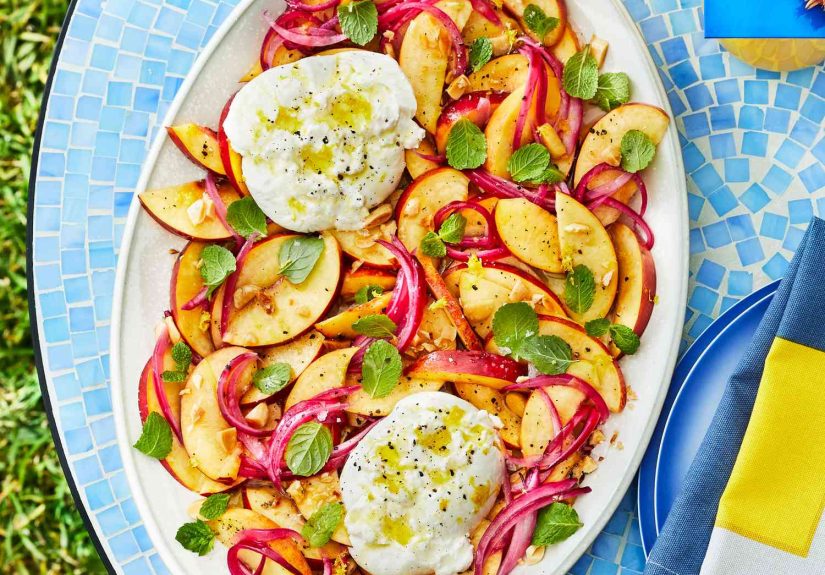
This salad is best served on a wide platter rather than a deep bowl. A platter lets the nectarines, burrata, and herbs show off their colors. It also prevents the delicate cheese from disappearing under a pile of greens. Remember, burrata did not come all this way to be buried like a secret.
Serve it as a starter before pasta, grilled chicken, salmon, shrimp, or steak. For a vegetarian meal, pair it with grilled sourdough, a simple bean salad, or chilled pasta tossed with lemon and herbs. The salad also works beautifully at brunch beside omelets, frittatas, or savory tarts.
Make-Ahead Tips
Nectarine-and-burrata salad is easy, but it is not a salad that loves waiting around fully assembled. Burrata is soft, greens are delicate, and nectarines release juice as they sit. For the best texture, prepare the components ahead and assemble right before serving.
- Slice the nectarines up to 1 hour ahead and toss them lightly with lemon juice to slow browning.
- Make the dressing up to 3 days ahead and refrigerate it in a sealed jar.
- Toast the nuts in advance and store them at room temperature in an airtight container.
- Wash and dry greens ahead, then refrigerate them wrapped in a clean towel.
- Add burrata only at the last minute for the freshest flavor and creamiest texture.
Common Mistakes to Avoid
Using Flavorless Fruit
If the nectarines taste bland, the salad will taste bland. This recipe relies on peak-season fruit. When nectarines are not at their best, use peaches, plums, apricots, or even fresh figs instead.
Overdressing the Salad
Burrata is already rich, and nectarines are juicy, so you do not need a heavy dressing. A light drizzle is enough. The goal is to enhance the ingredients, not send them on a slippery vacation.
Skipping the Salt
Do not forget flaky sea salt. Salt wakes up the fruit, balances the cheese, and makes the herbs pop. Even a sweet salad needs seasoning.
Serving Burrata Too Cold
Burrata straight from the refrigerator can taste muted. Letting it sit briefly at room temperature gives it a softer texture and fuller flavor.
Nutrition and Freshness Notes
This salad offers a bright mix of fruit, greens, healthy fats, and protein-rich cheese. Nectarines provide natural sweetness and freshness, while greens add volume and nutrients. Olive oil contributes richness, and burrata makes the dish satisfying enough to feel indulgent without being heavy.
Because this salad uses fresh produce and soft cheese, keep food safety in mind. Wash whole nectarines before slicing, use clean cutting boards and knives, and keep burrata refrigerated until shortly before serving. If the salad sits out during a warm outdoor meal, enjoy it within a reasonable window and avoid leaving dairy-based dishes in the heat for too long.
Experience Notes: What It Is Really Like to Make and Serve This Salad
The first time you make nectarine-and-burrata salad, you may feel suspicious of how little cooking is involved. There is a small voice in the brain that says, “Surely I should be simmering something, roasting something, or at least dramatically holding tongs.” Ignore that voice. This is a salad built on timing, freshness, and confidence. The most important skill is not cooking; it is choosing good fruit and knowing when to stop fussing.
In real-life serving situations, this salad has a wonderful habit of looking more difficult than it is. You can assemble it in about 15 minutes, place it on the table, and watch people react as if you just completed a culinary degree in Tuscany. The colors do most of the work: golden nectarines, white burrata, green herbs, glossy olive oil, and perhaps a few ruby tomatoes or purple onion slices. It is the kind of dish that makes a plain white platter look like it has been promoted.
One practical lesson is to slice the nectarines thick enough that they keep their shape. Very thin slices can become floppy, especially if the fruit is juicy. Wedges are better because they feel generous and hold up under dressing. Another useful tip is to tear the burrata instead of slicing it neatly. Burrata is meant to look soft and abundant. Let it spill a little. Let it be dramatic. That creamy center is the whole point.
The dressing should be tasted before it touches the salad. If your nectarines are very sweet, add a little more lemon juice or vinegar. If the fruit is tart, add a touch more honey. This small adjustment makes the salad feel balanced instead of random. A good nectarine-and-burrata salad should never taste like fruit dropped onto cheese by accident. It should taste intentional, fresh, and complete.
This salad is also forgiving when it comes to personal style. For a casual backyard meal, serve it with grilled bread and let everyone scoop up the burrata and juices. For a dinner party, arrange the ingredients neatly and finish with flaky salt at the table. For lunch, add chickpeas, white beans, or grilled chicken to make it more filling. If you want a picnic version, pack the components separately and assemble on-site so the greens stay crisp.
The biggest experience-based recommendation is simple: do not make this salad too early. It is at its best shortly after assembly, when the greens are lively, the burrata is creamy, and the nectarines are juicy without turning everything watery. Think of it as a fresh performance, not a storage project. When served right away, nectarine-and-burrata salad delivers exactly what summer food should: big flavor, little effort, and enough elegance to make even a Tuesday dinner feel like a tiny vacation.
Conclusion
Nectarine-and-Burrata Salad is proof that simple ingredients can create a showstopping dish when they are thoughtfully combined. Sweet nectarines, creamy burrata, fresh herbs, crisp greens, and a bright dressing come together in a salad that is colorful, refreshing, and deeply satisfying. It works for entertaining, quick lunches, summer dinners, and any moment when turning on the oven feels like a personal betrayal.
The secret is balance: ripe fruit, rich cheese, enough acidity, a touch of salt, and a little crunch. Once you understand that formula, you can adapt the salad endlessly with tomatoes, prosciutto, grilled fruit, spicy honey, toasted nuts, or crusty bread. It is easy, elegant, and just messy enough to be delicious.
Note: This article is written in original American English and synthesizes real culinary guidance from reputable cooking, cheese, produce, and food-safety resources. Source links and unnecessary publishing artifacts have been intentionally omitted for clean web publication.