Table of Contents >> Show >> Hide
- Why 2015 Hit Music Fans So Hard
- Major Musicians and Singer Deaths of 2015
- B.B. King (1925–2015): The Blues That Taught Rock How to Feel
- Percy Sledge (1940–2015): One Song, One Voice, Infinite Heartbreak
- Ben E. King (1938–2015): The Singer Who Made “Stand by Me” a Life Skill
- Ornette Coleman (1930–2015): The Jazz Innovator Who Refused to Behave
- James Horner (1953–2015): The Composer Who Made Movies Sound Like Memory
- Lynn Anderson (1947–2015): Country Crossover Royalty
- Allen Toussaint (1938–2015): The New Orleans Architect Behind the Hits
- Phil “Philthy Animal” Taylor (1954–2015): The Drummer Who Powered Motörhead’s Classic Era
- Scott Weiland (1967–2015): A Voice That Made the ‘90s Feel Dangerous and Glamorous
- Lemmy Kilmister (1945–2015): The Patron Saint of Loud
- Lesley Gore (1946–2015): Pop Stardom, Teenage Drama, and a Quiet Kind of Power
- A$AP Yams (1988–2015): A Young Visionary Behind a Movement
- What These Losses Taught Us About Music, Memory, and Legacy
- Fan Experiences: of What It Feels Like to Live Through a Year Like 2015
- Final Thoughts
If you were a music fan in 2015, you probably remember the weird emotional whiplash: one minute you’re casually
humming a song in the grocery store, and the next minute the internet is collectively saying, “Wait… they died?”
That year didn’t just take famous namesit took foundational voices: artists whose riffs, hooks, lyrics,
and production fingerprints are basically baked into American culture.
This article is a respectful (but human) look back at some of the most notable musicians who died in 2015,
from the “everyone knows that song” legends to the scene-defining artists who shaped whole genres from the inside.
It’s not an exhaustive roll call2015 was too heavy for thatbut it is a clear, story-driven guide to the losses
that hit hardest, and why their music still feels present.
Why 2015 Hit Music Fans So Hard
Music deaths always sting, but 2015 felt uniquely stacked because it spanned so many musical “ecosystems.” The year
included giants of blues and soul, innovators in jazz, mainstream pop icons, rock frontmen who defined the ‘90s, and
metal lifers who carried a whole attitude on their backs. It wasn’t one scene grievingit was everybody.
It also reminded people of an uncomfortable truth: we don’t just love songswe love eras. When an artist dies,
it can feel like a door closing on a time in your life: the car you drove, the apartment you lived in, the person you were
when you first heard that track. Which is why “in memoriam” lists aren’t only about celebrity newsthey’re about memory,
identity, and the soundtrack that keeps following you around like a loyal (occasionally annoying) friend.
Major Musicians and Singer Deaths of 2015
B.B. King (1925–2015): The Blues That Taught Rock How to Feel
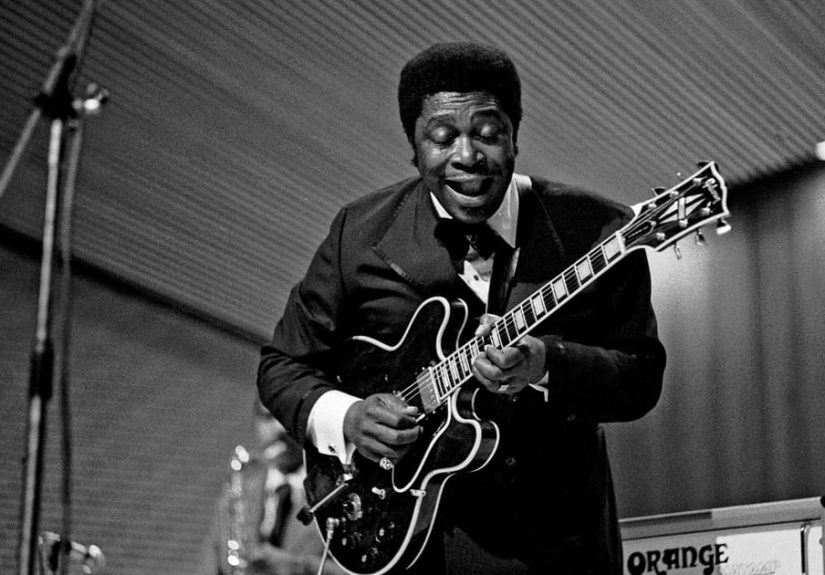
When B.B. King died in May 2015 at 89, it wasn’t just a blues storyit was a music story, period.
King helped define electric blues guitar as a speaking instrument: bends that sounded like sighs, vibrato that felt
like a human voice, and phrasing that made simple notes land like full sentences. If you’ve ever heard someone say,
“That guitarist makes the guitar sing,” they’re describing a world B.B. helped build.
His signature guitar, Lucille, became more than a propit was a character in the B.B. mythology, a reminder that tools
can become partners when you spend decades onstage together. Tracks like “The Thrill Is Gone” kept his name in the mainstream,
but his deeper impact lives in the DNA of rock and blues players who came after him.
What made B.B. special wasn’t speed or flash; it was emotional precision. He could make one note feel like a confession,
then make the next note feel like forgiveness. That’s not technique. That’s storytelling.
Percy Sledge (1940–2015): One Song, One Voice, Infinite Heartbreak
Percy Sledge died in April 2015 at 74, but his legacy is forever tied to a single title that refuses to age:
“When a Man Loves a Woman.” Plenty of singers have performed heartbreak. Sledge made it feel like a weather system
something that rolls in, changes the temperature of the room, and leaves you different afterward.
The magic was his delivery: restrained enough to feel real, raw enough to feel dangerous. It’s the kind of vocal you don’t just
listen toyou brace for it. Even people who don’t “know soul music” know that feeling, which is why his work continues to
show up in movies, weddings, breakups, and those late-night “why did I text them?” moments.
Ben E. King (1938–2015): The Singer Who Made “Stand by Me” a Life Skill
Ben E. King died in April 2015 at 76, and a lot of people had the same reaction: “Waithe wrote that?”
Because “Stand by Me” isn’t just famous; it’s practically a public service announcement set to a perfect groove.
It’s one of those songs that can turn a bar full of strangers into a temporary choir.
King’s voice had warmth without being soft, confidence without being cocky. He also carried the legacy of early R&B vocal-group
tradition (including work connected to The Drifters) into an era where pop was getting bigger and shinier. “Stand by Me” stayed human.
And maybe that’s why it lasts: it’s a promise people still want to believe in.
Ornette Coleman (1930–2015): The Jazz Innovator Who Refused to Behave
Jazz has always had rebels, but Ornette Coleman was the kind of rebel who doesn’t just break ruleshe questions why
the rules existed in the first place. Coleman died in June 2015 at 85, leaving behind a body of work that helped define
free jazz and expanded what improvisation could mean.
To listeners used to neat chord changes and predictable structure, Ornette could sound like chaos. But to people who leaned in,
it was freedom: emotion driving the music instead of the other way around. His influence reaches far beyond jazz puristsit shaped
experimental rock, modern composition, and any artist who ever thought, “What if the ‘wrong’ note is actually the honest one?”
James Horner (1953–2015): The Composer Who Made Movies Sound Like Memory
Not every musical giant stands under stage lights. James Horner, who died in June 2015 at 61, was a film composer whose
work became part of how audiences emotionally understood stories. His scores didn’t just underscore scenes; they shaped the way
scenes are remembered.
Horner’s name is attached to massive, culture-defining films, but what fans often recall is the feeling: swelling strings, choral textures,
melodic themes that seem to reach for something just out of frame. It’s a special kind of legacy when you can hum a melody and
immediately see an entire movie in your head. That’s Horner’s superpowerand his absence is still felt any time a modern blockbuster
tries (and fails) to pull off that same emotional gravity.
Lynn Anderson (1947–2015): Country Crossover Royalty
Lynn Anderson died in July 2015 at 67, and if your brain just started singing “I beg your pardon…”
congratulations: you’ve been visited by “(I Never Promised You a) Rose Garden,” a song so catchy it should come with a
small warning label.
Anderson was a key example of country music’s crossover power in the early 1970sstrong voice, radio-friendly polish, and enough
personality to make the song feel lived-in rather than manufactured. Her success helped widen the lane for women in country who wanted
both authenticity and mainstream reach. And “Rose Garden” remains a masterclass in the art of delivering hard truth with a melody sweet
enough to go down easy.
Allen Toussaint (1938–2015): The New Orleans Architect Behind the Hits
Allen Toussaint died in November 2015 at 77, and music people responded the way they do when a quiet giant leaves:
a lot of “If you know, you know.” Toussaint wasn’t only a performerhe was a songwriter, producer, arranger, and cultural architect who
brought New Orleans rhythm and sophistication into pop, R&B, and beyond.
His work is the kind you can miss if you only chase lead-singer fame, but once you notice his fingerprints, you start seeing them
everywhere. He helped define the elegant groove of New Orleans musicfunky without being messy, soulful without being sentimental.
He made records that feel like a city: humid, bright, alive, and slightly mischievous.
Phil “Philthy Animal” Taylor (1954–2015): The Drummer Who Powered Motörhead’s Classic Era
November 2015 was especially brutal for Motörhead fans. Before the year ended, the band’s world would change forever, and
Phil “Philthy Animal” Taylor was part of that story. Taylor died in November 2015 at 61.
Taylor’s drumming helped define Motörhead’s most iconic stretchhard-hitting, relentless, and perfectly suited to a band that sounded like
it was always five seconds away from outrunning the police. Drummers like Phil don’t just keep time; they set the laws of physics for the
whole band. And his style helped make Motörhead’s “classic” lineup feel like a machine built for speed and noise.
Scott Weiland (1967–2015): A Voice That Made the ‘90s Feel Dangerous and Glamorous
Scott Weiland died in December 2015 at 48, and for many listeners, it felt like the final punctuation mark on an era of
alternative rock that was both raw and theatrical. As the frontman for Stone Temple Pilots (and later Velvet Revolver), Weiland had that
rare ability to sound like multiple singers without losing his identity. He could swagger, sneer, croon, and howlsometimes in the same track.
His stage presence was famously electric and unpredictable, which is a polite way of saying he could command a room even when the room
wasn’t sure whether to applaud or stage an intervention. His death, later ruled an accidental overdose, reopened the painful conversation about
substance abuse in rock culturehow it gets romanticized, how it destroys bodies, and how it keeps echoing through the same headlines.
Lemmy Kilmister (1945–2015): The Patron Saint of Loud
Lemmy Kilmister died in late December 2015 at 70, and the tributes had a consistent theme: “There will never be another one.”
Lemmy wasn’t just the frontman of Motörheadhe was a living genre boundary, connecting punk attitude, metal weight, and rock ‘n’ roll grit
into a single unmistakable voice.
Even people who didn’t follow Motörhead closely understood Lemmy as a symbol: the guy who looked like he’d seen everything, didn’t flinch,
and still showed up to play. His influence isn’t limited to riffs; it’s cultural. He represented the idea that music can be a lifelong stance,
not a phase you outgrow.
Lesley Gore (1946–2015): Pop Stardom, Teenage Drama, and a Quiet Kind of Power
Lesley Gore died in February 2015 at 68. For some, she’ll always be “It’s My Party,” the song that captured teenage emotions with
an intensity that still feels hilarious and devastating at the same time. (“You would cry too if it happened to you” is basically the original
comment-section energy.)
But Gore’s legacy also includes “You Don’t Own Me,” a song that outgrew its era and kept coming back whenever culture needed a reminder that
a confident voice can be a form of protest. Her career is a great example of how pop musicoften dismissed as lightweightcan quietly carry
ideas that last longer than trends.
A$AP Yams (1988–2015): A Young Visionary Behind a Movement
A$AP Yams (Steven Rodriguez) died in January 2015 at just 26. He wasn’t primarily known as a front-stage performer; he was a key
driver of the A$AP Mob’s directionan organizer, taste-maker, and behind-the-scenes force who helped shape the collective’s identity and rise.
His death hit especially hard because it underscored how fragile momentum can be, and how much modern music depends on people whose names
aren’t always printed in big letters. In a streaming era, where teams and collectives shape culture at high speed, Yams represented a new kind
of influencecuration as creativity.
What These Losses Taught Us About Music, Memory, and Legacy
The musicians who died in 2015 didn’t all make the same kind of music, but they shared something: they were identity-shapers.
Some changed how instruments sound (B.B. King). Some changed how songs feel (Percy Sledge). Some changed how genres behave (Ornette Coleman).
Some built worlds behind the curtain (Allen Toussaint, James Horner, A$AP Yams). And some embodied a whole era’s voice and attitude
(Scott Weiland, Lemmy).
That’s why revisiting 2015 isn’t just nostalgia. It’s a way to map where our musical language came fromwhy certain chords still punch you in
the chest, why a film theme can trigger instant tears, why a three-minute single can feel like a life lesson. If the question is “Why does this
music still matter?” the answer is simple: because it’s still doing its job.
Fan Experiences: of What It Feels Like to Live Through a Year Like 2015
There’s a particular kind of experience that only happens when music and mortality collide: you hear the news, and suddenly your playlists turn
into a timeline. People who lived through 2015 as active music listeners often describe the year as a series of “soundtrack moments,” where grief
didn’t arrive as silenceit arrived as a song you didn’t expect to need.
Maybe you weren’t even a blues superfan, but when B.B. King died, you found yourself pulling up “The Thrill Is Gone” anyway, because some songs
are cultural instincts. You put it on “just to listen for a minute,” then it’s three tracks later and you’re reading comments from strangers
swapping stories like they’re at a wake with a jukebox. That’s the weird beauty of music grief: it’s communal, even when you’re alone at your desk.
For a lot of people, Ben E. King’s death had a different vibeless shock, more softness. “Stand by Me” is the kind of song that already lives in
public spaces: weddings, school dances, movie soundtracks, family cookouts. When the artist dies, the song doesn’t leave; it just changes color.
Suddenly it’s not only a sweet tuneit’s a reminder that love and loyalty are temporary jobs we keep reapplying for.
Rock fans often remember Scott Weiland’s death as a gut punch that carried a second feeling behind it: not surprise, exactly, but a heavy sense of
inevitability. People replayed the big Stone Temple Pilots tracks and realized how much charisma and vulnerability were braided together in his voice.
For some listeners, it reopened old conversations about addiction, about the “romance” of chaos, and about how many artists we treat like
entertainment before we treat them like humans.
And then there’s Lemmywhere grief mixed with mythology. Even people who didn’t own Motörhead albums felt like they lost a symbol: the idea that
someone could be uncompromising for decades and still be beloved. Fans talked about him like an immortal character who accidentally became real and
then, rudely, became mortal again. In that kind of mourning, you don’t just play the musicyou play it loud, because that’s what the
artist taught you to do.
The quietest experiences may be the most lasting: watching a movie and realizing James Horner is the reason a scene feels like it’s carved into your
memory, or hearing a New Orleans groove and recognizing Allen Toussaint’s elegance in the rhythm. Those moments don’t always look like grief, but they
are: small reminders that art outlives its maker, and that the listener becomes part of the legacy simply by pressing play again.
Final Thoughts
Looking back on 2015 isn’t about ranking losses or turning death into trivia. It’s about recognizing how deeply music is woven into everyday life.
The people listed here didn’t just make recordsthey made reference points. And the best way to honor them isn’t to stop at the headline. It’s to
return to the work: listen closely, share a song with someone younger, and let the music keep doing what it was always meant to doconnect us.