Table of Contents >> Show >> Hide
- Why People Confuse Moles and Skin Tags
- What Is a Mole?
- What Is a Skin Tag?
- Mole vs Skin Tag: The Quick Comparison
- How to Tell at Home (Without Starting a Side Hustle in Dermatology)
- When to Worry: Red Flags That Shouldn’t Wait
- What a Dermatologist Actually Does (Spoiler: It’s More Than a Vibe Check)
- Removal Options: Safe Methods vs. “Please Don’t” Methods
- Everyday Examples: “Which One Is This?”
- Prevention and Monitoring: What Actually Helps
- FAQ
- Conclusion
- Experience Add-On: Real-World Moments People Have With Moles and Skin Tags (500+ Words)
Let’s be honest: most of us don’t spend our free time cataloging every bump on our body like we’re running a tiny skin museum.
So when a mystery “thing” shows upespecially in a spot you can’t easily seeyour brain does the normal human thing:
panic-Google.
The good news? Most new skin growths are harmless. The important news? Some are worth a closer lookespecially because
moles can sometimes be connected to skin cancer warning signs, while skin tags are typically just annoying little freeloaders.
This guide breaks down mole vs skin tag differences in a clear, practical waywithout turning you into a dermatologist
(or a hypochondriac).
Quick disclaimer: This article is educational, not medical advice. If a spot is changing, bleeding, or just feels “off,” get it checked.
Why People Confuse Moles and Skin Tags
Because skin is a chaotic landscape. Both moles and skin tags can be small, raised, and flesh-toned or darker. They can show up
anywhere. They can be old or new. They can get irritated. And they both love making appearances right before a beach vacation.
The key difference is what they’re made of and how they behave: moles come from pigment-producing cells,
while skin tags are soft overgrowths often linked to friction. Translation: one is more about color/pigment biology,
the other is more about your skin rubbing like it’s trying to start a fire.
What Is a Mole?
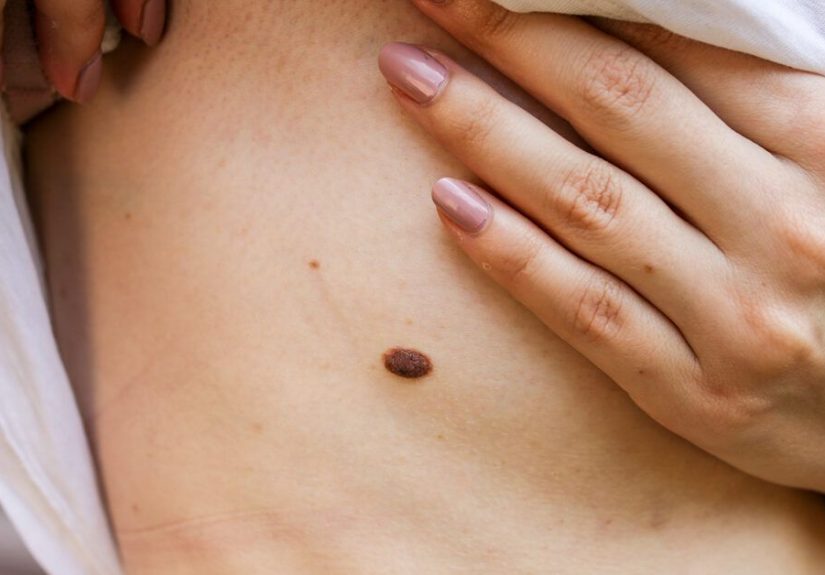
A mole (also called a nevus) is a common skin growth that happens when pigment cells called
melanocytes cluster together. Most adults have multiple moles, and many people keep developing new ones into adulthood.
Most are harmless, but some can be “atypical” and deserve monitoring.
How a Typical Mole Looks
- Shape: Usually round or oval.
- Border: Often smooth and well-defined.
- Color: Commonly tan, brown, or pink; can be darker.
- Surface: Flat or raised; may have hair growing from it.
- Timeline: Can appear in childhood/teens and change slowly over years.
Types of Moles You’ll Hear About
Not all moles are created equal. Here are the big categories people talk about during skin checks:
- Common (acquired) moles: The “standard issue” moles that show up over time.
- Congenital moles: Present at birth. Larger congenital moles can carry a higher melanoma risk,
so dermatologists often track them more closely. - Atypical (dysplastic) nevi: Moles that look differentoften larger, with irregular borders or mixed colors.
Having atypical moles can be associated with higher melanoma risk, especially with family history.
Do Moles Turn Into Skin Cancer?
Most moles never become cancer. But melanoma (a serious form of skin cancer) can develop in or near a moleor appear as a new spot.
That’s why dermatology organizations push routine self-checks and knowing red flags.
In other words: don’t fear every mole, but don’t ignore a suspicious one either.
What Is a Skin Tag?
A skin tag (medical name: acrochordon) is a small, soft, benign flap of skin that often hangs off the surface.
Think of it like your skin accidentally created a tiny “handle” where it didn’t need one.
Skin tags are extremely common and generally harmless.
How a Typical Skin Tag Looks
- Texture: Soft, squishy, and movable.
- Shape: Often a little bump on a narrow stalk (pedunculated).
- Color: Skin-toned, pinkish, or slightly darker.
- Where: Places where skin rubsneck, underarms, groin, under breasts, eyelids.
- Behavior: Usually stable; can get irritated from friction and turn red or darker.
Why Skin Tags Happen
The exact cause isn’t always clear, but skin tags are strongly associated with friction and are more common with age.
They’re also seen more often in people with overweight/obesity and metabolic conditions (like insulin resistance or diabetes).
Important nuance: skin tags themselves aren’t dangerous, but a sudden crop of new ones is a good reason to mention it to your clinician
not because “tags become cancer,” but because your body may be waving a metabolic flag.
Mole vs Skin Tag: The Quick Comparison
If you want the “don’t-make-me-scroll” version, here’s a practical side-by-side.
| Feature | Mole (Nevus) | Skin Tag (Acrochordon) |
|---|---|---|
| What it is | Cluster of pigment cells (melanocytes) | Soft overgrowth of skin tissue, often on a stalk |
| Common feel | Flat or slightly raised; can be firm | Soft, flexible, “dangly” |
| Typical color | Tan/brown/pink; may be darker | Skin-toned to slightly darker; may redden if irritated |
| Common locations | Anywhere (including sun-exposed areas) | Skin folds: neck, armpit, groin, eyelids, under breasts |
| Risk level | Mostly benign, but monitor for melanoma warning signs | Benign; main issues are irritation and mistaken identity |
| Most common complaint | “Is this changing?” | “This keeps catching on my necklace!” |
How to Tell at Home (Without Starting a Side Hustle in Dermatology)
You can’t diagnose yourself with certainty (and you shouldn’t try), but you can get better at spotting patterns.
Here are some real-world clues that help people tell a skin tag vs mole.
Clue #1: The “Stalk Test”
Skin tags often attach by a narrow stalk and can look like a tiny balloon tied to your skin. Many moles don’t have that stalk
(though some raised moles can still be “bumpy”). If it truly dangles and swings with movement, it leans skin tag.
Clue #2: The “Friction Map”
If the growth is in a high-rub zoneneckline, bra line, underarm, inner thighskin tags are frequent flyers there.
Moles can also be there, but skin tags love places where fabric, jewelry, and skin folds constantly argue.
Clue #3: The ABCDE Rule (For Moles)
Dermatology organizations recommend the ABCDE rule to spot potential melanoma signs:
- A – Asymmetry: One half doesn’t match the other.
- B – Border: Ragged, notched, blurred, or irregular edges.
- C – Color: Multiple colors or uneven color (brown/black with red/white/blue areas).
- D – Diameter: Often larger than 6 mm (pencil eraser), though melanomas can be smaller.
- E – Evolving: Any change in size, shape, color, heightor new symptoms like itching or bleeding.
Clue #4: The “Ugly Duckling” Sign
Most of your moles tend to resemble each other. An “ugly duckling” is the one that looks different from its neighbors.
Even if it doesn’t check every ABCDE box, “the odd one out” deserves attention.
When to Worry: Red Flags That Shouldn’t Wait
Whether it’s a mole or something else, these are good reasons to book a dermatology visit:
- Rapid change over weeks or months (size, color, shape, or texture).
- Bleeding without clear injury, or frequent crusting/scabbing.
- Persistent itching, pain, or tenderness in a spot that didn’t used to act up.
- A new pigmented spot appearing in adulthoodespecially after age 30.
- A sore that doesn’t heal or keeps returning in the same place.
Special note: skin tags can turn dark if they twist and lose blood supply. That can look scary, but it’s still worth having
a clinician confirm it’s truly a tag and not a different growth.
What a Dermatologist Actually Does (Spoiler: It’s More Than a Vibe Check)
A dermatologist doesn’t just glance and guess. Common steps include:
- History: When it appeared, whether it changed, symptoms, family history of skin cancer.
- Visual exam: Full-body skin exam when appropriate.
- Dermoscopy: A special magnifier/light to see patterns below the surface.
- Biopsy (if needed): Removing part or all of the lesion for lab analysis.
This is why DIY removal is risky: if you remove the evidence before diagnosis, you might delay detecting something serious.
Removal Options: Safe Methods vs. “Please Don’t” Methods
Skin Tag Removal
Skin tags don’t have to be removed unless they’re irritated or you don’t like them. In a medical office, common methods include:
- Snip/excision: Quick removal with sterile scissors or a blade, sometimes with local anesthetic.
- Cryotherapy: Freezing with liquid nitrogen (may take time to fall off).
- Cautery/electrocautery: Burning/sealing it off, often minimizing bleeding.
At-home kits and “tag bands” are popular online, but medical sources warn against DIY because of bleeding, infection, scarring,
and the risk you’re treating the wrong thing.
Mole Removal
Moles are removed for two main reasons: medical concern (rule out cancer) or cosmetic preference.
Methods depend on depth and location:
- Shave removal: For raised moles, often leaving a flatter surface (may still leave a mark).
- Punch biopsy: A small circular tool removes a deeper plug.
- Surgical excision: Cuts out the mole and stitches the skin; commonly used when melanoma is a concern.
If a mole is removed because it looks suspicious, the tissue is typically sent to a lab. That’s not “extra”
it’s the whole point of removing a suspicious lesion.
Everyday Examples: “Which One Is This?”
Example 1: The Necklace Nemesis
You notice a tiny, soft bump on your neck that catches on jewelry and sometimes gets red. It’s attached by a narrow stalk.
This pattern is classic for a skin tagespecially in a friction area.
Example 2: The Freckle That Started Evolving
A brown spot on your shoulder that used to look uniform now has a darker corner, and the edge looks less smooth than before.
That “E” in ABCDEevolvingis exactly why dermatologists want you to come in.
Example 3: The Surprise New Spot at 35
A new pigmented mole-like spot appears in adulthood. Many are benign, but new adult lesions deserve evaluation to rule out melanoma
or other skin cancersespecially if it looks different from your other moles.
Prevention and Monitoring: What Actually Helps
For Moles (and Skin Cancer Prevention)
- Sun protection: Sunscreen, hats, protective clothing, and avoiding tanning beds.
- Monthly self-checks: Use mirrors; take photos to track change over time.
- Professional skin exams: Especially if you have many moles, atypical moles, or family history of melanoma.
For Skin Tags
- Reduce friction: Softer fabrics, less chafing, mindful jewelry placement.
- Metabolic health check-in: If you’re suddenly getting many, mention it at your next visit.
- Don’t DIY: If it’s bothersome, get it removed professionallyfast and safer.
FAQ
Can a skin tag turn into cancer?
Skin tags are generally benign and not considered precancerous. The bigger issue is misidentificationsome skin cancers
can mimic benign growths, which is why diagnosis matters when something looks unusual.
Do moles always mean melanoma risk?
No. Most moles are harmless. But changes in a moleor a new, unusual spotcan be an early sign of melanoma.
Use ABCDE and the “ugly duckling” concept as a screening tool, not a final verdict.
Why did my skin tag turn black?
A skin tag can darken if it twists and loses blood flow, or if it’s repeatedly irritated. Still, anything that changes color
deserves a professional look to confirm what it is.
Is it safe to remove a mole or skin tag at home?
Medical organizations commonly discourage at-home removal due to bleeding, infection, scarring, and delayed diagnosis of skin cancer.
If you want it gone, get it removed by a clinician who can confirm what it is first.
Conclusion
The simplest takeaway is this: skin tags are usually soft, stalky, and friction-loving.
Moles are pigment-based growths that are often harmlessbut deserve attention when they change.
If you remember nothing else, remember “ABCDE + ugly duckling,” and don’t ignore evolving spots.
If you’re unsure, that’s not a failureit’s the correct moment to involve a dermatologist. Your job is to notice patterns.
Their job is to confirm what’s going on, safely remove it if needed, and make sure nothing important is missed.
Experience Add-On: Real-World Moments People Have With Moles and Skin Tags (500+ Words)
Because you’ll probably relate more to real-life scenarios than a textbook definition, here are common experiences that patients
(and clinicians) describeminus the dramatic music that your brain adds at 2:00 a.m.
These are not personal anecdotes from the author; they’re patterns that show up again and again in everyday life.
1) “It Was There Forever… Until It Wasn’t”
A classic mole story: someone has a small brown mole on their arm for years. It’s the quiet neighbor of the skin worldnever loud,
never changing, never bothering anyone. Then, one summer, they notice it looks darker on one side. Maybe it’s slightly raised now.
Maybe the border looks fuzzier than it used to. The reaction is usually a mix of denial (“It’s probably nothing”) and bargaining
(“I’ll check it next month after life calms down”). When they finally get it examined, dermatologists often say the same thing:
“You did the right thing coming in.” Sometimes it’s benign. Sometimes it’s atypical. The point is that noticing evolution is the win.
Even when results are reassuring, the person leaves with a new habit: quick monthly checks and a few reference photos on their phone.
2) “This Tiny Thing Has a Personal Vendetta Against My Clothing”
Skin tags are famous for being harmless yet deeply annoying. People often discover them because of frictionnecklaces snagging,
bra straps rubbing, shaving accidents, or a collar that suddenly feels like sandpaper. The tag may swell or turn red after repeated
irritation, which convinces the person it’s “getting worse.” Most of the time it’s simply inflamed, not dangerousbut it can be
surprisingly painful for something the size of a sesame seed. Once removed in-office, the emotional response is often disproportionate
to the procedure: pure relief, like removing a pebble from a shoe you didn’t realize you were wearing.
3) “I Tried a DIY Hack and Now I Have Regrets”
The internet loves a shortcut. Some people try to tie dental floss around a “tag,” use an at-home freezing kit, or cut it off.
What they expect: a quick fix. What sometimes happens: bleeding that’s hard to stop, infection, a scar, ormost importantly
the realization that the bump might not have been a skin tag in the first place. Clinicians see this pattern often enough that many
medical sites explicitly warn against DIY removal. The lesson people take away is usually simple: if it’s on your skin, it deserves
accurate ID before you go full arts-and-crafts.
4) “My Friend Had Melanoma, and Now Every Spot Feels Suspicious”
Anxiety after hearing someone else’s diagnosis is incredibly common. People start scanning their skin with a new intensity:
“Is this freckle new? Was it always that shape? Why does that mole look different in this lighting?” In these situations, a structured
approach helps. Using the ABCDE rule and the “ugly duckling” concept turns panic into a checklist. Many dermatologists recommend
taking baseline photos (especially if you have many moles) and doing consistent monthly checks rather than daily hyper-scans.
It’s a healthier balance: vigilant, not obsessed.
5) “The Appointment Was Way Less Scary Than My Imagination”
A lot of people delay appointments because they fear bad news or assume they’ll be judged for “overreacting.” In reality, clinicians
would much rather reassure you about a benign lesion than diagnose something late. People often describe skin checks as surprisingly
straightforward: a careful exam, a quick explanation, andif removal is neededlocal numbing and a short procedure. The most common
post-visit feeling isn’t fear; it’s clarity. Whether the result is “all good” or “we removed something suspicious to test,” the person
leaves with a plan instead of a question mark.
If you see yourself in any of these stories, you’re not alone. Skin changes are normal, and curiosity is healthy.
When in doubt, let a trained eye confirm the difference between “annoying but harmless” and “needs attention.”