Table of Contents >> Show >> Hide
- What Is Mokele-Mbembe, Exactly?
- Where the Legend Lives: The Congo Basin, Likouala, and Lake Télé
- How a Congo Legend Turned Into a “Living Dinosaur” Story
- The Expeditions: What People Looked Forand What They Found
- Could a Sauropod Dinosaur Survive in the Congo Basin?
- The Most Likely Explanations (That Don’t Require Time Travel)
- So… What’s the Truth?
- Why This Myth Still Matters (Even If It’s Not a Dinosaur)
- Experiences: What a “Mokele-Mbembe Quest” Feels Like (A Composite Field Diary)
Deep in the swampy green maze of the Congo Basin, there’s a name that can turn a perfectly normal river ripple
into a full-blown “Jurassic moment”: Mokele-Mbembe (also spelled Mokèlé-mbèmbé).
Depending on who’s telling the story, it’s a river spirit, a monster, a misidentified animal, orif you’ve got a
soft spot for adventure moviesa surviving long-necked dinosaur hiding in the reeds like it’s avoiding paparazzi.
This article is a fact-based look at what we actually know: where the legend comes from, why it became tied to
dinosaurs, what expeditions found (and didn’t), and what the most likely explanations are. We’ll keep it honest,
keep it fun, and keep one foot firmly on dry landbecause swamp mud has a way of stealing shoes and confidence.
What Is Mokele-Mbembe, Exactly?
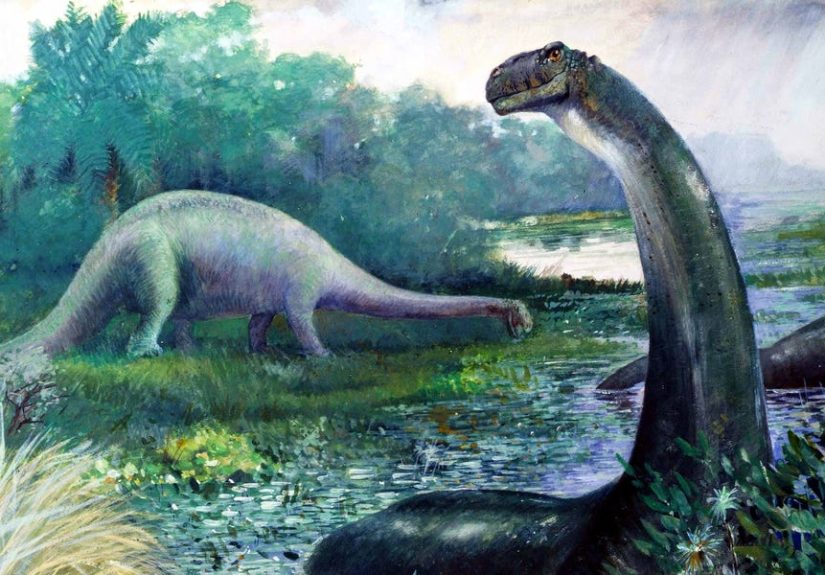
“Mokele-Mbembe” is often translated as something like “one who stops the flow of rivers,” a dramatic name that
basically dares you to look away from your canoe for one second. In modern retellings, the creature is usually
described as large, gray-brown, smooth-skinned, and semi-aquaticwith a long neck and tail. That description is
exactly why some people leap to “sauropod dinosaur.”
But here’s the important nuance: the Congo Basin is huge, culturally diverse, and ecologically complex. Stories
travel. Meanings shift. Some accounts treat Mokele-Mbembe as a physical animal; others treat it as something
spiritual or symbolic. If you’re hoping for a simple “real or fake” answer, the swamp is about to hand you a
complicated bouquet of reeds and ambiguity.
Where the Legend Lives: The Congo Basin, Likouala, and Lake Télé
Most modern “Mokele-Mbembe hotspot” stories cluster around remote wetland regions in the Congo Basinespecially
swamp forests and river systems connected to the Likouala area and Lake Télé.
This is not a place designed for easy fieldwork. Access can be difficult, visibility is limited, and the landscape
is dominated by waterways, flooded forest, and thick vegetation. It’s the kind of environment where a large animal
can exist unseen for a long time… and also where a perfectly ordinary animal can look like a prehistoric legend
for five seconds before it disappears.
Ecologically, the area is real-deal wildlife country: conservation groups describe the broader Ndoki-Likouala
landscape (including the Lac Télé area) as a major stronghold for biodiversity, including forest elephants.
In other words: there are absolutely large, powerful, mysterious-looking animals out there. They just come with
modern names and conservation status, not a Jurassic soundtrack.
How a Congo Legend Turned Into a “Living Dinosaur” Story
The Fossil Age Changed Everyone’s Imagination
People have told stories about strange creatures for as long as people have told stories. What changed in the
1800s and early 1900s was the global public’s exposure to dinosaur fossils. Once giant extinct animals became part
of mainstream conversation, the idea of “maybe one is still out there” went from campfire talk to headline bait.
The Spark: Hagenbeck, Headlines, and a Very Loud Imagination
One frequently cited turning point is a 1909 book by Carl Hagenbeck, a showman and animal dealer, who speculated
that long-necked dinosaurs might still survive in “deepest Africa.” The key detail: it was speculation, not evidence.
But sensational claims spread fast. A few years later, stories were circulating in popular media about dinosaurs
possibly still livingexactly the kind of narrative gasoline that turns a regional legend into an international obsession.
Fiction Didn’t Help (But It Sure Was Fun)
Around the same era, adventure fiction helped normalize the “lost world” ideathe notion that remote places could
hide ancient survivors. It’s entertaining, it’s memorable, and it makes for great cover art. It also sets a trap:
once you expect a dinosaur, your brain starts upgrading every splash into a neck, every log into a tail, and every
elephant into a “reptilian silhouette,” especially at dusk.
The Expeditions: What People Looked Forand What They Found
Roy Mackal and the Lake Télé Era
In the late 20th century, the most famous searches were tied to cryptozoologyinvestigations of animals not
recognized by mainstream zoology. Roy Mackal, a biologist associated with the University of Chicago, led efforts
into the Likouala and Lake Télé regions. Accounts describe interviews with local communities, the use of tools like
sonar, and a heavy dependence on anecdotal reportsalong with recurring concerns about reliability and how stories
were gathered.
Even sympathetic summaries of these expeditions generally come back to the same wall: no specimen, no verified
physical trace, no clear photo, no bones, no teeth. And in science, “almost evidence” is what you call a story you
still need to test.
The Pattern Cryptids Can’t Quit: “The Evidence Was Right There… Until It Wasn’t”
Reports connected to the Lake Télé area repeatedly run into practical problems that sound weirdly familiar:
cameras not ready, film ruined by humidity, settings wrong, the photographer missing the moment, recordings coming
out too poor to analyze. Skeptical reviews highlight this as a broader pattern in cryptid cases: evidence is always
just out of reach, and the explanations are always convenient enough to keep belief alive.
The Modern “Expedition Industrial Complex”
In the internet age, Mokele-Mbembe searches sometimes look less like science and more like a crowdfunding trailer.
Smithsonian Magazine famously covered a would-be expedition that talked about tranquilizing (or otherwise dealing with)
a creature that had never been demonstrated to existan approach that makes real researchers wince and real
mosquitoes applaud.
The takeaway isn’t “people are silly.” The takeaway is that extraordinary claims require extraordinary evidence,
and planning for a dinosaur capture before you’ve verified a dinosaur is… putting the canoe before the river.
Could a Sauropod Dinosaur Survive in the Congo Basin?
Let’s do the reality-check math (without turning this into a spreadsheet that cries). If a sauropod-like animal
existed today:
- It wouldn’t be just one. A species needs a breeding population, not a single immortal celebrity dinosaur.
- It would leave physical evidence. Tracks, dung, feeding damage, carcasses, bonessomething verifiable.
- It would show up in ecological surveys. Modern field biology, satellite imagery, and conservation work detect large animals regularly.
- It would conflict with what we know about dinosaur extinction. Non-avian dinosaurs died out around 66 million years ago; birds are the surviving dinosaur lineage.
None of that absolutely “proves” something can’t existscience stays open to new data. But it does set the bar:
if a massive, breeding population of dinosaur-sized animals lived in the same region where humans, conservation
teams, and researchers operate, we would expect more than stories.
The Most Likely Explanations (That Don’t Require Time Travel)
1) Misidentification: Big Animals Doing Big Animal Things
National Geographic reports a blunt, funny truth from the field: in the Congo Basin, it can be surprisingly easy
to mistake a forest elephant or a hippopotamus for something dinosaur-ish, especially for inexperienced observers.
An elephant partly submerged can look like a “humped back” with a “neck.” A hippo surfacing can look like a large,
smooth-headed creature. Add distance, haze, fear, excitement, and a story you’ve already heard… and you’ve got a
legend in the making.
2) The “Composite Creature” Effect
Sometimes a cryptid description is less “one animal” and more “story blender.” Different communities may describe
different beings using the same name, or outsiders may combine separate stories into a single creature with
dinosaur-flavored features. Over time, retellings standardize the “best parts”long neck, huge size, river
dominancebecause those details make the story stick.
3) Real Ecology, Real Mystery: The Congo Basin Is Vast
The Congo Basin’s scale and biodiversity are legitimately mind-bending. Conservation organizations describe a web
of life that includes forest elephants, great apes, and thousands of other speciesplus large areas that are still
difficult to survey comprehensively. New species are discovered regularly in the broader region. That reality can
feed a reasonable thought: “If new species are found, maybe this one is real too.”
The catch is size. Discovering a new frog or fish is common; discovering a new dinosaur-sized animal is a different
category of claim. The bigger the animal, the harder it is for it to leave no trace.
4) Media Feedback Loops (A.K.A. The Legend That Gets Stronger When Shared)
Once a story is internationally known, local “sightings” can increasenot necessarily because anything changed in
the forest, but because expectations changed in people’s minds. A famous photo, a documentary, a viral post, and
suddenly more observers interpret ordinary events through a Mokele-Mbembe lens. This doesn’t mean witnesses are lying.
It means humans are pattern-making machines with excellent imaginations and questionable night vision.
So… What’s the Truth?
The truth is that Mokele-Mbembe is real as a legenda story with cultural weight, geographic identity,
and staying power. The truth is also that there is no verified scientific evidence of a surviving
sauropod dinosaur in the Congo Basin. After many searches, the case remains built on anecdotes, ambiguous sightings,
and evidence that never quite becomes testable.
If you love the mystery, you don’t have to stop loving it. You just have to love it responsibly: with respect for
local communities, curiosity about real Congo Basin wildlife, and a willingness to separate “cool story” from
“confirmed species.”
Why This Myth Still Matters (Even If It’s Not a Dinosaur)
The Congo Basin isn’t just a backdrop for monster hunts. It’s a globally important ecosystem under pressure from
deforestation, resource extraction, and wildlife trafficking. Conservation groups emphasize the region’s
biodiversity and the deep knowledge held by Indigenous peoples who have lived with these forests for centuries.
If the Mokele-Mbembe story draws attention to the Basin, the best outcome is that attention turning into protection
for real habitats and real animalsespecially endangered ones like forest elephants.
In a way, the legend functions like a spotlight. The question is where you aim it: at a hypothetical dinosaur, or
at a living ecosystem that needs help right now.
Experiences: What a “Mokele-Mbembe Quest” Feels Like (A Composite Field Diary)
Let’s be clear up front: what follows is a compositea stitched-together “field diary vibe” based on
how real expeditions and real Congo Basin travel are often described, not a claim that any single person (or this
very non-mosquito-proof article) personally did all of it.
Day one starts with optimism so fresh it practically squeaks. You’ve packed waterproof bags, spare batteries, and
the kind of snacks that can survive being sat on. Then the environment politely informs you that “waterproof” is
not a binary state. It’s a spectrum. The air is humid enough to feel like you’re breathing soup. Your shirt is wet
before you finish thinking, “Wow, it’s humid.”
Travel is a slow negotiation with the landscape. Boats slide through narrow channels where the water looks calm
but feels busybusy hiding branches, vegetation mats, and the occasional surprise log that is absolutely not a
dinosaur tail (until your brain decides it is for half a second). At night, the sounds shift. The forest doesn’t
go quiet; it changes instruments. Frogs, insects, distant callseverything feels close, even when it isn’t.
Your imagination, meanwhile, becomes an unpaid intern whose only skill is dramatic escalation.
The most intense moments are often the smallest. A sudden splash. A wake that cuts across still water. A deep
rumble that turns out to be a perfectly normal animal doing perfectly normal animal things. And stillyour heart
does that little sprint. Because in a place this big, the unknown doesn’t feel impossible. It feels like it could
be standing just behind the next wall of green, waiting for you to misinterpret it.
Then comes the “evidence problem,” the part that veteran field researchers will recognize instantly. Equipment
struggles. Condensation sneaks into lenses. Batteries drain faster than your confidence. Someone swears they saw a
shape; someone else saw a wave; someone else saw the same thing but a different story formed in their head. If a
camera comes up too late, the moment is gone. If the camera was set wrong, the moment exists only as a blurry
reminder that technology has a sense of humor. In cryptid lore, this is where legends thrive: not in what’s
recorded, but in what nearly was.
The most meaningful experiences, though, often have nothing to do with monsters. They’re human. Listening to how
people describe the river and the forest, and realizing the story isn’t a cheap trickit’s a way of talking about
power, danger, respect, and place. You learn that the Congo Basin doesn’t need a dinosaur to be astonishing.
It has forest elephants, rare birds, and ecosystems so complex they can make a scientist go quiet mid-sentence.
By the end, you might still love the mystery of Mokele-Mbembe. But you also gain a new respect for the real,
living world that keeps that mystery alive.