Table of Contents >> Show >> Hide
- Meet the Megalodon: A Shark Known Mostly by Its Smile
- How Big Was Megalodon, Really?
- Why Megalodon Was So Horrifying (Scientifically Speaking)
- Where Megalodon Lived and How It Ruled
- So… Why Did Megalodon Go Extinct?
- Megalodon Myths That Refuse to Sink
- What Megalodon Still Does to Us (Besides Fuel Nightmares)
- Conclusion: The Seven Seas Were Not a Safe Place
- Experiences: of Real-World Megalodon Thrills (No Time Machine Required)
- SEO Tags
If you’ve ever looked at a great white shark and thought, “Cool, but what if it had the energy of a moving van with a mouth?” congratulations:
you’ve basically invented a pop-culture version of the megalodon. The real animal was even more unsettlingbecause it didn’t need movie magic.
For millions of years, Otodus megalodon (often called simply “megalodon”) was built to do one job exceptionally well: stay on top of the food chain.
And it did, across oceans, across eras, across an absurd amount of whales that absolutely did not sign up for this.
This article separates the fossil-backed facts from the Hollywood foam machine: how big megalodon likely was, what its teeth were designed to do,
where it lived, why scientists are confident it’s extinct, and what probably pushed an apex predator off the throne. We’ll keep it fun, but grounded
like a museum exhibit that cracks jokes while still making you whisper, “Nope,” at a jaw replica the size of a doorway.
Meet the Megalodon: A Shark Known Mostly by Its Smile
Why teeth are the star of the show
Sharks don’t come with a convenient skeleton for paleontologists to study. Their bodies are mostly cartilage, which rarely fossilizes well.
What does preserve beautifully are teethand megalodon had a lot of them. Like other sharks, it constantly shed and replaced teeth over its lifetime,
leaving behind a global breadcrumb trail of “I was here, and I was hungry.”
Those teeth aren’t just big; they’re engineered. Megalodon teeth are thick, broad, and serrated, built more like heavy-duty steak knives than delicate daggers.
Scientists also track megalodon’s evolutionary story through changes in tooth shape over timeearlier relatives had different edges and small side cusps,
while later megalodon teeth became flatter, more blade-like, and more uniformly serrated. Translation: the design got better at cutting.
What’s in a name? (More than you’d think)
You’ll see multiple scientific names in books and older documentaries. Megalodon has been classified in different genera over time, and
you may run into “Carcharocles megalodon” in older sources. Many modern references use Otodus megalodon.
That name debate doesn’t change the headline: we’re talking about the same famous “megatooth” shark known from widespread fossil teeth.
How Big Was Megalodon, Really?
Length: terrifying, but not infinite
Because megalodon is mostly known from teeth (and a smaller number of vertebrae), size estimates are based on relationships observed in living sharks:
tooth size, jaw dimensions, and body proportions. Many museum and science-education sources place large adults around 50–65 feet (roughly 15–20 meters),
with some estimates clustering near the upper end for the biggest individuals. It’s best to think in ranges, not a single “official” number,
because the fossil record is incomplete and different methods produce different results.
One widely cited educational estimate puts top-end individuals around 60 feet, with adult females often suggested as larger than adult males.
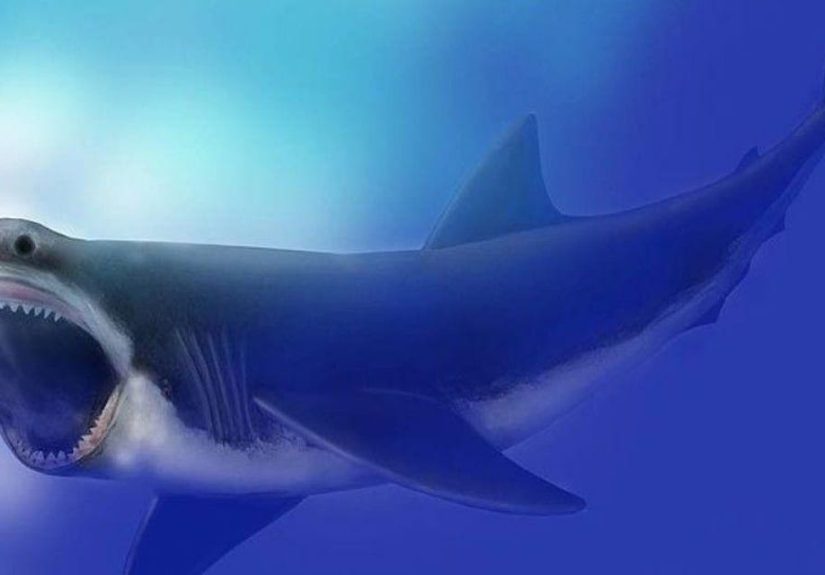
Other scientific modeling work has explored what a 16-meter animal might look like in terms of head length, fin height, and tail sizeuseful for
visualizing just how much shark you’re dealing with.
Weight and body shape: the “not just a giant great white” update
Here’s where modern research has gotten extra spicy (in the scientific sense). For years, many reconstructions pictured megalodon as a scaled-up great white:
thick, torpedo-shaped, and built like a living submarine with opinions. But newer analyses suggest megalodon may have been more elongated and less bulky
than the classic great-white clone image. Some researchers have proposed a slimmer silhouettestill enormous, still apex, but shaped differently than
the “great white on a growth-spurt” stereotype.
That matters because shape influences behavior. A more streamlined body could change expectations about speed, cruising efficiency, and turning.
The takeaway isn’t “scientists changed their minds, so nothing is real.” It’s the opposite: scientists refine reconstructions as better comparative data
and improved modeling methods come in.
Why Megalodon Was So Horrifying (Scientifically Speaking)
Those teeth weren’t for nibbling
Megalodon teeth could reach several inches long, and truly giant specimens are rare but real. Their serrations functioned like built-in saw blades,
designed to slice through tough tissue efficiently. If nature were trying to invent a “quickly process large prey” tool, this is what you’d get:
a wide cutting surface, serrations for traction, and a robust tooth root built to handle serious force.
Bite force: the number that makes everyone sit up straight
Bite-force estimates for megalodon are typically derived by scaling from modern sharks (especially great whites) using biomechanics and modeling.
Depending on assumptions about size and musculature, estimates can land in the neighborhood of well over 100,000 newtons for very large individuals.
Some popular science references translate the upper end into “tens of thousands of pounds of force.” That’s not a magic spell; it’s an estimate,
but it underscores the same point: this shark’s bite was likely among the most powerful known in the animal world.
And sharks don’t just bitethey can shake their heads while feeding, which may increase the effective forces experienced by prey.
Even without going full horror-movie, that’s enough to understand why megalodon didn’t need venom, spikes, or laser eyes.
It was a physics problem with fins.
Menu planning: big prey, big energy, big consequences
Fossil evidence and ecological inference suggest megalodon targeted large marine animals, including whales and other sizable prey.
You don’t evolve that body size and those teeth to live off shrimp cocktails. The “big-prey lifestyle” also explains why megalodon’s existence
was tied to ocean productivity, prey availability, and climate patterns. When you’re built like a freight train, you need a lot of fuel
and you can’t “just snack” your way through a bad era.
Where Megalodon Lived and How It Ruled
A global traveler with a fossil passport
Megalodon fossils have been found across many parts of the world, which strongly suggests a wide, near-cosmopolitan distribution in ancient oceans.
That broad range fits with an apex predator capable of long-distance travel and with warm-water preferences in certain life stages.
Nurseries: even ocean nightmares have a childhood
One of the most interesting ideas in megalodon research is that juveniles may have used shallow, warm coastal regions as nursery areas,
similar to how some modern sharks use protected habitats. Studies discussing potential nursery sites point to fossil deposits where smaller megalodon teeth
are unusually common, suggesting younger animals spent time there. That’s both adorable (in a “please don’t grow up” way) and informative:
it hints at reproduction strategies, habitat needs, and how vulnerable early life stages could be to environmental change.
So… Why Did Megalodon Go Extinct?
Extinction is rarely a single villain with a mustache. It’s usually a pile-up: climate shifts, changing prey, new competitors, and habitat changes
that add up until even the top predator can’t keep up. Megalodon appears to have disappeared sometime between roughly 3.6 and 2.6 million years ago,
with statistical work supporting an extinction date around 2.6 million years ago. Different sources cite different boundaries depending on methods,
fossil data, and interpretationso the best approach is “late Pliocene, likely around 2.6 million years ago.”
Cooling oceans and a moving buffet
As Earth’s climate shifted and oceans cooled, marine ecosystems changed. If your success depends on abundant large preyand on being able to meet huge energy demands
cooling waters and shifting food webs can become a problem fast. Some science-education sources also highlight the role of major oceanographic changes
in reshaping marine habitats and nutrient flow, with downstream impacts on prey availability.
Competition: when a new rival shows up at the worst possible time
Around the same broad timeframe, great white sharks expanded and diversified in ways that may have increased competition for similar prey resources.
Is it possible that great whites “killed off” megalodon like a dramatic sports movie? Not literally. But competition for overlapping food sources,
combined with environmental stress, can push a species closer to the edge. Chemical analyses of fossil teeth have even been used to explore dietary overlap
and competition hypotheses.
Big bodies are powerful… until they’re expensive
Being huge is an advantage when resources are plentiful. It can be a liability when they aren’t. A massive predator needs consistent calories,
and if prey becomes scarcer, smaller, faster, or shifts to different regions, a mega-sized hunter may lose efficiency.
In other words, evolution doesn’t guarantee job securityespecially if your “job” is being enormous forever.
Megalodon Myths That Refuse to Sink
Myth #1: “Megalodon is still out there.”
No. Scientists are confident megalodon is extinct. The fossil record, the lack of credible modern evidence, and our extensive knowledge of ocean life
all point the same direction. The idea of a living megalodon is fun for thrillers, but it doesn’t hold up under scientific scrutiny.
Modern sharks leave modern tracesbodies, genetics, verified sightings, consistent ecological signals. We have none of that for megalodon.
Myth #2: “We know exactly what it looked like.”
We know a lot, but not everything. Teeth tell us about feeding. Vertebrae tell us about size and structure. Comparisons to living sharks help us model proportions.
But without a full skeleton, reconstructions will always involve uncertaintyand that’s okay. The honest version of science is:
“Here’s what evidence supports, and here’s what we’re still testing.”
Myth #3: “It was basically a bigger great white.”
That’s the easiest mental image, which is why it spread. But current research suggests it may have had a different body form than a scaled-up great white.
Still terrifying, still dominantjust not necessarily built like the exact same template at 3x scale.
What Megalodon Still Does to Us (Besides Fuel Nightmares)
Megalodon isn’t just a monster story; it’s a case study in how ecosystems work at the top. Apex predators reflect the health and structure of food webs.
When conditions changeclimate, prey distribution, competitiontop predators can be among the first to feel it, even if they look unstoppable.
That’s part of why megalodon remains relevant. Understanding what may have contributed to its disappearance helps scientists think about modern ocean change,
modern apex predators, and what happens when large animals lose habitat or prey. The ancient oceans were different, but the ecological math is familiar:
energy in, energy out, and the bill always comes due.
Conclusion: The Seven Seas Were Not a Safe Place
Megalodon earned its reputation the old-fashioned way: by being enormous, well-armed, and extremely good at hunting for a very long time.
Its teeth were optimized cutting tools. Its bite forceby most estimateswas staggering. Its global spread tells us it wasn’t a local legend,
but a real apex predator with a wide range. And its extinction reminds us that even the scariest creatures aren’t immune to environmental change,
shifting prey, and competition.
The good news is you don’t have to worry about bumping into one on your next beach day. The better news is that the real story is more interesting than the myth:
a planet-scale predator whose rise and fall is written in fossil teeth, ancient oceans, and the scientific effort to reconstruct a creature we’ll never see alive.
Which is, frankly, a win for everybody currently trying to enjoy the sea.
Experiences: of Real-World Megalodon Thrills (No Time Machine Required)
If you want a megalodon “encounter” that’s actually grounded in reality, start with the closest thing the animal left behind: its teeth.
In places like Florida and parts of the U.S. Southeast, fossil hunters and divers treat megalodon teeth like prehistoric treasure.
There’s a special kind of adrenaline in scanning sand and gravel, spotting a triangle-shaped edge, and realizing you’re looking at a tool that once belonged
to an apex predator. It’s the same feeling people get when they find an arrowheadexcept this arrowhead used to be attached to a shark the length of a bus.
Museum experiences might be the most “holy wow” per square foot. Walk into a natural history exhibit featuring a megalodon jaw reconstruction and you’ll
immediately understand why humans love to exaggerate this shark. The jaw models aren’t subtle. They’re architectural. You don’t admire them so much as you
stand near them and rethink your life choices, like “Maybe I’ll take up birdwatching instead of scuba.” Seeing tooth size in your hand is impressive,
but seeing the implied mouth size in front of your face is a different category of humbling.
Another underrated experience: watching paleontology in action. Behind the scenes (and sometimes in public-facing labs), scientists measure and compare teeth,
document serration patterns, and use modern shark data to refine size models. It’s surprisingly detective-like. A single tooth can prompt questions like:
Was this animal juvenile or adult? Did it live in a warm nursery habitat? How does its shape compare to older relatives? The work can look meticulous
and it isbut it also carries a quiet thrill because every measurement ties into a larger story: how ancient oceans worked, and how a predator that seems
“too big to fail” could still disappear.
If you’re not a diver or a museum regular, you can still “experience” megalodon through the way it shows up in modern coastal culture. Beachcombers
swap photos of tooth finds like trading cards. Aquariums build displays around the animal’s scale, inviting visitors to stand next to life-size graphics.
Even kids’ science materials use megalodon as a gateway into paleontology because it sparks instant curiosity: How do we know anything about an animal
we’ve never seen? What can a tooth reveal? Why do big species go extinct? In that sense, megalodon is still doing what it did millions of years ago:
dominating attentiononly now it’s in exhibit halls and classrooms instead of open water.
And yes, there’s a final “experience” that’s completely free: the mental picture. Next time you’re at the ocean, glance out at the horizon and remember
that those waters have hosted creatures far stranger and larger than anything alive today. Megalodon doesn’t need to be alive to be horrifying.
It only needs to have been real. And it was.