Table of Contents >> Show >> Hide
- The Surgeon Behind the House-Call Experiment
- Why an Orthopedic Surgeon Would Ditch Insurance
- What House-Call Orthopedics Actually Looks Like
- The Appeal: Time, Access, and Fewer Middlemen
- The Limits of the Model
- What This Says About American Healthcare
- Experiences From the Direct-Pay, House-Call Frontier
- Conclusion
Imagine injuring your knee, calling an orthopedic surgeon, and hearing something almost suspiciously pleasant: “I can come to your house.” No endless hold music. No waiting room aquarium. No clipboard asking whether your left ankle has ever felt emotionally unsupported. Just a doctor, a plan, and a front door.
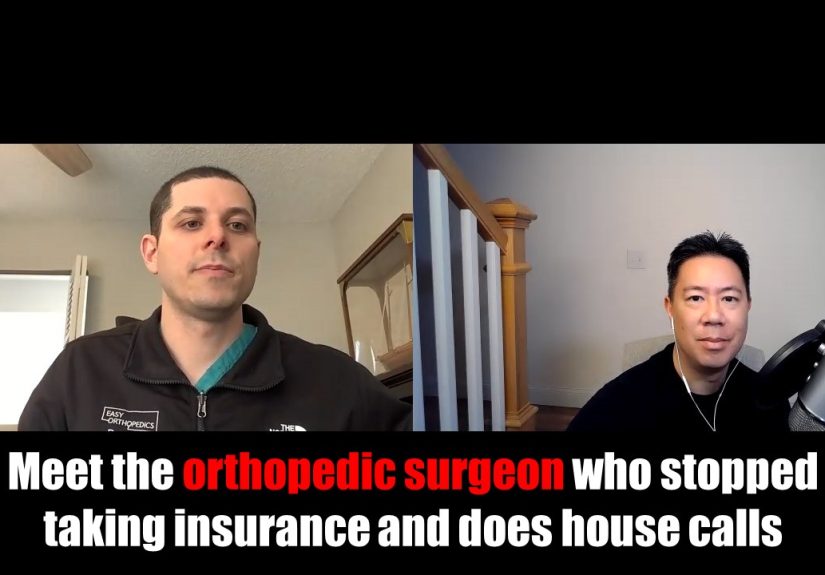
That is the pitch behind Colorado Springs orthopedic surgeon Dr. Daniel Paull, founder of Easy Orthopedics, a direct-pay practice built around a simple idea that sounds radical only because modern healthcare has become so gloriously complicated: cut out the middlemen, charge transparent prices, and bring orthopedic care directly to patients.
Paull’s model is not just a quirky marketing gimmick with a stethoscope and a car key. It is also a pointed critique of how American medicine often works now: more paperwork, more billing layers, more denials, more rushed visits, and more patients wondering why even “covered” care feels expensive, confusing, and slow. His answer was to stop taking insurance altogether and build a relationship-based orthopedic practice that makes house calls.
In a healthcare system that often feels like a maze designed by a committee of fax machines, that idea lands with a satisfying thud.
The Surgeon Behind the House-Call Experiment
Dr. Paull is an orthopedic surgeon who chose a lane that most specialists do not. Instead of joining a large hospital-owned network or expanding into a high-volume clinic model, he built Easy Orthopedics around direct access, house calls, and cash pricing. Patients in the Colorado Springs area can request same-day or next-day care, and visits may happen at a home, office, or even a hotel. Office and telehealth appointments are also part of the mix, but the signature move is obvious: the doctor comes to you.
That sounds old-school in the best possible way. Before medicine became a marathon of portals, prior authorizations, and hold music, house calls were not a novelty. They were medicine. Paull’s practice taps into that memory while updating it for a modern orthopedic audience: sports injuries, back pain, fractures, wounds, splinting, casting, injections, and urgent musculoskeletal problems that hurt now, not next Thursday at 3:40 p.m.
The deeper story, though, is not just mobility. It is independence. Paull has been blunt in describing why he walked away from insurance-based practice. In his telling, the traditional system rewards volume, administrative gymnastics, and short visits. That is not the kind of medicine he wanted to practice, and it is not the kind of experience many patients want to buy.
Why an Orthopedic Surgeon Would Ditch Insurance
Because the business model shapes the medicine
When people hear “cash-pay doctor,” they often imagine either a luxury concierge brand or a physician trying to avoid accountability. But the real tension is usually more boring and more important: economics. Insurance-based care often requires extensive coding, claims management, staff time, documentation built for payment rather than conversation, and endless negotiation over what will be approved, delayed, reduced, or denied.
That administrative load does not just sit quietly in the background like office wallpaper. It changes how practices are built. More billing complexity means more overhead. More overhead often means more patients per day. More patients per day usually means shorter visits. And shorter visits are not ideal when someone is limping, confused, frightened, or trying to decide whether the pain in a shoulder, wrist, or knee is something that needs imaging, immobilization, rehab, or surgery.
Orthopedics especially can become a factory line if a practice is built around speed. A swollen ankle is not just a billing code with good posture. It is an exam, a mechanism of injury, a timeline, a function problem, a pain story, and sometimes a life interruption with a soccer season, job, trip, or aging parent hanging in the balance. Direct-pay advocates argue that when insurance gets out of the room, time comes back into it.
Because many “insured” patients still feel like self-pay patients
There is another reason this model resonates: a lot of Americans already feel as if they are paying out of pocket anyway. High deductibles, coinsurance, facility fees, and delayed surprise bills can make insured care feel less like protection and more like a scavenger hunt for receipts. That does not mean insurance is useless; major medical coverage still matters enormously for catastrophic costs, hospitalization, surgery, and expensive downstream care. But it does help explain why transparent, upfront specialty pricing sounds refreshingly sane to many people.
When a patient knows the visit price before the visit happens, the emotional math changes. It becomes less about decoding a future bill and more about deciding whether the care is worth it now. For a lot of musculoskeletal problems, that clarity is powerful.
What House-Call Orthopedics Actually Looks Like
House-call medicine sounds romantic until you remember that orthopedics is not exactly a field built around tea, empathy, and soft lighting. Bones break. Joints swell. Cuts need sutures. Ankles become grapefruits. So what does this model actually include?
In Paull’s version, quite a bit. Easy Orthopedics promotes care for back pain, broken bones, sports injuries, wounds, casting, splinting, steroid injections, PRP-related services, and urgent orthopedic issues. The promise is not that every orthopedic problem can be solved in a living room, but that many can at least be evaluated, stabilized, treated, and guided without forcing the patient into the standard parade of urgent care, ER, specialist referral, and wait-list limbo.
That matters because the usual patient journey for a non-life-threatening orthopedic injury is often deeply inefficient. The emergency room is built for emergencies, not nuanced shoulder mechanics. A general urgent care may be faster, but it is not always staffed for specialized orthopedic assessment. A traditional orthopedic office may provide great care, but scheduling can lag behind the pain clock. A house-call orthopedic model tries to collapse those delays.
It also reframes convenience as clinical value. If a physician sees the patient where they live or work, the visit can reveal details that a sterile exam room never will. The staircase that aggravates the knee. The workstation destroying the neck. The home setup that makes recovery easier or harder. Medicine gets context, and context often improves decision-making.
The Appeal: Time, Access, and Fewer Middlemen
1. The visit feels more human
One of the most repeated selling points in direct-pay medicine is time. Paull has described longer visits as a deliberate antidote to rushed, checkbox-driven care. That matters in orthopedics because understanding movement, pain patterns, injury history, and treatment goals takes conversation. Patients are more likely to ask the question they almost skipped. Doctors are more likely to explain the why behind a brace, an injection, an X-ray, or a wait-and-watch plan.
In plain English: people tend to feel less like luggage on a conveyor belt.
2. The pricing is easier to understand
Transparent pricing is not just a financial detail; it is a trust signal. In conventional care, patients often cannot tell whether the real bill will come from the physician, the facility, the imaging center, the insurer’s processing logic, or the mysterious dimension where healthcare invoices are apparently forged. A direct-pay model does not erase all complexity, but it does simplify the front end.
That can be especially attractive to patients with high-deductible plans, people between jobs, small-business owners, athletes who need quick answers, and travelers who do not want to navigate an unfamiliar network while hobbling through a hotel lobby.
3. Access improves when the care comes to you
House calls are not only about luxury. They are about logistics. A patient with a painful ankle sprain, a parent juggling two children, an older adult with mobility limits, or a worker who cannot spend half a day in a waiting room may all benefit from a model that removes travel and waiting from the care equation. That does not make house calls right for everyone, but it does make them deeply practical for more people than the average system assumes.
The Limits of the Model
Now for the necessary reality check, because not every healthcare story should sound like it was written by a startup’s espresso machine.
An insurance-free orthopedic practice is not a universal replacement for traditional healthcare. Patients still need protection against major medical expenses. Surgery, hospitalization, advanced imaging, rehab, specialist referrals outside the practice, and long-term complex care can still pull patients back into the larger insurance-based ecosystem. Even a smooth direct-pay visit can become a doorway into a much messier downstream process.
There is also the basic issue of affordability. Transparent pricing is better than mystery pricing, but clear cost is still cost. For some patients, paying directly for specialty care is doable. For others, it is a stretch. A model like this can increase access for certain groups while remaining out of reach for others. That tension should be acknowledged, not polished away.
And then there is scale. House calls take travel time. Solo or minimalist practices often cap volume by design. That is partly the point, since the whole model argues against becoming a patient mill. But it also means expansion is harder. What works beautifully for one surgeon in one metro area may not copy-and-paste across every community, specialty, or payer environment.
What This Says About American Healthcare
The reason Paull’s story stands out is not just that it is unusual. It is that it feels weirdly logical.
Strip away the novelty and the model is built on ideas patients have wanted all along: direct communication, quick access, clear pricing, more time with the doctor, fewer billing acrobatics, and care that adjusts to real life instead of demanding that real life rearrange itself around the clinic schedule. The fact that this now feels disruptive says more about the current system than about the doctor.
In that sense, Paull is not merely offering house calls. He is offering a critique. He is asking whether a specialist can practice with less bureaucracy and more autonomy, and whether patients might prefer a simpler transaction to a supposedly covered process that is slower, murkier, and sometimes more expensive than expected. His practice does not answer every problem in healthcare, but it does shine a bright light on one of them: when the system becomes too tangled, simplicity starts looking revolutionary.
That is why this story travels beyond orthopedics. It connects with the broader rise of direct primary care and direct specialty care, both of which argue that medicine works better when the patient-physician relationship is not constantly interrupted by third-party rules. For many physicians, that promise is professional survival. For many patients, it is relief.
Experiences From the Direct-Pay, House-Call Frontier
If you want to understand why this model gets attention, the best place to look is not just policy or payment reform. It is lived experience. The recurring stories around insurance-free, house-call medicine tend to sound less like healthcare theory and more like ordinary frustration finally meeting an unusual solution.
Picture a patient who twists a knee on a business trip. In the standard system, that person might spend hours debating between urgent care, the emergency room, or waiting until they get home. In a house-call orthopedic model, the value proposition is brutally simple: someone qualified shows up, examines the joint, explains whether it looks unstable, decides whether imaging is needed, and lays out next steps. The patient still has an injury, but not a logistical side quest.
Or think about a parent whose teenager gets hurt at practice. The usual routine often means calling a pediatrician, then an orthopedic office, then maybe urgent care, then repeating the whole story three more times while trying to remember whether the swelling started before or after the ice pack. A direct-pay house call condenses that drama. The experience patients describe wanting is not extravagance; it is momentum. They want help while the injury is still fresh and the plan still matters.
For physicians, the experience can be just as dramatic, though in the opposite direction. Many doctors who move toward direct-pay medicine talk about reclaiming parts of the job that had been flattened by billing pressure. They describe fewer coding gymnastics, less staff overhead, more room for judgment, and visits that feel like medicine instead of transaction processing. That does not mean the model is easy. Running a lean, independent practice takes hustle, risk tolerance, and a willingness to do everything from clinical work to business development. But it does mean some physicians would rather build a smaller, more controlled practice than stay trapped in a larger system that leaves them burned out and oddly absent from their own work.
Patients also tend to notice the emotional difference when the clock is not openly hostile. A longer visit changes tone. Questions come out. Fears get named. Instructions stick better. The exam feels less rushed, and the plan feels less like a receipt. In orthopedics, where a treatment decision may affect work, sports, caregiving, sleep, and mobility, that shift matters more than people realize.
Of course, the experience is not universally rosy. Some patients may love the simplicity but hesitate at paying upfront. Others may appreciate the visit and still need imaging, surgery, or follow-up in the traditional system. Some communities may not have enough population density to support this kind of practice at all. Still, the stories keep surfacing for a reason. Whether you call it direct care, minimalist practice, or healthcare with fewer circus acts, the emotional through-line is consistent: people are hungry for care that feels accessible, intelligible, and personal.
And when an orthopedic surgeon is willing to bring that care to the front porch, the idea becomes memorable fast.
Conclusion
Dr. Daniel Paull’s insurance-free, house-call orthopedic practice is not just a curious side road in American medicine. It is a practical response to real frustrations shared by patients and physicians alike. By trading billing complexity for direct payment, long waits for rapid access, and rushed office churn for relationship-based care, he has built a model that feels at once old-fashioned and oddly futuristic. Whether or not this becomes mainstream, it forces an important question: if simpler care feels this good, why did healthcare get so complicated in the first place?