Table of Contents >> Show >> Hide
- What Exactly Did King’s Hawaiian Release?
- Why a Bread Gingerbread House Actually Makes Sense
- The Brand Story Behind the Buzz
- Why the “Mele Kalikimaka” Connection Works So Well
- A Smart Play in the Holiday Kit Trend
- Will People Actually Eat It?
- Why This Launch Is SEO Gold and Cultural Candy
- Should You Buy It?
- Experiences Related to the King’s Hawaiian Bread House Trend
- Conclusion
There are holiday products, and then there are holiday products that make you stop mid-scroll, blink twice, and whisper, “Well, that’s ridiculous.” Then you look again and realize it is not ridiculous at all. It is genius. That is exactly the energy behind the new King’s Hawaiian gingerbread house made of actual bread, a limited-edition holiday kit that swaps stiff gingerbread panels for the brand’s famously soft, sweet rolls. In a season full of peppermint overload, copycat stocking stuffers, and enough “limited-time” releases to make your cart nervous, this one actually feels fresh.
Yes, King’s Hawaiian really did put the bread in gingerbread house. And honestly? It was only a matter of time. The brand has spent decades becoming a permanent fixture on American holiday tables, especially when sliders, ham, baked casseroles, and “just one more roll” moments are involved. Turning that soft, slightly sweet bread into an edible centerpiece is weird in the best possible way: playful, practical, nostalgic, and just self-aware enough to know that many traditional gingerbread houses look adorable but taste like drywall with cinnamon.
This release also comes with a strong built-for-the-internet hook. It is cute. It is seasonal. It is highly snackable. It has enough novelty to dominate a group chat for twenty minutes, which is basically the modern benchmark for cultural relevance. But beneath the holiday sparkle and social-media-ready visuals, there is a smart brand story here too. This is not just a random bread stunt. It is a clever extension of what King’s Hawaiian already means to shoppers: comfort, celebration, family gatherings, and that sweet-savory lane where dinner rolls somehow become the MVP of the whole meal.
What Exactly Did King’s Hawaiian Release?
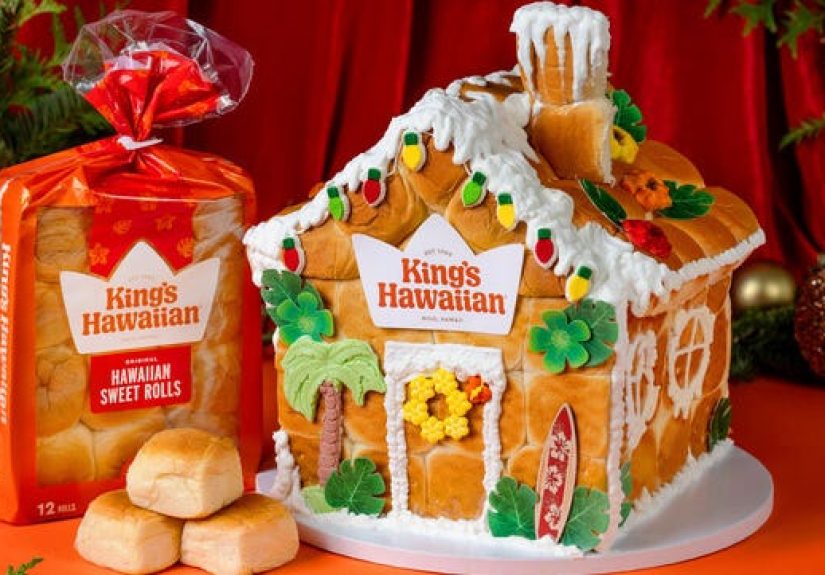
The product is a limited-edition King’s Hawaiian x Bing Crosby “Mele Kalikimaka” GingerBREAD House Kit. Instead of classic gingerbread walls and roof panels, the structure is built around King’s Hawaiian Original Sweet Rolls. The kit includes four 12-packs of rolls, icing, island-themed edible decorations, wooden skewers, and a mini record with a QR code tied to Bing Crosby’s iconic holiday song “Mele Kalikimaka.” In other words, it is part centerpiece, part snack, part nostalgia machine, and part “whoever pitched this deserves a holiday bonus.”
That last detail matters because this is not a basic novelty drop. The release is tied to a broader anniversary campaign celebrating 75 years of King’s Hawaiian and 75 years of Bing Crosby’s “Mele Kalikimaka.” The crossover sounds odd for about three seconds, then totally clicks. King’s Hawaiian has long leaned into warmth, togetherness, and Hawaiian roots. “Mele Kalikimaka,” meanwhile, is one of those songs that instantly makes a room feel more festive, even if the tree is still in the box and someone is arguing over where the tape went.
Even the price point feels calculated to hit the sweet spot between impulse buy and giftable novelty. It is whimsical enough for food lovers, easy enough for families, and unusual enough to feel like you found the internet’s favorite seasonal item before everyone else did. That is not accidental. It is smart holiday product design.
Why a Bread Gingerbread House Actually Makes Sense
It fixes the biggest problem with traditional gingerbread houses
Let’s say the quiet part out loud: a lot of gingerbread houses are more decorative than edible. They are gorgeous for five days, structurally questionable by day six, and often taste like a craft supply cabinet by the time anyone decides to take a bite. They exist in that weird holiday zone where food becomes décor and then nobody really wants to eat it.
King’s Hawaiian flips that script. Its version is intentionally edible from the start. The bread is soft, sweet, and familiar. The structure may still be playful, but the ingredients are not merely symbolic. You are not building a holiday display that gets quietly thrown away after New Year’s. You are building something that guests might actually tear apart and eat. That alone gives the product a real advantage in a crowded market of kitschy seasonal releases.
It turns a pantry favorite into an event
Another reason this works is because King’s Hawaiian rolls already live in people’s holiday routines. They are not introducing a strange flavor or forcing shoppers to learn a new product category. They are taking something people already recognize and giving it a festive costume. That is often the best kind of food innovation: not inventing an entirely new habit, but making an existing one feel more fun.
Holiday food is rarely just about taste. It is about ritual. It is about what lands on the table every year and what makes the season feel familiar. King’s Hawaiian understands that. This bread house is not trying to replace your dinner rolls. It is turning them into part of the entertainment.
The Brand Story Behind the Buzz
Part of what makes this launch resonate is the brand’s history. King’s Hawaiian traces its roots to the 1950s in Hilo, Hawaii, where founder Robert R. Taira opened Robert’s Bakery and created the sweet bread recipe that would eventually become a signature. The business later moved to Honolulu and grew into a beloved institution known for bread, cakes, and an emphasis on aloha spirit. That heritage still shows up in how the company positions itself today: warm, family-centered, celebratory, and rooted in sharing.
That makes the bread house feel more on-brand than it first appears. The edible centerpiece idea is playful, but it still fits the company’s identity. King’s Hawaiian is not a sleek minimalist food brand trying to act ironic for the holidays. It is a legacy bakery brand leaning into hospitality, comfort, and joy. The tropical-themed decorations, “Mele Kalikimaka” tie-in, and sweet-roll structure all reinforce that larger identity.
And from a marketing standpoint, the collaboration is especially sharp. Nostalgia still sells, but the best modern campaigns do not rely on nostalgia alone. They remix it. King’s Hawaiian and the Bing Crosby estate did not just dust off an old song and call it a day. They turned the partnership into a physical product, an experience, and a soundtrack. That kind of multi-sensory holiday branding is exactly how a seasonal launch punches above its weight.
Why the “Mele Kalikimaka” Connection Works So Well
The pairing with Bing Crosby is not random holiday glitter. “Mele Kalikimaka” is one of the rare Christmas songs that carries both familiarity and place. It instantly evokes warmth, family, island imagery, and a slightly sunnier version of the season. For King’s Hawaiian, that is basically the brand mood in song form.
The tie-in becomes even more effective because the kit is not just themed in name. It includes a mini record and QR code element that brings music into the decorating process. That turns the product into an experience rather than a static object. You are not simply buying food. You are buying a moment: music on, icing out, rolls stacked, someone overcommitting to palm-tree decorations, and one relative insisting they are “just helping” while quietly eating the roof.
In a market where brands constantly chase “immersive” consumer experiences, this is a surprisingly simple but effective example of how to do it well.
A Smart Play in the Holiday Kit Trend
Gingerbread houses have a deep history, with roots stretching back to German traditions and later becoming a familiar American holiday activity. Over time, they evolved from handmade labor-of-love projects into easy, pre-packed kits sold everywhere from craft stores to grocery chains. That shift matters, because it created a market where consumers now expect holiday house kits to be easy, decorative, and family-friendly.
King’s Hawaiian is stepping into that established tradition, but with a twist. Instead of competing by making a prettier gingerbread house, it is changing the material entirely. That kind of move stands out because it solves two common problems at once: fragility and flavor fatigue. Bread is softer, more familiar, and easier for mainstream shoppers to imagine eating. It also feels more welcoming than the classic gingerbread formula, which can sometimes be more about architecture than enjoyment.
This is why the product feels bigger than a gimmick. It taps into a well-known holiday category, then nudges it toward something more edible and more useful. It is still whimsical, but it is not nonsense.
Will People Actually Eat It?
That may be the funniest and most important question attached to this whole release. Traditional gingerbread houses are often admired, photographed, and gently ignored until someone finally tosses them. A bread-based version changes the conversation. King’s Hawaiian rolls already occupy that magical space where they can be sweet enough for festive snacking and neutral enough to work with savory flavors too. That means the finished house is not just a decoration. It is a potential appetizer, snack board centerpiece, or chaotic but delightful post-dinner teardown.
There is also a practicality factor here. Many holiday hosts are trying to do two things at once: create something memorable and avoid wasting food. A bread house feels more aligned with how people actually celebrate now. They want festive moments, yes, but they also want things that are shareable, edible, and not absurdly precious. In that sense, this product lands right on the mood of modern entertaining.
And let’s be honest: a soft roll roof has a better chance of disappearing into hungry hands than a stale gingerbread chimney ever did.
Why This Launch Is SEO Gold and Cultural Candy
From a content and search perspective, this product is practically a gift-wrapped headline. It combines a beloved brand, a surprising format, a seasonal trend, and a built-in curiosity hook. Search phrases like King’s Hawaiian gingerbread house, bread gingerbread house kit, holiday food gifts, edible Christmas centerpiece, and King’s Hawaiian holiday release all fit naturally around the topic.
It also performs well because it sits at the intersection of several high-interest categories: food news, Christmas trends, gift guides, family activities, and brand nostalgia. That gives it a wider search footprint than a standard product announcement. Someone looking for holiday kits may find it. Someone searching for unusual King’s Hawaiian products may find it. Someone hunting for edible décor ideas, family Christmas activities, or holiday food gifts may also land on it.
In other words, the product is not just clever in-store. It is built for discoverability.
Should You Buy It?
If you love holiday kits, quirky food drops, or anything that makes guests say, “Wait, this is made from rolls?” then yes, this is the kind of release worth grabbing while it is available. It is especially appealing for families, hosts, food-content creators, and people who enjoy bringing one delightfully unnecessary-but-actually-fun item into the holiday season.
If you are a gingerbread purist, maybe this won’t replace the classic cookie house in your heart. But that is not really the point. King’s Hawaiian is not trying to cancel gingerbread. It is offering a softer, sweeter, more snackable cousin that understands modern holiday behavior a little better. People want products that feel festive without being fussy. This one gets that.
And maybe that is why the idea works so well. It is silly, but not dumb. Nostalgic, but not stale. Trendy, but still deeply rooted in tradition. Frankly, that is a rare combo. In a holiday season full of products begging for attention, King’s Hawaiian may have found the one thing consumers still cannot resist: bread, but make it adorable.
Experiences Related to the King’s Hawaiian Bread House Trend
What makes this release especially interesting is the kind of experience it creates around the table. A traditional gingerbread house often feels like a fragile craft project with snacks attached. A bread house feels more relaxed. People lean in differently. Kids are less intimidated. Adults are less worried about perfect symmetry. The mood shifts from “do not touch that” to “okay, hand me more icing.” That alone changes the energy of a holiday gathering.
Imagine setting this out during a family get-together. The box opens, the sweet rolls come out, and everyone instantly understands the assignment. Someone starts building the base. Someone else claims creative control over the roof. One family member gets deeply invested in whether the palm-frond decorations should be “tasteful” or “extra.” Within minutes, you have laughter, mild chaos, and at least one person acting like they are on a competitive baking show despite having zero structural engineering skills. It is the kind of activity that fills a room in the best way.
There is also a sensory advantage to using bread. The texture is familiar. The smell is cozy. The setup feels less like crafting and more like preparing a snackable centerpiece. That matters because holiday memories are often built from small sensory details: music in the background, frosting on fingers, a kitchen counter full of candy, somebody sneaking bites when they think no one is looking. A product like this plays directly into that kind of memory-making.
For hosts, it also works as a conversation starter. Not everybody wants to bake from scratch in December, and not everybody wants another generic décor item that looks nice but does nothing. This lands in a sweeter middle space. It is interactive, easy to photograph, and actually useful once the novelty wears off. When the decorating is done, the house can become part of a grazing table, a dessert-adjacent snack, or the unofficial late-night food situation after everyone claims they are too full for “anything else.”
It also feels tailor-made for modern holiday habits. Friends and families increasingly want experiences they can share, post, laugh about, and remember. A King’s Hawaiian bread house checks all those boxes. It is visual enough for social media, simple enough for casual hosts, and unusual enough to feel memorable without becoming exhausting. No one needs a tutorial longer than the average holiday movie preview. The fun is obvious on sight.
And maybe that is the biggest experience-based takeaway here: this product turns people from passive consumers into participants. You do not just buy it and place it on a shelf. You build it, decorate it, talk about it, photograph it, sample it, and eventually pull it apart with the kind of joyful lack of ceremony that only good party food can inspire. In a season when people are craving connection as much as convenience, that matters. The bread house may start as a novelty, but the real value is the moment it creates. That is the sort of holiday experience people remember long after the frosting is gone and the roof mysteriously disappears.
Conclusion
The King’s Hawaiian gingerbread house made of actual bread is one of those rare holiday releases that earns its hype. It is funny without being flimsy, nostalgic without feeling dusty, and festive without requiring a full weekend of effort. More importantly, it understands what many holiday shoppers actually want: food that doubles as an experience, décor that can be eaten, and traditions that feel both familiar and freshly reimagined.
King’s Hawaiian did not just launch a seasonal product. It found a way to turn a beloved table staple into a conversation piece, a family activity, and a highly clickable moment in holiday food culture. Not bad for a roll.