Table of Contents >> Show >> Hide
- Why Space-Themed Digital Pet Portraits Hit Different
- What Counts as “Out of This World” (Besides Your Dog’s Zoomies)
- The #1 Secret Ingredient: A Reference Photo That Doesn’t Betray You
- My Digital Workflow: From “Cute Gremlin” to “Interstellar Icon”
- Print Quality 101: Make Sure Your Galaxy Doesn’t Turn Into Pixel Soup
- Ordering a Custom Digital Pet Portrait: What to Ask For
- Gift Ideas: How to Turn a Digital Portrait Into a “You Nailed It” Present
- FAQ: Quick Answers Before Your Pet Launches Their Space Career
- Conclusion: Your Pet Deserves Their Own Galaxy
- Studio Log: 10 Out-of-This-World Experiences I’ve Learned the Hard Way (So You Don’t Have To)
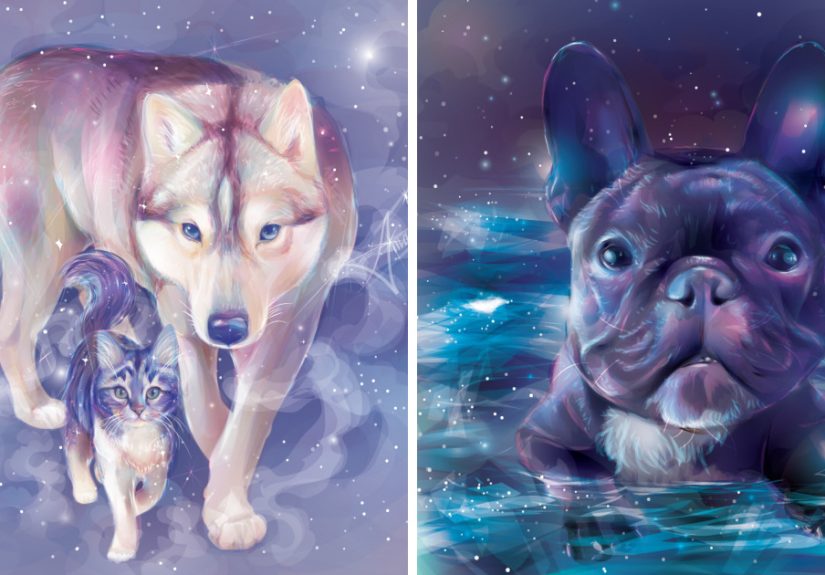
Your pet already rules your home like a tiny, fuzzy monarch. So why not make it official… in space? A cosmic digital pet portrait takes the face you boop every day and drops it into a galaxy of glowing nebulae, retro sci-fi, and heroic “captain of the couchship” energy. The result: wall art that feels personal, giftable, and just unhinged enough to be unforgettable (in the best way).
This guide breaks down what makes an “out of this world” custom pet portrait work, how to get reference photos that don’t look like they were shot during an earthquake, what print settings actually matter, and how to commission a portrait without accidentally ordering your dog a helmet that makes them look like a jar of pickles.
Why Space-Themed Digital Pet Portraits Hit Different
Regular pet portraits are sweet. Space-themed digital pet portraits are sweet and dramaticlike your corgi is about to negotiate peace between rival planets (or at least demand a treaty involving snacks). The cosmic approach works because it blends two powerful things:
- Emotion: pets are family, and art turns that feeling into a keepsake.
- Story: a galaxy backdrop instantly adds narrative and personality.
Visually, space is a cheat code. Deep, dark backgrounds make fur texture pop. Rim lighting (that glowy edge light) makes whiskers and ear fluff look cinematic. And color palettesfrom neon vaporwave to soft “moonlit silver”let the portrait match your home style instead of clashing with it like a suspicious throw pillow.
What Counts as “Out of This World” (Besides Your Dog’s Zoomies)
“Out of this world” doesn’t have to mean a full astronaut suit (though yes, it’s iconic). It’s really about taking your pet’s vibechaotic goblin, gentle angel, retired detective, snack-loving philosopherand translating it into a design that feels larger than life.
Common cosmic portrait concepts that actually look great
- Astronaut Commander: helmet glow, reflective visor, subtle stars in the suit.
- Galaxy Royalty: nebula cape, crown of constellations, regal lighting.
- Retro Sci-Fi Poster: bold typography vibes (without turning your pet into an ad for “SPACE BEANS”).
- Constellation Minimal: clean background, star-map outlines, understated elegance.
- Space Explorer Duo: two pets in matching mission patches (best friends, sworn rivals, or both).
The trick is balance: the cosmic styling should elevate your pet, not bury them under glitter. Your pet is the main character. The nebula is the supporting cast. Nobody came to watch Supporting Cast: The Movie.
The #1 Secret Ingredient: A Reference Photo That Doesn’t Betray You
Digital pet portrait artists can do a lotfix weird lighting, adjust colors, rescue a slightly blurry photobut we can’t invent details that don’t exist. A strong reference photo is the difference between “museum-worthy masterpiece” and “why does my cat look like a potato with eyes?”
How to take a portrait-ready pet photo (without a full production crew)
- Use soft natural light: near a window or outdoors in shade is ideal. Harsh midday sun can create weird shadows.
- Avoid backlighting: if the brightest light is behind your pet, their face turns into a mystery silhouette.
- Get eye-level: crouch down so the camera meets your pet’s eyes. Yes, you may look ridiculous. Embrace it.
- Focus on the eyes: eyes are where portraits “feel alive.” Tap-to-focus if you’re using a phone.
- Skip the flash if possible: flash can flatten features and cause reflective “laser eyes.”
- Clean your lens: one quick wipe can turn a foggy photo into a crisp one. Fingerprints are the real villain.
- Use treats/toys strategically: bribe your pet like a professional negotiator. Short sessions, lots of praise.
Bonus tip: send 3–8 photos if you canfront view, slight angle, and at least one that shows coat patterns clearly. It’s easier to capture “your pet, but heroic” when we can actually see them.
My Digital Workflow: From “Cute Gremlin” to “Interstellar Icon”
Every artist has their own process, but here’s a realistic, behind-the-scenes look at what goes into a polished custom pet portraitespecially one with cosmic lighting and sci-fi details.
1) Personality + concept planning
Before I draw a single whisker, I figure out the vibe. Is this portrait a funny gift? A memorial piece? A “my dog is my child and I want them on the wall like royalty” situation? The answers guide everything: pose, colors, mood, background, and how dramatic we make the lighting.
2) Sketch and composition
I block in the head shape, ear placement, and that specific expression that makes your pet your pet. Then I build the composition: where the stars go, where the glow hits, and how to keep the face as the focal point.
3) Fur, texture, and “recognition accuracy”
This is where the hours go. Fur isn’t just “hair lines.” It’s direction, thickness, clumps, and light behavior. Black pets need careful value control so they don’t turn into a flat shadow. White pets need shading so they don’t become a featureless snowball (a charming snowball, but still).
4) Space effects that don’t look like glitter spilled in Photoshop
A good nebula background has depth: soft gradients, subtle texture, and controlled highlights. Stars should vary in size and brightness. And the glow should make sense with the light sourceotherwise your pet looks like they’re being haunted by a fluorescent jellyfish.
5) Final polish: rim light, eye sparkle, and print-safe cleanup
The last 10% is what makes people go “WHOAAA.” I refine edges, add gentle catchlights to the eyes, clean up noisy textures, and ensure the portrait holds up at full print resolutionnot just on a phone screen at midnight.
Print Quality 101: Make Sure Your Galaxy Doesn’t Turn Into Pixel Soup
If you plan to print your digital pet portrait (highly recommended), a few technical choices make a huge difference. The goal is simple: crisp detail, accurate color, and no “why is the purple nebula suddenly… brown?” surprises.
Resolution: what “300 DPI/PPI” really means
For sharp prints viewed up close (frames, posters, canvases), 300 DPI/PPI is a common best-practice target. Larger items viewed from farther away can sometimes look fine at lower resolution, but 300 is the safe “looks great on a wall” zone for most portrait-sized prints.
Color space: why sRGB keeps your colors from going weird
Many consumer print labs and print workflows expect files in sRGB. If you upload a file in another color space without handling it correctly, you can get muted colors, odd shifts, or unexpected darkness. If you’re unsure, sRGB is usually the safest choice for widely compatible printing and online sharing.
File formats that make sense for clients (and printers)
- High-res JPEG: great for printing and sharing; small enough to send easily.
- PNG: useful for crisp edges or transparent backgrounds (for stickers, overlays, etc.).
- PDF Print: ideal if you’re ordering prints through services that like PDF workflows or need bleed/crop options.
Practical suggestion: if you’re commissioning a portrait, ask for (1) a print-ready file sized for your intended frame, plus (2) a web-friendly version for social sharing. That way you’re not uploading a massive print file to your phone and watching it struggle like it’s running on hamster power.
Ordering a Custom Digital Pet Portrait: What to Ask For
Commissioning art should feel funnot like filing taxes with glitter. Here’s what makes the process smoother for both you and the artist.
Your quick commission checklist
- Purpose: gift, memorial, home decor, social avatar, or “I want my cat as a space emperor.”
- Number of pets: solo, duo, whole squad.
- Style choice: realistic, painterly, cartoon, retro poster, minimalist constellation.
- Background: deep space, planet horizon, star map, or simple color gradient.
- Size: tell the artist your intended print size (example: 8×10, 11×14, 16×20).
- Deadline: if it’s a birthday, don’t wait until the day before. (Unless you enjoy living dangerously.)
- Revision policy: clarify what changes are included (small tweaks vs. full redraws).
Pricing for digital pet portraits usually depends on complexity: number of pets, detail level, background, and how custom the concept is (a simple galaxy gradient is different from a full starship scene with reflective armor and embroidered mission patches). If you want commercial usage (like printing on products for resale), expect that to be a separate license conversation.
Gift Ideas: How to Turn a Digital Portrait Into a “You Nailed It” Present
Digital pet portraits are basically the gift version of showing up with a microphone and saying, “I know what you love, and I brought it… in HD.” A few crowd-pleasers:
- Framed print: classic, clean, always wins.
- Canvas or metal print: extra bold for cosmic lighting and deep colors.
- Desk print: small format for offices (or for people who “work” while looking at pictures of their dog).
- Phone wallpaper set: crop-friendly versions for lock screen + home screen.
- Memorial keepsake: softer palette, subtle stars, name/date text if desired.
If you’re printing, match the file to the product. Posters and framed prints reward high resolution and careful color. If you’re going big, ask for a file sized specifically for that print so details stay crisp.
FAQ: Quick Answers Before Your Pet Launches Their Space Career
Can you work from an iPhone photo?
Yesif it’s well-lit and in focus. Modern phone cameras are totally capable. Natural light and sharp eyes are the key.
What if my pet won’t sit still?
Totally normal. Use treats, toys, and short sessions. Try capturing them when they’re calmer (post-walk for dogs, post-meal for many pets). Taking several photos increases the odds of a perfect one.
Do black pets photograph and paint well?
Absolutelybut they need good lighting so the camera (and the artist) can see fur texture and facial structure. Soft window light works wonders.
Can you include real space textures or nebula inspiration?
Yes, and it can look incredibleespecially when it’s used as subtle texture rather than a loud wallpaper. If you want “real space vibes,” make sure the final design still keeps your pet as the focal point.
Conclusion: Your Pet Deserves Their Own Galaxy
An out-of-this-world digital pet portrait is part art, part storytelling, and part “I love this creature so much I made them interstellar.” With a strong reference photo, a clear style direction, and print-smart files, you end up with a piece that feels personal and looks professionalwhether it’s hanging in your living room or starring as your phone wallpaper while you pretend you’re not obsessed.
If you’re commissioning one, keep it simple: pick the vibe, send great photos, choose a print size, and let the artist do what they do bestturn fur and personality into something that feels like a movie poster for the greatest hero your household has ever known.
Studio Log: 10 Out-of-This-World Experiences I’ve Learned the Hard Way (So You Don’t Have To)
I used to think the hardest part of drawing digital pet portraits was the fur. Then I met the true final boss: the reference photo collection. The first time someone requested “make my dog look like an astronaut,” they sent one pictureshot at night, from across the room, with the dog mid-sneeze. I stared at it like it was an ancient artifact. Technically, yes, it was a dog. But it was also a blur with vibes.
Over time, I learned to treat reference photos like a mission briefing. If I get a well-lit, eye-level shot where the eyes are sharp, the portrait practically builds itself. If I get a photo where your pet’s face is in shadow and the brightest thing is a lamp behind them, then I’m basically painting a witness sketch. Now I tell clients: “Give me three options, and we’ll choose the hero shot together.” It’s the easiest way to avoid intergalactic heartbreak.
Then there’s the “space wardrobe” debate. Some pets look amazing in a sleek helmet design with a soft glowinstant sci-fi elegance. Other pets (usually the ones with big round eyes) look like they’re trapped inside a fishbowl and quietly plotting revenge. I learned to adapt: sometimes the astronaut concept becomes a space captain look insteadno helmet, just a suit collar, a mission patch, and cinematic lighting that says, “Yes, I’m in charge here.”
One of my favorite commissions was a cat who had exactly two expressions: (1) judgment and (2) deeper judgment. The owner asked for “a galaxy queen.” Perfect. I leaned into itnebula cape, subtle starfield crown, and a calm background so the cat’s face did all the talking. When the client approved the final, they said, “This looks like she owns Saturn.” That’s the goal. Not “cute cat in space.” Cat with jurisdiction over planets.
Printing has its own set of adventures. I once had a client who loved the neon purples on-screen, but their printed version came out dull. That’s when I became the annoying-but-helpful person who talks about color profiles and print-ready exports. Now I deliver two versions by default: a web version that looks punchy on screens, and a print version designed to hold up in real life. The funny part? Most people never thought about it until they saw the difference. The unfunny part? I absolutely thought about it at 2 a.m. while tweaking highlights on a nebula.
The most unexpectedly emotional commissions are memorial portraits. When someone asks for a softer galaxyless “space adventure,” more “starlight remembrance”I slow down. I keep the palette gentle, the stars subtle, and the expression true to how the pet felt in the home. Those portraits aren’t about making the pet look like a superhero. They already were. The art just gives the love a place to live.
And yes, I’ve learned the universal truth of pet portrait work: if you add a tiny planet in the background, somebody will ask if it can be their pet’s favorite ball. If you add a comet, somebody will ask if it can be shaped like a treat. If you add a spaceship, somebody will ask for a bumper sticker that says “My other vehicle is also a dog.” Honestly? Fair.
After all these portraits, my favorite moment is still the same: when the final file gets delivered, and the client says, “That’s them. That’s exactly them.” The galaxy is fun. The glow is cool. But recognitionthat instant emotional clickis the real magic. The rest is just stardust.