Table of Contents >> Show >> Hide
- The #1 Mindset Shift: Stop Watering on a Schedule
- Know Your Plant’s “Water Personality”
- How to Tell When Your Indoor Plant Actually Needs Water
- Drainage: The Not-So-Secret Superpower
- Water Quality: Yes, Your Plant Can Be a Water Snob
- How to Water Indoor Plants: Methods That Work
- Seasonal Watering: Why Winter Feels Like a Trap
- Quick “Right-Way” Watering Guide for Popular Houseplants
- Common Watering Mistakes (And Easy Fixes)
- A Simple Indoor Plant Watering Routine You Can Actually Stick To
- of “Real Life” Watering Experiences (So You Don’t Have to Learn the Hard Way)
- Conclusion: The Right Way Is the Observant Way
- Sources Consulted (No Links)
Watering indoor plants sounds like it should be simple: add water, plant says “thank you,” everybody moves on.
And yet… somehow this is how many perfectly nice houseplants meet their dramatic endeither by drowning in love
or turning into a crispy decorative arrangement.
The good news: “watering the right way” isn’t about having a mystical green thumb or a color-coded calendar.
It’s about learning a few reliable checks (soil, pot weight, drainage), matching them to the kind of plant you have,
and watering thoroughly when it’s actually needed. Let’s turn you into the calm, confident plant parent your pothos already believes you are.
The #1 Mindset Shift: Stop Watering on a Schedule
If there’s one rule that saves more houseplants than any fancy gadget, it’s this:
don’t water by the calendarwater by the condition.
Indoor plant watering depends on light, temperature, humidity, pot size, pot material, soil mix, and the plant’s growth cycle.
Translation: “Every Sunday” is a suggestion, not a strategy.
In winter or during low-light stretches, many houseplants grow more slowly and use less water, so the soil can stay wet longer.
In brighter months (or under grow lights), they may drink faster. Your job isn’t to memorize a universal scheduleit’s to learn
when your plant is ready.
Know Your Plant’s “Water Personality”
Different houseplants evolved in different conditions. If you water a snake plant like a fern, you’ll eventually own a snake plant-shaped memory.
Group your indoor plants into these easy watering styles:
1) “Soak-and-Dry” Plants
These like a thorough watering, then a noticeable dry-down before the next drink. Examples: pothos, philodendron, monstera, rubber plant,
many dracaenas. You’ll usually water when the top couple inches are dry, or when the pot feels lighter than usual.
2) “Dry-Me-Out” Plants
These store water and prefer the soil to dry more completely between waterings. Examples: succulents, cacti, snake plant, ZZ plant.
Overwatering is the classic mistake herethese plants aren’t being “easy,” they’re being patient.
3) “Evenly Moist” Plants
These prefer consistent moisturenot soggy, not bone-dry. Examples: many ferns, some calatheas/prayer plants, peace lily (it’s dramatic, but honest).
You’ll water more often and monitor closely, especially in dry indoor air.
How to Tell When Your Indoor Plant Actually Needs Water
The Finger Test (Simple, Classic, Effective)
Stick your finger into the potting mix. For many common houseplants, checking about 2 inches deep works well.
If it’s still damp at that depth, wait. If it’s dry, it’s usually time to water.
(For succulents/cacti, you’ll wait longeroften until much deeper is dry.)
The Pot Weight Test (A Sneaky Pro Move)
Lift the pot right after a thorough watering. Feel how heavy it is. Then lift it again a few days later.
Over time you’ll learn the difference between “still plenty of water” and “this plant is running on vibes.”
This method is especially handy for fast-draining mixes and plants that hate staying wet.
Visual Clues (Use These as Supporting Evidence)
- Thirsty signs: wilting, drooping, curling leaves, dry potting mix pulling away from the pot edge, lightweight pot.
- Too-wet signs: yellowing leaves (especially lower leaves), mushy stems, a musty smell, fungus gnats, slow growth with constantly damp soil.
Important: drooping can mean “I’m thirsty” or “my roots are stressed from staying wet.” Always check the soil before you react.
Watering a plant that’s already waterlogged is like fixing a flood with more rain.
Drainage: The Not-So-Secret Superpower
Want to make indoor plant watering easier instantly? Use containers with drainage holes.
A pot without drainage turns watering into a high-stakes guessing game.
What “Water Thoroughly” Really Means
When you water, aim to moisten the whole root zonenot just the top inch. A good rule of thumb:
water until you see steady drainage from the bottom, then let the excess drain away.
Don’t leave a plant sitting in a puddle in its saucer for hours unless the plant is specifically adapted for it.
Choose the Right Pot + Soil Combo
Your pot and potting mix control how long moisture sticks around:
- Terracotta breathes and dries fastergreat for plants that hate wet feet (succulents, cacti, snake plant).
- Plastic or glazed ceramic holds moisture longerhelpful for thirstier plants, but easier to overwater.
- Chunkier, airy mixes (with bark/perlite) drain fasterexcellent for many tropicals and for people who tend to overwater.
- Dense mixes hold water longercan be fine, but you’ll water less often and need good drainage.
Water Quality: Yes, Your Plant Can Be a Water Snob
Most houseplants tolerate regular tap water, but some are sensitive to salts and certain additives over time.
If you’re seeing crusty buildup on soil, white residue on pots, or persistent brown leaf tips in sensitive plants,
water quality is worth considering.
Avoid Softened Water (Usually a Bad Deal for Plants)
Mechanically softened water can contain elevated salts that may stress plant roots and contribute to buildup in the potting mix.
If your home uses a softener, try using an unsoftened tap, filtered water, distilled water, or collected rainwater (where safe/legal).
Fluoride/Salts and “Brown Tips” Drama
Some plants (like spider plant, dracaena, calathea/prayer plant, peace lily) can be more prone to browning tips,
which may be linked to low humidity, inconsistent watering, or mineral/chemical sensitivity.
If your care is consistent and tips still brown, try switching water sources and periodically flushing the pot with a deep watering.
Temperature Matters
Use room-temperature water when possible. Very cold water can shock roots for many tropical houseplants,
especially in winter when growth is already slow.
How to Water Indoor Plants: Methods That Work
1) Top Watering (The Everyday Standard)
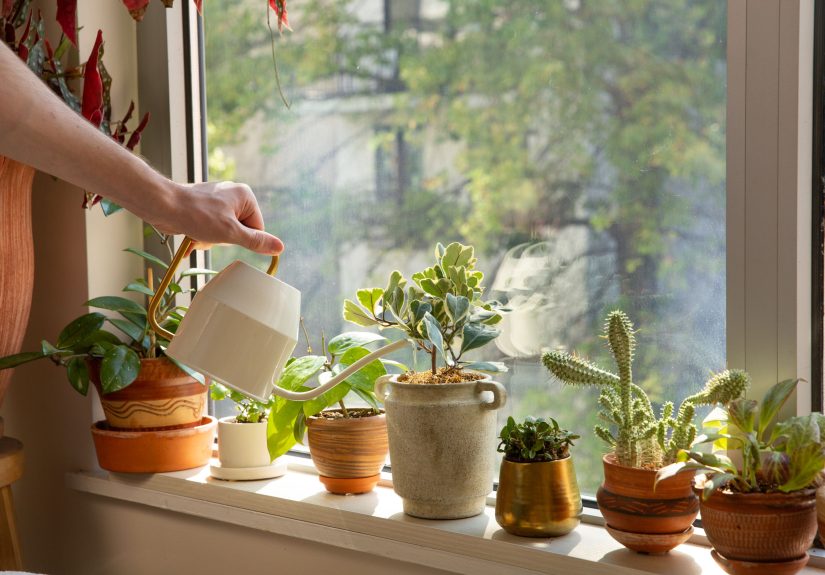
Slowly pour water across the soil surface, aiming to wet evenly around the potnot just one spot.
A long-spout watering can helps you target the soil and avoid splashing leaves.
Continue until water drains from the bottom, then empty the saucer after the pot finishes dripping.
2) Bottom Watering (Great for Some PlantsWith One Caveat)
Bottom watering means setting the pot in a shallow tray of water and letting the soil wick moisture upward.
It can help keep foliage dry and encourage even moisture, especially for plants that hate wet leaves.
The catch: it may increase salt buildup over time if you never flush from the top. So, occasionally do a thorough top-water flush.
3) The “Soak Rescue” for Bone-Dry Soil
If potting mix gets extremely dry, it can become water-repellent and water may run down the sides without soaking in.
If that happens, you can soak the pot (with drainage holes) in a basin for 20–60 minutes, then let it drain well.
This is a “reset,” not a weekly hobby.
4) Self-Watering Pots (Helpful, Not Magical)
Self-watering planters use a reservoir and wick/sub-irrigation system so the plant can drink gradually.
They can be great for consistent-moisture plants or for people who travel, but they still require monitoring:
the reservoir needs refilling, and some plants prefer a dry-down period that a constantly wet system won’t provide.
Seasonal Watering: Why Winter Feels Like a Trap
Indoor plants often need less water in winter due to shorter days and slower growth.
Soil also dries more slowly in cooler rooms. Meanwhile, heating systems can lower humidity and make leaves look thirsty even when roots are wet.
Before you water, check the soilespecially if you moved a plant away from summer sun or closer to a cooler window.
Quick “Right-Way” Watering Guide for Popular Houseplants
These are practical starting pointsyour home’s light and climate will still be the final judge.
Pothos / Philodendron
Water when the top 1–2 inches are dry. Thoroughly water and drain. They forgive missed waterings better than soggy soil.
Snake Plant / ZZ Plant
Let soil dry significantly between waterings. In lower light or winter, this may mean watering far less often.
If in doubt, waitthen check again.
Monstera
Water when the top couple inches are dry. It likes thorough watering but not constant wetness.
Bigger pots dry slower, so don’t “scale up” watering just because the leaves are big.
Peace Lily
Prefers more even moisture. It wilts to tell you it’s thirsty (Oscar-worthy performance), but repeated dramatic wilting isn’t ideal.
Check soil regularly and water before it gets bone-dry.
Ferns
Many ferns prefer consistently moist (not waterlogged) soil and higher humidity. Expect more frequent checks and smaller dry-down windows.
Orchids (Phalaenopsis as the Common One)
Orchids aren’t watered like typical houseplants because they often grow in bark-based media.
Water thoroughly, then let the medium approach dryness before watering again.
Many orchid care guides emphasize watering based on “drying out” rather than a strict weekly routine.
Common Watering Mistakes (And Easy Fixes)
Mistake: “A Little Sip Every Day”
Light, frequent watering can leave deeper roots dry and encourage shallow root growth.
Fix it by watering thoroughly, then letting the plant dry appropriately for its type.
Mistake: Letting Pots Sit in Water
Standing water can starve roots of oxygen and invite rot.
Fix it by emptying saucers after draining and using pot risers if needed.
Mistake: One Rule for Every Plant
Group plants by watering style (soak-and-dry vs. dry-me-out vs. evenly moist).
You’ll stop accidentally treating a cactus like a rainforest.
Mistake: Ignoring Light Changes
A plant moved from bright window light to a dim shelf will use less water.
Fix it by re-learning the dry-down time in the new spot.
A Simple Indoor Plant Watering Routine You Can Actually Stick To
- Check soil (finger test or chopstick test) and/or lift the pot for weight.
- Confirm drainage (holes + saucer) before you water.
- Water thoroughly until it drains, then let it finish dripping.
- Empty excess water from the saucer.
- Note the pattern: how long did it take to dry this time? Adjust next check accordingly.
of “Real Life” Watering Experiences (So You Don’t Have to Learn the Hard Way)
If you’ve ever stared at a houseplant and thought, “You look… thirsty?” welcome to the club. Most plant-parent mistakes
don’t come from neglectthey come from good intentions wearing clown shoes.
One of the most common stories goes like this: a new plant owner decides to be “consistent,” chooses a watering day,
and proudly keeps the streak alive. The plant, however, is living in a different reality. Maybe it’s a pothos in bright light
during summerfine! But then winter hits, growth slows, the soil stays wet longer, and that same Sunday watering turns into
a slow-motion overwatering situation. The leaves yellow. The owner panics. Ironically, they water again to “help.” The plant
doesn’t need a therapist, it needs oxygen at the roots. The fix is boring but powerful: check soil first, then act.
Then there’s the “tiny sip” habitpeople who add just a splash because it feels gentle and responsible. Unfortunately,
plants don’t read intentions. A splash often wets only the top layer, while the root zone stays dry. Roots respond by hanging out
near the surface, which makes the plant even more sensitive to missed waterings. The owner thinks, “Wow, you’re needy,” when the plant
is basically saying, “I never got a real drink.” A thorough watering that drains out the bottom is usually the reset button here.
Another experience many indoor gardeners share: the mysterious “brown tips.” They trim the tips, they mist, they negotiate,
they consider astrology. Brown tips can come from low humidity, inconsistent watering, or mineral/salt sensitivitysometimes all three
are throwing a group project. The most practical move is to tighten up your watering consistency (no extreme dry-to-flood cycles),
keep the plant away from blasts of heat/AC, and occasionally flush the pot with a deep watering to rinse buildup. For sensitive plants,
switching to filtered or distilled water can make a noticeable difference over time.
And finally: the “saucer swamp.” A plant gets watered, drains into the saucer, and everyone forgets about it. The pot sits in water,
the lower soil stays saturated, and roots lose oxygen. This is how you can “water correctly” and still end up with root problems.
A simple habitempty the saucer after the pot finishes drippingsolves a surprisingly large percentage of indoor plant sadness.
The best watering experience you can aim for isn’t perfectionit’s feedback. Plants are quietly honest.
When you match the plant, pot, soil, and light, watering becomes less like a recurring crisis and more like a calm check-in:
“How’s the soil today?” If it’s dry, you water thoroughly. If it’s damp, you wait. That’s it. No guilt. No drama. (Okaypeace lilies
will still be dramatic, but at least you’ll know why.)
Conclusion: The Right Way Is the Observant Way
Watering indoor plants the right way comes down to three things: check first, water thoroughly, and
let the plant’s environment guide your timing. Use drainage, match watering style to plant type, watch seasonal changes,
and treat water quality as a variable if problems persist. Once you learn your plant’s pattern, you’ll stop guessingand your plants will
stop filing complaints.
Sources Consulted (No Links)
- University of Maryland Extension
- Clemson Cooperative Extension (HGIC)
- Missouri Botanical Garden
- University of Nebraska–Lincoln (Water)
- Cornell Cooperative Extension
- University of Illinois Extension
- University of Connecticut (CAHNR)
- Penn State Extension
- NC State Extension
- University of Georgia (CAES Field Report)
- UC ANR (Master Gardeners)
- Iowa State University Extension
- University of Wisconsin Extension
- American Orchid Society
- Better Homes & Gardens